TLP:CLEAR · Disclosure is not limited.
Persian Gulf: Shipping Attacks and Military Posture, 7 October 2026
Time window: Last 1 day · Audience: General analyst · Type: Situation report · DTG: 2026-10-07 10:11Z · Overall confidence: MEDIUM
BLUF
Further attacks or coercive interference with commercial vessels in or near the Strait of Hormuz are likely over the next 14 days. The 5 October tanker strikes and reports of Iranian anti-ship missile launches heighten the risk to shipping and US forces, but the missile report is uncorroborated and the attackers behind the tanker strikes have not been identified. Diplomatic contacts continue, but a comprehensive ceasefire and reopening agreement by 19 October is unlikely.
Executive summary
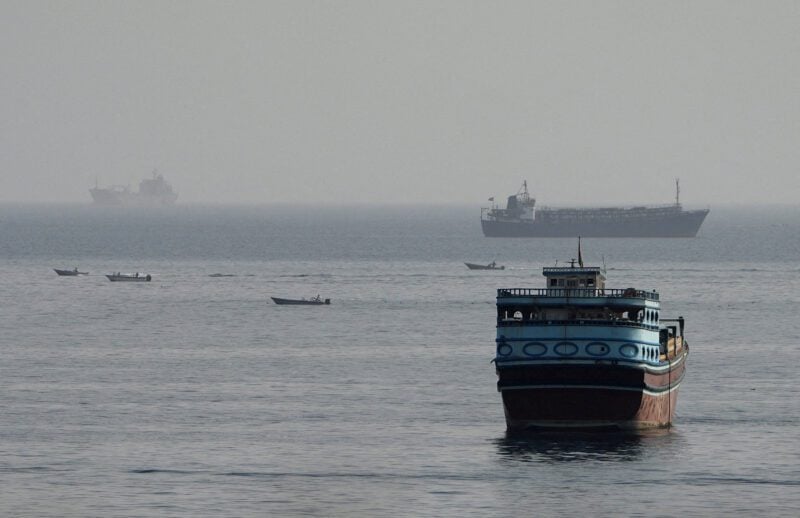
UKMTO reported two projectile strikes on tankers transiting the Strait of Hormuz on 5 October. One struck the On Peace, injuring 12 seafarers, including 11 Indian nationals; India did not identify the attacker. A separate report says Iran is launching anti-ship missiles at US naval forces near the Strait, but the available claims do not independently corroborate that report. The Pentagon removed 12 B-1 bombers from RAF Fairford amid reporting of a suspected Iran-linked plot, while another report says a third carrier group and thousands of troops are heading to the Persian Gulf. Trump has said he is open to direct talks, and Qatar reports continuing mediation, but accounts of Iran's proposed terms differ and the White House is seeking firmer nuclear commitments. September data indicate recovering Gulf oil flows, alongside severe constraints on Iranian crude exports; the estimates vary by provider and by what they count.
Change from previous assessment
Since the 6 October brief, reporting has added the 5 October strikes on two tankers, including the On Peace with 12 injured seafarers, and a separate claim of Iranian anti-ship missile launches against US naval forces. The additional missile claim is uncorroborated, so it raises the warning level without establishing a confirmed engagement. The removal of 12 B-1 bombers from RAF Fairford and a seventh arrest in the suspected plot add a force-protection concern; Iran's role remains unresolved. Diplomatic prospects have modestly improved from the earlier account of a rejected proposal because Trump has said he is open to direct talks and Qatar reports continuing mediation, but a reopening agreement by 19 October remains unlikely. New September figures sharpen the distinction between severely constrained Iranian crude exports and recovering, though still below pre-war, aggregate Gulf flows.
Key judgments
- Further attacks or coercive interference with commercial vessels in or near the Strait of Hormuz are likely over the next 14 days. UKMTO reported two tanker strikes by unknown projectiles on 5 October, including the On Peace, whose 19-person crew included 17 Indian nationals and whose attack injured 12 seafarers. India did not identify the attacker, and the reported connection between the On Peace strike and another UKMTO incident has not been formally confirmed. A separate trade publication reported 12 tanker and gas-carrier hits in seven days, but that count is not independently corroborated in the available reporting. (Confidence: medium · ASSESSED)
- I&W: Confirm if UKMTO issues a new warning of a projectile strike, attempted boarding or IRGC order to turn around in or near the Strait of Hormuz. (0-14 days)
- I&W: Break if UKMTO records no new attacks or coercive incidents and no further official reports identify commercial vessels as targets. (0-14 days)
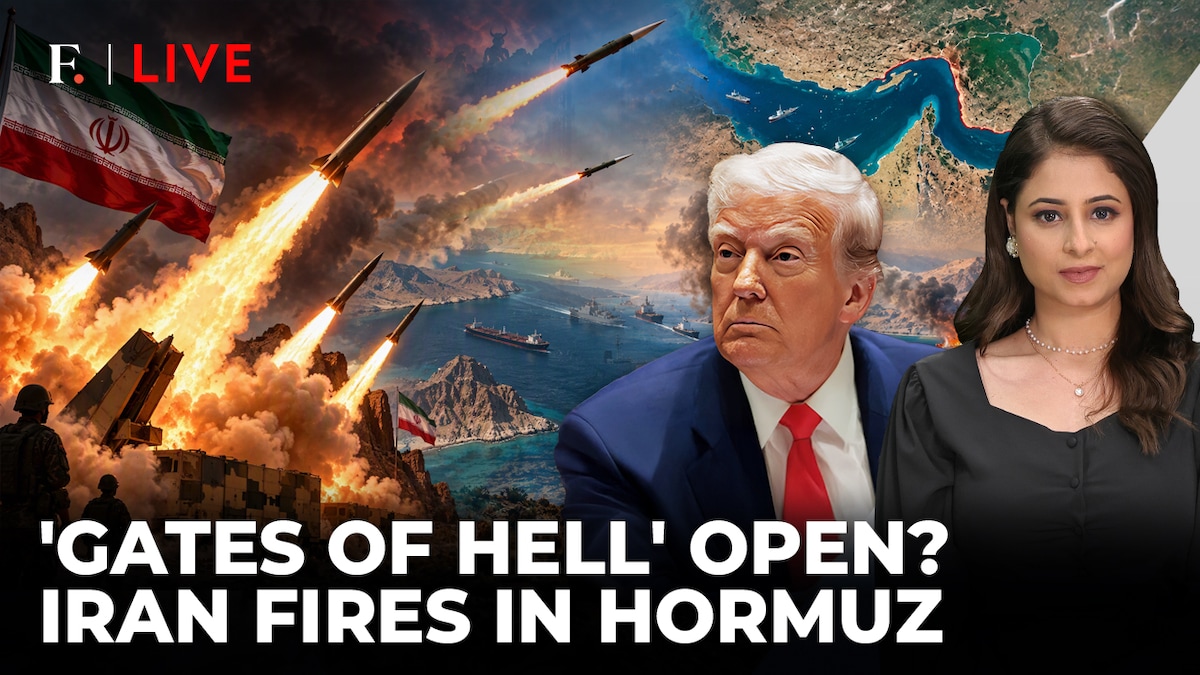
- Iran is reportedly launching anti-ship missiles at US naval forces near the Strait of Hormuz, but this claim is not independently corroborated in the available reporting. The report provides no independently confirmed details of launch timing, damage or a US response. (Confidence: low · REPORTED)
- I&W: Confirm if CENTCOM or another named official source reports an anti-ship missile engagement near the Strait and provides details consistent with the reported launches. (0-14 days)
- I&W: Break if CENTCOM explicitly denies a missile engagement and no other official or independent reporting corroborates the launches. (0-14 days)
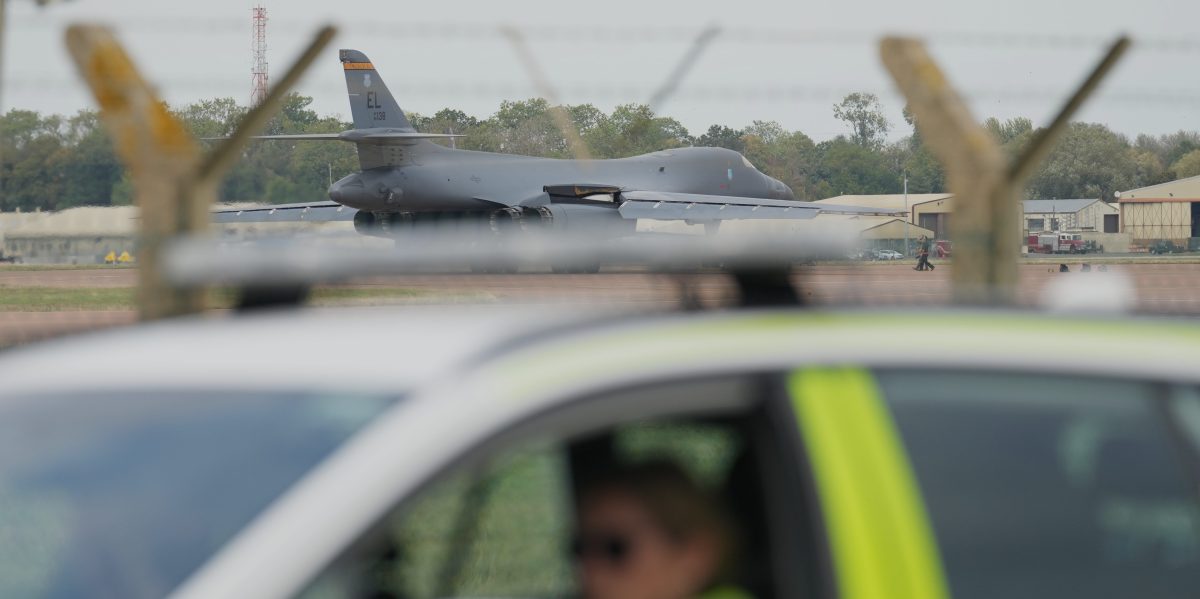
- US force posture is mixed in current reporting. The Pentagon removed 12 B-1 bombers from RAF Fairford on 4 October amid reports of a threat to the base; separately, one report says a third carrier group and thousands more troops are heading to the Persian Gulf. The bomber move was likely a force-protection measure. Iran's role in the suspected RAF Fairford plot remains unconfirmed: one account attributes to Andy Burnham only 'strong indications' of Iranian involvement, while another describes his remarks as confirmation. British police reported a seventh arrest in the case. (Confidence: medium · ASSESSED)
- I&W: Confirm the reported reinforcement if an official US statement or independently corroborated reporting identifies the carrier group and troop movements into the Persian Gulf. (0-14 days)
- I&W: Break the force-protection assessment if US officials state that the RAF Fairford threat is no longer active and the B-1 bombers return to the base. (0-14 days)
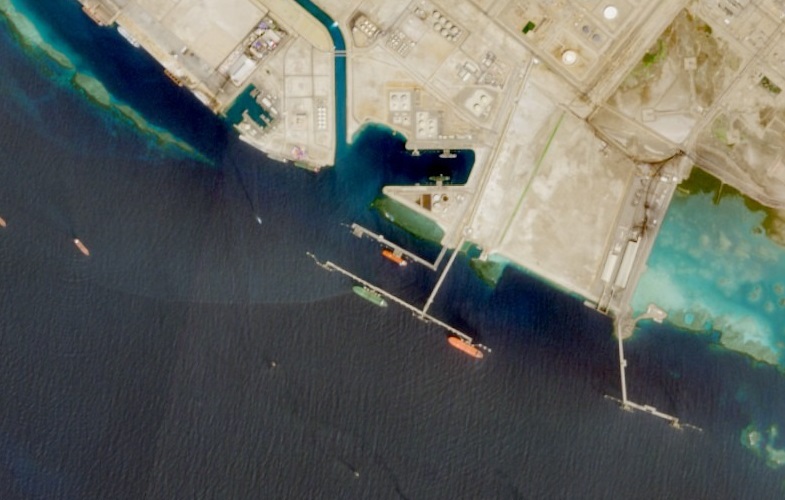
- Iranian crude exports are very likely severely constrained, but the available reporting does not establish that all Iranian crude exports or transfers have ceased. United Against Nuclear Iran reported no crude loadings at Iranian export terminals in September and put September exports at about 50,789 barrels per day, while also estimating 9 million barrels of ship-to-ship transfers off Malaysia and up to roughly 10 million barrels remaining in floating storage there. Its estimate that China received no newly exported barrels uses a methodology that is not reconciled with reports of transfers in waters near China. (Confidence: medium · ASSESSED)
- I&W: Confirm continued constraint if October satellite monitoring again finds no crude loading at Iranian export terminals and tanker tracking shows only residual transfers from floating storage. (1-3 months)
- I&W: Break the assessment if independent tanker tracking records sustained crude loading at Kharg Island and deliveries of newly loaded Iranian crude to buyers. (1-3 months)
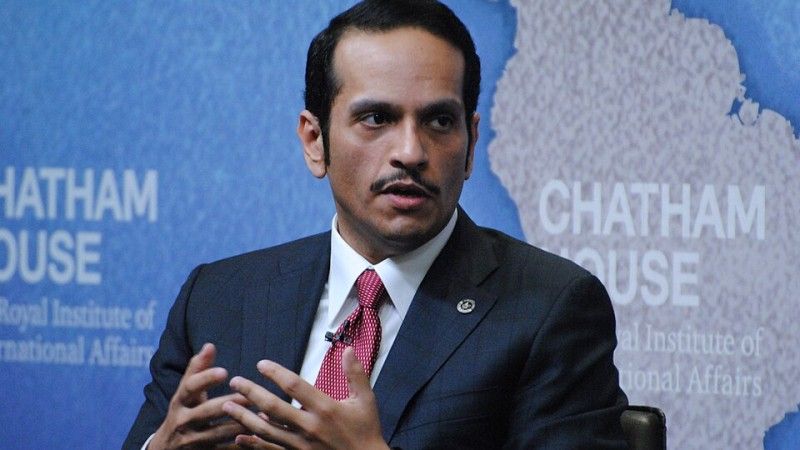
- A comprehensive ceasefire and Strait of Hormuz reopening agreement by 19 October is unlikely, despite continuing diplomatic contact. Trump said on 6 October that he was open to direct talks, and Qatar's foreign ministry spokesperson reported continuing US-Iran mediation. The White House is seeking more concrete nuclear commitments before releasing funds, while reports describe Iran's proposed exchange in different terms. The forecast rests on limited reporting about the negotiations and the exact proposal terms. (Confidence: low · ASSESSED)
- I&W: Confirm the forecast if no joint US-Iran text or formal announcement sets out ceasefire terms and a timetable for reopening the Strait by 19 October. (0-14 days)
- I&W: Break the forecast if Washington and Tehran announce agreed ceasefire terms that include a dated reopening arrangement for the Strait. (0-14 days)
- September data indicate that Gulf oil flows were recovering but remained below pre-war levels on reported aggregate measures. Gulf flows excluding Iran were reported at over 81 per cent of pre-war levels; Vortexa put broader crude, condensate and refined-fuel flows at 19.2 million barrels per day, against a pre-war average of 23.6 million. Provider estimates for crude and condensate differ, so the figures should not be combined into a single precise flow estimate. (Confidence: medium · REPORTED)
- I&W: Confirm continued recovery if October Kpler and Vortexa estimates rise from their respective September figures while remaining below their stated pre-war baselines. (1-3 months)
- I&W: Break the recovery assessment if October estimates from both providers fall below their respective September levels. (1-3 months)
Outlook & scenarios
Continued maritime attrition (50%)
Over the next 14 days, US enforcement and Iranian pressure on shipping continue, with further UKMTO warnings or IRGC orders to commercial vessels. Gulf oil continues to move, but incidents and uncertain attribution sustain elevated risk for crews and operators.
Mediation produces a limited pause (30%)
Qatari mediation and Trump's stated openness to direct talks produce a temporary understanding on shipping or a ceasefire, without resolving sanctions, Iranian assets or nuclear commitments. The Strait remains contested and a comprehensive reopening agreement does not immediately follow.
Wider US-Iran military escalation (15%)
Reported missile attacks on US naval forces are confirmed or followed by a US response. The reported carrier-group movement becomes an operational reinforcement, while commercial shipping faces more frequent attacks and Gulf export flows come under renewed pressure.
Wildcard: strike on Gulf energy infrastructure (5%)
Iranian hard-liners or Iranian-backed groups strike a Gulf oil facility or a pipeline pumping station. Even a single successful attack would add pressure to shipping disruption and force analysts to reassess the resilience of the routes used to bypass the Strait.
Recommendations
- Maintain a single incident log for UKMTO warnings, India Ministry of External Affairs statements and named vessel reports. Record confirmed vessel damage and casualties separately from claims about who carried out an attack.
- Treat the report of Iranian anti-ship missile launches as unverified until CENTCOM or another independent source confirms an engagement. Track any official account of US naval damage, interception or response.
- Monitor US and UK announcements on the 12 B-1 bombers, the reported carrier-group movement and the RAF Fairford arrests. Keep evidence of an Iranian link separate from evidence that the plot itself existed.
- Compare UANI terminal monitoring and tanker tracking with Kpler and Vortexa monthly flow estimates. Label crude loadings, ship-to-ship transfers, floating storage and Gulf-wide flows separately.
- Track public readouts of Qatari mediation and any direct US-Iran contact. Compare published terms on sanctions, Iranian assets, oil exports, nuclear commitments and reopening the Strait before assessing whether talks have produced an agreement.
Confidence & uncertainty
Overall confidence is medium. UKMTO incident warnings, India's account of injuries aboard the On Peace, and multiple reports of the RAF Fairford bomber withdrawal provide corroboration for key developments. Confidence is lower on attribution for the tanker strikes, the reported anti-ship missile launches and Iran's role in the Fairford plot. Iranian export estimates rely heavily on United Against Nuclear Iran's methodology, while Gulf flow estimates differ by provider and scope. Reporting on negotiations confirms contact but leaves the terms and prospects for agreement unclear.
Alternative analysis (red cell)
The available diplomatic evidence does not establish that a comprehensive agreement by 19 October is unlikely; it may instead indicate an unsettled but active bargaining process. Trump’s reported openness to direct talks (fe993481-5305-4372-ab7e-5ef10aa17093) and Qatar’s account of continuing mediation (4203d749-bf9a-4122-a320-6065ecbe087a) leave a meaningful possibility of a late or partial arrangement. The conflicting proposal descriptions (8faaa10b-9d8b-409d-8de7-545c46e22ffc; 1f5b1fd8-fbaa-4940-b374-bdd9601e520a) support uncertainty about the outcome, not a clearly negative forecast.
Intelligence gaps
- [EEI 1.1 · UNCOVERED] Concentrations or unusual movements of IRGC-Navy fast attack craft, small boat swarms, or escort vessels within 200 km of US/allied ships, including approach distances and formation changes. Recommended collection: maritime/AIS
- [EEI 1.2 · UNCOVERED] Detected pre-launch activity at coastal missile or rocket batteries (vehicle dispersal, fuel/warhead handling, radars powering up, transport erector launchers moving to firing positions). Recommended collection: imagery/signals
- [EEI 1.3 · UNCOVERED] Increased launch/arming/positioning of armed UAVs (MALE/loitering munitions) or tactical aircraft at Iranian coastal bases with sortie generation rates and munitions loadouts. Recommended collection: air/ADS-B/imagery
- [EEI 1.4 · UNCOVERED] Command-and-control indications of attack orders or elevated rules-of-engagement from IRGC/General Staff (intercepted communications, internal order messages, force-wide alert messages). Recommended collection: signals/human
- [EEI 2.1 · PARTIAL] Public statements or state-media broadcasts from Supreme Leader, President, Minister of Defense, or IRGC commanders indicating authorization, restraint, or conditions for retaliation. Recommended collection: open-source
- [EEI 2.2 · UNCOVERED] Issuance of formal orders, mobilization directives, travel restrictions, or official internal communications within IRGC/Armed Forces indicating escalation posture or stand-down. Recommended collection: human/diplomatic
- [EEI 2.3 · UNCOVERED] Directives, logistics movements, or communications from Iranian commanders to regional proxy militias (Houthis, Iraqi Shia militias, Lebanese groups) that change their threat posture or task them with specific operations. Recommended collection: signals/human
- [EEI 2.4 · PARTIAL] Changes in Iran's diplomatic exchanges with key states (offers of negotiation, warnings, or coordination with Russia/China) or requests for deconfliction with maritime/naval actors. Recommended collection: diplomatic
- [EEI 3.2 · UNCOVERED] Discovery or reporting of naval mines, unexploded ordnance, or damage to fixed maritime infrastructure (oil platforms, terminals, pipelines) with geolocated imagery or on-scene assessments. Recommended collection: imagery/open-source
- [EEI 3.3 · PARTIAL] Commercial indicators of disruption: sudden increases in war-risk insurance premiums for Gulf transits, vessel re-routing decisions, port throughput reductions, or charter cancellations for Gulf shipments. Recommended collection: financial/commercial
- [EEI 3.4 · UNCOVERED] Movements or posture changes of regional state navies/air forces (Saudi, UAE, Kuwait, Bahrain, UK) such as task group departures, airbase dispersals, or announced maritime patrols near choke points. Recommended collection: open-source/imagery
Cited sources
[1] gCaptain · A Dozen Seafarers Injured in Strait of Hormuz Tanker Attack, India Says (C) · 6 October 2026 · sha256:629eca54ff54 [2] The Maritime Executive · Saudi Bypass Pipeline Quickly Rebounded After Attack, Export Data Shows (C) · sha256:35f4b3aaa01d [3] Firstpost · 'Gates Of Hell' For Iran? Trump Warns As Missiles Fly In Hormuz | Firstpost Live (B) · 7 October 2026 · sha256:46e76780d20b [4] The Intercept · The U.S. Military Struggles to Protect Its Bases Amid Failing Iran War (B) · 6 October 2026 · sha256:39d6258320cc [5] CBS News · Live Updates: Iran-backed Houthis deny losing ground in Yemen as oil prices ease despite fierce fighting (A) · 5 October 2026 · sha256:09e0c4f8a5e4 [6] TV7 Israel News · Shifting alliances shape Middle East security (B) · sha256:8ccdd66d0013 [7] Bloomberg (via The Korea Times / Tribune Content Agency) · Don't let hubris get in the way of ending the Iran war (A) · 6 October 2026 · sha256:9119777076c0 [8] Reuters (republished by gCaptain) · Gulf Oil Flows Rise to Average 81% of Pre-war Rate in September (A) · 6 October 2026 · sha256:6cde5a909a33 [9] gCaptain · Iran’s Offshore Oil Stockpile Nears Exhaustion as Blockade Chokes New Supply (C) · 6 October 2026 · sha256:2b0ab0634033 [10] Defence24 · Gulf security with Iran: What is Qatar proposing? (C) · 7 October 2026 · sha256:bb87a9124cf2
Source content hashes were computed at collection time; the cited text is preserved unmodified for the life of this product.
Red cell review: PARTIAL DISSENT
TLP:CLEAR