TLP:CLEAR · Disclosure is not limited.
Persian Gulf: Shipping Attacks and US-Iran Tensions
Time window: Last 1 day · Audience: General analyst · Type: Situation report · DTG: 2026-10-12 12:40Z · Overall confidence: HIGH
BLUF
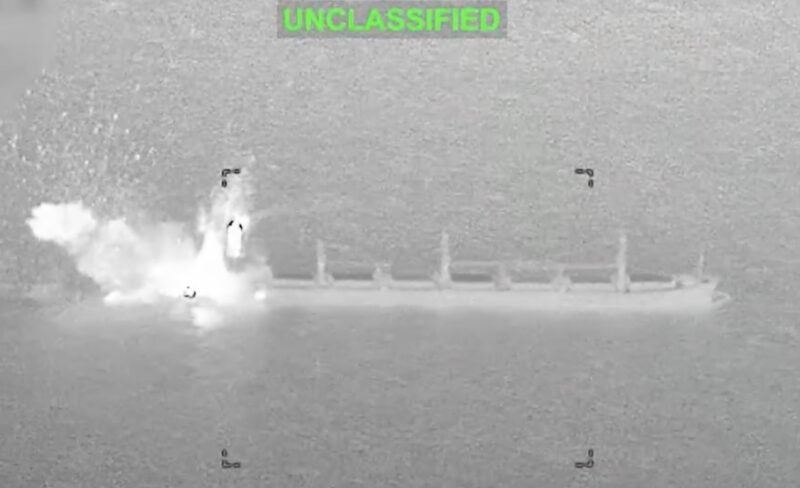
Commercial shipping risk has worsened: UKMTO reported projectile strikes on outbound tankers in the Strait of Hormuz on 10 and 11 October, alongside other recent vessel attacks, while US forces disabled the Panama-flagged Ocean Molica under the Iranian ports blockade. A Hormuz reopening within the next 14 days is unlikely: Tehran says Washington’s response to its seven-condition proposal is insufficient, and the US blockade remains in force.
Executive summary
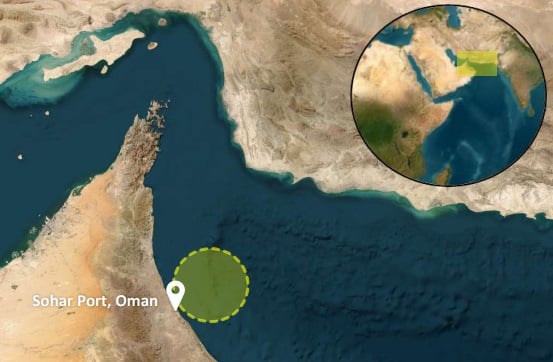
The latest reporting adds a second outbound tanker projectile strike in the Strait of Hormuz on 11 October to the 10 October incident. On 11 October, a drone attack was also reported on the MT Petro Dolphin off Sohar, Oman; reports differ on whether nine or ten crew members were rescued, and two were reported missing. CENTCOM said US forces disabled the Ocean Molica in the Gulf of Oman on 10 October after it left an Iranian port and ignored repeated warnings. Iran has presented a seven-condition proposal for reopening the Strait through Qatari intermediaries, but Mohsen Rezaei called the US response insufficient. Reports that Washington accepted some conditions conflict with Rezaei’s statement that Iran was no longer responding. Saudi Arabia also announced plans to increase pipeline capacity that bypasses the Strait, but the proposed additional route is not expected to carry crude for seven to eight weeks.
Change from previous assessment
Initial assessment of the latest developments against the 11 October prior brief. New reporting adds a second outbound tanker projectile strike in the Strait of Hormuz on 11 October and a drone attack on the MT Petro Dolphin off Sohar, strengthening the basis for the existing near-term assessment of continued shipping risk. Iran’s seven-condition proposal and its officials’ description of the US response as insufficient add detail to the diplomatic picture, but conflicting statements leave the status of talks unresolved. The blockade remains reported as active. No prior judgment is retired; the reported Houthi target list and casualty figures remain uncertain.
Key judgments
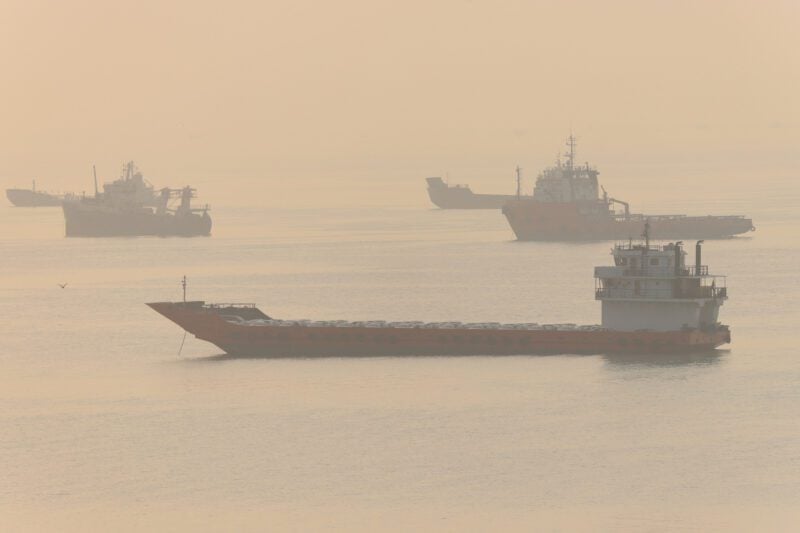
- Further attacks on commercial vessels in or near the Strait of Hormuz are likely over the next 14 days. UKMTO reported projectile strikes on outbound tankers on 10 and 11 October; separate reports describe strikes off Sharjah, near Al Jazeera in the UAE, and off Qatar, as well as a drone attack on the MT Petro Dolphin off Sohar. The attackers behind the projectile strikes have not been identified, and the Petro Dolphin rescue count is disputed. (Confidence: medium · ASSESSED)
- I&W: Confirm: UKMTO or a vessel operator reports another projectile, drone or mine incident involving a commercial vessel in the Strait of Hormuz or off Oman, the UAE or Qatar. (0-14 days)
- I&W: Break: UKMTO or affected vessel operators retract or reclassify the reported 10-11 October tanker incidents as non-hostile events. (0-14 days)
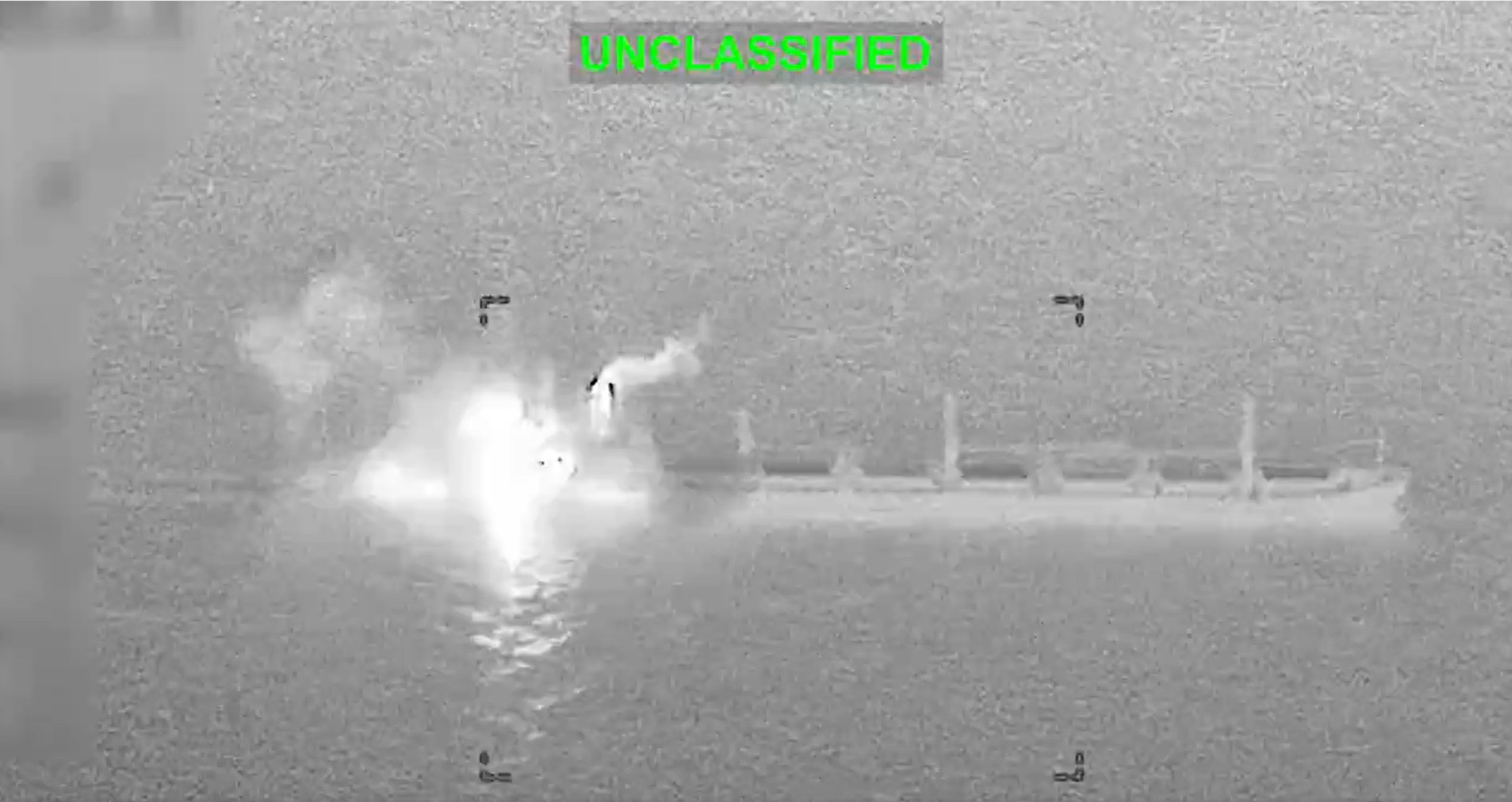
- The US naval blockade of Iranian ports remains active, and US forces have used direct force to enforce it. CENTCOM said a US fighter jet disabled the Panama-flagged Ocean Molica, also reported as Arika Sun, on 10 October after the vessel departed an Iranian port. CENTCOM also reported four commercial vessels disabled and 135 ships turned back since the blockade resumed on 14 July. The exact location of the Ocean Molica strike is disputed between reporting that places it in the Gulf of Oman and reporting that places it off Oman’s Arabian Sea coast. (Confidence: medium · REPORTED)
- I&W: Confirm: CENTCOM reports another ship interdiction or disabling strike under the blockade. (0-14 days)
- I&W: Break: Washington announces that the blockade has been suspended or ended. (0-14 days)
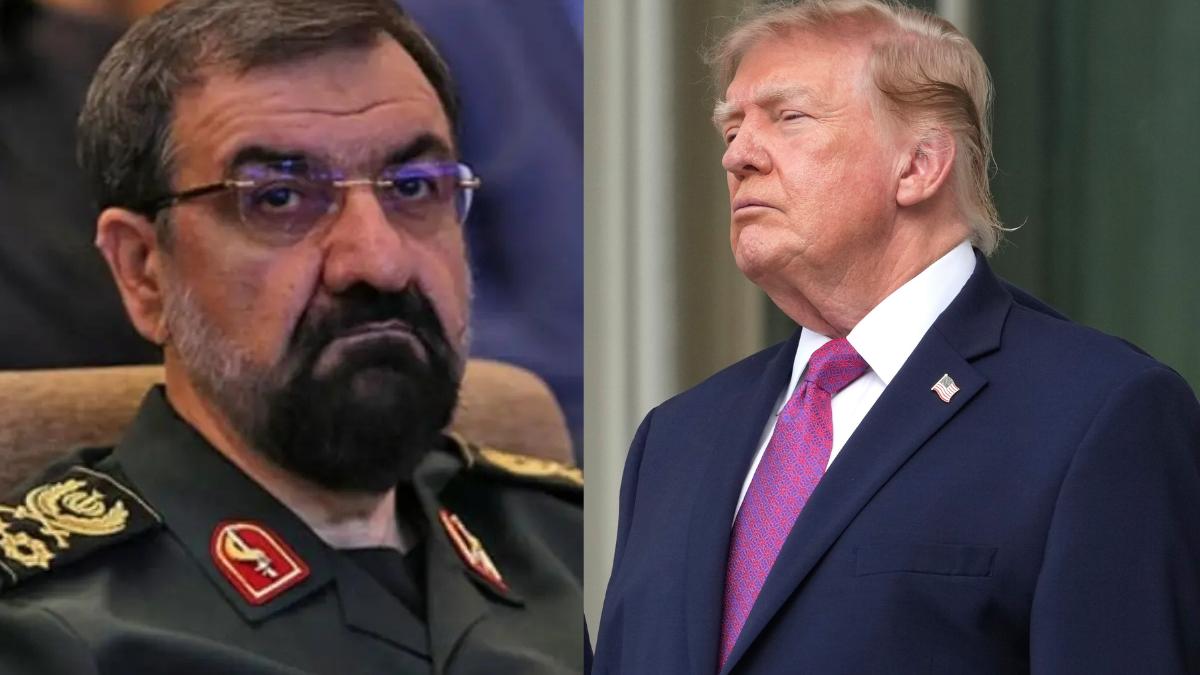
- A Strait of Hormuz reopening within the next 14 days is unlikely. Iran’s reported seven-condition proposal calls for an end to the US blockade and restrictions on Iranian oil sales; Mohsen Rezaei said Washington’s response was insufficient. Reporting that the US accepted some conditions conflicts with Rezaei’s statement that Iran was no longer responding. The proposal and public statements are reported, but the terms of any US response and the actual state of negotiations remain unclear. (Confidence: low · ASSESSED)
- I&W: Confirm: Rezaei or another senior Iranian official publicly reiterates that the Strait will remain closed to the US until the stated conditions are met, without a confirmed US-Iran timetable. (0-14 days)
- I&W: Break: Washington and Tehran publicly confirm an agreement, and CENTCOM announces a suspension of the blockade or a reopening timetable. (0-14 days)
- Available reporting does not establish that naval mines caused the reported tanker damage in the Strait of Hormuz. The IRGC Navy has attributed tanker incidents to mines, while a report also carries the US government’s claim that mines had previously been cleared; UKMTO separately reported projectile strikes. The mine claims rely on statements from parties to the conflict and social media, so the cause remains unverified. (Confidence: medium · ASSESSED)
- I&W: Confirm: UKMTO and affected vessel operators continue to describe the cause of tanker damage as unknown, with no independent damage assessment released. (0-14 days)
- I&W: Break: An independent inspection or vessel operator assessment identifies a mine or another specific cause for a reported tanker incident. (0-14 days)
- The Houthi-Saudi confrontation is likely to remain a separate regional escalation channel over the next 14 days, but the reported effects of Houthi operations on 11 October are not established. A Houthi spokesman claimed strikes on King Khalid International Airport in Riyadh, King Fahd International Airport in Dammam, Shedgum and Tanajib; reports of Riyadh airport casualties differ sharply, and Saudi Aramco had not confirmed damage at Shedgum or Tanajib. The detailed target claims and casualty figures rest on thin, contested reporting. (Confidence: low · ASSESSED)
- I&W: Confirm: Saudi authorities or Saudi Aramco verify damage or casualties at the named airport or energy sites, or announce a response to the 11 October claims. (0-14 days)
- I&W: Break: Saudi authorities and Saudi Aramco explicitly deny damage at the named sites, and no further Houthi operation against Saudi targets is reported. (0-14 days)
- Saudi Arabia is unlikely to add the announced repurposed pipeline capacity within the next 14 days. Prince Abdulaziz bin Salman said the line could carry about 1.2 million barrels of crude a day within seven to eight weeks; the East-West pipeline was reported to be carrying 5.8 million barrels a day on 6 October. The longer-term target of 10 million barrels a day is a stated plan, not current capacity. (Confidence: medium · ASSESSED)
- I&W: Confirm: Saudi Aramco or the Energy Ministry states that commissioning of the repurposed line remains scheduled for at least seven weeks after the 12 October announcement. (0-14 days)
- I&W: Break: Saudi Aramco reports that the repurposed line is already delivering crude before 26 October. (0-14 days)
Outlook & scenarios
Continued blockade and maritime pressure (55%)
The most likely path is continued US enforcement of the Iranian ports blockade alongside Iranian restrictions and further hazards to commercial shipping. No reopening agreement is confirmed, and recent vessel attacks provide a basis for expecting continued disruption. The attribution and cause of individual attacks remain contested.
Limited diplomatic arrangement (30%)
An arrangement through Qatari intermediaries produces a limited reopening or a defined process for restoring passage. This outcome is less likely in the near term because Iran says the US response is insufficient and its stated demands include ending the blockade and lifting restrictions on Iranian oil sales.
Regional escalation wildcard (15%)
A tanker incident causes confirmed deaths or major damage, or verified Houthi strikes on Saudi targets prompt a Saudi response and US participation. This is an unlikely, high-impact path; current reporting does not establish the full effects of the Houthi claims or confirm US participation.
Recommendations
- Maintain a daily incident log for the Strait of Hormuz, Gulf of Oman and approaches off Oman, the UAE and Qatar. Record vessel name, location, reported weapon, damage, crew status, attribution and source, and distinguish UKMTO or operator reporting from claims by the US or Iran.
- Track public statements on Iran’s seven conditions alongside any US announcement on the blockade. Do not treat Tehran’s report of partial US acceptance as an agreement without confirmation from both governments and a clear reopening timetable.
- Seek Saudi government, airport operator and Saudi Aramco confirmation before using casualty or damage figures for the 11 October Houthi claims. Track any formal announcement of US participation in Saudi strikes separately from statements that Washington is considering it.
- Monitor Saudi Aramco and Energy Ministry updates on commissioning of the repurposed pipeline. Keep its announced future capacity separate from the East-West pipeline’s reported current throughput.
Confidence & uncertainty
Overall confidence is high for the central picture of recent US blockade enforcement, reported tanker incidents and public diplomatic positions. CENTCOM statements, UKMTO-referenced maritime reporting, wire services and major media provide corroboration across these developments. Confidence is lower on attacker attribution, the IRGC’s mine claims, Petro Dolphin rescue totals, the reported Riyadh airport casualties and the actual status of negotiations; some details rely on interested parties or thin reporting.
Alternative analysis (red cell)
The Houthi-Saudi reporting presently supports a contested claim of attempted attacks, not a demonstrated, distinct escalation channel. The evidence in claims 6826b094-99ca-444a-bf97-9dbd87814c52 and a34c967a-43c1-4b49-a3f7-9d67c2caae6e is offset by the lack of confirmation in f80aaf17-eb09-4608-ab9f-6885ea298e5f and sharply inconsistent casualty reporting in 666efb15-7dc0-4902-bd8a-9fe5b3c9d8af and 2b689fa1-71ca-4b2f-9464-b91ac68feb16. It is therefore defensible to assess that the channel's persistence and independence from the Hormuz crisis remain unresolved.
Intelligence gaps
- [EEI 1.1 · UNCOVERED] Concentrations or unusual movements of IRGC-Navy fast attack craft, small boat swarms, or escort vessels within 200 km of US/allied ships, including approach distances and formation changes. Recommended collection: maritime/AIS
- [EEI 1.2 · UNCOVERED] Detected pre-launch activity at coastal missile or rocket batteries (vehicle dispersal, fuel/warhead handling, radars powering up, transport erector launchers moving to firing positions). Recommended collection: imagery/signals
- [EEI 1.3 · UNCOVERED] Increased launch/arming/positioning of armed UAVs (MALE/loitering munitions) or tactical aircraft at Iranian coastal bases with sortie generation rates and munitions loadouts. Recommended collection: air/ADS-B/imagery
- [EEI 1.4 · UNCOVERED] Command-and-control indications of attack orders or elevated rules-of-engagement from IRGC/General Staff (intercepted communications, internal order messages, force-wide alert messages). Recommended collection: signals/human
- [EEI 2.2 · PARTIAL] Issuance of formal orders, mobilization directives, travel restrictions, or official internal communications within IRGC/Armed Forces indicating escalation posture or stand-down. Recommended collection: human/diplomatic
- [EEI 2.3 · UNCOVERED] Directives, logistics movements, or communications from Iranian commanders to regional proxy militias (Houthis, Iraqi Shia militias, Lebanese groups) that change their threat posture or task them with specific operations. Recommended collection: signals/human
- [EEI 3.3 · PARTIAL] Commercial indicators of disruption: sudden increases in war-risk insurance premiums for Gulf transits, vessel re-routing decisions, port throughput reductions, or charter cancellations for Gulf shipments. Recommended collection: financial/commercial
- [EEI 3.4 · UNCOVERED] Movements or posture changes of regional state navies/air forces (Saudi, UAE, Kuwait, Bahrain, UK) such as task group departures, airbase dispersals, or announced maritime patrols near choke points. Recommended collection: open-source/imagery
Cited sources
[1] gCaptain · More Tankers Hit in Hormuz as U.S. Strikes Cargo Ship (C) · 11 October 2026 · sha256:80b4c744c804 [2] The Maritime Executive · Two Seafarers Missing in Drone Attack on Product Tanker off Oman (C) · sha256:96cedc4ea135 [3] The Maritime Executive · U.S. Hits Chinese-Owned Freighter, Claiming it Ran Blockade on Iran (C) · sha256:4adeaa8a7c04 [4] The Maritime Executive (article courtesy of Poten & Partners) · The Continuously Shifting Control of the Strait of Hormuz (C) · sha256:48a8ed5ab675 [5] Reuters (republished by gCaptain) · Iran Says US Response To Its Proposal To Reopen Hormuz Was 'Insufficient' (A) · 11 October 2026 · sha256:ee825d32d6fc [6] Mathrubhumi (English edition) · Iran says US accepted some demands to reopen Strait of Hormuz: What is holding up a deal? (B) · 12 October 2026 · sha256:6a0439329fae [7] BRICS News (Facebook page) · 🇮🇷💥 IRGC NAVY: THIRD SUPERTANKER HITS NAVAL MINE IN HORMUZ – "Disabled Navigation = Hostile" A third crude oil supertanker has struck a naval mine and caught fire in the southern Strait of Hormuz today after disabling its navigation systems and violating regulations. The IRGC Navy has declared: any vessel with disabled navigation will be treated as hostile. 🚢 Third supertanker in two days to strike a sea mine in the Strait of Hormuz. 🔥 The vessel's engine room caught fire after the explosion. 📡 The ship had disabled its navigation and identification systems – a deliberate attempt to evade detection. ⚠️ New policy: "Any ship within the Strait of Hormuz that turns off its navigation and identification systems will be considered hostile and will be dealt with severely and decisively." #Iran 🇮🇷 #Hormuz #IRGCNavy #Sovereignty #BRICS | BRICS News (E) · sha256:65197c4f2daf [8] Israel Today (shared via Facebook page) · 🇮🇷➡️ Environmental terrorism. Iran's Islamic Revolutionary Guard Corps (IRGC) Navy said a 3rd oil tanker has struck a naval mine in the Strait of Hormuz since Saturday, with the latest incident involving a crude-carrying supertanker attempting to exit the waterway on Sunday afternoon. According to the IRGC, the vessel had switched off its AIS tracking system and deviated from an authorized shipping route when it hit a mine in the southern strait, triggering an explosion and fire in its engine room. Iranian authorities described the incident as the second supertanker mine strike and warned vessels against unauthorized navigation. | Israel Today (E) · sha256:d0469a41842b [9] House of Saud · Houthis Target Aramco: What Shedgum and Tanajib Mean (E) · 12 October 2026 · sha256:6d522749982d [10] The New York Times · The Iran-backed Houthi militia launched a deadly attack on an international airport in Saudi Arabia’s capital on Saturday that Saudi officials said killed at least 12 people and injured over 300 more. It was the deadliest attack in a Gulf Arab country since the U.S.-Israeli war with Iran began in February. https://trib.al/gtHtrEh | The New York Times (D) · sha256:72a09c8fe582 [11] Bloomberg (republished by gCaptain) · Saudi Eyes 10 Million Barrels a Day of Oil Pipe Capacity (A) · 12 October 2026 · sha256:0fd80354559a [12] BBC · Saudi minister vows 'serious response' to Houthi attacks on airports (A) · 12 October 2026 · sha256:90dea0a7d510
Source content hashes were computed at collection time; the cited text is preserved unmodified for the life of this product.
Red cell review: PARTIAL DISSENT
TLP:CLEAR