TLP:CLEAR · Disclosure is not limited.
Persian Gulf: Shipping Attacks Persist as US Strike Planning Reports Surface
Time window: Last 1 day · Audience: General analyst · Type: Situation report · DTG: 2026-10-15 13:07Z · Overall confidence: HIGH
BLUF
Commercial shipping risk in the Strait of Hormuz remains acute: UKMTO recorded 15 attacks from 6 to 14 October, including 11 in the final four days, and attacks damaged or sank several vessels. Reports of US contingency planning have intensified, but a GBU-43 strike has not been authorised publicly and Donald Trump said US forces would not attack Iran before 3 November.
Executive summary
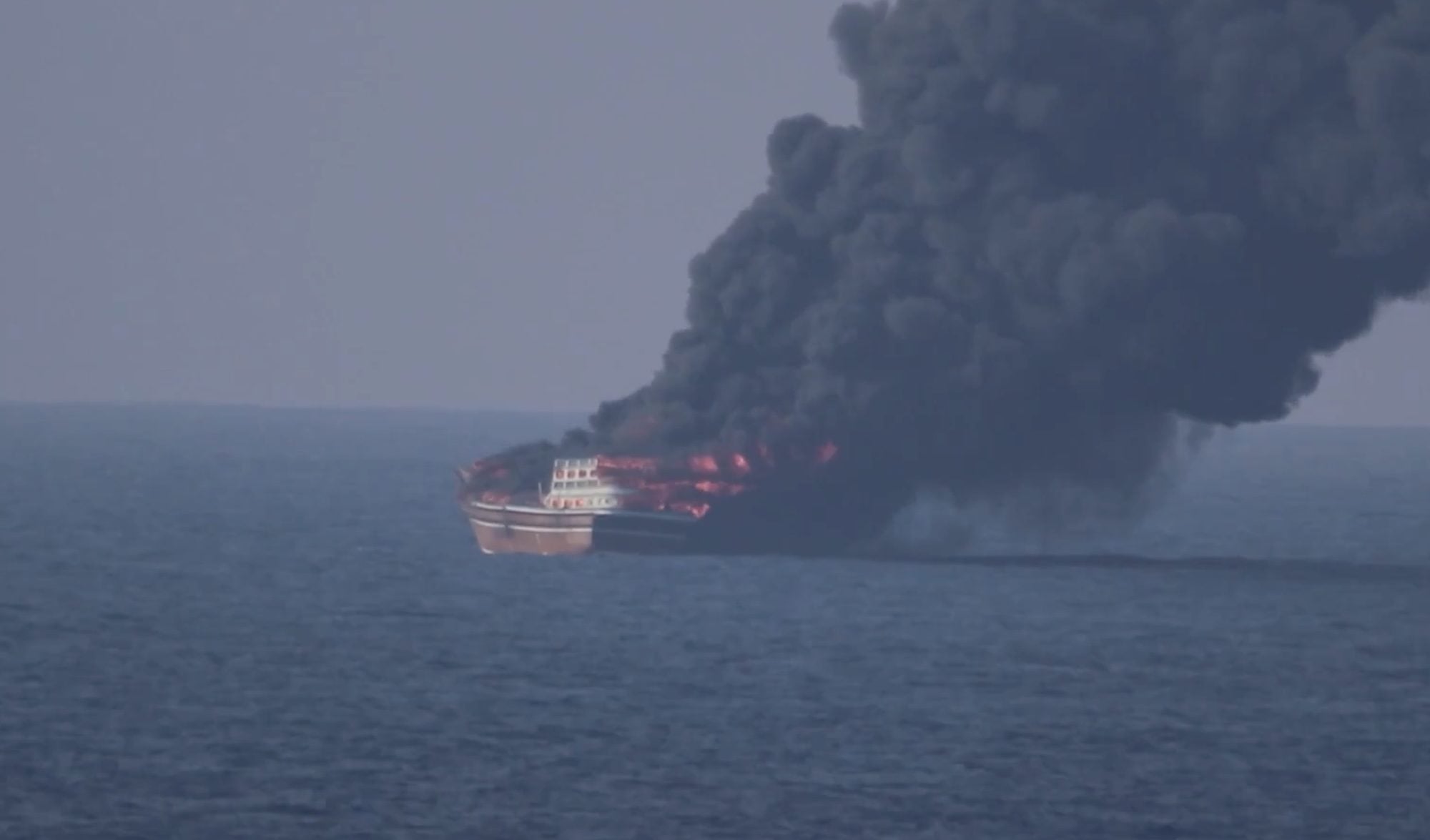
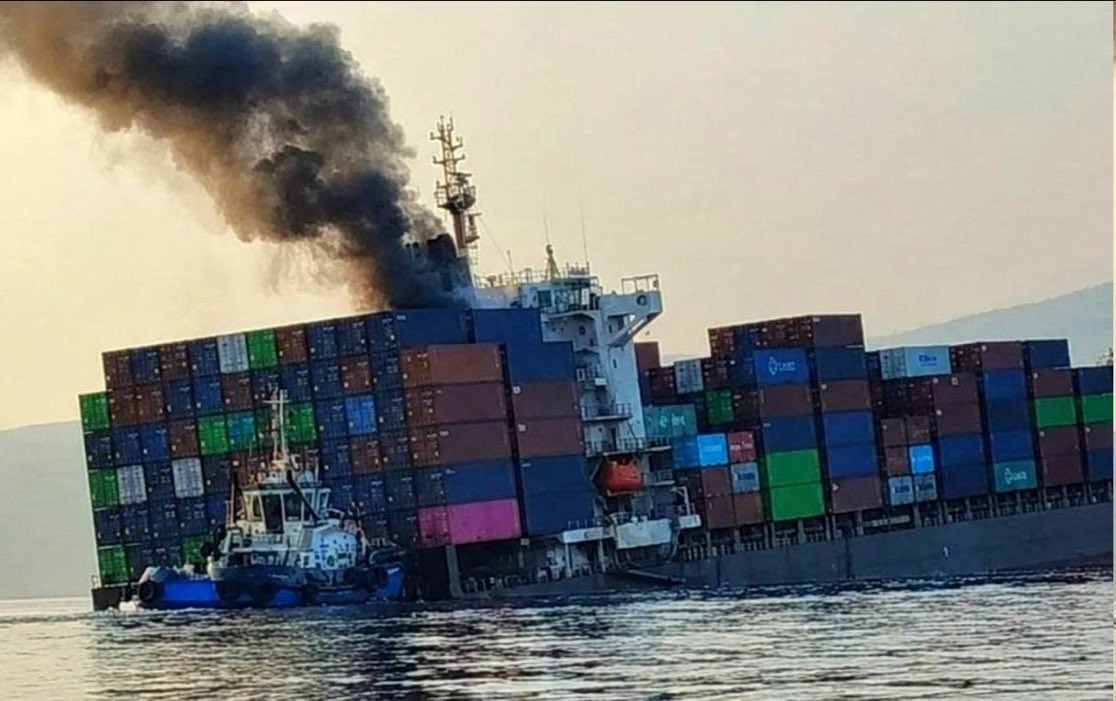
UKMTO recorded 15 attacks on shipping between 6 and 14 October, while Singapore's maritime authority confirmed that the GFS Pride was attacked and sank and the GFS Giselle was struck. The Cape Dao also sank, weeks after a 23 September strike near Khasab, Oman. The cause of the GFS Pride's sinking remains disputed: projectile attack reports conflict with Iran's unsupported claim that the ship hit a mine. US reporting describes contingency plans that include the GBU-43 against Iranian targets, but does not establish an approved strike. Trump said there would be no US attack before 3 November. Iran's public warnings of retaliation, alongside conflicting US and Iranian claims about control of the Strait, sustain escalation risks while leaving the timing and scale of any next military action uncertain.
Change from previous assessment
Since the 14 October brief, this assessment adds reports that US contingency planning includes a GBU-43 option, while also incorporating Trump's statement that US forces would not attack Iran before 3 November. These accounts conflict, so confidence in the timing of any US strike is low. The shipping judgment now reflects UKMTO's tally of 15 attacks from 6 to 14 October and the sinking of the GFS Pride; it also distinguishes the Cape Dao's sinking from its 23 September strike. The prior low-confidence judgment on a further direct maritime encounter is retained, with new reports of the 6 October dhow destruction and 10 October Ocean Molica disabling. The prior tanker-diversion forecast is not carried forward because current reporting does not establish present diversion levels or duration.
Key judgments
- Further attacks on commercial shipping in and around the Strait of Hormuz are likely in the next 14 days. UKMTO recorded 15 attacks from 6 to 14 October, 11 in the final four days, and issued four verified warnings for incidents on 13 October. The GFS Pride was attacked on 13 October and later sank; the GFS Giselle was struck on 14 October, while the Al Saadiyat was also reported targeted. The Cape Dao sank weeks after a 23 September strike near Khasab, Oman. The GFS Pride's cause remains disputed: reports describe a projectile attack, while Iran claimed without evidence that it hit a mine. (Confidence: medium · ASSESSED)
- I&W: Confirm: UKMTO issues at least three additional verified attack warnings for the Strait of Hormuz by 29 October. (0-14 days)
- I&W: Break: UKMTO issues no further verified attack warnings through 29 October and Kpler records daily crude transits returning to about 20.8 million barrels on at least three days. (0-14 days)
- A US strike against Iran before 3 November is unlikely, but confidence is low because reporting conflicts. Trump said US forces would not attack before the midterm election. Separate reports describe US contingency planning, including a GBU-43 option, and one account says campaign plans await Trump's approval. CNN's account says no decision on using the bomb has been announced. (Confidence: low · ASSESSED)
- I&W: Confirm: No US strike occurs by 3 November and the White House reiterates Trump's stated commitment. (0-19 days)
- I&W: Break: Trump announces authorisation for an attack before 3 November, or US forces conduct a strike against Iran before that date. (0-19 days)
- If US or Israeli strikes resume, Iran is likely to retaliate against US facilities or energy infrastructure in the Persian Gulf. Iranian Defence Ministry spokesman Reza Talaei-Nik said retaliation targets were prepared and warned of a stronger response. Foreign Minister Abbas Araghchi gave regional officials a similar warning. Iranian security media outlet Jaryan listed the Carmel and Ayalon bridges in Israel, King Fahd and Wadi Laban bridges in Saudi Arabia, Sheikh Zayed and Infinity bridges in the UAE, Lusail in Qatar, Sheikh Jaber in Kuwait, Sheikh Hamad in Bahrain, Sohar crossings in Oman, and Abdoun bridge in Jordan. These statements establish a public threat, not operational tasking. (Confidence: medium · ASSESSED)
- I&W: Confirm: Iranian forces attack a US facility, Gulf energy asset, or one of the bridges named by Jaryan after renewed US or Israeli strikes. (0-3 months)
- I&W: Break: Talaei-Nik or Araghchi publicly withdraws the retaliation warning and states that Iran will not carry out the threatened response. (0-3 months)
- Commercial traffic through the Strait of Hormuz is severely disrupted but is not fully halted. Kpler recorded 2.9 million barrels of oil transiting on 11 October, down from nearly 20.8 million barrels on 8 October, while CENTCOM said US forces had assisted Gulf partners in moving more than 19 million barrels on 13 October. Iranian Admiral Habibollah Sayyari said the strait remained closed; CENTCOM asserted that US forces and regional partners controlled it. The conflicting official claims and sharply varying transit figures leave the extent of disruption contested. (Confidence: medium · ASSESSED)
- I&W: Confirm: Kpler records more than 10 million barrels of crude transiting on at least three days in the next 14 days, alongside a reported commercial tanker crossing. (0-14 days)
- I&W: Break: Kpler records less than 3 million barrels per day for three consecutive days and no commercial tanker crossing is reported in that period. (0-14 days)
- A further direct US-Iran maritime encounter in the next 14 days is roughly even chance. CENTCOM reported that a US fighter jet disabled the Panama-flagged Ocean Molica in the Gulf of Oman on 10 October and that US forces destroyed an Iranian-affiliated dhow on 6 October. Separate reporting says IRGC forces have used small vessels to identify potential targets. Confidence is low because the US military withheld details about the dhow and its alleged surveillance activity, and the spotter reporting does not independently establish each encounter's circumstances. (Confidence: low · ASSESSED)
- I&W: Confirm: CENTCOM reports another vessel interdiction or disabling in the Gulf of Oman or Strait of Hormuz, or reports an encounter with an IRGC-linked spotter boat. (0-14 days)
- I&W: Break: No further US interdiction or destruction of an Iranian-affiliated vessel is reported through 29 October, and no new report identifies IRGC small boats shadowing US naval forces. (0-14 days)
Outlook & scenarios
Continued maritime pressure without a renewed US air campaign (55%)
Likely through the end of October. Attacks on commercial shipping continue while US forces and Gulf partners maintain maritime activity. Trump does not order a strike before 3 November, but reported attacks and uneven transit volumes keep pressure on shipping. The cause of the GFS Pride's sinking remains unresolved.
US strikes after 3 November (25%)
If negotiations remain stalled and Trump approves the reported plans, US strikes against Iranian nuclear, underground, or energy facilities follow the midterm election. Iran then retaliates against US facilities or energy infrastructure in the Persian Gulf. The reported GBU-43 option does not establish that this weapon will be used.
Pre-election strike and regional retaliation (10%)
This is a low-probability, high-impact scenario. Trump reverses his stated position and authorises a strike before 3 November. Iran responds against US facilities or Gulf energy infrastructure, with the bridges listed by Jaryan adding to regional concern. Reporting does not confirm that the listed bridges are operationally tasked targets.
Limited de-escalation and partial recovery in transit (10%)
Washington and Tehran reach a limited understanding that reduces attacks without resolving the broader conflict. Commercial transits recover from the sharp decline recorded by Kpler on 11 October. This scenario is less likely while reporting describes negotiations as stalled and both sides continue public warnings.
Recommendations
- Maintain a daily Strait of Hormuz incident log using UKMTO warning numbers. Record attack date separately from vessel damage, sinking confirmation, and casualty reporting.
- Keep the GFS Pride's cause of sinking classified as disputed. Do not attribute it to a projectile or mine without new corroboration.
- Treat GBU-43 reporting as contingency planning, not an approved strike decision. Track any public change in Trump's position, White House confirmation, or reported US strike activity before 3 November.
- Compare daily Kpler transit figures with CENTCOM statements and reported commercial vessel crossings. Flag material gaps between claimed throughput and observed movement.
- Brief Iran's stated retaliation targets as threats rather than confirmed operational plans. Track any reported attack on named Gulf energy infrastructure, US facilities, or bridges in Jaryan's list.
- Keep the Saudi-Houthi threat picture separate from direct US-Iran maritime incidents unless reporting establishes a specific connection.
Confidence & uncertainty
Overall confidence is high for the underlying shipping incident pattern and the broad operational picture. UKMTO, Singapore's maritime authority, IMO data, Kpler figures, wire reporting, and trade reporting support the increase in maritime incidents, although some outlets republish the same reporting and should not be counted as independent corroboration. Confidence is lower for attribution of individual attacks, the status of US strike planning, and whether Iran will carry out its stated threats. Official US and Iranian claims about control of the Strait directly conflict.
Alternative analysis (red cell)
Recent US actions against the Ocean Molica and an Iranian-affiliated dhow are documented in 6309aad7-1a1b-4cc7-96ae-0b3e2d6771fd and 8a34dbc7-5965-4162-ade6-4dc489aac7a8, but the circumstances of the dhow incident remain opaque under 32a1ff9c-7ddd-463d-9b59-dbad4bc0232c. Reporting on Iranian spotters in f3fe8f39-c656-4cb7-8eb1-8d172714fa3e and 2b92b7c4-93c2-45e0-b161-743f22239c3f indicates a continuing risk, not a measurable near-term probability. A more defensible reading is that another encounter is plausible but cannot be characterized as roughly even chance from the available evidence.
Intelligence gaps
- [EEI 1.1 · PARTIAL] Concentrations or unusual movements of IRGC-Navy fast attack craft, small boat swarms, or escort vessels within 200 km of US/allied ships, including approach distances and formation changes. Recommended collection: maritime/AIS
- [EEI 1.2 · UNCOVERED] Detected pre-launch activity at coastal missile or rocket batteries (vehicle dispersal, fuel/warhead handling, radars powering up, transport erector launchers moving to firing positions). Recommended collection: imagery/signals
- [EEI 1.3 · UNCOVERED] Increased launch/arming/positioning of armed UAVs (MALE/loitering munitions) or tactical aircraft at Iranian coastal bases with sortie generation rates and munitions loadouts. Recommended collection: air/ADS-B/imagery
- [EEI 1.4 · UNCOVERED] Command-and-control indications of attack orders or elevated rules-of-engagement from IRGC/General Staff (intercepted communications, internal order messages, force-wide alert messages). Recommended collection: signals/human
- [EEI 2.2 · PARTIAL] Issuance of formal orders, mobilization directives, travel restrictions, or official internal communications within IRGC/Armed Forces indicating escalation posture or stand-down. Recommended collection: human/diplomatic
- [EEI 2.3 · PARTIAL] Directives, logistics movements, or communications from Iranian commanders to regional proxy militias (Houthis, Iraqi Shia militias, Lebanese groups) that change their threat posture or task them with specific operations. Recommended collection: signals/human
- [EEI 2.4 · PARTIAL] Changes in Iran's diplomatic exchanges with key states (offers of negotiation, warnings, or coordination with Russia/China) or requests for deconfliction with maritime/naval actors. Recommended collection: diplomatic
- [EEI 3.2 · PARTIAL] Discovery or reporting of naval mines, unexploded ordnance, or damage to fixed maritime infrastructure (oil platforms, terminals, pipelines) with geolocated imagery or on-scene assessments. Recommended collection: imagery/open-source
- [EEI 3.4 · PARTIAL] Movements or posture changes of regional state navies/air forces (Saudi, UAE, Kuwait, Bahrain, UK) such as task group departures, airbase dispersals, or announced maritime patrols near choke points. Recommended collection: open-source/imagery
Cited sources
[1] Banking News (bankingnews.gr) · «Οι στόχοι της Ώρας Μηδέν»: Αντίποινα σοκ του Ιράν σε στρατηγικής σημασίας γέφυρες σε Ισραήλ και 7 κράτη – Η λίστα του τρόμου (B) · 15 October 2026 · sha256:e29e821a3cac [2] gCaptain · Containership Sinks as Hormuz Attacks Spiral Out of Control (C) · 14 October 2026 · sha256:3d26cc4befe7 [3] The Maritime Executive · Iran Claims Containership Hit Mine and Sank in Strait of Hormuz (B) · sha256:8a2d04565c2a [4] Reuters · Bulk Carrier Sinks Weeks After Deadly Strait of Hormuz Strike (A) · 14 October 2026 · sha256:2b3df83932f6 [5] CNBC Africa · Iran says it’s ‘counting the moments’ until it can attack U.S. warships; Saudi Aramco facilities attacked (A) · 14 October 2026 · sha256:dce7bfad4b58 [6] Syrian Arab News Agency (SANA) · Washington envisage d’utiliser la « mère de toutes les bombes » contre l’Iran (B) · 15 October 2026 · sha256:8140522b23c3 [7] Srugim · הפצצה הגדולה בעולם: התוכנית החדשה לתקיפה באיראן (D) · 15 October 2026 · sha256:8fd53c58f8d6 [8] gCaptain (republishing a Bloomberg News report) · Qatar Rewrites Its Gas Playbook With Old Tankers and New Tactics (C) · 14 October 2026 · sha256:dd9f1920f160 [9] gCaptain · U.S. Forces Destroy Iranian-Linked Dhow Accused of Targeting Navy Ships (C) · 14 October 2026 · sha256:d5780f21061b
Source content hashes were computed at collection time; the cited text is preserved unmodified for the life of this product.
Red cell review: PARTIAL DISSENT
TLP:CLEAR