TLP:CLEAR · Disclosure is not limited.
Persian Gulf Shipping Attacks Widen Maritime Risk
Time window: Last 1 day · Audience: General analyst · Type: Situation report · DTG: 2026-10-10 11:38Z · Overall confidence: MEDIUM
BLUF
Further attacks or coercive interference with commercial shipping in or near the Strait of Hormuz are likely over the next 14 days. The reported strikes near Qatar and the UAE widen the observed risk beyond Hormuz, but the perpetrators remain unconfirmed; a renewed US strike on Iran before the midterm elections is unlikely given President Donald Trump's public pledge.
Executive summary
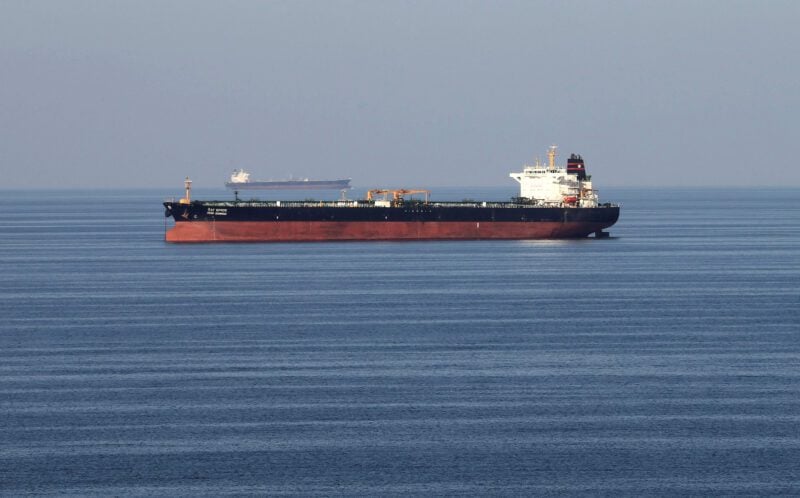
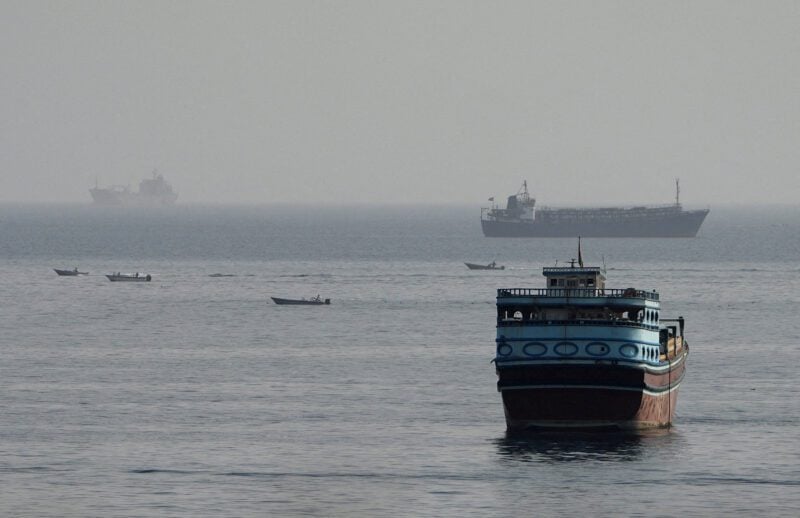
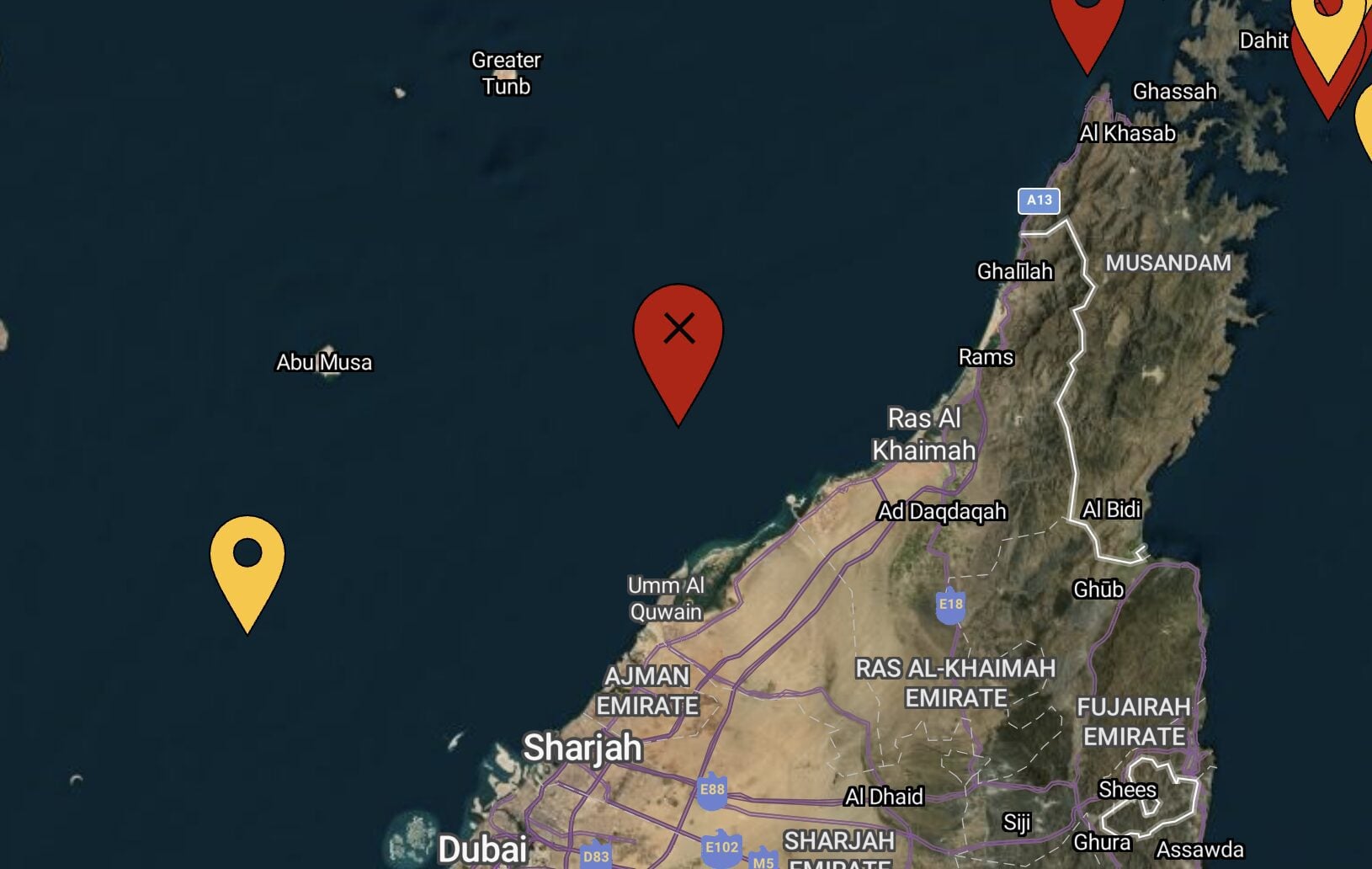
Reported: UKMTO documented 11 attacks on commercial shipping in the seven days ending 7 October, including 10 in the Strait of Hormuz and one in the Arabian Gulf. A tanker was reported struck near Qatar on 7 October; on 9 October, a vessel identified by two shipping and security sources as GEM NO.2 was struck west of Al Jazeera, UAE. UKMTO said the fire was extinguished, but crew condition and damage remained unknown. Assessment: Iran's warning that it would block unauthorised routes adds to the risk of coercive interference, but current reporting does not establish Iranian responsibility for either recent strike. UKMTO recorded 275 Hormuz transits in the latest seven-day period, up from 247, while reporting traffic about 75 per cent below pre-conflict levels. Industry executives separately described shipments at about 80 per cent of pre-war levels; the reported figures are not reconciled. Tanker costs remain elevated, while Trump has pledged not to renew attacks on Iran until after the midterm elections.
Change from previous assessment
Since the 9 October brief, reporting adds a 9 October strike about 13 nautical miles west of Al Jazeera, UAE, and a UKMTO tally of 11 attacks in the seven days ending 7 October. The assessment now treats the reported maritime risk as extending beyond Hormuz proper, while retaining medium confidence because the latest strikes remain unattributed. The assessment that renewed US attacks before the midterm elections are unlikely remains in place, with low confidence.
Key judgments
- Reported attacks on commercial shipping intensified in the week ending 7 October, and further attacks or coercive interference in or near the Strait of Hormuz are likely over the next 14 days. UKMTO's weekly tally and reports of strikes near Qatar and Al Jazeera, UAE, support the heightened threat assessment; responsibility for the individual strikes remains unknown. (Confidence: medium · REPORTED)
- I&W: Confirmation: UKMTO or JMIC reports another attack, attempted attack, or coercive interception of a commercial vessel in the Strait of Hormuz or Arabian Gulf. (0-14 days)
- I&W: Break: UKMTO and JMIC report no further attacks or interference in those waters through 24 October. (0-14 days)
- Iran is likely to sustain coercive pressure on shipping through warnings about unauthorised Strait of Hormuz routes, but the evidence does not establish Iranian responsibility for the reported 7 October strike near Qatar or the 9 October strike near Al Jazeera, UAE. Maritime security sources describe the UAE strike as evidence of widening risk, not as an attributed Iranian attack. (Confidence: medium · ASSESSED)
- I&W: Confirmation: Iranian authorities repeat or implement warnings to block routes they have not authorised through the Strait of Hormuz. (0-14 days)
- I&W: Break: Iranian authorities withdraw the route warning and UKMTO reports no further route interference. (0-14 days)
- Commercial traffic through the Strait of Hormuz is likely to remain navigable but substantially below pre-conflict levels over the next 14 days. UKMTO recorded 275 combined inbound and outbound transits, up from 247 the previous week, and put traffic about 75 per cent below pre-conflict levels. Industry executives' separate estimate of shipments at about 80 per cent of pre-war levels conflicts with that picture, and the reporting does not reconcile the measures. (Confidence: medium · ASSESSED)
- I&W: Confirmation: UKMTO's next weekly count remains well below its reported pre-conflict baseline, despite recording continued inbound and outbound transits. (0-14 days)
- I&W: Break: UKMTO transit counts or independently reported shipment data show a sustained recovery towards 80 per cent of pre-conflict levels. (0-14 days)
- Tanker capacity and transport costs are likely to remain under pressure over the next one to three months. A reported US-origin booking equated to $41 per barrel in transport costs, compared with a $4.50 average on the same route last year; shipbroker Gibson put US-to-China tanker hire at about $80 million. Reports of attacks taking ships out of service and of sharply higher Suezmax earnings are consistent with continued strain, though the available cost indicators come from market reporting rather than a single common measure. (Confidence: medium · ASSESSED)
- I&W: Confirmation: reported tanker bookings remain well above the $4.50-per-barrel average for the same US route last year, or Suezmax daily earnings remain near the reported level of more than $680,000. (1-3 months)
- I&W: Break: reported transport costs on the same US route move towards the $4.50-per-barrel average and Suezmax earnings fall substantially from the reported October level. (1-3 months)
- A renewed US attack on Iran before 3 November is unlikely, given Trump's public pledge not to renew attacks until after the midterm elections. The pledge is a reported statement of intent, not evidence that US forces have been ordered to stand down; confidence in this forecast is low because it rests on that single public commitment. (Confidence: low · ASSESSED)
- I&W: Confirmation: Trump or the White House publicly reaffirms that US attacks on Iran will not resume before the midterm elections. (0-14 days)
- I&W: Break: the White House or Pentagon announces that US attacks have resumed or that an operation against Iran is imminent before 3 November. (0-14 days)
Outlook & scenarios
Intermittent maritime pressure continues (55%)
Attacks or coercive interference continue intermittently in the Strait of Hormuz and nearby Arabian Gulf waters. Iran maintains its warnings about unauthorised routes, while vessel traffic continues at depressed levels. The reported strikes remain unattributed, and the US does not renew attacks on Iran before the midterm elections.
Shipping risk eases and traffic recovers (30%)
Iran refrains from enforcing its route warnings, and no further attacks are reported near Qatar, Al Jazeera, UAE, or the Strait of Hormuz. Weekly transit counts rise from the latest 275, reducing pressure on tanker availability and freight costs. The conflicting estimates of traffic recovery are clarified by subsequent reporting.
High-impact escalation prompts a US response (15%)
A further strike on a commercial vessel causes deaths, extensive damage, or an environmental impact, prompting a US decision to resume attacks on Iran despite Trump's pledge. The attacker remains unidentified at first, raising the risk of a response before attribution is established.
Recommendations
- Maintain a daily incident log using UKMTO and JMIC reporting. Record the date, coordinates, vessel identity, reported weapon or projectile, casualty status, damage, and whether responsibility is confirmed or merely attributed.
- Track UKMTO's weekly Hormuz transit counts separately from industry estimates of oil shipments. Do not treat the reported 75 per cent traffic reduction and 80 per cent shipment recovery as equivalent until reporting explains the different measures.
- Prioritise checks for new Iranian route warnings and for reported attacks outside the Strait of Hormuz, especially near Qatar and Al Jazeera, UAE. Keep perpetrator attribution separate from location and incident reporting.
- Monitor public statements by Trump, the White House, and the Pentagon against the pledge not to renew attacks before the midterm elections. Treat any change in stated policy as a warning indicator, not proof that an operation has begun.
Confidence & uncertainty
Overall confidence is medium. UKMTO's attack tally and reports of the 9 October vessel strike draw on multiple reporting channels, while major-media and market reporting provide specific tanker cost and earnings figures. Confidence is limited by the unknown perpetrators and unresolved crew and damage status for the UAE strike, the conflict between reported Hormuz traffic measures, and the single-source basis for Trump's pledge.
Alternative analysis (red cell)
The available reporting may indicate heightened maritime anxiety without demonstrating a sustained Iranian coercive campaign or a continuing increase in attack frequency. The apparent traffic and cost effects are also difficult to interpret because the measures conflict or capture different routes and market conditions. A more cautious reading is that recent incidents produced a temporary risk premium and episodic disruption, while the direction and persistence of the trend remain unresolved.
Intelligence gaps
- [EEI 1.1 · UNCOVERED] Concentrations or unusual movements of IRGC-Navy fast attack craft, small boat swarms, or escort vessels within 200 km of US/allied ships, including approach distances and formation changes. Recommended collection: maritime/AIS
- [EEI 1.2 · UNCOVERED] Detected pre-launch activity at coastal missile or rocket batteries (vehicle dispersal, fuel/warhead handling, radars powering up, transport erector launchers moving to firing positions). Recommended collection: imagery/signals
- [EEI 1.3 · UNCOVERED] Increased launch/arming/positioning of armed UAVs (MALE/loitering munitions) or tactical aircraft at Iranian coastal bases with sortie generation rates and munitions loadouts. Recommended collection: air/ADS-B/imagery
- [EEI 1.4 · UNCOVERED] Command-and-control indications of attack orders or elevated rules-of-engagement from IRGC/General Staff (intercepted communications, internal order messages, force-wide alert messages). Recommended collection: signals/human
- [EEI 2.1 · UNCOVERED] Public statements or state-media broadcasts from Supreme Leader, President, Minister of Defense, or IRGC commanders indicating authorization, restraint, or conditions for retaliation. Recommended collection: open-source
- [EEI 2.2 · PARTIAL] Issuance of formal orders, mobilization directives, travel restrictions, or official internal communications within IRGC/Armed Forces indicating escalation posture or stand-down. Recommended collection: human/diplomatic
- [EEI 2.3 · PARTIAL] Directives, logistics movements, or communications from Iranian commanders to regional proxy militias (Houthis, Iraqi Shia militias, Lebanese groups) that change their threat posture or task them with specific operations. Recommended collection: signals/human
- [EEI 2.4 · UNCOVERED] Changes in Iran's diplomatic exchanges with key states (offers of negotiation, warnings, or coordination with Russia/China) or requests for deconfliction with maritime/naval actors. Recommended collection: diplomatic
- [EEI 3.2 · UNCOVERED] Discovery or reporting of naval mines, unexploded ordnance, or damage to fixed maritime infrastructure (oil platforms, terminals, pipelines) with geolocated imagery or on-scene assessments. Recommended collection: imagery/open-source
- [EEI 3.4 · UNCOVERED] Movements or posture changes of regional state navies/air forces (Saudi, UAE, Kuwait, Bahrain, UK) such as task group departures, airbase dispersals, or announced maritime patrols near choke points. Recommended collection: open-source/imagery
Cited sources
[1] gCaptain · Second Ship Struck Inside Persian Gulf in Three Days (C) · 9 October 2026 · sha256:19ad7d097327 [2] gcaptain.com · Vessel Struck by Unknown Projectile Off UAE Coast Amid Surge in Attacks, UKMTO Says (F) · 9 October 2026 · sha256:cf2aaede111d [3] Bloomberg (via gCaptain) · Global Oil Tanker Shortage is Getting Worse By the Day (B) · 9 October 2026 · sha256:d4c2e67e2e82 [4] BBC · Trump's shock Russia deal highlights mounting pressure to curb fuel prices (A) · 9 October 2026 · sha256:e4da4f5ed78c
Source content hashes were computed at collection time; the cited text is preserved unmodified for the life of this product.
Red cell review: PARTIAL DISSENT
TLP:CLEAR