TLP:CLEAR · Disclosure is not limited.
Persian Gulf: Shipping Risk and US-Iran Tensions
Time window: Last 1 day · Audience: General analyst · Type: Situation report · DTG: 2026-10-19 13:39Z · Overall confidence: HIGH
BLUF
A further attack or hazardous encounter involving commercial shipping in the Strait of Hormuz is likely in the next 14 days, but the IRGC Navy's account of a tanker mine strike remains unverified. Iran's conditional reopening offer and reported stalled talks make a near-term negotiated reopening unlikely; the evidence does not establish that the US has authorised a new strike on Iran.
Executive summary
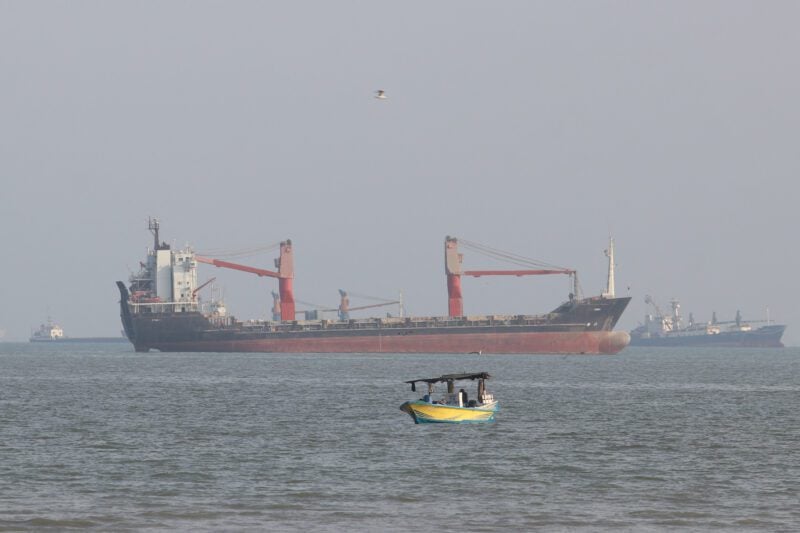
The IRGC Navy reported that an oil tanker struck a mine in the southern Strait of Hormuz and said the vessel had disabled navigation systems and used an unauthorised route. Separate reports of further burning tankers are weak and conflict over whether the damage resulted from a mine or an attack. Iran's reopening offer remains conditional on lifting the US blockade on Iranian ports, sanctions on Iranian oil exports and hostilities on regional fronts; reports differ on whether the proposed reopening timeline was six or seven days. The US State Department has warned of attacks against US-linked facilities and possible flight cancellations or airspace closures. Qatar's deputy prime minister warned that energy-market effects have not peaked. EIA data put Brent at $126.55 a barrel and WTI at $101.91 on 14 October, while a wire report said European gas inventories were at their lowest seasonal level in over a decade.
Change from previous assessment
Since 18 October, the IRGC Navy has provided a more detailed account of the reported tanker incident, including its claim that the vessel disabled navigation systems and used an unauthorised route. New social-media reports describe a second burning VLCC, but they do not resolve whether one or more vessels were involved or whether a mine or an attack caused the fires. The new State Department alert adds a specific warning about US-linked facilities and aviation disruption. Qatar's warning adds to the reported energy-risk picture, while a single local-media report describes a US shift towards sanctions. The prior judgement that further shipping incidents are likely remains, with low confidence in incident details and attribution; the available claims still do not establish US authorisation for a new strike.
Key judgments
- A further attack or hazardous encounter involving commercial shipping in the Strait of Hormuz is likely in the next 14 days. The IRGC Navy has warned vessels against disabling navigation systems, and Iranian officials say safe passage requires routes authorised by the IRGC Navy. Reporting of an increase in shipping attacks is thin, however, and does not establish the frequency or perpetrators of incidents. (Confidence: low · ASSESSED)
- I&W: Confirmation: UKMTO or a vessel operator reports a new attack or hazardous encounter in the Strait of Hormuz and identifies the vessel and location. (0-14 days)
- I&W: Break: no new incident is reported by UKMTO, a vessel operator or an insurer during the next 14 days. (0-14 days)
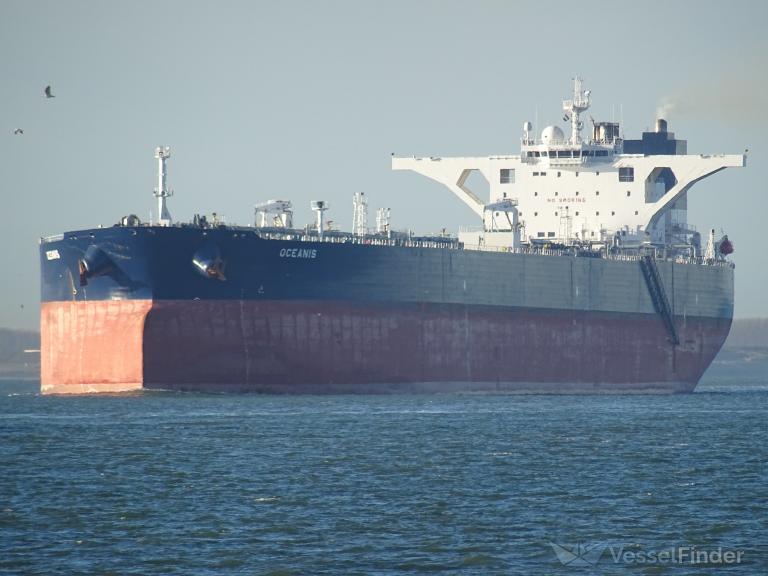
- The IRGC Navy's report that an oil tanker struck a mine in the southern Strait of Hormuz remains unverified, and the mine explanation should be treated as an IRGC allegation. The IRGC Navy also said the tanker was attempting to exit the strait with its navigation systems switched off. Separate social-media reports describe a second burning VLCC, but do not independently establish the number of vessels involved or the cause of the fires. (Confidence: low · REPORTED)
- I&W: Confirmation: an independent maritime authority, vessel operator or identifiable ship-tracking record confirms a tanker was damaged in the reported area. (0-14 days)
- I&W: Break: ship-tracking records or a vessel operator establish that the reported tanker was elsewhere or that no tanker was damaged. (0-14 days)
- A negotiated reopening of the Strait of Hormuz within the next 14 days is unlikely. Tehran's stated conditions include lifting the US blockade on Iranian ports, ending sanctions on Iranian oil exports and stopping hostilities on regional fronts; Iran's security chief said talks had stalled. The reopening offer's reported six-day and seven-day timelines conflict, and the offer itself is not independently confirmed. (Confidence: medium · ASSESSED)
- I&W: Break: Washington and Tehran announce an agreement addressing the port blockade, oil sanctions and regional hostilities, followed by an Iranian notice setting out reopened passage arrangements. (0-14 days)
- I&W: Confirmation: Iranian officials reiterate the stated conditions and no reopening arrangement is announced within 14 days. (0-14 days)
- A new large-scale US strike on Iran in the next 14 days is unlikely, but confidence is low. A single local-media report describes a US shift towards sanctions, and reporting says President Trump withheld backing for Benjamin Netanyahu's proposed bombing of Iranian civilian infrastructure. A 10 October report that the US leader did not rule out new strikes points in the other direction; the available reporting does not establish that a strike has been authorised. (Confidence: low · ASSESSED)
- I&W: Break: the White House or CENTCOM announces a new US strike on Iranian territory or publicly confirms authorisation for one. (0-14 days)
- I&W: Confirmation: the US administration announces additional Iran sanctions and no US strike on Iran is reported by the end of the 14-day period. (0-14 days)
- The 19 October State Department alert identifies US facilities, businesses and institutions as potential targets for Iran or Iranian-backed groups, and warns of flight cancellations and temporary airspace closures. The warning reflects an official threat assessment, not confirmation of a specific plot. (Confidence: medium · REPORTED)
- I&W: Confirmation: the State Department issues a new alert naming a specific US-linked facility or location, or an airline or authority reports a flight cancellation or airspace closure. (0-14 days)
- I&W: Break: no updated alert or reported flight or airspace restrictions appear during the next 14 days. (0-14 days)
- Energy-market pressure is likely to persist over the coming months if disruption around the Strait of Hormuz continues. Qatar's deputy prime minister said the global energy effects had not peaked; a wire report described months of tighter global LNG supply and unusually low European gas inventories. EIA spot prices on 14 October were $126.55 a barrel for Brent and $101.91 for WTI. (Confidence: medium · ASSESSED)
- I&W: Confirmation: new EIA spot-price data show Brent at or above $126.55 a barrel or WTI at or above $101.91, alongside continued reports of Strait-related LNG disruption. (0-14 days)
- I&W: Break: updated EIA prices fall below both 14 October levels and reports identify resumed LNG movements through the Strait of Hormuz. (1-3 months)
Outlook & scenarios
Continued maritime standoff (55%)
The most likely course is continued constrained passage without an agreed reopening. The IRGC Navy maintains its stated route requirements, while Tehran keeps its conditions on the table and Washington continues economic pressure. Commercial shipping remains exposed to hazardous encounters, and energy-market pressure persists.
Conditional reopening agreement (25%)
Qatar, Pakistan and Oman sustain mediation, and Washington and Tehran reach an interim arrangement on passage through the Strait of Hormuz. The outcome requires movement on Iran's stated conditions; an offer alone does not establish that reopening will occur.
Renewed US-Iran strikes (15%)
A new US strike on Iran follows a breakdown in talks or a serious maritime incident. This is an unlikely path in the near term, but conflicting US policy signals and Iranian threats of retaliation leave it open.
Maritime incident triggers wider escalation (5%)
The low-probability, high-impact wildcard is a tanker incident with confirmed casualties and a credible attribution to Iran or the IRGC Navy, followed by a US military response. The resulting exchange would raise the risk to shipping and US forces at Al Udeid Air Base in Qatar.
Recommendations
- Keep the reported tanker mine strike and the separate VLCC fire claims distinct. Do not present the IRGC Navy's explanation as independently verified; seek vessel identity, ship-tracking data, operator statements and maritime-authority reporting before updating attribution.
- Maintain a dated incident log for the Strait of Hormuz. Record each reported vessel, location, damage, source and attribution, and distinguish direct reporting from reposts of IRGC statements.
- Track US and Iranian announcements against the stated reopening conditions. Record whether any agreement addresses the US port blockade, oil sanctions and hostilities, and flag the unresolved six-day versus seven-day timeline.
- Separate US sanctions announcements from evidence of strike authorisation. Update the near-term strike judgement only when official US statements or confirmed military action change the evidence.
- Monitor State Department alerts and reported airline or airspace restrictions, alongside EIA oil prices and updates on European gas inventories and LNG disruption.
Confidence & uncertainty
Overall confidence is high for the broad assessment of sustained US-Iran tensions and pressure on shipping and energy markets. Official EIA price data and wire and major-media reporting support the energy picture and the diplomatic statements. Confidence is lower on the central maritime incident: reporting traces to Iranian claims and social-media accounts, with no independent confirmation of the mine strike, vessel count or cause. The US strike outlook and the precise reopening timeline also remain uncertain.
Alternative analysis (red cell)
The evidence indicates elevated maritime and escalation risk, but it does not establish that another shipping incident is more likely than not within 14 days or that a new large-scale US strike is unlikely. Claims 4f441302-e213-482c-bd23-48757fcc2325 and 5ac15b9c-f4fb-4644-88d9-d3b99d060c2d are thinly sourced, while aa21d1fb-82cd-415b-bfa9-78d22e15e8a9 and 63d24dc9-b143-4868-bc4c-90f3ddb81f8f are counterbalanced by e08fe6a9-735f-4a4c-ba32-cf3085da1118. A more defensible reading is that both outcomes remain indeterminate over the stated period.
Intelligence gaps
- [EEI 1.1 · UNCOVERED] Concentrations or unusual movements of IRGC-Navy fast attack craft, small boat swarms, or escort vessels within 200 km of US/allied ships, including approach distances and formation changes. Recommended collection: maritime/AIS
- [EEI 1.2 · UNCOVERED] Detected pre-launch activity at coastal missile or rocket batteries (vehicle dispersal, fuel/warhead handling, radars powering up, transport erector launchers moving to firing positions). Recommended collection: imagery/signals
- [EEI 1.3 · UNCOVERED] Increased launch/arming/positioning of armed UAVs (MALE/loitering munitions) or tactical aircraft at Iranian coastal bases with sortie generation rates and munitions loadouts. Recommended collection: air/ADS-B/imagery
- [EEI 1.4 · UNCOVERED] Command-and-control indications of attack orders or elevated rules-of-engagement from IRGC/General Staff (intercepted communications, internal order messages, force-wide alert messages). Recommended collection: signals/human
- [EEI 2.2 · UNCOVERED] Issuance of formal orders, mobilization directives, travel restrictions, or official internal communications within IRGC/Armed Forces indicating escalation posture or stand-down. Recommended collection: human/diplomatic
- [EEI 2.3 · PARTIAL] Directives, logistics movements, or communications from Iranian commanders to regional proxy militias (Houthis, Iraqi Shia militias, Lebanese groups) that change their threat posture or task them with specific operations. Recommended collection: signals/human
- [EEI 3.3 · PARTIAL] Commercial indicators of disruption: sudden increases in war-risk insurance premiums for Gulf transits, vessel re-routing decisions, port throughput reductions, or charter cancellations for Gulf shipments. Recommended collection: financial/commercial
- [EEI 3.4 · PARTIAL] Movements or posture changes of regional state navies/air forces (Saudi, UAE, Kuwait, Bahrain, UK) such as task group departures, airbase dispersals, or announced maritime patrols near choke points. Recommended collection: open-source/imagery
Red cell review: PARTIAL DISSENT
TLP:CLEAR