TLP:CLEAR · Disclosure is not limited.
Persian Gulf Situation Report: 19 November 2026
Time window: Last 1 day · Audience: General analyst · Type: Situation report · DTG: 2026-11-19 12:13Z · Overall confidence: HIGH
BLUF
US blockade guidance now explicitly covers vessels receiving Iranian cargo through ship-to-ship transfers, while CENTCOM says neutral transit to or from non-Iranian destinations remains unaffected. Commercial navigation faces continued risk: attacks on NAVIG8 MESSI and TARA GAS are supported by multiple reporting streams, but Iranian claims that two or three other tankers struck mines remain unverified and internally inconsistent. US-Iran military exchanges are likely to continue over the next 14 days.
Executive summary
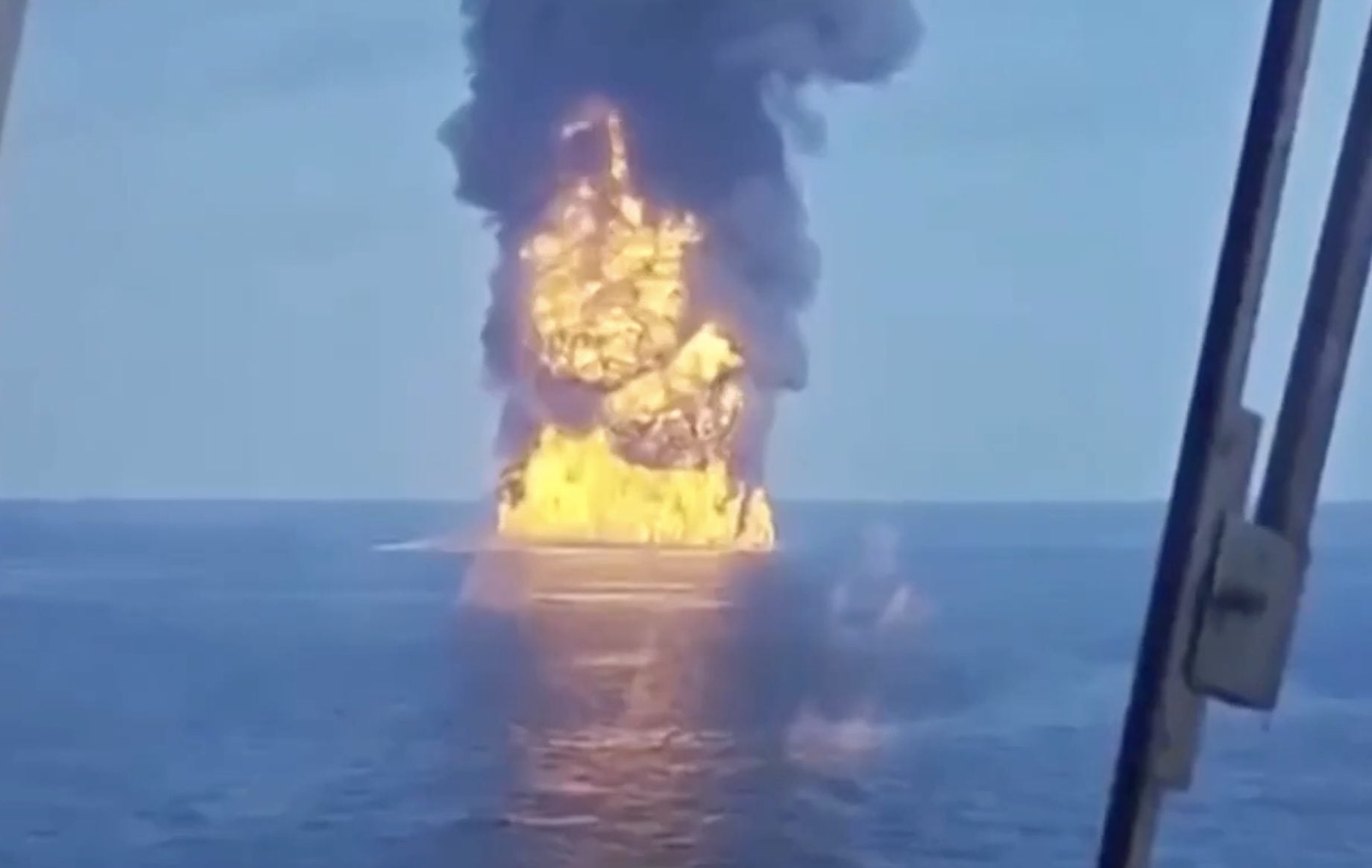
US warplanes struck an Iranian missile launch site on Qeshm Island on 17 November. Kuwait said it repelled an Iranian drone attack at Ali Al Salem Air Base, and Bahrain reported intercepting Iranian aerial attacks. ADNOC confirmed that NAVIG8 MESSI was attacked on 17 November, with 11 crew injured; India's shipping ministry later said all crew were accounted for. UKMTO reporting and satellite and visual evidence support the separate attacks on TARA GAS on 16 and 17 November. One of its 25 crew remains missing, and the vessel was still burning and drifting on 18 November. Iranian Army and IRGC Navy accounts of tankers hitting mines disagree on the number, location and route status of the vessels, with no independent confirmation in the available reporting. The US has extended blockade enforcement guidance to some vessels receiving Iranian cargo at sea, while retaining a stated exemption for neutral transit. The latest reporting says USS George Washington has left the Persian Gulf, leaving two US carrier strike groups there, but the current count is not officially confirmed.
Change from previous assessment
Since the 18 November brief, India's shipping ministry has reported that all NAVIG8 MESSI crew are safe and accounted for, updating the earlier missing-crew report. Reporting now provides stronger corroboration of the TARA GAS fires, while one crew member remains missing. US blockade guidance has explicitly extended to some vessels receiving Iranian cargo through ship-to-ship transfers, with neutral transit to non-Iranian destinations still stated to be exempt. New Iranian Army and IRGC Navy reports allege mine strikes on two or three tankers, but their count, location and route descriptions conflict and remain unverified. The latest reporting also says USS George Washington departed the Persian Gulf, reducing the reported carrier presence to two, a status that is not officially confirmed.
Key judgments
- US-Iran military exchanges are likely to continue over the next 14 days, but the available reporting does not establish that either side has shifted to sustained, wider combat. US officials reported a US strike on an Iranian missile launch site on Qeshm Island on 17 November; Kuwait said it repelled an Iranian drone attack at Ali Al Salem Air Base, and Bahrain reported intercepting several Iranian aerial attacks. Iranian claims that the Kuwait operation destroyed Patriot systems conflict with Kuwait's account that it repelled the attack. Major-media reporting corroborates the sequence of reported actions, but the damage claims come from the parties to the conflict and remain unresolved. (Confidence: medium · ASSESSED)
- I&W: Confirm: Kuwait reports another Iranian drone or missile attack at Ali Al Salem Air Base, or US officials report a new strike on Iranian territory. (0-14 days)
- I&W: Break: Iran and the US announce a public stand-down, with no new US strike or host-government-confirmed Iranian attack reported during the following 14 days. (0-14 days)
- Commercial navigation through the Strait of Hormuz is likely to face continued disruption over the next 14 days. ADNOC confirmed the attack on NAVIG8 MESSI, while UKMTO reported attacks on TARA GAS and NASA fire-detection data and Reuters-verified footage support reports that TARA GAS burned. JMIC assesses the threat to navigation as severe and reports continued IRGC hailing, surveillance and kinetic activity. The attacks are corroborated across company, maritime-monitoring and media reporting, but responsibility for them and current traffic levels are not established. (Confidence: medium · ASSESSED)
- I&W: Confirm: UKMTO issues a new warning for an attack, mine strike or fire aboard a named commercial vessel in the Strait of Hormuz. (0-14 days)
- I&W: Break: JMIC downgrades its threat assessment and UKMTO reports no new commercial-vessel incident in the Strait of Hormuz for 14 consecutive days. (0-14 days)
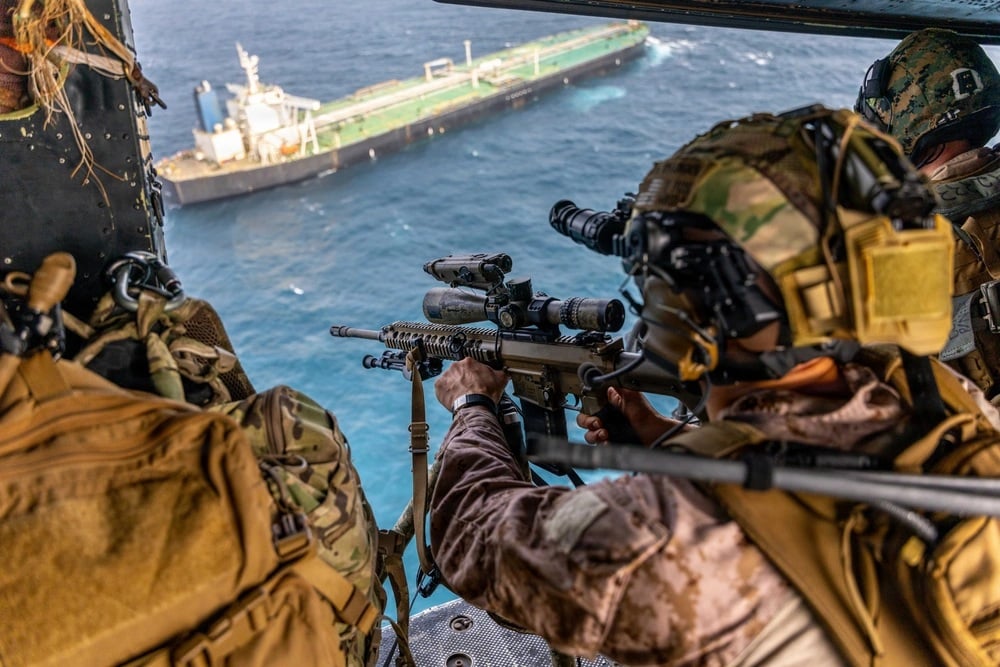
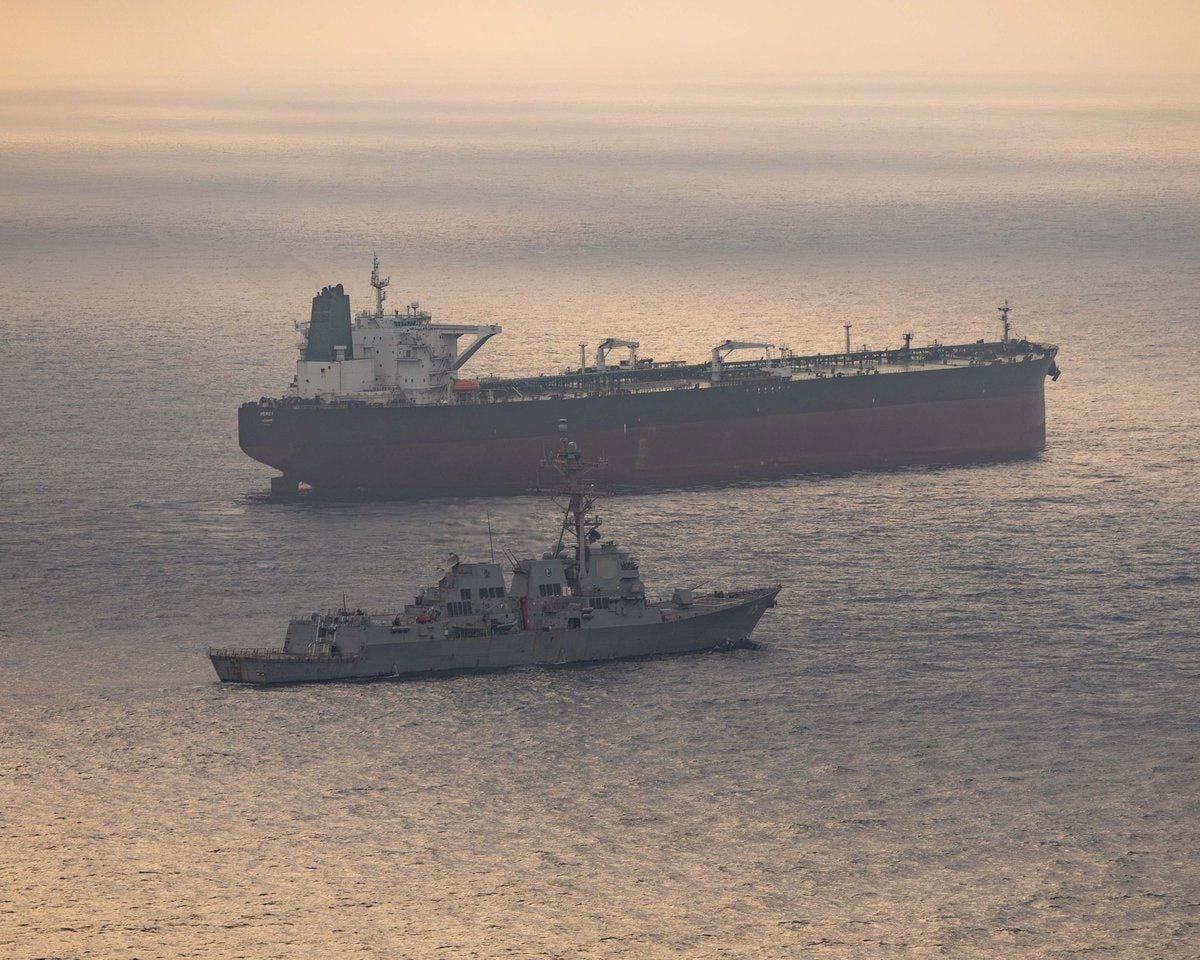
- US blockade enforcement now explicitly treats some vessels receiving Iranian-origin cargo through ship-to-ship transfers as potential blockade evaders, while CENTCOM says neutral transit to or from non-Iranian destinations remains unaffected. The expanded rules increase the likelihood of enforcement encounters and miscalculation at sea over the next month. Trade reporting reproduces the operational guidance, but accounts differ on whether CENTCOM or JMIC issued the relevant notice. (Confidence: medium · ASSESSED)
- I&W: Confirm: CENTCOM or JMIC reports a boarding, diversion or capture of a named vessel identified as receiving Iranian cargo through a ship-to-ship transfer. (0-1 month)
- I&W: Break: CENTCOM formally revises its guidance to exclude ship-to-ship recipients of Iranian cargo or announces a suspension of blockade enforcement. (0-1 month)
- Reports that two or three tankers struck mines in the Strait of Hormuz remain unverified, with the reported count, location and route status unresolved. Iran's Army reported three tankers on fire east of the strait, while the IRGC Navy reported two supertankers in its southern sector. Iranian accounts also differ on whether the vessels were using an authorised route. These accounts appear in media reporting, but the available claims provide no independent confirmation of the mine strikes. (Confidence: low · REPORTED)
- I&W: Confirm: UKMTO, a flag state or independently checked imagery identifies at least two vessels with fire or mine damage in one of the reported Strait of Hormuz sectors. (0-14 days)
- I&W: Break: Iranian military sources retract or revise the vessel count and no independent maritime or imagery reporting identifies a tanker affected by mines. (0-14 days)
- The US carrier presence in the Persian Gulf is likely down to two carrier strike groups following the reported departure of USS George Washington. Earlier reporting described three US carrier strike groups in the area, so the change is consistent with a deployment followed by a departure, but the current count lacks official confirmation. The latest departure account is carried by major-media reporting and is echoed in lower-reliability social reporting. (Confidence: medium · ASSESSED)
- I&W: Confirm: The US Navy or CENTCOM confirms USS George Washington's departure and identifies two carrier strike groups operating in the Persian Gulf. (0-14 days)
- I&W: Break: The US Navy or CENTCOM reports that a third carrier strike group has entered or remains in the Persian Gulf. (0-14 days)
Outlook & scenarios
Continued maritime coercion without a major new exchange (62%)
Likely over the next 14 days. The US maintains blockade enforcement, including scrutiny of ship-to-ship transfers involving Iranian cargo, while Iran sustains pressure through warnings, maritime activity and attacks on shipping. Neutral transit remains formally exempt, but commercial navigation through the Strait of Hormuz continues to face elevated risk.
A blockade encounter triggers a limited US-Iran exchange (25%)
Unlikely, but plausible over the next month. US forces stop or board a vessel treated as evading the blockade, and Iranian forces respond against US or partner assets. The parties then limit retaliation rather than expand strikes across the Persian Gulf.
A conditional diplomatic pause (10%)
Unlikely over the next month. Iran's Two-Day Plan remains available, but it conditions reopening the Strait of Hormuz on an end to attacks and the US blockade, sanctions relief and the unfreezing of Iranian assets. Washington has demanded reopening and limits on Iran's nuclear programme. A pause requires movement on those competing conditions.
Multiple mine strikes cause a major maritime casualty event (3%)
Very unlikely, but high impact. Independent evidence confirms mine strikes on multiple large tankers in the Strait of Hormuz, causing substantial casualties or fires. The incident prompts direct US-Iran confrontation and a further reduction in commercial transit.
Recommendations
- Maintain a time-ordered incident log for UKMTO and NAVAREA IX warnings, recording vessel identity, location, damage and crew status. Separate independently corroborated incidents from claims made by Iranian military sources.
- Track revisions to CENTCOM, NAVCENT and JMIC blockade guidance. Record the named vessels stopped, boarded or diverted, the stated basis for each action, and whether authorities apply the neutral-transit exemption.
- Verify the carrier count through US Navy or CENTCOM announcements before treating the reported departure of USS George Washington as a confirmed reduction in force posture.
- Reconcile crew updates for NAVIG8 MESSI and TARA GAS against statements from ADNOC, India's shipping ministry, UKMTO and Omani authorities. Keep the missing TARA GAS crew member distinct from the later report that all NAVIG8 MESSI crew were accounted for.
Confidence & uncertainty
Overall confidence is high for the broad operational picture because ADNOC's confirmation, UKMTO reporting, and Reuters-verified footage and NASA fire-detection data support the reported commercial-vessel attacks. Multiple reports also reproduce the US blockade guidance and its stated neutral-transit exemption. Confidence is lower on the tanker mine claims, which conflict on count, location and route status, and on the current carrier count, which lacks official confirmation.
Intelligence gaps
- [EEI 1.1 · PARTIAL] Concentrations or unusual movements of IRGC-Navy fast attack craft, small boat swarms, or escort vessels within 200 km of US/allied ships, including approach distances and formation changes. Recommended collection: maritime/AIS
- [EEI 1.2 · UNCOVERED] Detected pre-launch activity at coastal missile or rocket batteries (vehicle dispersal, fuel/warhead handling, radars powering up, transport erector launchers moving to firing positions). Recommended collection: imagery/signals
- [EEI 1.3 · PARTIAL] Increased launch/arming/positioning of armed UAVs (MALE/loitering munitions) or tactical aircraft at Iranian coastal bases with sortie generation rates and munitions loadouts. Recommended collection: air/ADS-B/imagery
- [EEI 1.4 · PARTIAL] Command-and-control indications of attack orders or elevated rules-of-engagement from IRGC/General Staff (intercepted communications, internal order messages, force-wide alert messages). Recommended collection: signals/human
- [EEI 2.2 · PARTIAL] Issuance of formal orders, mobilization directives, travel restrictions, or official internal communications within IRGC/Armed Forces indicating escalation posture or stand-down. Recommended collection: human/diplomatic
- [EEI 2.3 · UNCOVERED] Directives, logistics movements, or communications from Iranian commanders to regional proxy militias (Houthis, Iraqi Shia militias, Lebanese groups) that change their threat posture or task them with specific operations. Recommended collection: signals/human
- [EEI 3.2 · PARTIAL] Discovery or reporting of naval mines, unexploded ordnance, or damage to fixed maritime infrastructure (oil platforms, terminals, pipelines) with geolocated imagery or on-scene assessments. Recommended collection: imagery/open-source
- [EEI 3.3 · PARTIAL] Commercial indicators of disruption: sudden increases in war-risk insurance premiums for Gulf transits, vessel re-routing decisions, port throughput reductions, or charter cancellations for Gulf shipments. Recommended collection: financial/commercial
- [EEI 3.4 · PARTIAL] Movements or posture changes of regional state navies/air forces (Saudi, UAE, Kuwait, Bahrain, UK) such as task group departures, airbase dispersals, or announced maritime patrols near choke points. Recommended collection: open-source/imagery
Red cell review: CONCUR WITH COMMENT
TLP:CLEAR