TLP:CLEAR · Disclosure is not limited.
Persian Gulf Situation Report: Qeshm Strike and New Shipping Incident, 4 November 2026
Time window: Last 1 day · Audience: General analyst · Type: Situation report · DTG: 2026-11-04 03:46Z · Overall confidence: HIGH
BLUF
The reported US strike on Qeshm Island followed IRGC missile fire at a US aircraft, and UKMTO has now reported a tanker struck near the Strait of Hormuz. The tanker incident's cause and number of vessels remain disputed; a broader US campaign over the next 14 days remains a roughly even chance, while shipping through Hormuz is likely to remain operational but hazardous.
Executive summary
Reporting from 2 November describes a limited US strike on Qeshm Island after the IRGC fired a surface-to-air missile at a US aircraft. The US account says the aircraft was not hit; CENTCOM has not publicly acknowledged the strike in the available reporting. On 4 November, UKMTO reported one tanker struck by two unknown projectiles near the Strait, while the IRGC said three tankers hit mines. Iran's Persian Gulf Strait Authority has expanded its non-compliant vessel list to 240 ships and threatened penalties. US and Iranian officials continue to signal interest in mediated contacts, but their public accounts differ on progress and conditions. We assess that a broad US campaign remains a roughly even chance over the next 14 days, while a binding agreement to reopen the Strait by 18 November is unlikely.
Change from previous assessment
Since the 3 November brief, reporting adds the 4 November tanker incident, with unresolved disagreement between UKMTO's account of one tanker struck by unknown projectiles and the IRGC's claim that three tankers hit mines. The PGSA's 240-vessel list and its threatened penalties add a new, concrete source of shipping risk. The Qeshm strike assessment remains medium confidence. The broader-campaign assessment remains a roughly even chance with low confidence: the Qeshm exchange raises immediate risk, while new statements against immediate escalation and the reported shift towards sanctions point the other way. The assessment that a binding reopening agreement is unlikely remains unchanged.
Key judgments
- US forces very likely carried out limited defensive strikes on Qeshm Island on 2 November after the IRGC fired a surface-to-air missile at a US aircraft operating near the Strait of Hormuz. US officials described the aircraft as unharmed and the strike as defensive, but CENTCOM has not acknowledged the operation in the available reporting. (Confidence: medium · REPORTED)
- I&W: Confirmation: CENTCOM or the US Department of Defense publicly confirms the 2 November Qeshm strike or releases evidence of damage. (0-14 days)
- I&W: Break: US or Iranian authorities provide verifiable evidence that no US strike occurred on Qeshm on 2 November. (0-14 days)
- There is a roughly even chance that US action against Iran expands beyond the reported limited strikes into a broader campaign by 18 November. Trump's references to renewed attacks and Pickaxe Mountain, and reports of continued smaller-scale strikes, point towards escalation; his statements that he is in no rush, has no immediate strike plans, and that Washington is shifting towards sanctions point towards restraint. Iran's announcement of a ready deterrence plan and expanded target lists adds risk, but the reporting contains no public confirmation of a decision to begin a wider campaign. Confidence is low because the signals conflict and some reporting on US plans is single-source. (Confidence: low · ASSESSED)
- I&W: Confirmation: US forces conduct or publicly announce strikes on Iranian targets beyond the reported limited Qeshm operation. (0-14 days)
- I&W: Break: the White House or Pentagon explicitly rules out further strikes and no additional US strikes are reported during the following 14 days. (0-14 days)
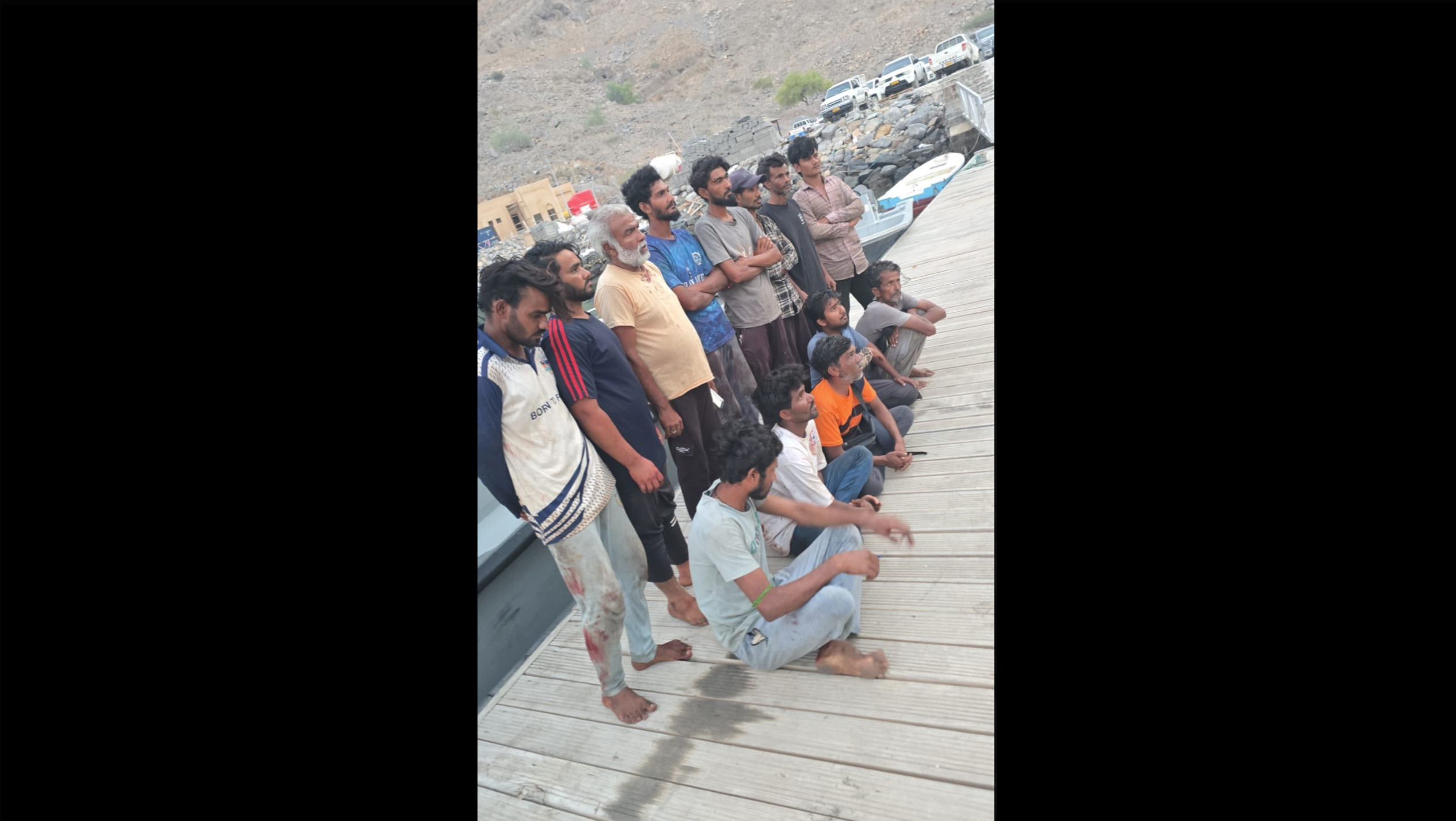
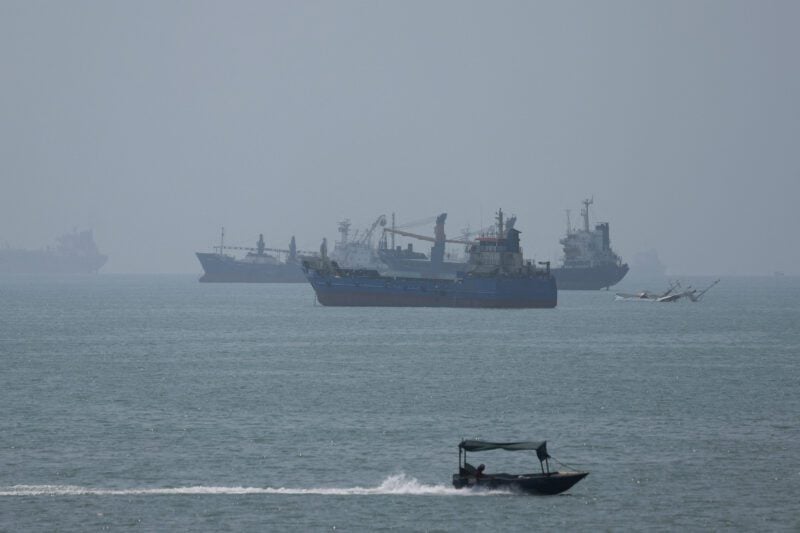
- Shipping through the Strait of Hormuz is likely to remain operational but hazardous over the next 14 days. One report put shipments at about 80 per cent of pre-war levels, while CENTCOM said about 95 per cent of ships transit without incident; UKMTO reported 18 confirmed attacks since 6 October and at least 28 open-source damage reports in October. The 4 November tanker report adds a fresh incident, but the IRGC's account differs on both the number of vessels and the cause. The Al Jusufi was reported struck off Limah, Oman, on 2 November; one crew member died and 13 were rescued. The available figures use different measures and do not establish a single incident rate. (Confidence: medium · ASSESSED)
- I&W: Confirmation of worsening: UKMTO confirms another attack or vessel damage in the Strait, or the IMO reports an increase above its estimate of 121 incidents since the war began. (0-14 days)
- I&W: Break: independently reported shipping movements return to pre-war levels and UKMTO reports no new Strait attacks for 14 consecutive days. (0-14 days)
- Iran's Persian Gulf Strait Authority is likely to add enforcement uncertainty for shipping operators. On 2 November it issued a list of 240 non-compliant vessels, including 114 additions, and threatened fines, detention or confiscation. The list includes 72 vessels linked to Gulf state shipping companies, with 25 among the latest additions; named companies include Kuwait Oil Tanker Company, Bahri, NCC, ADNOC, Nakilat, QatarEnergy, Safeen and AD Ports. Reporting establishes the list and threatened penalties, but not that Iran has enforced them against a listed vessel. (Confidence: medium · ASSESSED)
- I&W: Confirmation: the PGSA announces a fine, detention or confiscation involving a named vessel on its list, or a named listed operator reports rerouting a planned Strait transit. (0-14 days)
- I&W: Break: the PGSA withdraws the list or publicly removes its stated passage restrictions on listed vessels. (0-30 days)
- A binding US-Iran agreement to reopen the Strait of Hormuz by 18 November is unlikely. Iranian negotiators have described a proposal for reopening within two days if US conditions are met, and Qatar says Washington and Tehran remain committed to mediation. Vance has described progress, but a senior Iranian official says the sides remain far from agreement; the reported proposal also conditions reopening on US concessions, including lifting the naval blockade of Iranian ports. (Confidence: medium · ASSESSED)
- I&W: Confirmation of progress: Qatar or Pakistan announces an agreed US-Iran text that includes a defined change to the naval blockade and a Strait reopening timetable. (0-14 days)
- I&W: Break: either Washington or Tehran publicly rejects the mediated proposal or announces that mediated contacts have stopped. (0-14 days)
Outlook & scenarios
Limited exchanges continue alongside mediated contacts (55%)
This is the most likely near-term course. US forces continue limited action or maintain pressure without starting a broad campaign; Iran sustains deterrent messaging and Strait controls; Qatar and Pakistan continue mediation. Shipping remains usable, with further incidents and disputed attribution.
US campaign expands and Iran retaliates (30%)
A broader US campaign is a roughly even chance in the current assessment period. Further US strikes, including against targets beyond the reported Qeshm operation, prompt an Iranian response against US or Israeli assets and increase the risk to commercial shipping. Iran has announced a maximum-deterrence plan and says its target lists are expanding.
Mediators secure a limited reopening arrangement (25%)
A negotiated arrangement is unlikely by 18 November, but continued Qatar and Pakistan mediation provides a route to a limited agreement. The clearest sign would be an agreed text linking changes to the US naval blockade with Iran's stated two-day Strait reopening proposal.
Wildcard: a disputed multi-vessel incident triggers rapid escalation (5%)
A low-probability, high-impact scenario is a further incident involving several tankers, with Iran and the United States or maritime authorities giving conflicting accounts of the cause. If either side treats the incident as a deliberate attack, retaliatory action is likely to follow before mediators can contain the dispute.
Recommendations
- Treat the 4 November tanker report as unresolved until UKMTO, the vessel operator or flag-state authorities clarify the vessel count and whether projectiles or mines caused the damage. Keep the UKMTO and IRGC accounts separate in situation reporting.
- Track the PGSA's 240-vessel list against reported detentions, fines, confiscations and rerouting. Prioritise the 72 listed vessels linked to Gulf state operators, including QatarEnergy, ADNOC, Nakilat and Kuwait Oil Tanker Company.
- Maintain separate escalation triggers for limited defensive action and a broader US campaign. Do not revise the broader-campaign assessment on rhetoric alone; look for publicly confirmed strikes beyond Qeshm or an explicit US decision.
- Assess mediated progress against observable terms: a published or officially described US-Iran text, a stated change to the naval blockade, and a dated commitment on Strait access. Treat general statements of optimism or commitment as evidence of contact, not agreement.
- Include the reported death of Al Jusufi crew member Gandhar Nahim Ajij and the rescue of 13 others in maritime risk updates, while keeping attacker attribution open.
Confidence & uncertainty
Overall confidence is high in the broad situation picture because reporting across major media, wire services and specialist maritime publications corroborates the Qeshm strike reporting, continued US-Iran contacts, the PGSA list expansion and sustained shipping incidents. Confidence is lower on disputed particulars, especially the 4 November tanker incident's cause and vessel count, the outcome of IRGC drone claims, and whether Washington has decided to expand military action.
Alternative analysis (red cell)
The available evidence may support a lower-than-even likelihood of a broader US campaign by 18 November. Claims, and 7a09fd67-94a1-4b92-bb43-fdd0b87e49f3 indicate stated preference for restraint and sanctions, while claims 804d2bdf-46f7-4453-842d-2988c661b23f and 63da4bb4-7271-4613-a287-179b14a7d85c may reflect rhetoric rather than an operational decision. The absence of public confirmation of a wider campaign, combined with the conflicting negotiation assessments in a40233b3-cc2d-4c16-b0f1-081b592ac064 and 1ee6d4fa-034e-43c5-8d72-0b47fe4d18d6, makes continued limited action or diplomatic pressure a defensible alternative reading.
Intelligence gaps
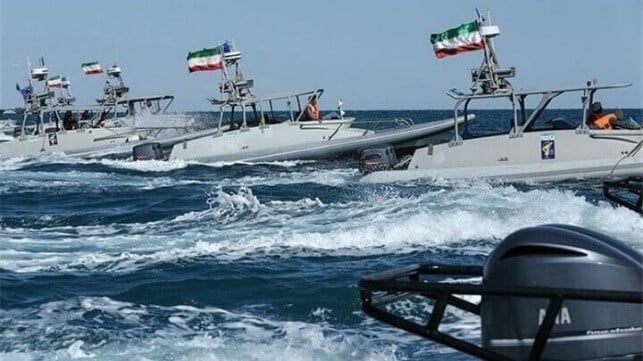
- [EEI 1.1 · UNCOVERED] Concentrations or unusual movements of IRGC-Navy fast attack craft, small boat swarms, or escort vessels within 200 km of US/allied ships, including approach distances and formation changes. Recommended collection: maritime/AIS
- [EEI 1.2 · PARTIAL] Detected pre-launch activity at coastal missile or rocket batteries (vehicle dispersal, fuel/warhead handling, radars powering up, transport erector launchers moving to firing positions). Recommended collection: imagery/signals
- [EEI 1.3 · UNCOVERED] Increased launch/arming/positioning of armed UAVs (MALE/loitering munitions) or tactical aircraft at Iranian coastal bases with sortie generation rates and munitions loadouts. Recommended collection: air/ADS-B/imagery
- [EEI 1.4 · PARTIAL] Command-and-control indications of attack orders or elevated rules-of-engagement from IRGC/General Staff (intercepted communications, internal order messages, force-wide alert messages). Recommended collection: signals/human
- [EEI 2.2 · UNCOVERED] Issuance of formal orders, mobilization directives, travel restrictions, or official internal communications within IRGC/Armed Forces indicating escalation posture or stand-down. Recommended collection: human/diplomatic
- [EEI 2.3 · UNCOVERED] Directives, logistics movements, or communications from Iranian commanders to regional proxy militias (Houthis, Iraqi Shia militias, Lebanese groups) that change their threat posture or task them with specific operations. Recommended collection: signals/human
- [EEI 3.2 · PARTIAL] Discovery or reporting of naval mines, unexploded ordnance, or damage to fixed maritime infrastructure (oil platforms, terminals, pipelines) with geolocated imagery or on-scene assessments. Recommended collection: imagery/open-source
- [EEI 3.3 · PARTIAL] Commercial indicators of disruption: sudden increases in war-risk insurance premiums for Gulf transits, vessel re-routing decisions, port throughput reductions, or charter cancellations for Gulf shipments. Recommended collection: financial/commercial
- [EEI 3.4 · PARTIAL] Movements or posture changes of regional state navies/air forces (Saudi, UAE, Kuwait, Bahrain, UK) such as task group departures, airbase dispersals, or announced maritime patrols near choke points. Recommended collection: open-source/imagery
Red cell review: PARTIAL DISSENT
TLP:CLEAR