TLP:CLEAR · Disclosure is not limited.
Persian Gulf: Tanker Attacks and Conflicting US Strike Signals
Time window: Last 1 day · Audience: General analyst · Type: Situation report · DTG: 2026-10-09 11:11Z · Overall confidence: MEDIUM
BLUF
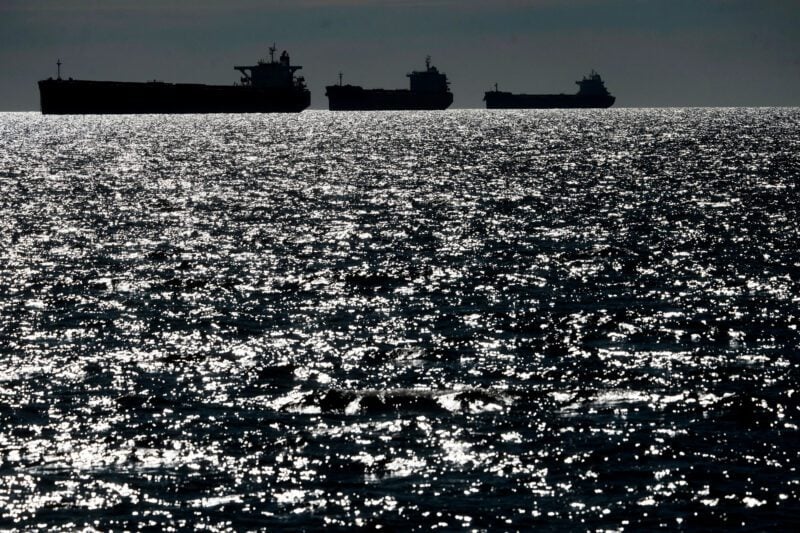
Further attacks or coercive interference against commercial vessels in or near the Strait of Hormuz are likely over the next 14 days. The reported 8 October attack on the Antigua and Barbuda-flagged tanker Acers extends the threat into the Gulf north of Qatar, while claims about US strike planning conflict with President Donald Trump’s statement that US forces would not attack Iran before 3 November.
Executive summary
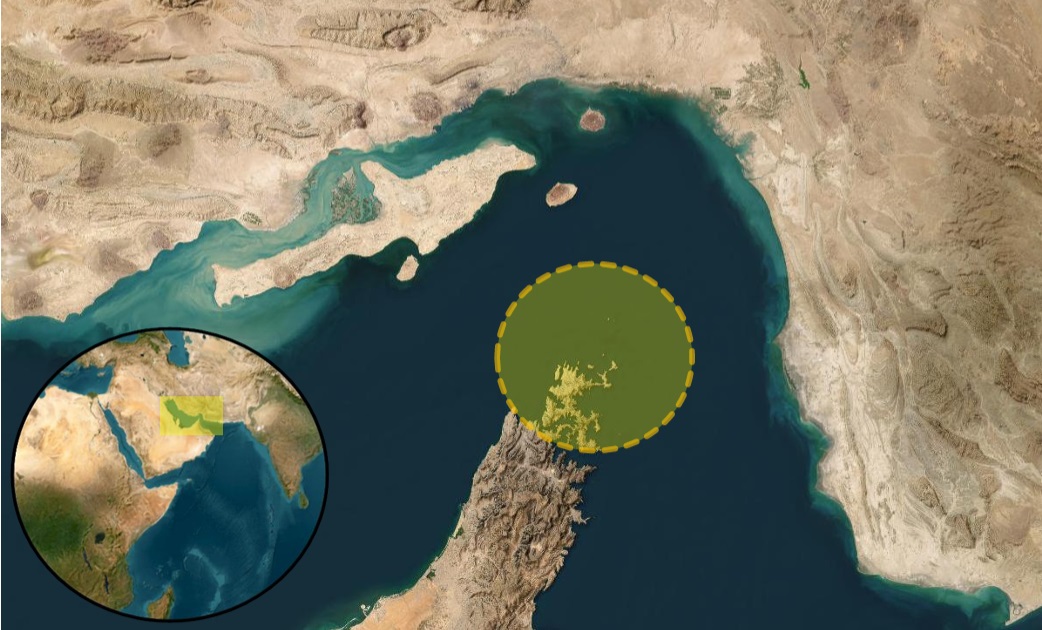
Reporting identifies the Acers as struck by multiple projectiles north of Qatar, with minor crew injuries reported; the incident date is given as 7 or 8 October, and UKMTO has not attributed the attack. Estimates of recent vessel attacks differ by source and counting method. The White House reportedly asked the Pentagon to prepare strike options against Iran, but Trump said the United States would not attack before the 3 November midterm elections. The US also announced new sanctions against Iran-linked oil traders and vessels. Separately, Houthi attacks on Saudi airports and reported Saudi-led coalition strikes in Yemen indicate a parallel regional escalation, although casualty accounts conflict.
Change from previous assessment
Since the 8 October brief, reporting identifies the Acers attack north of Qatar, extending the reported maritime threat deeper into the Persian Gulf. The assessment that further attacks are likely remains in place, but incident totals remain difficult to reconcile. New reporting presents opposing US strike signals: a reported White House request for options and Trump’s statement that the United States would not attack before 3 November. This lowers the assessed likelihood of a pre-election strike, while the conflict between accounts keeps confidence low. The brief also adds the 8 October sanctions action and the Houthi-Saudi escalation as relevant regional developments.
Key judgments
- Further attacks or coercive interference against commercial vessels in or near the Strait of Hormuz are likely over the next 14 days. Reuters reported at least 12 tanker attacks between 28 September and 5 October, while UKMTO reported nine attacks in or near Hormuz so far in October and Iranian media claimed 14 vessels had been attacked in a week. Reporting on 8 October identified the Acers as struck north of Qatar. The attacker remains unknown, and accounts differ on the incident date and whether the projectiles were drones. (Confidence: medium · ASSESSED)
- I&W: Confirm: UKMTO or JMIC reports another attack or forced turnback involving a named vessel in the Strait of Hormuz or Persian Gulf. (0-14 days)
- I&W: Break: UKMTO and JMIC report no new attack or forced turnback, while Kpler reports weekly crude exports through Hormuz rising above the reported 12 million barrels per day. (0-14 days)
- A US strike against Iran before 3 November is unlikely, despite reporting that the White House asked the Pentagon to prepare attack options. Trump publicly said US forces would not attack Iran before the midterm elections. The reporting does not establish that strike options have been approved or that an operation is imminent; conflicting accounts leave this estimate uncertain. (Confidence: low · ASSESSED)
- I&W: Confirm: The White House or Pentagon announces an authorised strike against Iran, or a US strike on an Iranian target is publicly confirmed before 3 November. (0-25 days)
- I&W: Break: Trump reiterates that US forces will not attack before 3 November, and no US strike is publicly confirmed by that date. (0-25 days)
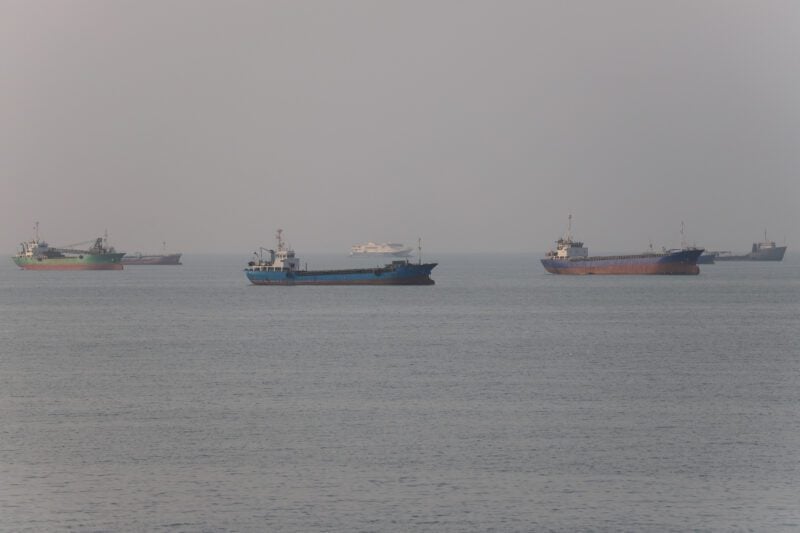
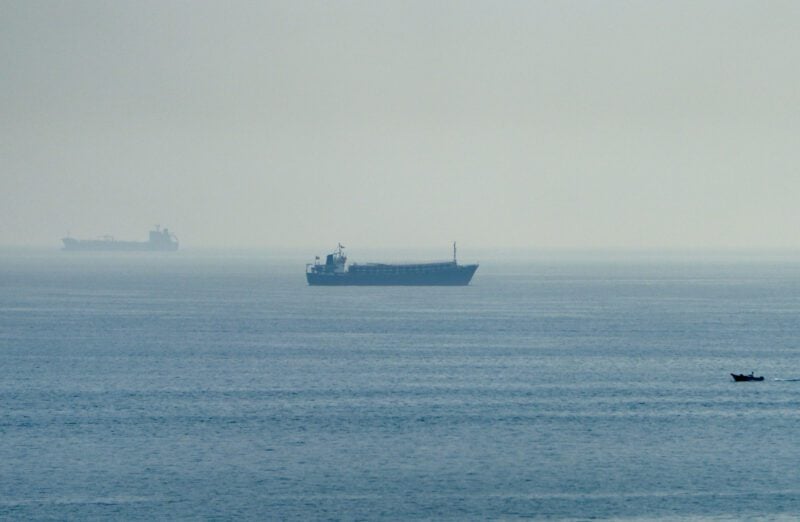
- Commercial shipping through the Strait of Hormuz is likely to remain partially navigable rather than fully closed, but access remains hazardous and the volume of traffic is disputed. Kpler analysts put crude exports over the past two weeks at 12 million barrels per day, about 80 per cent of pre-war levels, while another report described crude flows as near pre-war levels. CENTCOM rejected Iranian claims that the Strait was closed and under Iranian control, while other reporting described an effective closure after the war began. (Confidence: medium · ASSESSED)
- I&W: Confirm: Kpler continues to report crude exports near or above 12 million barrels per day in successive weekly updates. (1-3 weeks)
- I&W: Break: Kpler reports zero crude exports through Hormuz or a sustained halt in commercial transits, accompanied by an official closure or route-control announcement. (1-3 weeks)
- The US almost certainly expanded sanctions pressure on Iranian oil shipping on 8 October, but the available reporting indicates that sanctions coverage remains incomplete. The reported action covered 22 tankers and dozens of people and companies. TankerTrackers.com said 173 Iran-linked tankers remained outside US sanctions, in tension with Treasury Secretary Scott Bessent’s assertion that the campaign had neutralised most of Iran’s remaining shadow fleet. (Confidence: medium · ASSESSED)
- I&W: Confirm: TankerTrackers.com publishes an updated count that still lists Iran-linked tankers outside US sanctions after the 8 October designations. (1-3 months)
- I&W: Break: TankerTrackers.com reports that no Iran-linked tankers remain outside US sanctions. (1-3 months)
Outlook & scenarios
Continued coercion without a pre-election US strike (58%)
The United States maintains its blockade and sanctions pressure, while Iran continues to threaten shipping routes and vessel incidents persist. Commercial traffic continues through Hormuz, but attacks and warnings keep transit risky. A US strike before 3 November remains unlikely.
Maritime violence and regional retaliation widen (30%)
Further tanker incidents follow the Acers attack, while Houthi attacks on Saudi targets and Saudi-led coalition strikes in Yemen continue. This scenario increases pressure on regional shipping and security without establishing that the Houthi-Saudi fighting is directed by Iran or linked operationally to the attacks on tankers.
US strike before the midterm elections (12%)
This is a low-probability, high-impact outcome. The reported strike-options process results in an authorised US operation against Iranian missile and drone assets, energy facilities, or command-and-control sites. Such an operation would raise the risk of Iranian retaliation against US base infrastructure or commercial shipping.
Recommendations
- Maintain a daily incident log that separates incident date from publication date and records vessel name, location, reported weapon, casualty severity, source, and attribution status. Keep UKMTO, JMIC, Reuters-based, and Iranian-media counts separate until their definitions and reporting periods are reconciled.
- Treat the Acers attack’s drone description and attribution to Iran as unconfirmed. Update the assessment only when investigating authorities or additional corroborated reporting establish the weapon type or responsible actor.
- Track official White House and Pentagon statements on strike options separately from evidence of authorisation or execution. Reassess the pre-election strike estimate if the public pledge changes or a strike is confirmed before 3 November.
- Monitor Kpler’s weekly Hormuz crude-export estimates alongside UKMTO and JMIC incident updates. Report the difference between partial navigability and safe or unrestricted transit.
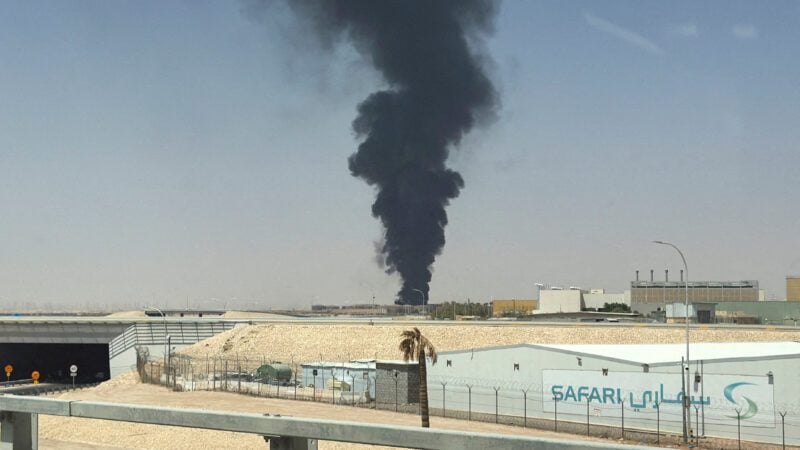
- Keep Houthi-Saudi hostilities analytically separate from US-Iran maritime exchanges. Reconcile the reported deaths and locations at King Khalid and Abha airports before using casualty figures in regional escalation estimates.
Confidence & uncertainty
Confidence is medium because reputable wire and major-media reporting, along with UKMTO and Kpler reporting, supports the occurrence of recent tanker attacks, continued Hormuz traffic, and new US sanctions. Important uncertainties remain: attack totals use differing periods and definitions, the Acers attacker and weapon type are unconfirmed, reports conflict on US strike timing, and accounts of Houthi attack casualties disagree.
Alternative analysis (red cell)
The Strait may be functionally closed to normal commercial shipping even if substantial crude volumes continue moving. The 80-percent Kpler estimate in 9f54a221-737d-4dfc-a01e-cdf6561b8377 does not demonstrate routine navigability, while c29692ca-c0b5-4e86-8ca2-6327dbbde300 explicitly describes an effective closure and c66c810d-2aaf-42c0-9bc2-5951c95d2fbf reflects a party to the conflict disputing that characterization. On this reading, limited or specially managed flows should not be treated as evidence that the Strait will remain broadly navigable.
Intelligence gaps
- [EEI 1.1 · UNCOVERED] Concentrations or unusual movements of IRGC-Navy fast attack craft, small boat swarms, or escort vessels within 200 km of US/allied ships, including approach distances and formation changes. Recommended collection: maritime/AIS
- [EEI 1.2 · UNCOVERED] Detected pre-launch activity at coastal missile or rocket batteries (vehicle dispersal, fuel/warhead handling, radars powering up, transport erector launchers moving to firing positions). Recommended collection: imagery/signals
- [EEI 1.3 · UNCOVERED] Increased launch/arming/positioning of armed UAVs (MALE/loitering munitions) or tactical aircraft at Iranian coastal bases with sortie generation rates and munitions loadouts. Recommended collection: air/ADS-B/imagery
- [EEI 1.4 · UNCOVERED] Command-and-control indications of attack orders or elevated rules-of-engagement from IRGC/General Staff (intercepted communications, internal order messages, force-wide alert messages). Recommended collection: signals/human
- [EEI 2.1 · PARTIAL] Public statements or state-media broadcasts from Supreme Leader, President, Minister of Defense, or IRGC commanders indicating authorization, restraint, or conditions for retaliation. Recommended collection: open-source
- [EEI 2.2 · UNCOVERED] Issuance of formal orders, mobilization directives, travel restrictions, or official internal communications within IRGC/Armed Forces indicating escalation posture or stand-down. Recommended collection: human/diplomatic
- [EEI 2.3 · UNCOVERED] Directives, logistics movements, or communications from Iranian commanders to regional proxy militias (Houthis, Iraqi Shia militias, Lebanese groups) that change their threat posture or task them with specific operations. Recommended collection: signals/human
- [EEI 2.4 · PARTIAL] Changes in Iran's diplomatic exchanges with key states (offers of negotiation, warnings, or coordination with Russia/China) or requests for deconfliction with maritime/naval actors. Recommended collection: diplomatic
- [EEI 3.2 · UNCOVERED] Discovery or reporting of naval mines, unexploded ordnance, or damage to fixed maritime infrastructure (oil platforms, terminals, pipelines) with geolocated imagery or on-scene assessments. Recommended collection: imagery/open-source
- [EEI 3.4 · PARTIAL] Movements or posture changes of regional state navies/air forces (Saudi, UAE, Kuwait, Bahrain, UK) such as task group departures, airbase dispersals, or announced maritime patrols near choke points. Recommended collection: open-source/imagery
Cited sources
[1] gCaptain · Tanker Attack Off Qatar Signals Wider Threat Beyond Hormuz (C) · 8 October 2026 · sha256:a87a5ee0d4e0 [2] gCaptain (republishing Bloomberg content) · Houthis Kill Three in Strikes on Saudi Arabian Airports (B) · 9 October 2026 · sha256:9f6bafbfe7b4 [3] The Maritime Executive · Hormuz Transits Fall to Lowest Level in Two Months as Attacks Increase (C) · sha256:10c3cf809419 [4] Reuters (republished by gCaptain) · Attack Risks Rise for Tankers as Iran Vows to Block More Hormuz Routes (A) · 8 October 2026 · sha256:7906e770b59e [5] The Maritime Executive · Oil Prices and Tanker Rates Rise After Latest Iranian Attacks in Mideast (C) · sha256:3df697f297fe [6] BBC News · Tanker hit by multiple projectiles in Gulf off Qatar, UKMTO says (A) · 8 October 2026 · sha256:488002e19097 [7] Bloomberg (republished by gCaptain) · Supertankers Racing to Middle East Worsen Global Ship Crunch (A) · 8 October 2026 · sha256:3b78e0d897e9 [8] The Maritime Executive · USS Abraham Lincoln Pulls into San Diego, Closing 321-Day Deployment (C) · sha256:26a2e7a670ff [9] gCaptain · U.S. Sanctions 22 More Tankers in Crackdown on Iran’s Shadow Fleet (C) · 8 October 2026 · sha256:902dbbd6fe18 [10] The Maritime Executive · US and UK Pile on Sanctions to Increase Pressure on Iran and Russia (C) · sha256:fa41bc947aac
Source content hashes were computed at collection time; the cited text is preserved unmodified for the life of this product.
Red cell review: PARTIAL DISSENT
TLP:CLEAR