TLP:CLEAR · Disclosure is not limited.
Persian Gulf: Tanker Attacks Sustain Maritime Risk
Time window: Last 1 day · Audience: General analyst · Type: Situation report · DTG: 2026-11-23 13:13Z · Overall confidence: HIGH
BLUF
Commercial shipping remains the immediate pressure point: two tankers were reported hit near Khasab on 21 November, but the IRGC’s mine explanation conflicts with UKMTO’s projectile classification. Further attacks on shipping are likely within 14 days; a direct US-Iran strike exchange in that period is roughly even chance. The purported Khat Shekan blockade breach is very unlikely to represent a genuine transit.
Executive summary
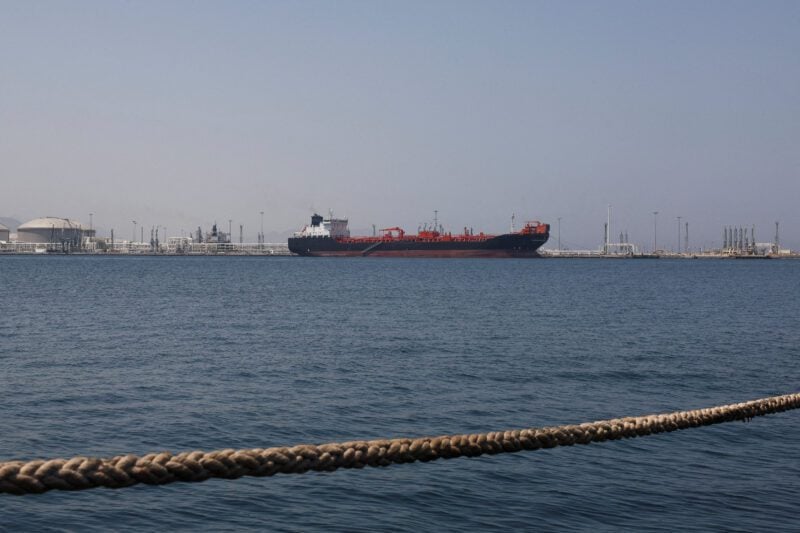
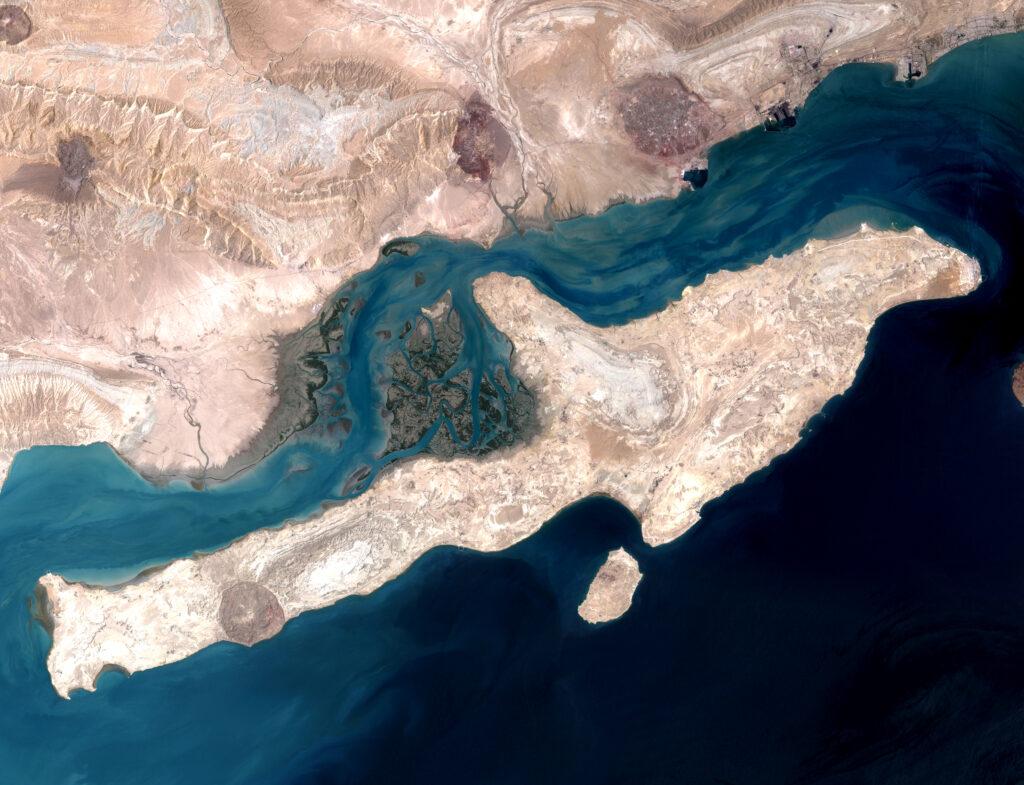
Maritime reporting and UKMTO records describe projectile incidents near Khasab, Oman, on 21 November. Analysts identified two of the vessels as the Hong Kong-flagged tankers Torkel and Arina. The IRGC and Iran’s Artesh attributed tanker fires to mines, while UKMTO classified incidents as involving unidentified projectiles; the available reporting does not settle the cause or identify the attackers. UKMTO recorded 263 Strait of Hormuz transits in the week to 18 November, down from 308 the previous week, and the Joint Maritime Information Center rates the threat as severe. MarineTraffic assessed the purported Khat Shekan tracking signal as AIS spoofing. President Donald Trump’s reported consideration of strikes is conditional on no agreement being reached after New Year, while Iranian officials have vowed to resist the US blockade.
Change from previous assessment
Since the 22 November brief, this update adds reporting identifying Torkel and Arina among the tankers struck near Khasab and sets out the competing UKMTO projectile and Iranian mine accounts. It also adds MarineTraffic’s assessment that the purported Khat Shekan signal was spoofed, making a genuine blockade breach very unlikely. The direct US-Iran exchange outlook is lowered from likely to roughly even chance because Trump’s latest reported consideration of strikes is conditional on no agreement after New Year. The prior forecast of further tanker attacks within 14 days remains unresolved: this update does not establish a distinct attack after the prior brief, so it does not validate that forecast.
Key judgments
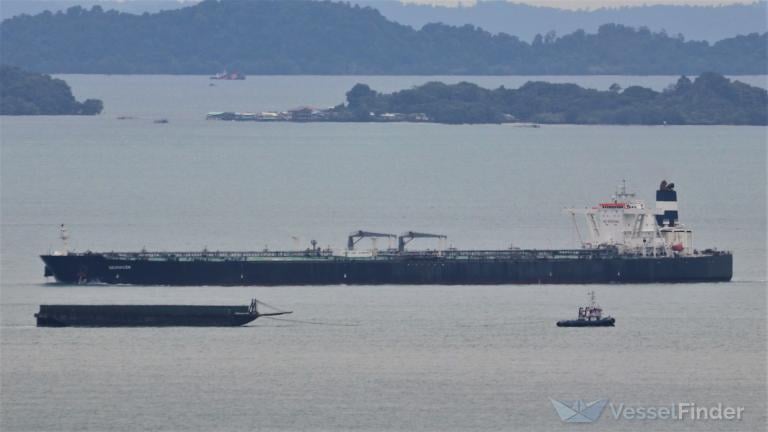
- Two tankers near Khasab, Oman, were almost certainly struck by projectiles on 21 November. UKMTO and maritime reporting describe the incidents, and analysts identified the vessels as the Hong Kong-flagged VLCC Torkel, IMO 9340635, and Suezmax Arina, IMO 9248813. (Confidence: high · REPORTED)
- I&W: A UKMTO update or vessel-owner statement confirms damage to Torkel and Arina, further confirming the reported strikes. (0-14 days)
- I&W: UKMTO withdraws either incident report, or a vessel owner credibly denies damage to both named vessels, weakening the reported account. (0-14 days)
- Further attacks on commercial vessels in and around the Strait of Hormuz are likely within 14 days. UKMTO counted six tanker attacks in the week to 18 November, and the Joint Maritime Information Center rates the threat in the strait as severe; the attacker in the latest reported incidents remains unidentified. (Confidence: medium · ASSESSED)
- I&W: UKMTO records another projectile or other attack incident involving a commercial vessel in or near the strait. (0-14 days)
- I&W: UKMTO reports no new attacks during the 14-day period and the Joint Maritime Information Center lowers its threat rating. (0-14 days)
- The available reporting does not establish that mines caused the 21 November tanker damage or that Iran was responsible for the specific attacks. UKMTO described unidentified projectiles, while the IRGC and Artesh claimed that tankers struck mines; earlier Joint Maritime Information Center reporting found no substantiation for IRGC mine claims in October. (Confidence: medium · ASSESSED)
- I&W: UKMTO or the Joint Maritime Information Center publishes forensic or incident findings that identify mines or attribute an attack to a named actor. (0-14 days)
- I&W: New UKMTO reporting continues to classify incidents as unidentified projectiles without confirming mine evidence or naming an attacker. (0-14 days)
- The latest available transit data show that the Strait of Hormuz was not fully closed during the week to 18 November, although traffic was lower than the previous week. UKMTO recorded 263 transits, down from 308; this weekly figure does not establish the level of traffic after 18 November. (Confidence: medium · REPORTED)
- I&W: UKMTO publishes a subsequent weekly transit count showing continued vessel passage through the strait. (1-3 weeks)
- I&W: UKMTO transit data show no vessel passages, or Iran announces and enforces a full closure that halts recorded traffic. (0-3 weeks)
- The purported Khat Shekan transit is very unlikely to represent a genuine tanker crossing of the US blockade. MarineTraffic identified AIS spoofing, and the vessel reportedly lacks an IMO number and is absent from several ship-tracking platforms. (Confidence: high · ASSESSED)
- I&W: A verified IMO identity, independently corroborated vessel position, and a confirmed port call establish that a physical tanker completed the reported passage. (0-14 days)
- I&W: No vessel identity or physical transit is confirmed, and tracking platforms continue to identify spoofed signals. (0-14 days)
- A direct US-Iran strike exchange within 14 days is roughly even chance, lower than the prior brief’s likely assessment. Trump’s latest reported consideration of fresh strikes is conditional on no agreement after New Year, while Iranian officials have threatened resistance to the blockade; a third US carrier strike group has also been reported in the region. (Confidence: medium · ASSESSED)
- I&W: CENTCOM or the White House confirms a US strike on Iranian forces, or reliable reporting confirms an Iranian strike on US forces. (0-14 days)
- I&W: The 14-day period passes without a confirmed US or Iranian strike against the other’s forces. (0-14 days)
Outlook & scenarios
Continued maritime attrition, no immediate direct strike exchange (55%)
Further attacks on commercial vessels are likely, while the US blockade and Iranian resistance continue. The attacker and the cause of tanker damage remain unconfirmed, and some vessel traffic continues through the Strait of Hormuz.
Direct US-Iran escalation (25%)
A US use of force against an Iranian vessel or a confirmed Iranian attack on US forces would create a direct escalation path. Trump has threatened to sink Iranian vessels attempting to break the blockade, and Iranian officials have said Tehran will resist US action.
Conditional easing after an agreement (15%)
A negotiated agreement before the threatened post-New Year strike window would reduce immediate pressure on the strait. This outcome is unlikely: Trump has made his stated consideration of fresh strikes conditional on no agreement, while Esmail Bagei has tied improved security in the strait to US acceptance of Tehran’s conditions.
Mine or oil-infrastructure incident causes a sharp disruption (5%)
A confirmed mine strike or an attack on regional oil infrastructure would be a low-probability, high-impact wildcard. Iranian mine claims remain unverified, and the supplied warning of strikes on regional oil facilities rests on low-reliability social-media reporting.
Recommendations
- Track UKMTO and Joint Maritime Information Center updates daily for 14 days. Record incident time, location, vessel identity, weapon classification and attribution separately.
- Keep the IRGC and Artesh mine explanation distinct from UKMTO’s projectile classification until maritime authorities or independently verified forensic evidence resolve the cause.
- Do not count the purported Khat Shekan passage as a confirmed blockade breach. Require a verified IMO identity and independent evidence of physical transit before updating the shipping assessment.
- For near-term warning, prioritise confirmed strikes and new UKMTO incident reports over public statements about action after New Year. Reassess the 14-day direct-exchange outlook if either side confirms a strike.
- Monitor US blockade enforcement against vessels receiving Iranian cargo through ship-to-ship transfers, including reports involving Singapore and Malaysia, and distinguish announced scope from confirmed interdictions.
Confidence & uncertainty
Overall confidence is high for the main situation picture because UKMTO incident reporting is supported by maritime reporting, and the reported tanker identities have been attributed by tracking analysts. MarineTraffic’s spoofing assessment and the reported lack of an IMO identity also support treating the Khat Shekan claim cautiously. Confidence is lower on the cause of tanker damage, responsibility for the attacks and forecasts of direct military escalation; Iranian mine claims conflict with UKMTO’s projectile classification, and the drone shoot-down claims remain unverified.
Intelligence gaps
- [EEI 1.1 · UNCOVERED] Concentrations or unusual movements of IRGC-Navy fast attack craft, small boat swarms, or escort vessels within 200 km of US/allied ships, including approach distances and formation changes. Recommended collection: maritime/AIS
- [EEI 1.2 · UNCOVERED] Detected pre-launch activity at coastal missile or rocket batteries (vehicle dispersal, fuel/warhead handling, radars powering up, transport erector launchers moving to firing positions). Recommended collection: imagery/signals
- [EEI 1.3 · PARTIAL] Increased launch/arming/positioning of armed UAVs (MALE/loitering munitions) or tactical aircraft at Iranian coastal bases with sortie generation rates and munitions loadouts. Recommended collection: air/ADS-B/imagery
- [EEI 1.4 · UNCOVERED] Command-and-control indications of attack orders or elevated rules-of-engagement from IRGC/General Staff (intercepted communications, internal order messages, force-wide alert messages). Recommended collection: signals/human
- [EEI 2.2 · UNCOVERED] Issuance of formal orders, mobilization directives, travel restrictions, or official internal communications within IRGC/Armed Forces indicating escalation posture or stand-down. Recommended collection: human/diplomatic
- [EEI 2.3 · UNCOVERED] Directives, logistics movements, or communications from Iranian commanders to regional proxy militias (Houthis, Iraqi Shia militias, Lebanese groups) that change their threat posture or task them with specific operations. Recommended collection: signals/human
- [EEI 2.4 · PARTIAL] Changes in Iran's diplomatic exchanges with key states (offers of negotiation, warnings, or coordination with Russia/China) or requests for deconfliction with maritime/naval actors. Recommended collection: diplomatic
- [EEI 3.3 · PARTIAL] Commercial indicators of disruption: sudden increases in war-risk insurance premiums for Gulf transits, vessel re-routing decisions, port throughput reductions, or charter cancellations for Gulf shipments. Recommended collection: financial/commercial
- [EEI 3.4 · UNCOVERED] Movements or posture changes of regional state navies/air forces (Saudi, UAE, Kuwait, Bahrain, UK) such as task group departures, airbase dispersals, or announced maritime patrols near choke points. Recommended collection: open-source/imagery
Red cell review: CONCUR WITH COMMENT
TLP:CLEAR