TLP:CLEAR · Disclosure is not limited.
Persian Gulf Tensions: Diplomacy, Shipping Risks and Post-Election Strike Reporting
Time window: Last 1 day · Audience: General analyst · Type: Situation report · DTG: 2026-10-28 13:38Z · Overall confidence: HIGH
BLUF
Diplomatic activity has expanded, but Tehran's refusal to restore IAEA access and the sanctions-for-Hormuz sequencing remain major barriers to a breakthrough. Shipping through the Strait of Hormuz remains exposed to reported attacks and Iranian enforcement threats even as Gulf oil exports have recovered near pre-war levels; reporting of a US campaign after 3 November remains unconfirmed.
Executive summary
On 27 and 28 October, the UK pressed Iran to readmit IAEA inspectors, while Gulf states and Iranian officials discussed a regional security arrangement and a four-day timetable for reopening the Strait of Hormuz after sanctions relief. Iran reportedly kept its nuclear programme off the agenda at the Tehran regional meeting. At sea, US Central Command says more than 3,000 commercial ships have transited since summer, and a wire-service report says Gulf oil exports are near pre-war levels. Those flows coexist with reports of attacks on Bahri vessels, deaths of two mariners and Iranian threats of legal action against Sinokor. Iranian regime-affiliated channels have also publicised threats to undersea communications cables. Separately, a major-media report says Washington warned Gulf Arab allies to prepare for a possible campaign after the US midterm elections, but it does not establish that an operation has been authorised.
Change from previous assessment
Initial assessment of this topic was provided on 27 October. The assessment that a US strike before 3 November is unlikely is retained, but new reporting shifts attention to a possible campaign after the midterm elections; it still does not establish authorisation. The diplomatic picture now includes a four-day Hormuz reopening proposal tied to sanctions relief, Houthi withdrawals and renewed IAEA access. The shipping assessment is updated to reflect reporting that Gulf exports have recovered near pre-war levels, alongside new reporting of attacks on Bahri vessels and Iranian action threatened against Sinokor. Threats against undersea cables are a new concern, but their operational significance remains low-confidence.
Key judgments
- Iran's nuclear safeguards gap is likely to remain a primary obstacle to diplomatic progress. IAEA Director-General Rafael Mariano Grossi said the agency cannot verify whether Iran diverted nuclear material, including highly enriched uranium; reporting says Iran's stockpile of more than 400kg of uranium enriched to 60% has been unaccounted for for more than a year and that Tehran has denied inspectors access to sensitive sites. Grossi says the IAEA is ready to resume safeguards activities at short notice, while the UK has urged Iran to readmit inspectors. (Confidence: medium · ASSESSED)
- I&W: Confirm if Tehran continues to bar inspectors from sensitive nuclear sites by 11 November; break if Grossi announces that safeguards inspections have resumed at those sites. (0-14 days)
- A comprehensive diplomatic breakthrough is unlikely in the near term. Gulf states are working on a plan for the Strait of Hormuz to reopen within four days of sanctions being lifted, and Iran's Ali Bagheri said Tehran would accept that timetable. The proposal also involves Houthi force withdrawals, while European diplomats identify inspectors' return to Iran's bombed nuclear sites as a minimum condition for a breakthrough. Iran reportedly kept its nuclear programme off the agenda at the Tehran regional meeting. (Confidence: medium · ASSESSED)
- I&W: Confirm progress if Iran and Gulf states publish terms linking sanctions relief to Hormuz reopening and Houthi withdrawals; break if Tehran rejects those terms or continues to exclude nuclear access from negotiations. (1-3 months)
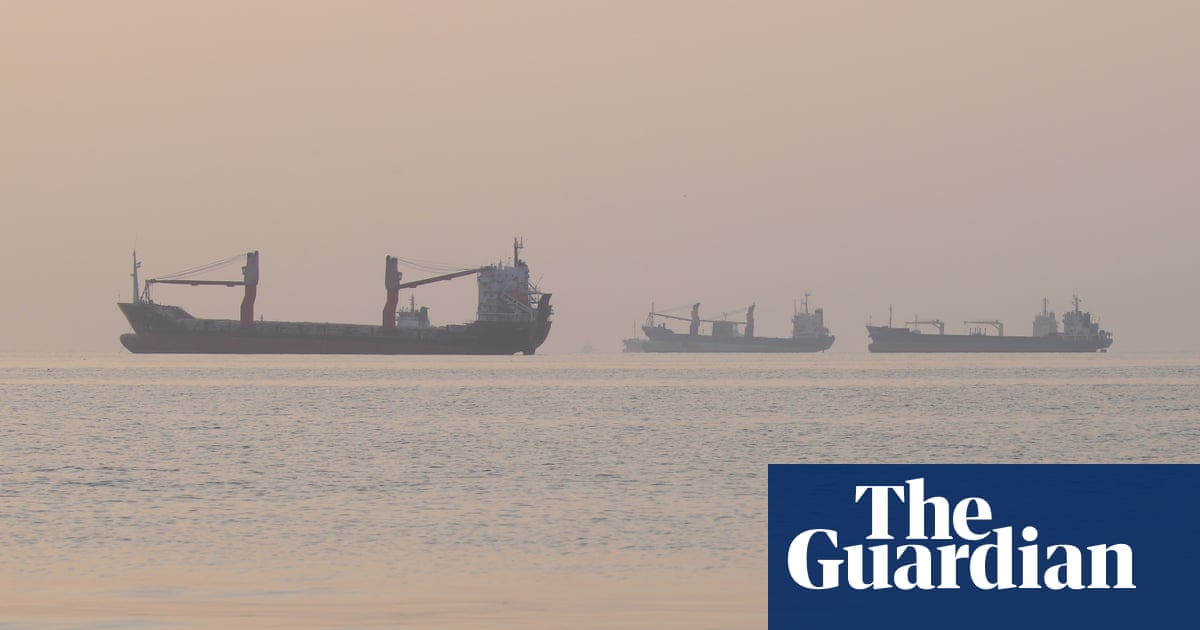
- Commercial shipping through the Strait of Hormuz is likely to remain exposed to targeted enforcement and attack, despite Gulf oil exports recovering near pre-war levels. A wire-service report says several Bahri vessels were attacked and two mariners killed. The Persian Gulf Strait Authority has reportedly singled out Sinokor, with one report saying at least seven Sinokor ships were attacked and another warning of legal action against Sinokor-linked vessels from 1 November. These reports do not establish whether the threatened action is new or follows earlier enforcement. (Confidence: medium · ASSESSED)
- I&W: Confirm continued exposure if the Persian Gulf Strait Authority issues a post-1 November notice naming Sinokor vessels or another tanker attack is independently reported; break if no enforcement action or new attack is reported by 14 November and transit reporting remains near pre-war levels. (0-14 days)
- A short, intense US campaign against Iran after 3 November is likely to remain a contingency, but the available reporting does not establish an authorised operation. A Wall Street Journal report says Washington warned Gulf Arab allies to prepare for a possible campaign after the midterm elections. A separate, low-reliability social-media post says senior Iranian officials received a warning, so the recipient and nature of the warning remain unverified. (Confidence: low · ASSESSED)
- I&W: Confirm if US officials confirm a post-election operation or US forces strike Iran after 3 November; break if the US publicly rules out a campaign through 11 November. (0-14 days)
- Iranian regime-affiliated cable threats are likely coercive signalling, not proof that Tehran has ordered sabotage. A report published on 28 October describes a threatening video and warnings about undersea cables in the Strait of Hormuz area. A separate account attributes detailed plans to two senior Iranian security officials but dates the cited Reuters report to 23 October 2025, creating a one-year discrepancy. The reporting is thin and does not establish that a cable has been damaged. (Confidence: low · ASSESSED)
- I&W: Confirm continued signalling if Iranian regime-affiliated channels repeat the threat or name a cable route by 11 November; break if the channels remove the video and Iranian officials explicitly disavow the threat. (0-14 days)
Outlook & scenarios
Limited diplomatic accommodation (40%)
A negotiated pause is a roughly even chance over the next 1-3 months. Iran accepts inspector access and the parties agree on sanctions relief linked to a four-day Hormuz reopening, while talks on Houthi withdrawals continue.
Managed conflict with continued shipping (35%)
A managed but unresolved conflict is a roughly even chance. Gulf exports continue near pre-war levels, while ship attacks and Iranian enforcement claims sustain risk for operators using the Strait of Hormuz.
Renewed US campaign after the midterms (20%)
A short, intense US campaign after 3 November is an unlikely but material outcome. The reported warnings to Gulf Arab allies point to preparation, but no public reporting establishes an order to strike.
Undersea cable disruption (5%)
An attack that damages Gulf undersea communications cables is an almost no chance wildcard with potentially broad communications effects. Current reporting consists of threats and an account of plans with an unresolved date discrepancy, not evidence of an attack.
Recommendations
- Track IAEA statements and Iranian decisions on inspector access separately from diplomatic proposals. Record whether inspectors enter named nuclear sites and whether Grossi reports that safeguards verification has resumed.
- Maintain a dated record of the proposed sanctions-for-Hormuz sequence, including any published four-day reopening terms and Houthi withdrawal commitments. Do not treat a proposal as an agreement.
- Verify the status of Persian Gulf Strait Authority action against Sinokor after 1 November. Distinguish a non-compliance list, a threat of future legal action and reported attacks or enforcement already carried out.
- Monitor reported Hormuz export and transit levels alongside confirmed ship attacks. Treat export recovery as evidence of continued movement, not as evidence that shipping is safe.
- Seek independent confirmation of the undersea cable reporting and resolve the 2025 versus 2026 date discrepancy before assessing the reported plans as current operational intent.
- Treat reporting of US warnings as evidence of contingency discussion, not authorisation. Update the assessment if US officials confirm a post-election operation or if a public order or strike is reported.
Confidence & uncertainty
Overall confidence is high in the broad picture because official UK and IAEA-linked statements, major-media reporting and a wire-service account support key developments in nuclear access, regional diplomacy and Gulf oil exports. Those sources corroborate distinct parts of the situation rather than every operational detail. Confidence is lower on the reported US campaign warning, which has limited corroboration and conflicting accounts of its recipient, and on the cable threat reporting, which contains a one-year date discrepancy. Iranian enforcement claims against Sinokor also differ on whether action is threatened or already under way.
Alternative analysis (red cell)
The evidence may indicate that diplomacy is advancing through a conditional, multiparty bargaining process rather than that a comprehensive breakthrough is unlikely. Iran's reported acceptance of a four-day Hormuz reopening timetable (8658d6ba-b1a1-401d-8587-38bc7eb62a94) and the regional delegation's security discussions (ecb2c7bf-0c70-48bb-8c90-82e18796bec3) provide signs of negotiable arrangements. The inspection and agenda disputes show hurdles, but not necessarily an impediment to a near-term comprehensive deal.
Intelligence gaps
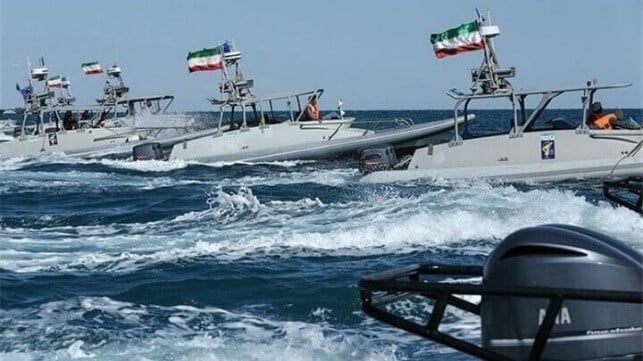
- [EEI 1.1 · PARTIAL] Concentrations or unusual movements of IRGC-Navy fast attack craft, small boat swarms, or escort vessels within 200 km of US/allied ships, including approach distances and formation changes. Recommended collection: maritime/AIS
- [EEI 1.2 · PARTIAL] Detected pre-launch activity at coastal missile or rocket batteries (vehicle dispersal, fuel/warhead handling, radars powering up, transport erector launchers moving to firing positions). Recommended collection: imagery/signals
- [EEI 1.3 · UNCOVERED] Increased launch/arming/positioning of armed UAVs (MALE/loitering munitions) or tactical aircraft at Iranian coastal bases with sortie generation rates and munitions loadouts. Recommended collection: air/ADS-B/imagery
- [EEI 1.4 · UNCOVERED] Command-and-control indications of attack orders or elevated rules-of-engagement from IRGC/General Staff (intercepted communications, internal order messages, force-wide alert messages). Recommended collection: signals/human
- [EEI 2.1 · PARTIAL] Public statements or state-media broadcasts from Supreme Leader, President, Minister of Defense, or IRGC commanders indicating authorization, restraint, or conditions for retaliation. Recommended collection: open-source
- [EEI 2.2 · UNCOVERED] Issuance of formal orders, mobilization directives, travel restrictions, or official internal communications within IRGC/Armed Forces indicating escalation posture or stand-down. Recommended collection: human/diplomatic
- [EEI 2.3 · PARTIAL] Directives, logistics movements, or communications from Iranian commanders to regional proxy militias (Houthis, Iraqi Shia militias, Lebanese groups) that change their threat posture or task them with specific operations. Recommended collection: signals/human
- [EEI 3.4 · PARTIAL] Movements or posture changes of regional state navies/air forces (Saudi, UAE, Kuwait, Bahrain, UK) such as task group departures, airbase dispersals, or announced maritime patrols near choke points. Recommended collection: open-source/imagery
Red cell review: PARTIAL DISSENT
TLP:CLEAR