TLP:CLEAR · Disclosure is not limited.
Persian Gulf: U.S.-Iran exchanges and a 60-day safe-passage window
Time window: Last 1 day · Audience: General analyst · Type: Situation report · DTG: 2026-07-04 10:43Z · Overall confidence: MEDIUM
BLUF
Active U.S.-Iran military exchanges and coercive maritime control continue around the Strait of Hormuz while Washington keeps a robust naval-aviation posture to deter interference. A 60‑day ceasefire and Iranian safe‑passage arrangement are in play, but the waterway remains unsafe and the prospect of fees is contested, keeping the risk of miscalculation high.
Executive summary
Iran says it is arranging 60 days of free safe passage and has launched technical talks with Oman, coinciding with a reported U.S.-Iran Memorandum of Understanding for a 60‑day ceasefire. In parallel, Iran condemned U.S. air strikes on 27 June and the IRGC Navy claimed retaliatory targeting of U.S. positions, while a container ship was reportedly attacked in the Strait of Hormuz and the Guards demanded transit clearances. CENTCOM maintains a high‑readiness posture with two carrier strike groups, an embarked Marine Expeditionary Unit, and Apache helicopters over Hormuz to prioritise the free flow of commerce. The UK and Italy have added forces in the Gulf and France deployed a carrier to defend Cyprus, while China publicly calls for unhindered shipping. Despite de‑escalation steps, Hormuz remains far from safe, including reported floating mines, and debate over any fee regime pits the United States and Gulf partners against reports that some European powers may accept payments.
Change from previous assessment
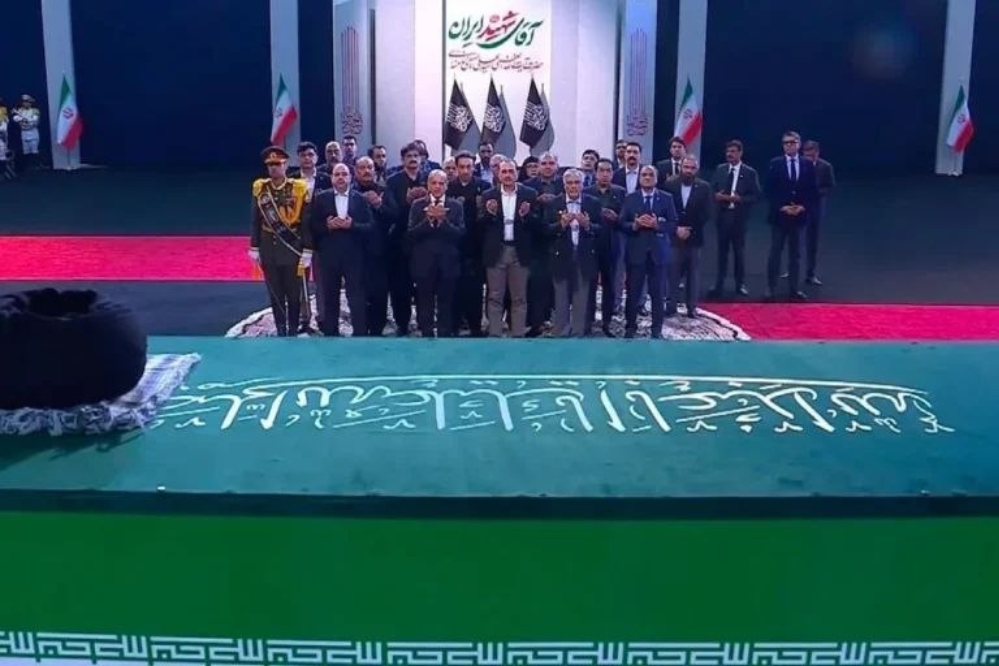
Since the prior brief, reporting indicates fresh U.S. air strikes on 27 June and an IRGC naval retaliation claim, plus a reported attack on a container ship with Iranian demands for transit clearance. The U.S. posture is further detailed with two carrier strike groups, the 11th MEU, and Apache helicopters over Hormuz. Diplomatically, a 60‑day ceasefire and an Iranian 60‑day safe‑passage arrangement with Iran‑Oman technical dialogue are now explicit. The UK and Italy have reinforced the regional air‑maritime posture and China has called for unhindered flow through Hormuz. Mass mourning events in Tehran elevate short‑term security sensitivities amid contested reporting about threats to negotiators. Initial assessment of this topic was broadened with more concrete posture and maritime‑risk details.
Key judgments
- U.S.-Iran military exchanges have resumed since 27 June and are likely to persist in the near term, keeping commercial shipping at risk in and around the Strait of Hormuz. (Confidence: medium · ASSESSED)
- I&W: Further publicly reported attacks or interdictions on named merchant vessels transiting Hormuz, accompanied by IRGC statements requiring pre-clearance. (0-14 days)
- I&W: A sustained lull with no reported exchanges at sea or ashore and no new Iranian transit-clearance announcements. (1-3 months)
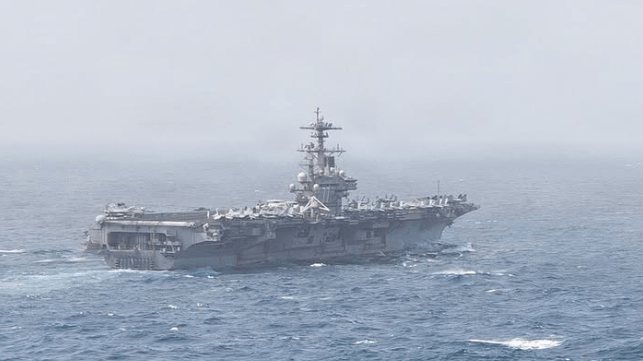
- The United States very likely retains substantial deterrent capability in theatre, including two carrier strike groups, the 11th Marine Expeditionary Unit afloat, and Apache helicopters over Hormuz, with CENTCOM prioritising the free flow of commerce. (Confidence: high · REPORTED)
- I&W: Visible and reported flight operations by air wings from USS Abraham Lincoln and USS George H. W. Bush and continued 11th MEU activity. (0-14 days)
- I&W: Public notification of a drawdown or redeployment of a carrier strike group or the 11th MEU from the Arabian Gulf area. (1-3 months)
- A limited de‑escalation package is likely in effect for Hormuz, centred on a 60‑day ceasefire and Iran’s 60‑day safe‑passage arrangement with technical coordination with Oman, but the waterway remains far from safe due to floating mines and coercive enforcement, and any fee regime is contested. (Confidence: medium · ASSESSED)
- I&W: Publication of coordinated Notices to Mariners by Iran and Oman detailing free, time‑bound routing procedures and a decline in reported incidents. (0-14 days)
- I&W: Official announcements by European governments or flag registries endorsing payment of fees to Iran or Oman for Hormuz passage, or fresh mine‑related advisories. (0-14 days)
- Regional and extra‑regional actors are hedging for a prolonged crisis: the United Kingdom has reinforced bases in the Persian Gulf, Italy deployed naval vessels and air defences to help protect the Gulf region, and France deployed Charles de Gaulle to defend Cyprus, while China called publicly for unhindered shipping through Hormuz. (Confidence: high · REPORTED)
- I&W: Further UK or Italian defence announcements of deployments or exercises in and around the Gulf. (0-14 days)
- I&W: Public stand‑down or withdrawal notices by these governments from Gulf missions. (1-3 months)
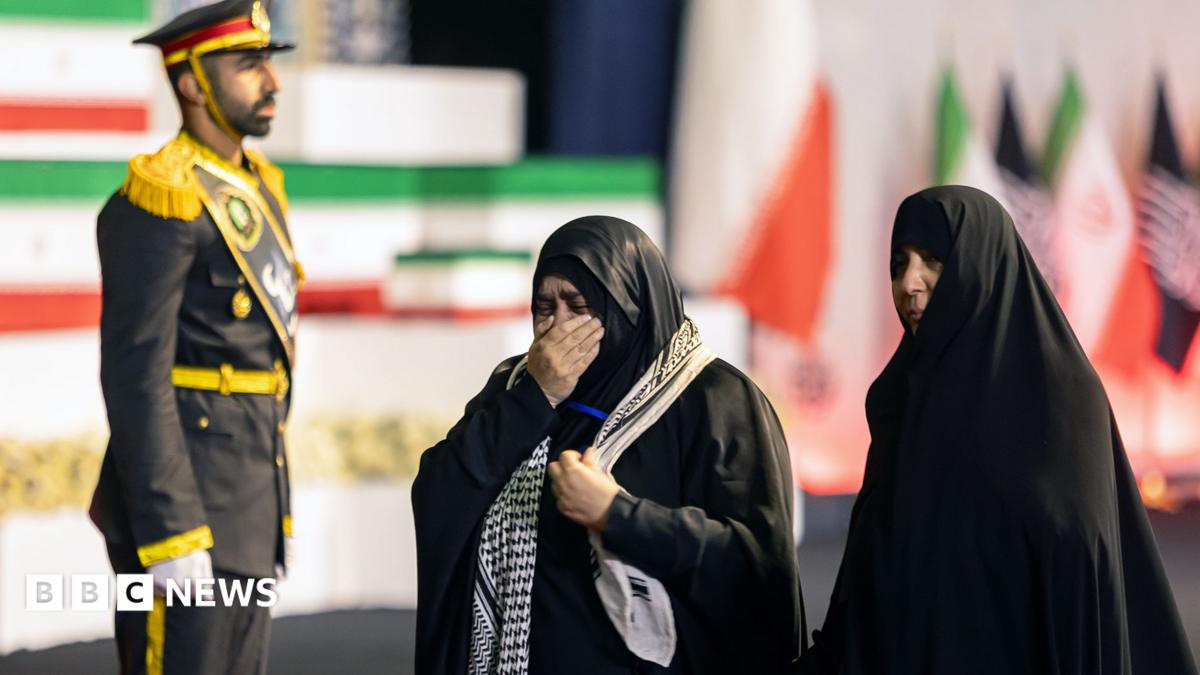
- There is a roughly even chance that spoiler activity, including attempts against Iranian negotiators or incidents across mass mourning events in Tehran, disrupts the 60‑day window, given U.S. concerns about possible Israeli targeting that Israel publicly denies and the scale of upcoming gatherings. (Confidence: low · ASSESSED)
- I&W: Iranian security services announce foiled plots or raise formal threat levels around negotiators or mourning venues. (0-14 days)
- I&W: No security advisories or incidents reported during the principal mourning period. (0-14 days)
- Energy‑market stakes remain elevated: the Iran war is described as producing the largest daily oil supply shock, with peak losses above 14 million bpd and a record 400 million barrels released from strategic reserves, while Japanese firms explore Iranian crude purchases under a short U.S. waiver amid shipping‑safety concerns. (Confidence: medium · ASSESSED)
- I&W: Reported fixtures of Japanese‑operated tankers to load at Kharg Island under the waiver. (0-14 days)
- I&W: Announcements of additional IEA reserve releases or suspension of Japanese buyer talks due to maritime risk. (1-3 months)
Outlook & scenarios
Managed standoff under a time‑bound safe‑passage and ceasefire framework (50%)
Iran’s 60‑day safe‑passage arrangement and the U.S.-Iran ceasefire hold in practical terms, moderated by Iran‑Oman technical coordination. U.S. carrier and MEU presence deters major interference, while China and some Europeans advocate keeping trade moving. The waterway remains hazardous, but incidents subside and fee debates stay largely political without formal adoption.
Short‑cycle escalation with ship harassment and mine scares (40%)
Additional attacks or coercive boardings occur, IRGC demands for transit clearance harden, and mine warnings proliferate, triggering short‑term diversions and convoying. U.S. strikes and Iranian retaliation remain limited but frequent, and UK/Italian deployments deepen defensive coverage. Insurance and buyer caution delay any rapid normalisation of flows.
Ceasefire unravels and broader confrontation resumes (20%)
A spoiler incident, including an attempt on negotiators or a high‑profile strike, collapses the 60‑day window. U.S. air-missile activity against Iranian capabilities expands, Iran escalates maritime coercion, and regional deployments intensify. Commercial flows through Hormuz face acute disruption despite U.S. naval cover.
Recommendations
- Maintain a daily, time‑stamped common operating picture of Hormuz incidents that cross‑references official statements, shipowner reports, and open‑source imagery to validate any claimed attacks or interdictions.
- Track and archive all Iranian and IRGC public notices on transit clearances and routing, and compare them with any Notices to Mariners issued by Oman to identify convergence or friction points.
- Align collection and watch priorities on U.S. naval-aviation posture: verify the presence and activity tempo of USS Abraham Lincoln, USS George H. W. Bush, and the 11th MEU, and monitor Apache flight activity over Hormuz.
- Monitor measurable indicators of de‑escalation or risk: reported mine sightings or clearance operations, frequency of merchant transits without interference, and any formal statements on fees by European governments or flag registries.
- Follow Japanese buyer activity under the U.S. waiver: look for reported fixtures to Kharg Island and stated shipping‑safety requirements that could condition purchase timelines.
- During the mourning period, watch for official Iranian security advisories, venue closures, or travel restrictions that signal heightened threat perceptions around negotiators or mass gatherings.
Confidence & uncertainty
Overall confidence is medium. Several judgments rest on multiple, corroborating reports from official statements and major media regarding U.S. naval posture, the 60‑day arrangements, and allied deployments. However, key elements are single‑source or contested, including the reported container ship attack, the extent of floating mines, and claims about possible assassination threats that Israel publicly denies. These inconsistencies and gaps in independent verification constrain confidence below high.
Alternative analysis (red cell)
An alternative, more cautious reading is that current reporting shows episodic exchanges and partial diplomatic arrangements that may be fragile or only partially implemented. The coexistence of ceasefire/MOU claims with continuing incidents, unresolved contradictions (notably fee regimes and loss‑figure totals), and variable source quality supports an estimate of a transactional lull rather than a durable change in behavior. Absent robust operational indicators (persistent ISR, engagement logs, or implementation documentation), forecasts of persistent exchanges or definitive market‑shock magnitudes should be treated as provisional.
Intelligence gaps
- [EEI 1.1 · UNCOVERED] Concentrations or unusual movements of IRGC-Navy fast attack craft, small boat swarms, or escort vessels within 200 km of U.S./allied ships, including approach distances and formation changes. Recommended collection: maritime/AIS
- [EEI 1.2 · PARTIAL] Detected pre-launch activity at coastal missile or rocket batteries (vehicle dispersal, fuel/warhead handling, radars powering up, transport erector launchers moving to firing positions). Recommended collection: imagery/signals
- [EEI 1.3 · UNCOVERED] Increased launch/arming/positioning of armed UAVs (MALE/loitering munitions) or tactical aircraft at Iranian coastal bases with sortie generation rates and munitions loadouts. Recommended collection: air/ADS-B/imagery
- [EEI 1.4 · UNCOVERED] Command-and-control indications of attack orders or elevated rules-of-engagement from IRGC/General Staff (intercepted communications, internal order messages, force-wide alert messages). Recommended collection: signals/human
- [EEI 2.2 · UNCOVERED] Issuance of formal orders, mobilization directives, travel restrictions, or official internal communications within IRGC/Armed Forces indicating escalation posture or stand-down. Recommended collection: human/diplomatic
- [EEI 2.3 · UNCOVERED] Directives, logistics movements, or communications from Iranian commanders to regional proxy militias (Houthis, Iraqi Shia militias, Lebanese groups) that change their threat posture or task them with specific operations. Recommended collection: signals/human
- [EEI 3.1 · PARTIAL] Incidents involving commercial vessels within the Strait of Hormuz or Persian Gulf: attacks, boarding attempts, near-misses, AIS spoofing or deliberate AIS outages, including vessel IDs and locations. Recommended collection: maritime/AIS
- [EEI 3.2 · UNCOVERED] Discovery or reporting of naval mines, unexploded ordnance, or damage to fixed maritime infrastructure (oil platforms, terminals, pipelines) with geolocated imagery or on-scene assessments. Recommended collection: imagery/open-source
Cited sources
[1] islamtimes.com · Iran Raps US Aggression, Defends Right to Self-Defense - Islam Times (A) · sha256:fa17432e4cf6 [2] Iran Press · Iran Press – Iran news, breaking news, world news (B) · sha256:8e402d7561d5 [3] gcaptain.com · Japan Weighs Return to Iranian Oil as Shipping Risks Cloud Sanctions Waiver (A) · sha256:422058aef7bb [4] maritime-executive.com · US Forces Still Poised in the Arabian Gulf Area (B) · sha256:bc323b87762b [5] cnn.com · US officials attempted to warn Iran of fears that Israel would assassinate mediators | CNN Politics (A) · sha256:ecc65241aec5 [6] gcaptain.com · China Urges ‘Unimpeded Passage’ of Hormuz as Fee Chatter Mounts (B) · sha256:0c6f2badd924 [7] Wikipedia · 2026 Iran war regional mobilizations (B) · sha256:f9e0e03d200a [8] nbcnews.com · U.S. was concerned Israel might try to kill Iran negotiators, sources say (A) · sha256:c469126ba3e2 [9] BBC · Large crowds gather in Tehran for Ayatollah Khamenei's funeral (A) · sha256:2f0ead54b34e [10] nournews.ir · Iran’s Upper Hand in the Diplomacy of Mourning (B) · sha256:6f525c6f08a9 [11] kitco.com · How does the Iran crisis compare with the 1979 oil shock? (B) · sha256:0bb8771b1f80 [12] cryptobriefing.com · China launches coast guard patrol east of Taiwan amid regional tensions (B) · sha256:789d135f0224
Source content hashes were computed at collection time; the cited text is preserved unmodified for the life of this product.
Red cell review: PARTIAL DISSENT
TLP:CLEAR