TLP:CLEAR · Disclosure is not limited.
Persian Gulf: U.S., Iran exchanges and IRGC closure of the Strait of Hormuz
Time window: Last 1 day · Audience: General analyst · Type: Situation report · DTG: 2026-07-12 13:47Z · Overall confidence: LOW
BLUF
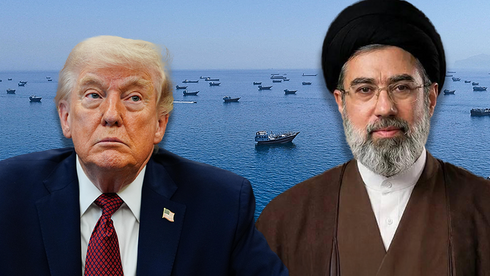
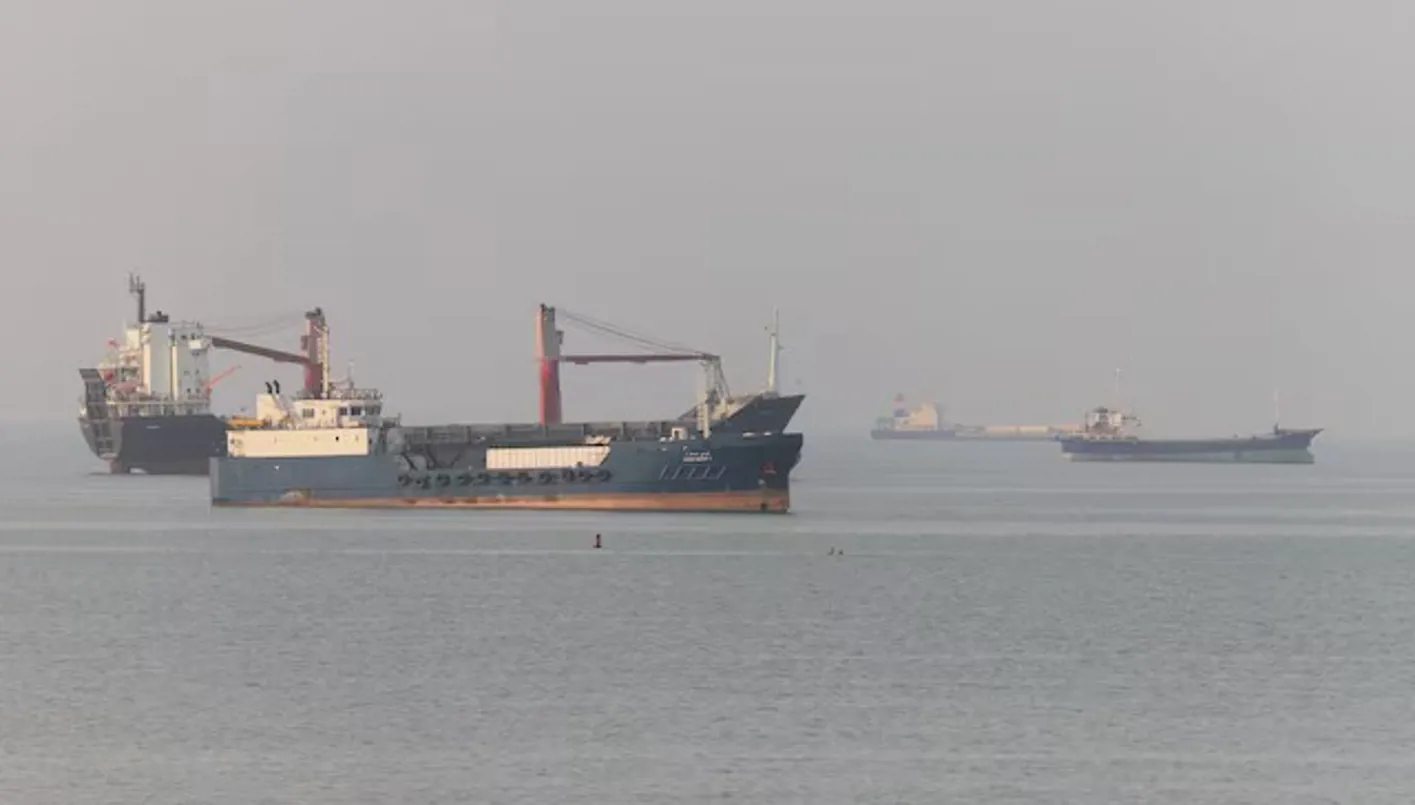
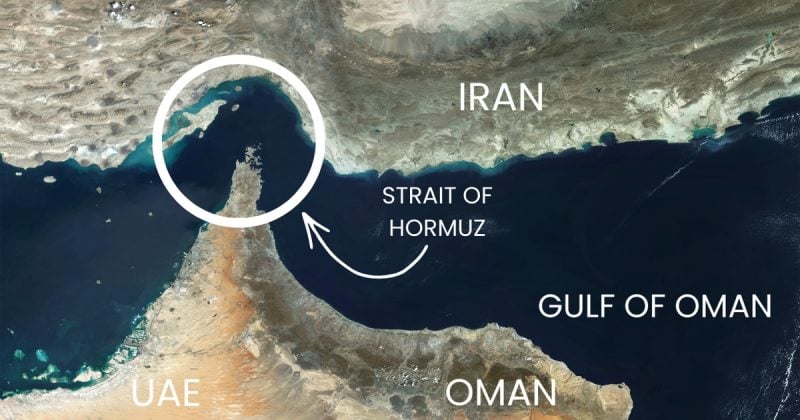
Iran’s IRGC has very likely declared the Strait of Hormuz closed after striking the Cyprus‑flagged m/v GFS Galaxy, and the United States has very likely hit roughly 140 Iranian military targets in response. Iran has very likely launched follow‑on missile and drone attacks against U.S.-linked facilities in Bahrain, Kuwait and Jordan, while Oman is brokering a two‑lane navigation plan as markets price a higher risk of an Iranian airspace closure by 31 July.
Executive summary
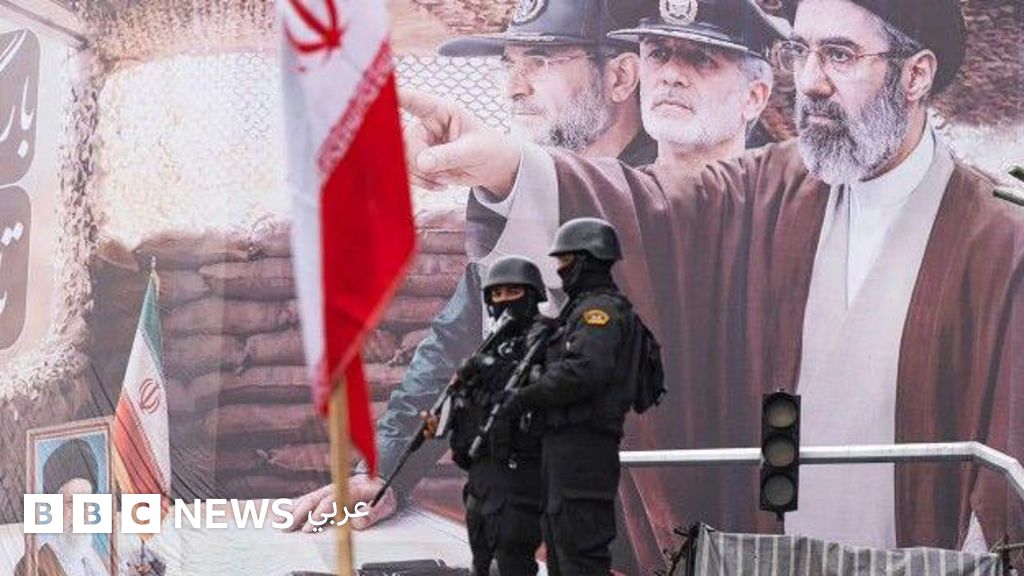
Open military exchanges between the United States and Iran have intensified around the Strait of Hormuz. U.S. forces very likely conducted large-scale strikes on Iranian military infrastructure after the IRGC damaged the m/v GFS Galaxy, and Tehran has very likely answered with missile and drone fire at U.S.-linked facilities in Bahrain, Kuwait and Jordan. The IRGC has very likely declared the strait closed, disrupting maritime routes. Muscat is driving an interim traffic-management concept and continued talks with Tehran even as Washington demands a public Iranian commitment to halt ship attacks. Energy markets are strained, with Brent above $120 and market pricing signalling a higher probability of an Iranian airspace closure by 31 July. Reported casualties inside Iran, fresh U.S. sanctions steps, and unverified claims of attacks on Qatar and Oman keep miscalculation risks high.
Change from previous assessment
New reporting since the prior brief adds specificity on U.S. strikes hitting roughly 140 Iranian targets, repeated claims by the IRGC that the Strait of Hormuz is closed, and an Iranian Health Ministry tally of 17 killed and 115 injured from U.S. attacks on 9 July. Muscat’s two‑lane traffic proposal and continued Oman, Iran talks are more clearly described, while Washington’s demand for a public Iranian pledge on ship attacks is explicit. Market pricing indicating a higher probability of a full Iranian airspace closure by 31 July is now noted. Claims of Iranian strikes on Qatar and Oman are present but remain uncorroborated, which lowers confidence on their inclusion. Initial assessment of this topic was provided yesterday; confidence remains low given persistent source gaps and contradictions.
Key judgments
- The United States very likely conducted large-scale strikes hitting about 140 Iranian military targets in response to IRGC attacks on commercial shipping in the Strait of Hormuz. (Confidence: high · REPORTED)
- I&W: CENTCOM publishes battle damage imagery or a target list consistent with approximately 140 sites struck across Iranian radar, missile, drone and naval assets. (0-14 days)
- I&W: Independent commercial imagery of named Iranian air-defence, coastal surveillance and storage sites shows little or no damage. (1-3 months)
- Iran’s IRGC very likely declared the Strait of Hormuz closed, disrupting international maritime routes, after an IRGC missile damaged the Cyprus‑flagged container ship m/v GFS Galaxy. (Confidence: high · REPORTED)
- I&W: Public IRGC maritime advisories or broadcast warnings continue to bar or condition transits through Hormuz, accompanied by boardings or warning shots in the approaches. (0-14 days)
- I&W: Verified multi‑tanker convoys transit Hormuz without Iranian vetting or interference on both inbound and outbound lanes. (0-14 days)
- Iran very likely launched missile and drone attacks on U.S.-linked facilities in Bahrain, Kuwait and Jordan, and several Gulf states likely engaged intercepts. (Confidence: high · REPORTED)
- I&W: Bahrain, Kuwait or Jordan release debris photos or impact assessments attributing attacks to Iranian missiles or drones. (0-14 days)
- I&W: Coalition reporting or local authorities deny inbound threats or document only false alarms across the three states. (0-14 days)
- There is a roughly even chance that Iran attempted strikes on Qatar’s Al Udeid Air Base and U.S.-linked facilities in Oman, but current evidence remains limited to Iranian and sympathetic media claims. (Confidence: low · ASSESSED)
- I&W: Qatar or Oman publicly acknowledge impacts or intercepts at Al Udeid or Duqm with location details. (0-14 days)
- I&W: Qatar and Oman issue categorical denials with air-defence activity summaries for the reported windows. (0-14 days)
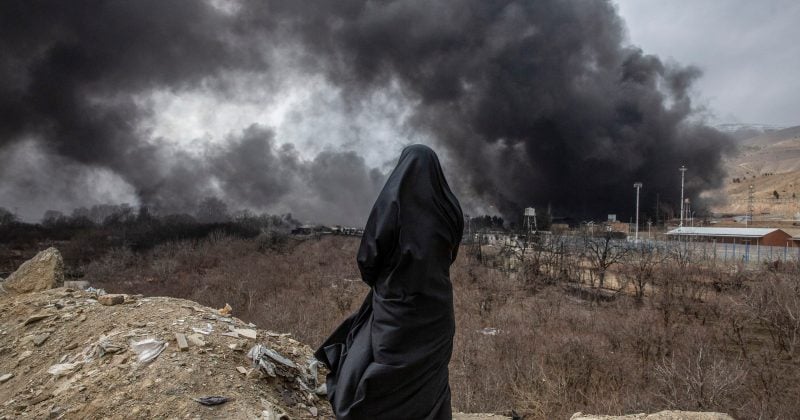
- U.S. strikes almost certainly caused casualties inside Iran, with Iran’s Health Ministry reporting 17 killed and 115 injured across six cities on 9 July. (Confidence: medium · REPORTED)
- I&W: Follow‑up official lists of victims or independent medical reporting from the six named cities corroborate casualty numbers. (1-3 months)
- I&W: Absence of subsequent Iranian official updates and contradictory local reporting indicating markedly lower casualties. (0-14 days)
- Energy markets have likely tightened as hostilities and shipping disruption persist, with Brent above $120 and a reported 6.7 million barrels per day drop in Gulf oil output by 10 March; markets very likely assign higher odds to a full Iranian airspace closure by 31 July. (Confidence: high · REPORTED)
- I&W: Market odds for a July 31 Iranian airspace closure continue to rise or remain elevated relative to the prior week. (0-14 days)
- I&W: Sustained retracement in closure odds and forward freight rates as verified transits through Hormuz resume at scale. (1-3 months)
- An Oman-led deconfliction track is likely active: Muscat has prepared a two‑route traffic plan for Hormuz and agreed with Tehran to continue technical and political talks, while Washington demands a public Iranian pledge to halt ship attacks and allow free passage. (Confidence: high · REPORTED)
- I&W: Oman and Iran issue a joint statement outlining corridor procedures or pilotage rules for Hormuz transits. (1-3 months)
- I&W: Renewed IRGC notices asserting permit requirements for all transits and signalling enforcement actions. (0-14 days)
- Washington is very likely intensifying economic pressure alongside military action, restoring oil sanctions, revoking an oil sanctions waiver and rolling back earlier sanctions relief for Iranian oil exports after attacks on commercial vessels. (Confidence: high · REPORTED)
- I&W: OFAC announces further designations tied to IRGC maritime, energy or finance networks. (0-14 days)
- I&W: Public re‑issuance of oil export waivers or sanctions relief tied to de‑escalation steps. (1-3 months)
Outlook & scenarios
Rolling exchanges with contested closure of Hormuz (60%)
U.S. strike cycles and Iranian missile and drone fire persist, while the IRGC keeps the Strait of Hormuz under declared closure with intermittent enforcement actions. Markets continue to price heightened disruption and increased odds of an airspace closure by 31 July. Diplomatic signalling remains hostile, with Tehran stating it will not adhere to understandings while alleging U.S. violations, and CENTCOM asserting Iranian non‑adherence.
Oman‑brokered navigation regime tempers the crisis (40%)
Muscat’s two‑lane traffic concept gains traction through continued technical and political talks with Tehran. Iran softens maritime enforcement in exchange for face‑saving language, while Washington secures a public Iranian pledge on halting ship attacks. Transits resume under managed routing, though sanctions pressure remains.
Sharp escalation and regional spillover (25%)
Iran attempts high‑impact strikes on Qatar or Oman and announces a full airspace closure. The United States answers with additional large‑scale strikes on Iranian military infrastructure. Markets spike further as Brent stays above $120, and invasion risk pricing edges up. Humanitarian casualties increase inside Iran and in targeted Gulf states.
Recommendations
- Maintain a structured evidence log keyed to claim IDs for all reported strikes, closures and intercepts, and separately track uncorroborated items such as alleged attacks on Al Udeid and Duqm for priority verification.
- Set near‑term tripwires for maritime status in Hormuz: capture IRGC advisories, broadcast warnings and any boardings or warning‑shot reports, and pair with observed tanker convoy movements to assess de facto closure versus declared closure.
- Build a consolidated radar and missile activity timeline across Bahrain, Kuwait, Jordan, Qatar and the UAE using official statements and debris imagery where available to refine the assessed pattern of Iranian targeting and intercept effectiveness.
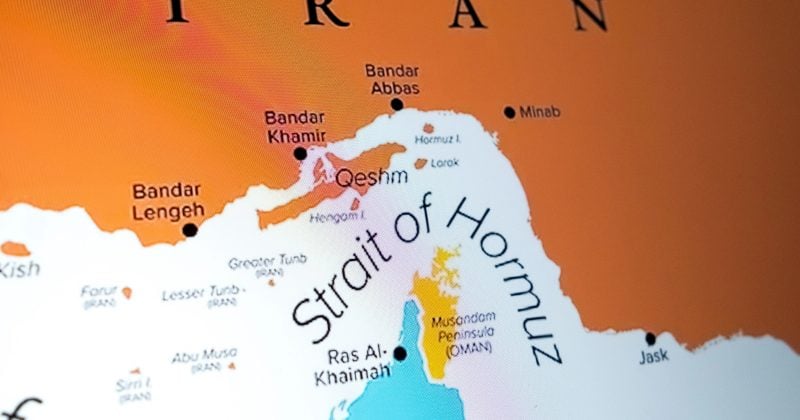
- Map Oman's proposed two‑lane routing concept and likely implementation venues; prepare a decision note on operational implications if managed corridors are adopted, including expected effects on shipping schedules and insurer behaviour.
- Produce a short weekly energy risk update linking Hormuz status, reported Gulf output changes, Brent pricing and market odds of Iranian airspace closure by 31 July to inform contingency planning.
- Flag to leadership any new OFAC actions or sanctions relief reversals tied to maritime attacks to anticipate second‑order effects on global shippers, insurers and energy traders.
Confidence & uncertainty
Overall confidence is low because several central points rely on mixed‑quality open sources, date inconsistencies and single‑source claims. Core events such as U.S. strikes, an IRGC‑declared closure of Hormuz, and Iranian attacks on Bahrain, Kuwait and Jordan are supported by multiple high‑confidence reports, but key elements remain under‑verified, including alleged strikes on Qatar and Oman and the operational status of the closure. Some sourcing derives from state media or secondary outlets with potential bias, and overlapping timelines create uncertainty about sequencing and scale.
Alternative analysis (red cell)
Many key judgments rely disproportionately on single‑source governmental statements and medium/low admiralty reporting without independent forensic, imagery, AIS, or market‑flow corroboration. Given the flagged contradictions (e.g., aa8ee8fd vs 2123b68c) and the tradecraft lint (contradiction_unaddressed), alternative, more restrained interpretations — that reported strike totals, closures, and market impacts are preliminary or politically framed — are credible until multiple independent sources close these gaps.
Intelligence gaps
- [EEI 1.1 · UNCOVERED] Concentrations or unusual movements of IRGC-Navy fast attack craft, small boat swarms, or escort vessels within 200 km of U.S./allied ships, including approach distances and formation changes. Recommended collection: maritime/AIS
- [EEI 1.2 · UNCOVERED] Detected pre-launch activity at coastal missile or rocket batteries (vehicle dispersal, fuel/warhead handling, radars powering up, transport erector launchers moving to firing positions). Recommended collection: imagery/signals
- [EEI 1.3 · UNCOVERED] Increased launch/arming/positioning of armed UAVs (MALE/loitering munitions) or tactical aircraft at Iranian coastal bases with sortie generation rates and munitions loadouts. Recommended collection: air/ADS-B/imagery
- [EEI 1.4 · UNCOVERED] Command-and-control indications of attack orders or elevated rules-of-engagement from IRGC/General Staff (intercepted communications, internal order messages, force-wide alert messages). Recommended collection: signals/human
- [EEI 2.1 · UNCOVERED] Public statements or state-media broadcasts from Supreme Leader, President, Minister of Defense, or IRGC commanders indicating authorization, restraint, or conditions for retaliation. Recommended collection: open-source
- [EEI 2.2 · UNCOVERED] Issuance of formal orders, mobilization directives, travel restrictions, or official internal communications within IRGC/Armed Forces indicating escalation posture or stand-down. Recommended collection: human/diplomatic
- [EEI 2.3 · UNCOVERED] Directives, logistics movements, or communications from Iranian commanders to regional proxy militias (Houthis, Iraqi Shia militias, Lebanese groups) that change their threat posture or task them with specific operations. Recommended collection: signals/human
- [EEI 2.4 · UNCOVERED] Changes in Iran's diplomatic exchanges with key states (offers of negotiation, warnings, or coordination with Russia/China) or requests for deconfliction with maritime/naval actors. Recommended collection: diplomatic
- [EEI 3.1 · UNCOVERED] Incidents involving commercial vessels within the Strait of Hormuz or Persian Gulf: attacks, boarding attempts, near-misses, AIS spoofing or deliberate AIS outages, including vessel IDs and locations. Recommended collection: maritime/AIS
- [EEI 3.2 · UNCOVERED] Discovery or reporting of naval mines, unexploded ordnance, or damage to fixed maritime infrastructure (oil platforms, terminals, pipelines) with geolocated imagery or on-scene assessments. Recommended collection: imagery/open-source
- [EEI 3.3 · UNCOVERED] Commercial indicators of disruption: sudden increases in war-risk insurance premiums for Gulf transits, vessel re-routing decisions, port throughput reductions, or charter cancellations for Gulf shipments. Recommended collection: financial/commercial
- [EEI 3.4 · UNCOVERED] Movements or posture changes of regional state navies/air forces (Saudi, UAE, Kuwait, Bahrain, UK) such as task group departures, airbase dispersals, or announced maritime patrols near choke points. Recommended collection: open-source/imagery
Cited sources
[1] cryptobriefing.com · US strikes 140 Iranian targets after ship attack in Strait of Hormuz (B) · sha256:a8d8fce3b487 [2] bbc.co.uk · US launches fresh strikes as Iran closes Strait of Hormuz (A) · sha256:87a3f265e25f [3] ynetnews.com · Iran attacks ship in Strait of Hormuz, declares waterway 'closed until further notice' (B) · sha256:a6ef492db3f4 [4] cryptobriefing.com · US military strikes Iranian targets near Strait of Hormuz: Axios (B) · sha256:af3f4578dcca [5] annahar.com · الحرس الثوري الإيراني يعلن إغلاق مضيق هرمز حتى إشعار آخر (A) · sha256:f0912a2ce6f3 [6] cryptobriefing.com · CENTCOM launches strikes after IRGC attack on Cyprus-flagged ship (B) · sha256:3930eb4c7b36 [7] cryptobriefing.com · US, Iran exchange fire over Strait of Hormuz amid escalating 2026 conflict (B) · sha256:a4c02f7dee9d [8] cryptobriefing.com · US airstrikes target Iran's energy infrastructure amid 2026 conflict (B) · sha256:0c58e1512af0 [9] cryptobriefing.com · US resumes aggressive actions against Iran amid Strait of Hormuz tensions (B) · sha256:431d0f88a292 [10] Al Jazeera · Iran attacks five Gulf nations, shuts Hormuz after US bombing: All to know (A) · sha256:d2d52ddde147 [11] cryptobriefing.com · Iran strikes US positions in Middle East, escalating conflict (B) · sha256:d6334ff034ce [12] cryptobriefing.com · Gulf states intercept Iranian missiles amid escalating regional tensions (B) · sha256:3599808cca0b [13] marinelink.com · US strikes Iran. Tehran declares Strait of Hormuz shut, Gulf States hit (D) · sha256:d03b428c4978 [14] alqaheranews.net · وسط تهديد باغتيال ترامب. جولة ثالثة من الضربات الأمريكية الإيرانية (B) · sha256:86ae181b595f [15] dw.com · Иран атаковал страны Персидского залива (B) · sha256:c8d56d7c1931 [16] BBC News عربي · إيران تلوّح بـ"عدم التقيّد باتفاقيات مع الولايات المتحدة"، ووفد من الجيش الأمريكي يزور لبنان - BBC News عربي (A) · sha256:267408f1544b [17] Wikipedia · Economic impact of the 2026 Iran war (B) · sha256:5ae6bc5cd289 [18] fortune.com · The U.S. and Iran can't agree on fully reopening the Strait of Hormuz. The solution could be straight out of the Old Testament | Fortune (B) · sha256:0cb01f7d71ba [19] gcaptain.com · Trump Declares Iran Ceasefire Over as U.S. Unveils New Sanctions (B) · sha256:ca8b1833d031
Source content hashes were computed at collection time; the cited text is preserved unmodified for the life of this product.
Red cell review: PARTIAL DISSENT
TLP:CLEAR