TLP:CLEAR · Disclosure is not limited.
Persian Gulf: US Blockade Enforcement and Maritime Risk Intensify
Time window: Last 1 day · Audience: General analyst · Type: Situation report · DTG: 2026-11-08 05:44Z · Overall confidence: HIGH
BLUF
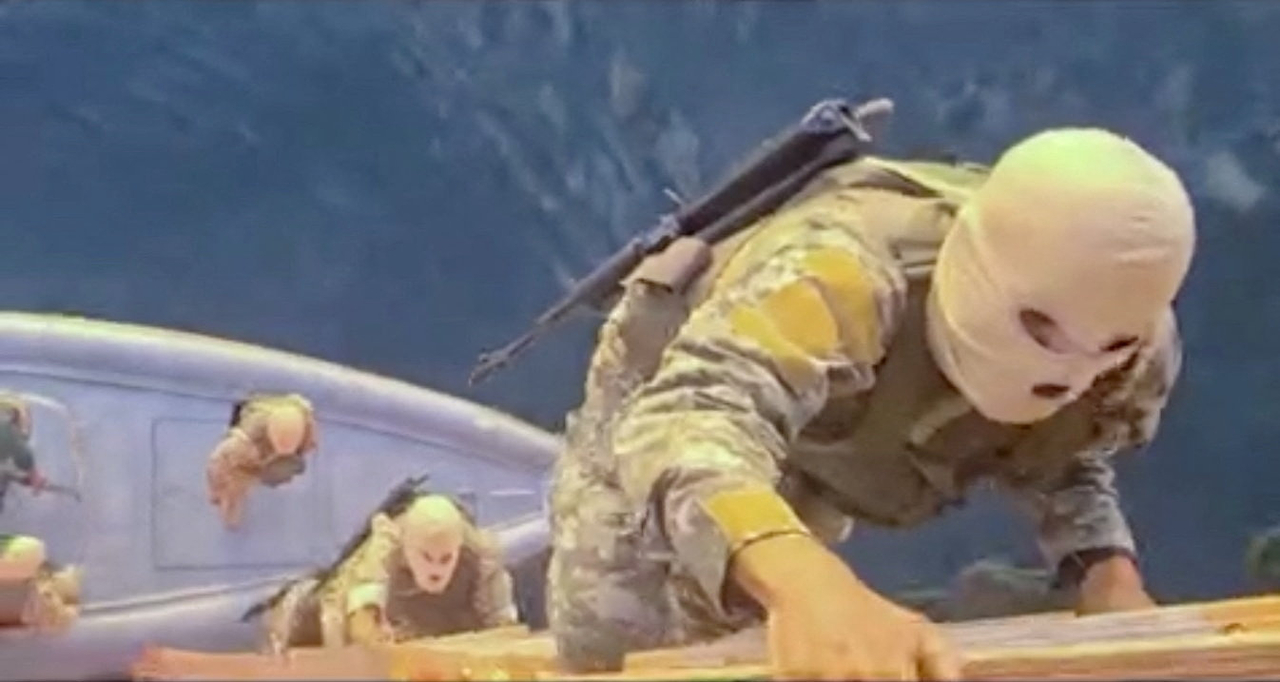
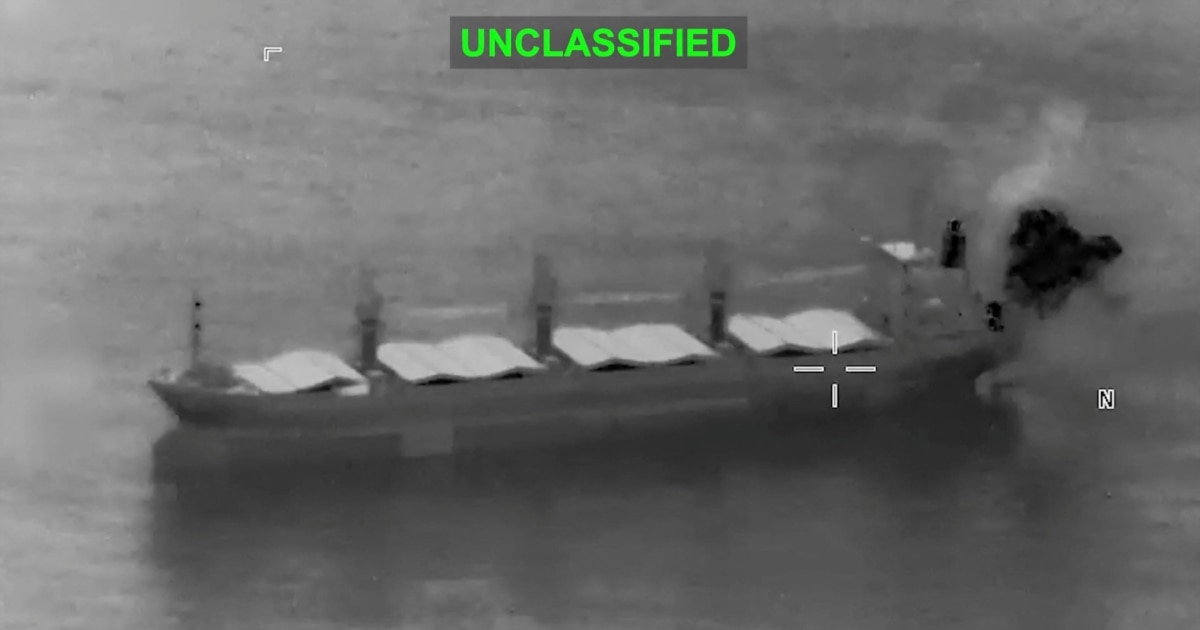
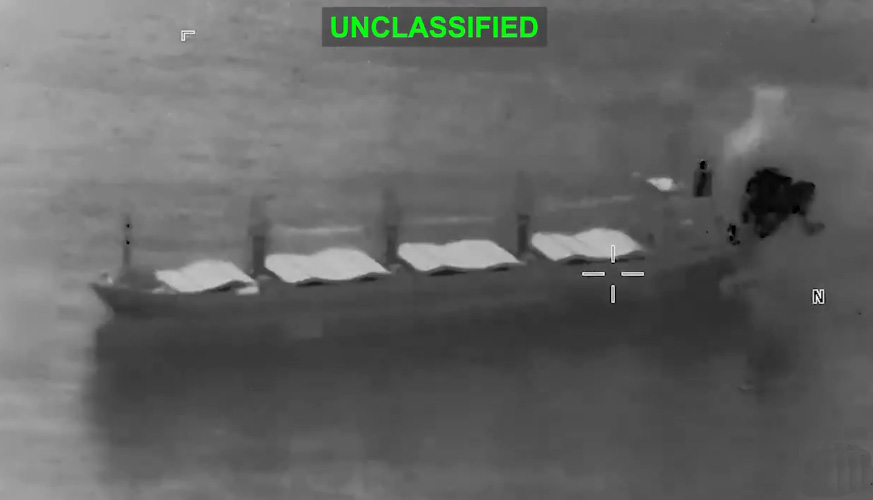
US forces disabled the Saint Kitts and Nevis-flagged M/V Huda in the Gulf of Oman on 7 November, while CENTCOM announced Task Force Iron Gate to target reported Iranian supply routes over land and through the Caspian Sea. Commercial shipping through the Strait of Hormuz is very likely to remain hazardous, but reports of tanker mine strikes do not establish who placed the mines or whether the fires involved two tankers.
Executive summary
The confrontation has widened beyond the 6 November US strike on Qeshm Island. CENTCOM says US forces have redirected 147 commercial vessels and disabled five since the blockade resumed in mid-July; it also announced Task Force Iron Gate, described in reporting as a roughly 20-person unit based in Tampa and focused on land routes and the Caspian Sea. The task force's exact remit is not consistently described. The IRGC reported that two tankers hit mines and caught fire on 7 November, and the UAE said it rescued 22 people from a burning cargo ship on 8 November; the available reporting does not establish whether these accounts concern the same incident. Qatar's proposal and reported US outreach to China keep diplomacy active, but the proposed terms and sequencing remain unsettled. The IRGC also publicly declared that Iran had lifted its self-imposed 2,000 km missile-range limit, without evidence in the available reporting of a corresponding change in deployed capability.
Change from previous assessment
Since the 7 November brief, US forces have disabled the M/V Huda in the Gulf of Oman, CENTCOM has announced Task Force Iron Gate, the IRGC has declared its self-imposed 2,000 km missile-range limit lifted, and reporting describes a US request for Chinese mediation. Reports of two tanker fires and the UAE rescue of 22 people add detail to the maritime risk picture, but do not resolve whether the accounts concern the same incident or establish mine responsibility. The assessment that further US strikes are a roughly even chance by 21 November remains unchanged; confidence remains medium given conflicting signals from Trump, reported adviser pressure and active diplomacy. The earlier drone-loss claims remain unverified and are not carried forward as a key judgment.
Key judgments
- US maritime enforcement against Iran is very likely to remain active through 22 November. CENTCOM says US forces have redirected 147 commercial vessels and disabled five since mid-July, and on 7 November disabled the M/V Huda in the Gulf of Oman after it left an Iranian port. The announced Task Force Iron Gate signals a broader stated effort: CENTCOM described a roughly 20-person unit based in Tampa as targeting Iranian land-border and Caspian Sea supply routes, although one account frames the plan as an expansion of the naval blockade. The conflicting descriptions leave the task force's operational remit uncertain. (Confidence: medium · ASSESSED)
- I&W: CENTCOM confirms another vessel was redirected or disabled after an attempted blockade breach, supporting continued enforcement; an announced suspension of interdictions would weaken this judgment. (0-14 days)
- I&W: CENTCOM or another US agency reports a specific interdiction of Iranian supplies on a land route or through the Caspian Sea, confirming operational activity by Task Force Iron Gate; a clarification that the unit has no interdiction role would weaken it. (1-3 months)
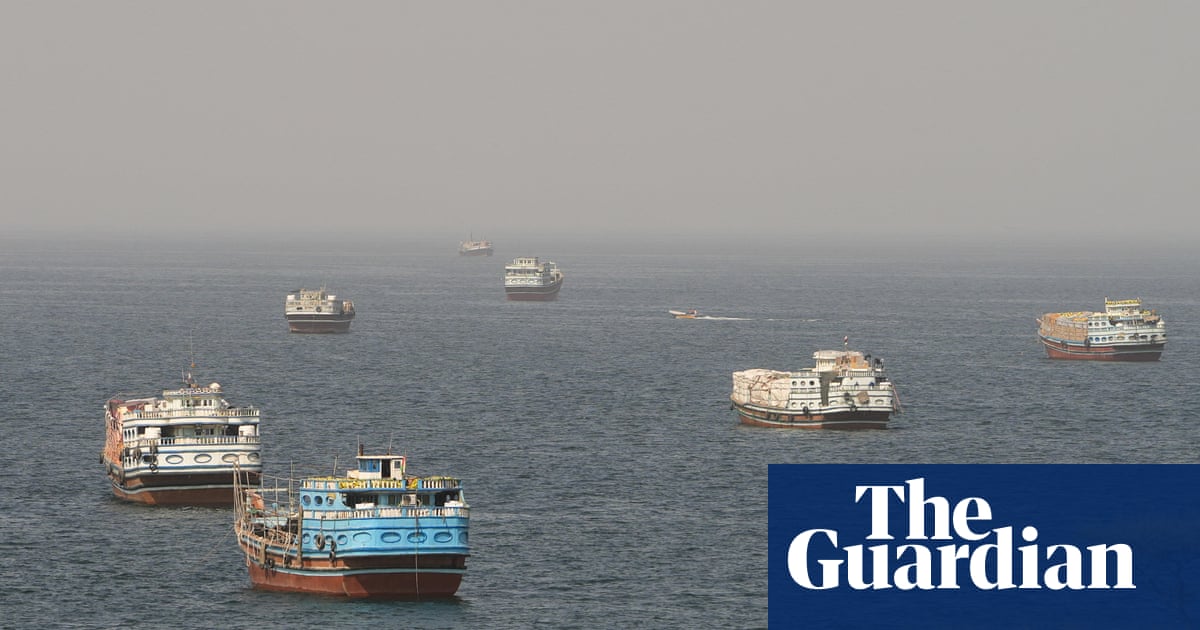
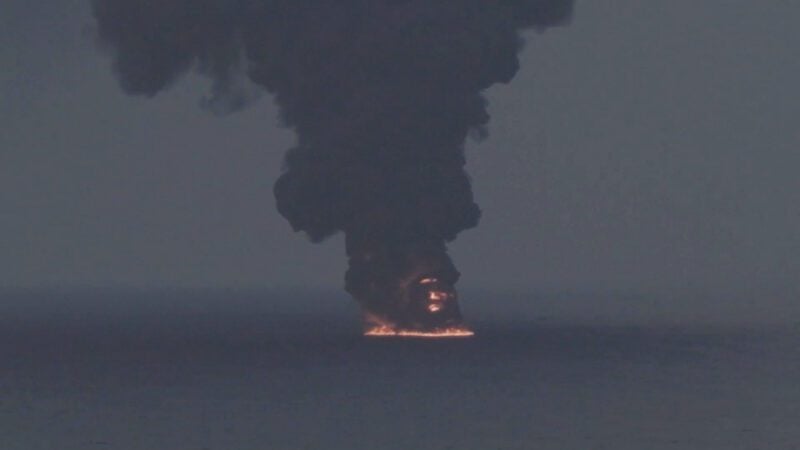
- Commercial transit through the Strait of Hormuz is very likely to remain hazardous through 22 November. UKMTO reported six confirmed vessel attacks in the first days of November and five in the final days of October. The IRGC Navy reported that two tankers hit mines and caught fire on 7 November, while the UAE reported rescuing 22 people from a burning cargo ship on 8 November. The available reporting does not establish whether the rescue involved either tanker or independently confirm the mine attribution. (Confidence: medium · ASSESSED)
- I&W: UKMTO reports another confirmed vessel attack in the Strait of Hormuz area, supporting continued hazard; a period with no confirmed attacks and verified routine transits would weaken the judgment. (0-14 days)
- I&W: UAE authorities or maritime monitors identify the rescued vessel and publish findings on its damage, helping confirm or separate that incident from the IRGC-reported tanker fires. (0-14 days)
- There is a roughly even chance that US forces conduct further strikes inside Iran by 21 November. President Donald Trump confirmed the limited 6 November strike on Qeshm Island, and reporting describes pressure from some advisers for renewed attacks. Countervailing signals include Trump's statements that he had no current plans for new strikes and was in no rush, alongside ongoing indirect talks. Conflicting accounts of his pre-election remarks and the absence of a reported decision on further strikes keep confidence at medium. (Confidence: medium · ASSESSED)
- I&W: CENTCOM or the White House confirms a new US strike inside Iran, supporting the assessment that further action is a live possibility. (0-14 days)
- I&W: Trump publicly rules out further strikes through 21 November and Qatar announces that both sides have accepted a negotiated pause, weakening the assessment. (0-14 days)
- A binding US-Iran agreement that reopens the Strait of Hormuz by 21 November is unlikely. Qatar has presented a proposal linking US blockade relief and a partial release of frozen Iranian assets to IAEA inspector visits, while Iranian statements describe broader conditions, including sanctions relief and reparations. Reports also differ on whether the blockade would lift immediately or the strait would reopen on the second day. Qatar remains active in mediation, and US officials reportedly asked China to use its influence with Tehran, but the available reporting does not establish agreed terms. (Confidence: medium · ASSESSED)
- I&W: Qatar or Oman announces a signed US-Iran arrangement with a published sequence for lifting the blockade and reopening the strait, weakening this judgment. (0-14 days)
- I&W: Iran repeats conditions not included in the Qatari proposal while CENTCOM reports continued blockade enforcement, supporting the assessment that an agreement remains unlikely. (0-14 days)
- The IRGC publicly declared on 7 November that Iran had lifted its self-imposed 2,000 km ballistic missile range limit. This is a reported policy signal, not evidence that Iran has fielded or demonstrated missiles with greater range. (Confidence: medium · REPORTED)
- I&W: The IRGC or Iranian military publishes a formal policy directive specifying a revised range limit, confirming that the announcement reflects a formal policy change. (0-3 months)
- I&W: A credible, independently documented Iranian missile test beyond 2,000 km would confirm a demonstrated range beyond the former limit; an Iranian clarification that the limit remains in force would weaken the reported policy interpretation. (1-3 months)
Outlook & scenarios
Continued blockade enforcement, no new US strikes (50%)
CENTCOM continues vessel interdictions and develops Task Force Iron Gate's land-route and Caspian remit, while Washington and Tehran avoid another direct strike. Shipping remains exposed to attack claims and incident-driven disruption. Qatar and China maintain diplomatic contacts without producing an agreed reopening sequence by 21 November.
Negotiated pause and staged reopening (25%)
Qatar's mediation produces agreement on a sequence linking blockade relief, access for IAEA inspectors and reopening of the Strait of Hormuz. Oman and Iran publish a transit route for submission to the IMO. The conflicting accounts of timing and Iranian conditions make this outcome less likely than continued enforcement.
Further US-Iran military exchanges (20%)
US forces conduct another strike inside Iran, and Tehran responds with military action or renewed threats against US or Gulf-linked targets. The Huda interdiction and continuing blockade provide immediate points of friction; the available reporting does not establish a decision for a wider campaign.
Wildcard: attacks spread to Gulf infrastructure (5%)
A further US strike prompts Iran to act on reported threats against Gulf infrastructure, widening the confrontation beyond shipping and US-Iran military sites. This is a low-probability, high-impact scenario; the stated threats and reported target orders do not establish that such attacks are planned or imminent.
Recommendations
- Maintain separate incident records for the IRGC-reported tanker mine strikes and the UAE rescue of 22 people. Do not treat them as the same event until vessel names, locations and damage reports match.
- Track UKMTO incident notices and CENTCOM blockade statements daily through 22 November. Record vessel identity, flag, location, reported cause and whether the account is independently corroborated.
- Seek confirmation of Task Force Iron Gate's actual remit and any operational activity. Keep the reported land-border and Caspian focus distinct from accounts describing a broader naval blockade expansion.
- Compare official US statements on further strikes with reporting about adviser pressure. Treat statements of intent, reported internal advice and confirmed military action as separate evidence categories.
- Track whether Qatar, Oman or the IMO publishes an agreed transit route or the sequence for reciprocal US and Iranian steps. Do not describe the proposals as an agreed deal until terms are confirmed by both sides.
- Treat the IRGC's missile-range announcement as a policy statement. Do not infer a demonstrated increase in Iranian missile range without reporting on a formal directive or a verified test.
Confidence & uncertainty
Overall confidence is high for the broad situation: CENTCOM's account of the Huda interdiction and blockade figures appears across major media and maritime trade reporting, while UKMTO reporting and the UAE rescue statement provide separate reporting on maritime incidents. Confidence is lower on the specific number and location of tankers involved, the cause of their fires, Task Force Iron Gate's precise remit and the terms of any agreement. The reported missile-range change is an official statement, not verified evidence of a change in deployed capability.
Intelligence gaps
- [EEI 1.1 · UNCOVERED] Concentrations or unusual movements of IRGC-Navy fast attack craft, small boat swarms, or escort vessels within 200 km of US/allied ships, including approach distances and formation changes. Recommended collection: maritime/AIS
- [EEI 1.2 · UNCOVERED] Detected pre-launch activity at coastal missile or rocket batteries (vehicle dispersal, fuel/warhead handling, radars powering up, transport erector launchers moving to firing positions). Recommended collection: imagery/signals
- [EEI 1.3 · UNCOVERED] Increased launch/arming/positioning of armed UAVs (MALE/loitering munitions) or tactical aircraft at Iranian coastal bases with sortie generation rates and munitions loadouts. Recommended collection: air/ADS-B/imagery
- [EEI 1.4 · UNCOVERED] Command-and-control indications of attack orders or elevated rules-of-engagement from IRGC/General Staff (intercepted communications, internal order messages, force-wide alert messages). Recommended collection: signals/human
- [EEI 2.2 · UNCOVERED] Issuance of formal orders, mobilization directives, travel restrictions, or official internal communications within IRGC/Armed Forces indicating escalation posture or stand-down. Recommended collection: human/diplomatic
- [EEI 2.3 · UNCOVERED] Directives, logistics movements, or communications from Iranian commanders to regional proxy militias (Houthis, Iraqi Shia militias, Lebanese groups) that change their threat posture or task them with specific operations. Recommended collection: signals/human
- [EEI 3.3 · PARTIAL] Commercial indicators of disruption: sudden increases in war-risk insurance premiums for Gulf transits, vessel re-routing decisions, port throughput reductions, or charter cancellations for Gulf shipments. Recommended collection: financial/commercial
- [EEI 3.4 · UNCOVERED] Movements or posture changes of regional state navies/air forces (Saudi, UAE, Kuwait, Bahrain, UK) such as task group departures, airbase dispersals, or announced maritime patrols near choke points. Recommended collection: open-source/imagery
Red cell review: CONCUR WITH COMMENT
TLP:CLEAR