TLP:CLEAR · Disclosure is not limited.
Persian Gulf: US-Iran Exchanges Keep Hormuz Risk Elevated
Time window: Last 1 day · Audience: General analyst · Type: Situation report · DTG: 2026-08-28 18:37Z · Overall confidence: MEDIUM
BLUF
US-Iran military confrontation is likely to remain elevated over the next 14 days, while the Strait of Hormuz remains dangerous despite US reports of mine clearance. Commercial traffic is continuing, but high tanker earnings, conflicting flow estimates and a SEVERE maritime threat assessment indicate that reliable normalisation is unlikely soon.
Executive summary
US forces report clearing Iranian mines from recognised shipping lanes and assisting 1,500 commercial vessels carrying about 750 million barrels of crude through the Strait of Hormuz. JMIC nevertheless maintains a SEVERE threat assessment, and Iran has threatened vessels transiting without its authorisation. Oman-Iran and Qatar-Iran contacts offer a diplomatic channel, but the relevant claims include arrangements dated 28 August 2023 and preliminary terms that do not establish a reliable 2026 reopening timeline. The record also mixes 2023 and 2026 reporting, reducing confidence in exact sequencing.
Change from previous assessment
The assessment is broadly unchanged on the central issue: US-Iran confrontation remains likely to stay elevated, and full reopening of the Strait of Hormuz remains unlikely within 14 days. Confidence in the immediate maritime picture has risen from low to medium for the mine-hazard and shipping judgements because new reporting describes Admiral Brad Cooper's mine-clearance announcement, US assistance to 1,500 vessels and crude flows of 6 million to 8 million barrels a day. Confidence remains low for the military-exchange and diplomatic judgements because the operational sequence is still uneven and several relevant claims are dated 2023. The medium-confidence assessment of Patriot strain is retained. The prior judgement on US legal pressure is not carried forward because this run supplies no new, current US vessel-seizure or prize-court development.
Key judgments
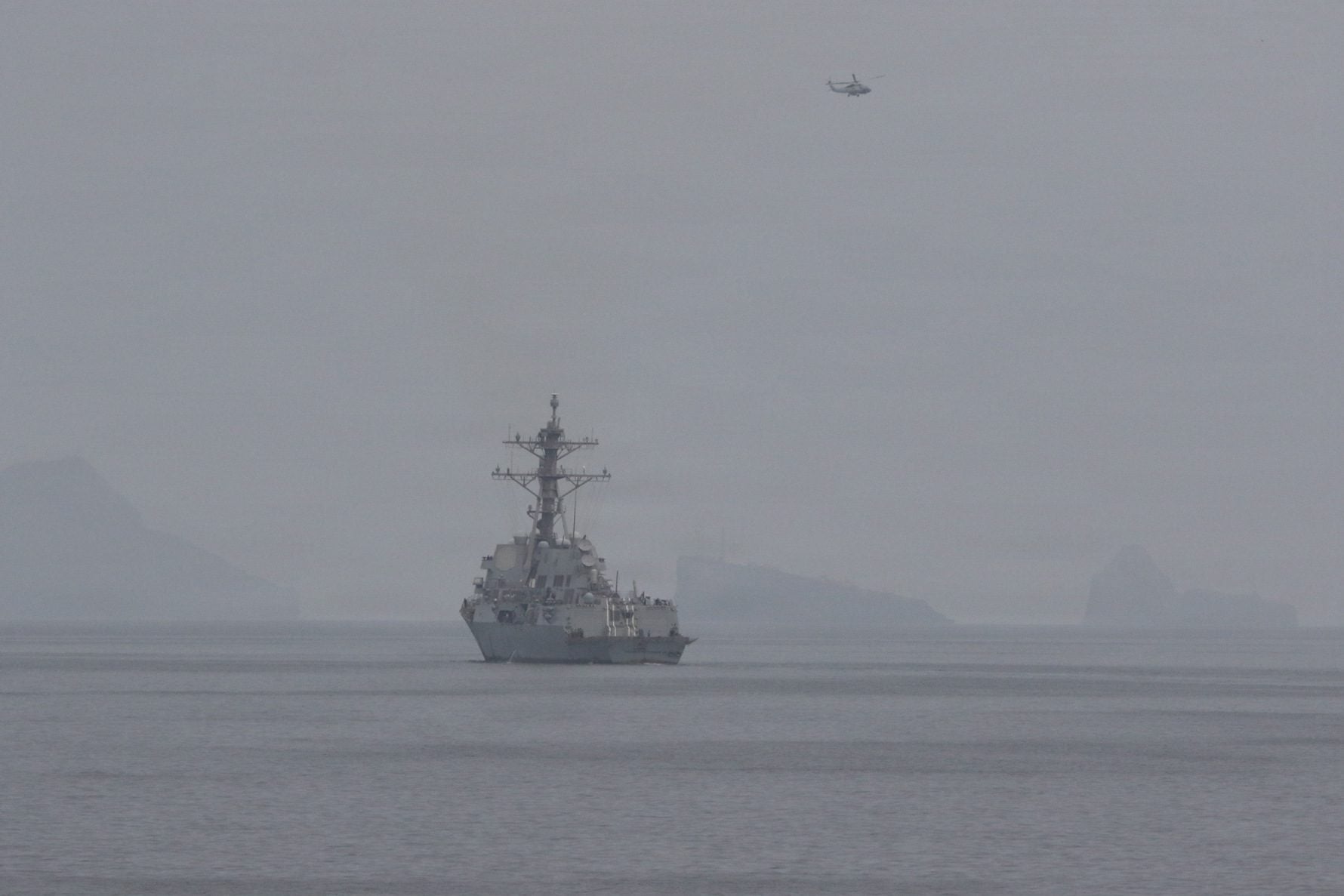
- US-Iran military confrontation is likely to remain elevated over the next 14 days. President Donald Trump announced major combat operations against Iran on 1 March 2026, Iran is reported to be using missile and drone attacks against Israel, and Tehran has threatened to strike vessels transiting the Strait of Hormuz without its authorisation. This is an assessed, low-confidence judgement because the record combines a March 2026 operational timeline with undated attack reporting and contains no fresh, independently corroborated US-Iran exchange dated 28 August 2026. (Confidence: low · ASSESSED)
- I&W: Confirm: within 0-14 days, Iran reports another missile or drone attack against Israel or issues a new threat against vessels without authorisation in the Strait of Hormuz. (0-14 days)
- I&W: Break: within 0-14 days, Iran publicly suspends attacks against Israel and withdraws its threat against unauthorised Hormuz transits. (0-14 days)
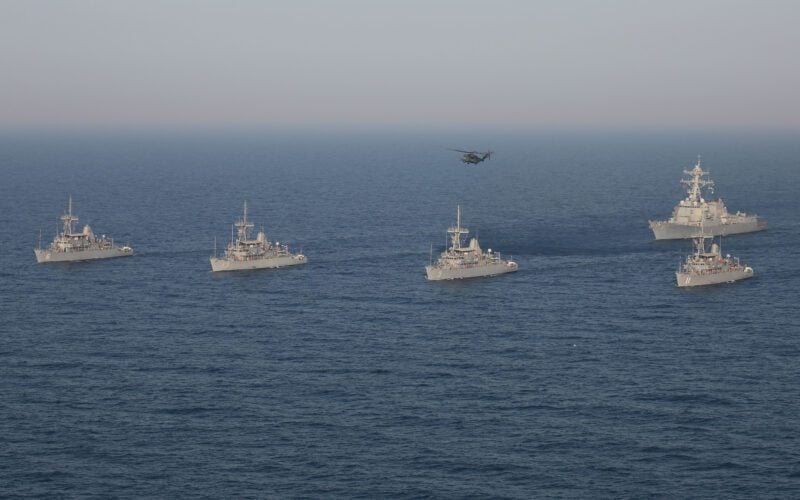
- Residual maritime hazard in the Strait of Hormuz is likely to persist despite US reports that Admiral Brad Cooper's forces cleared Iranian mines. JMIC maintains its overall threat assessment at SEVERE, US allies privately assess that the strait is likely still mined, and the UN International Maritime Organization has reported 70 incidents since the start of the war that killed 19 seafarers. This is an assessed, medium-confidence judgement because military, major-media and international reporting corroborate a high-risk environment, although the US mine-clearance claims conflict with the continuing SEVERE assessment. (Confidence: medium · ASSESSED)
- I&W: Confirm: within 0-14 days, JMIC retains the SEVERE assessment and reports continuing mine-surveying or clearance operations in the Strait of Hormuz. (0-14 days)
- I&W: Break: within 0-14 days, JMIC lowers the threat assessment and reports sustained commercial passage without further mine-surveying activity or vessel incidents. (0-14 days)
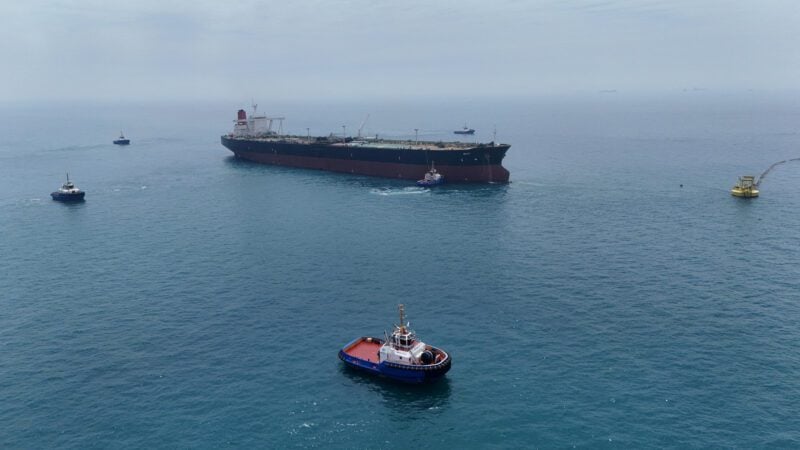
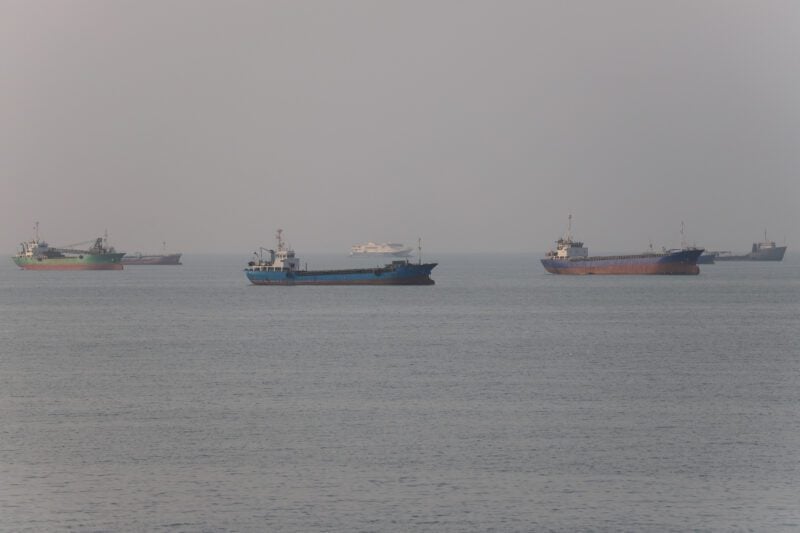
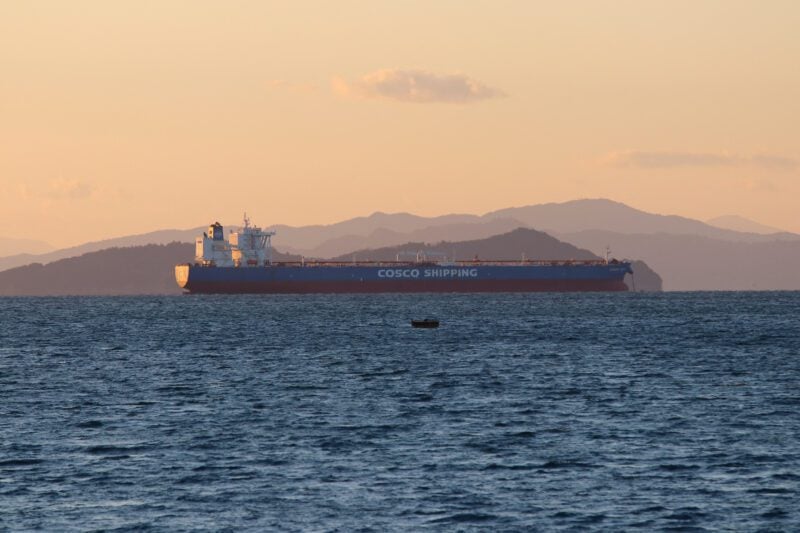
- Commercial traffic through the Strait of Hormuz is likely to continue, but reliable normalisation is unlikely within the next 14 days and operating costs are likely to remain high. US forces report assisting 1,500 vessels carrying about 750 million barrels of crude, oil traders estimate current flows at 6 million to 8 million barrels a day, and crude movements are reported to be increasing. At the same time, tanker earnings approached $650,000 a day on the benchmark route and reached $647,000 a day for Saudi Arabia-China cargoes. This is an assessed, medium-confidence judgement because several major-media and military reports indicate ongoing flows, but the volume estimates do not align and the record does not establish a consistent pre-conflict baseline. (Confidence: medium · ASSESSED)
- I&W: Confirm: within 0-14 days, tanker earnings remain at or above $647,000 a day while JMIC retains the SEVERE threat assessment. (0-14 days)
- I&W: Break: within 0-14 days, reported crude flows exceed 8 million barrels a day on a sustained basis, tanker earnings fall below $647,000 a day and JMIC lowers its threat assessment. (0-14 days)
- Qatar-Iran and Oman-Iran engagement is likely to continue, but full and reliable reopening of the Strait of Hormuz is unlikely within the next 14 days. Iran's military reported a revenue-sharing deal with Oman, Iran agreed to draw up conditions for restoring normal traffic, and Iran and Oman reportedly agreed in principle on administering traffic. The relevant Qatar and Iran-Oman reports are dated 28 August 2023 in the record, and the arrangements remain preliminary. This is an assessed, low-confidence judgement because the dates weaken direct relevance to the 28 August 2026 situation and the diplomatic claims do not establish implementation. (Confidence: low · ASSESSED)
- I&W: Confirm: within 0-14 days, Iran and Oman issue a joint implementation notice covering traffic administration and revenue sharing in the Strait of Hormuz. (0-14 days)
- I&W: Break: within 0-14 days, JMIC lowers the threat assessment from SEVERE and reporting shows sustained normal commercial traffic through the strait. (0-14 days)
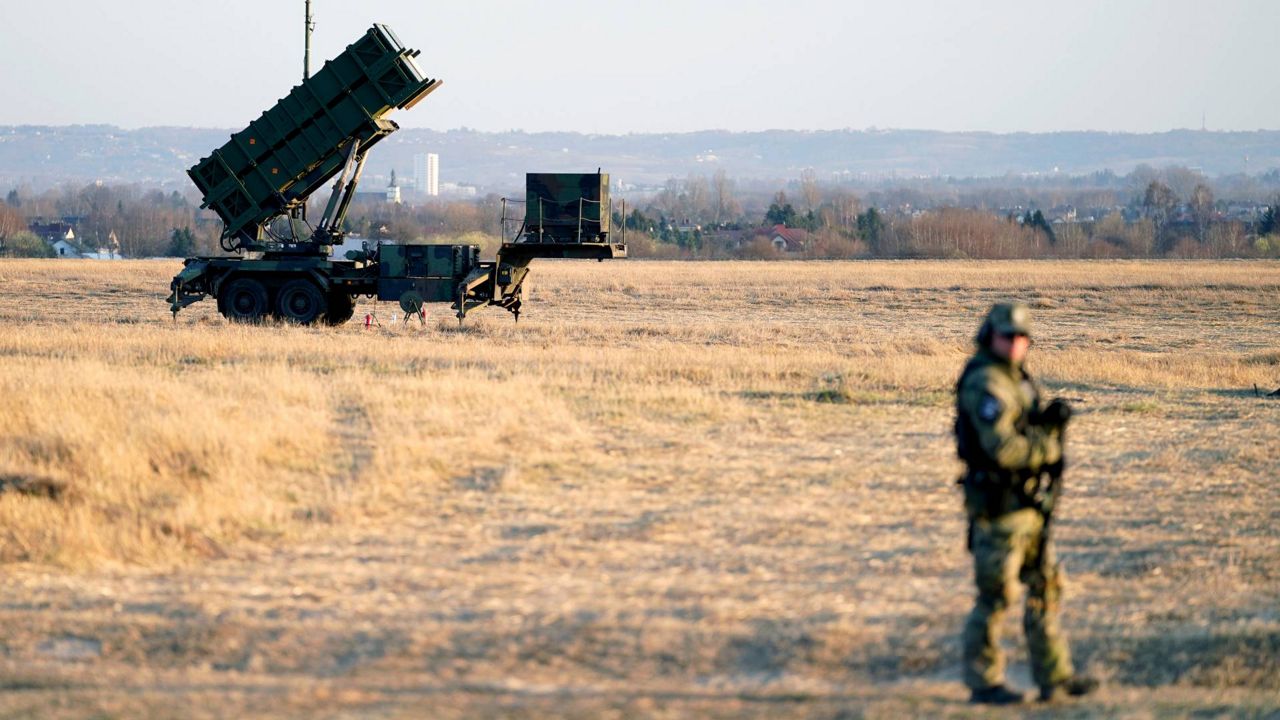
- US and NATO Patriot interceptor availability is likely to remain strained over the next 1 to 3 months. Reporting estimates that the Iran conflict used 65 per cent of US Patriot interceptors, that US missile stocks were moved from Europe to the Middle East, and that European inventories are beyond critical. Germany is reported to have Patriot systems without ammunition, while NATO reports that its first Patriot missile production facility in Germany is expected to open in September and that stockpiles are projected to rebound by 2030. This is an assessed, medium-confidence judgement based on several major-media reports, but the precise stockpile figures and the operational effect on US and NATO planning remain uncertain. (Confidence: medium · ASSESSED)
- I&W: Confirm: within 1-3 months, US missile stocks continue moving from Europe to the Middle East or European reporting continues to describe inventories as beyond critical. (1-3 months)
- I&W: Break: by the end of September 2026, NATO confirms the German Patriot production facility is operational and reports that US transfers from European stocks have stopped. (0-3 months)
Outlook & scenarios
Sustained maritime coercion with partial commercial passage (55%)
This is the most likely outcome over the next 14 days. Iran maintains its threat against unauthorised vessels, US forces continue mine-clearance and assisted transits, and JMIC retains a SEVERE assessment. Commercial flows continue unevenly, while tanker earnings remain near $650,000 a day.
Conditional reopening through Oman and Qatar (30%)
Oman-Iran and Qatar-Iran contacts produce operational conditions for selected shipping, including arrangements on traffic administration and revenue sharing. The Strait does not return fully to normal because mine-surveying activity and restrictions on some vessels continue.
Low-probability, high-impact escalation (10%)
A new strike on commercial shipping, a mine incident or a renewed Iranian missile and drone operation against Israel triggers further US-Iran exchanges. JMIC retains SEVERE or raises its assessment, commercial traffic contracts sharply and Patriot interceptor constraints become a more immediate factor in US and NATO defence planning.
Recommendations
- Build and maintain a 24-hour chronology separating claims dated 2023 from claims dated 2026. Do not use the AL SALAM II incident dated 25 August 2023 or the Qatar-Iran meeting dated 28 August 2023 as evidence of a new 2026 development without fresh confirmation.
- Reconcile Admiral Brad Cooper's mine-clearance statements against JMIC threat updates, continuing mine-surveying reports and the UN International Maritime Organization incident count. Treat the shipping lanes as operationally contested until those indicators converge.
- Track Oman and Iran for a joint implementation notice that specifies traffic administration, revenue sharing and the treatment of military and commercial vessels. Track Qatar for evidence that its reported diplomatic engagement has produced operational compliance rather than general assurances.
- Monitor daily tanker earnings, reported crude volumes and the number of assisted transits. Keep the 6 million to 8 million barrels-a-day estimate separate from the reported 130 million barrels guided over 14 days until the discrepancy is resolved.
- Review US and NATO Patriot posture at least monthly through November 2026, with particular attention to the September opening of the German production facility, further transfers from European stocks and any reported effect on Ukraine or Gulf air-defence coverage.
Confidence & uncertainty
Overall confidence is medium because military and official reporting corroborates mine-clearance activity, assisted commercial transits and a SEVERE maritime threat assessment, while major-media reporting provides multiple indicators of elevated tanker costs and ongoing oil movements. Confidence is limited by the mixture of 2023 and 2026 dates, conflicting estimates of cargo volumes, disagreement between claimed mine clearance and residual-threat assessments, and preliminary diplomatic reporting that lacks a clear implementation timeline.
Intelligence gaps
- [EEI 1.1 · UNCOVERED] Concentrations or unusual movements of IRGC-Navy fast attack craft, small boat swarms, or escort vessels within 200 km of US/allied ships, including approach distances and formation changes. Recommended collection: maritime/AIS
- [EEI 1.2 · UNCOVERED] Detected pre-launch activity at coastal missile or rocket batteries (vehicle dispersal, fuel/warhead handling, radars powering up, transport erector launchers moving to firing positions). Recommended collection: imagery/signals
- [EEI 1.3 · UNCOVERED] Increased launch/arming/positioning of armed UAVs (MALE/loitering munitions) or tactical aircraft at Iranian coastal bases with sortie generation rates and munitions loadouts. Recommended collection: air/ADS-B/imagery
- [EEI 1.4 · UNCOVERED] Command-and-control indications of attack orders or elevated rules-of-engagement from IRGC/General Staff (intercepted communications, internal order messages, force-wide alert messages). Recommended collection: signals/human
- [EEI 2.2 · PARTIAL] Issuance of formal orders, mobilization directives, travel restrictions, or official internal communications within IRGC/Armed Forces indicating escalation posture or stand-down. Recommended collection: human/diplomatic
- [EEI 2.3 · UNCOVERED] Directives, logistics movements, or communications from Iranian commanders to regional proxy militias (Houthis, Iraqi Shia militias, Lebanese groups) that change their threat posture or task them with specific operations. Recommended collection: signals/human
- [EEI 3.4 · UNCOVERED] Movements or posture changes of regional state navies/air forces (Saudi, UAE, Kuwait, Bahrain, UK) such as task group departures, airbase dispersals, or announced maritime patrols near choke points. Recommended collection: open-source/imagery
Cited sources
[1] ABC News · Largest US military base in Middle East hit by missile, Qatar says (A) · sha256:c7dfca321f09 [2] gcaptain.com · Iran War Diplomacy Turns Toward Reopening Hormuz (B) · sha256:88fd0104dadf [3] gcaptain.com · US Commander Declares Hormuz Shipping Lanes Are Mine-Free (A) · sha256:207180f7dc2e [4] gcaptain.com · U.S. Military Says It Has Cleared Iran’s Mines From Strait of Hormuz Shipping Lanes (A) · sha256:dce3299a6e04 [5] gcaptain.com · Hormuz Oil Flows Rising as Gulf Giants’ Ramp Up Accelerates (B) · sha256:8af12d4eb729 [6] gcaptain.com · Gulf Oil Tankers Near $650,000 a Day as Iran War Disrupts Flows (A) · sha256:2e3baae6c664 [7] spectrumlocalnews.com · Officials: U.S. Patriot missile stocks in Europe are 'beyond critical' (B) · sha256:3ef952467331
Source content hashes were computed at collection time; the cited text is preserved unmodified for the life of this product.
Red cell review: CONCUR WITH COMMENT
TLP:CLEAR