TLP:CLEAR · Disclosure is not limited.
Persian Gulf: US-Iran Exchanges Keep Hormuz Under Pressure
Time window: Last 1 day · Audience: General analyst · Type: Situation report · DTG: 2026-08-26 18:09Z · Overall confidence: LOW
BLUF
US-Iran military and economic confrontation is likely to keep commercial traffic through the Strait of Hormuz severely constrained over the next 14 days. Oman-Iran discussions on a temporary corridor provide the main reported de-escalation channel, but immediate normalisation is unlikely while Tehran links traffic restoration to US sanctions relief.
Executive summary
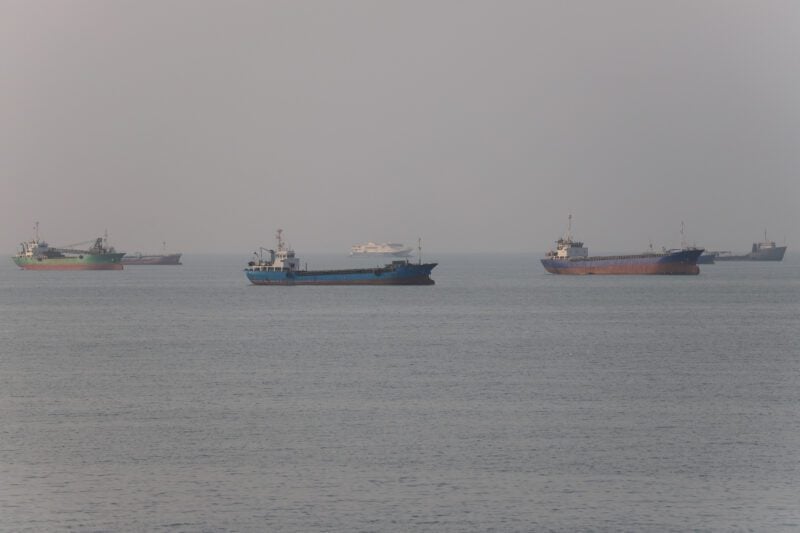
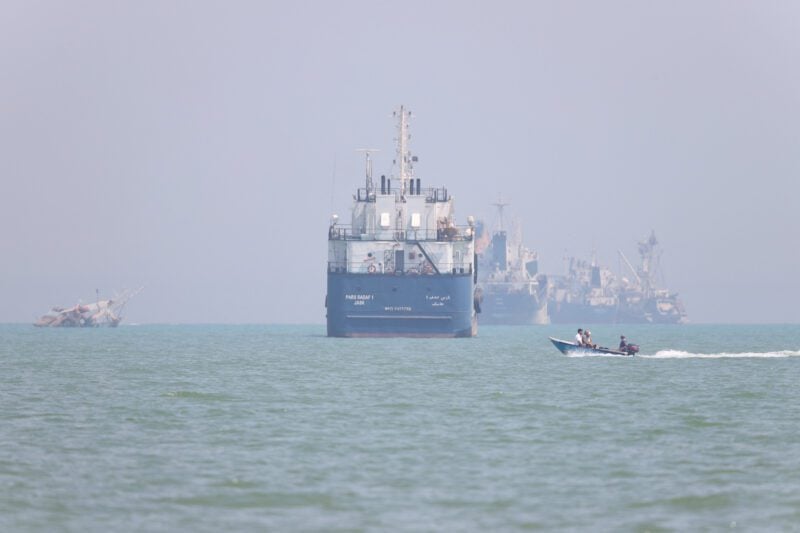
Iran's partial blockade, reported attacks on Gulf states hosting US military bases, and warnings from Iranian officials are sustaining pressure around the Strait of Hormuz. The IMO has reported at least 70 maritime incidents, 19 sailor deaths, 35 injuries, and about 500 vessels unable to leave the Persian Gulf, although the central maritime picture remains contested. Iran and Oman continue to discuss navigational arrangements, while Japan is pursuing pipelines, insurance, and risk-financing measures to reduce exposure to Hormuz disruption. The reporting contains major date inconsistencies, conflicting claims about whether the strait is open, and no confirmed attribution for the oil tanker hit on 25 August.
Change from previous assessment
Since the 25 August 2026 brief, the core assessment is unchanged: commercial traffic is likely to remain constrained and Iran is likely to use maritime pressure. Confidence is lowered from medium to low because the new reporting adds conflicting claims on whether Hormuz is open, whether mine clearance is confirmed, and whether the tanker incident is attributable. This brief adds a judgement on Japan's bypass, insurance, and risk-financing response. It also reframes the diplomatic picture around the Oman-Iran corridor discussions, while direct US-Iran negotiations remain unlikely.
Key judgments
- US-Iran military and economic confrontation is likely to remain elevated over the next 14 days. The United States has combined a naval blockade with sanctions that Scott Bessent said would take effect on 24 August, while Ali Madanizadeh said Iran was prepared to respond. Iran's partial blockade of the Strait of Hormuz, Ahmad Vahidi's appointment as IRGC commander with an offensive remit, and Marco Rubio's statement that Washington did not expect new strikes for now point to continued pressure below the threshold of a declared new US strike. This is an assessed, low-confidence judgement. The reporting is thinly corroborated and contains incompatible dates for the war, the air campaign, and the sanctions sequence. (Confidence: low · ASSESSED)
- I&W: CONFIRM: Within 0 to 14 days, Scott Bessent announces another sanctions measure or Ali Madanizadeh or another senior Iranian official announces a concrete retaliatory step. (0 to 14 days)
- I&W: BREAK: Within 0 to 14 days, Marco Rubio states that the pressure campaign has ended and Iranian authorities report that the partial blockade has ended. (0 to 14 days)
- Commercial traffic through the Strait of Hormuz is very likely to remain constrained rather than fully restored over the next 14 days. The IMO has reported at least 70 maritime incidents, 19 sailor deaths, 35 injuries, and about 500 vessels unable to leave the Persian Gulf. Iran continues a partial blockade, while the IMO head said the strait was not open and mine clearance was unconfirmed. A contrary claim from Donald Trump says the strait is open and many ships are passing. This is an assessed, low-confidence judgement because the central traffic picture is based on limited corroboration and the mine-clearance and openness claims conflict. (Confidence: low · ASSESSED)
- I&W: CONFIRM: Within 0 to 14 days, the IMO or a shipping monitor reports that roughly 500 vessels remain unable to leave the Persian Gulf and publishes no confirmation that mine clearance is complete. (0 to 14 days)
- I&W: BREAK: Within 0 to 14 days, Oman and the IMO publish a corridor in operation and report sustained commercial departures from the Persian Gulf through the Strait of Hormuz. (0 to 14 days)
- Oman-Iran engagement over the Strait of Hormuz is likely to continue, but immediate reopening of the waterway is unlikely over the next 14 days. Oman's foreign minister Badr Albusaidi and Iranian officials have discussed a joint temporary navigational corridor, and Oman and the IMO previously created a temporary maritime corridor on 24 June 2026. Tehran has stated that traffic normalisation depends on the United States lifting sanctions and has warned that an agreement with Oman would not reopen the waterway immediately. This is an assessed, low-confidence judgement because the corridor reporting is single-source in parts and the dates of the reported arrangements are inconsistent. (Confidence: low · ASSESSED)
- I&W: CONFIRM: Within 0 to 14 days, Badr Albusaidi announces practical arrangements for a joint corridor, including an opening date and eligible vessels. (0 to 14 days)
- I&W: BREAK: Within 0 to 14 days, Iran or Oman publicly ends corridor discussions, or Tehran removes sanctions relief as a condition for traffic normalisation. (0 to 14 days)
- Iran is likely to sustain coercive pressure on shipping and on Persian Gulf states hosting US military bases over the next 14 days, but attribution for the oil tanker hit in the Strait of Hormuz on 25 August remains unresolved. Reporting says Iranian attacks have focused more on Gulf states hosting US bases, Ali Abdollahi warned those states against assisting US operations, and a senior Iranian official described a move towards a fully offensive posture. The 25 August tanker incident is attributed only to an unknown actor. This is an assessed, low-confidence judgement because the pressure indicators are official statements and reported policy, whereas the incident attribution lacks corroboration. (Confidence: low · ASSESSED)
- I&W: CONFIRM: Within 0 to 14 days, Iranian authorities announce another restriction on a named vessel or a further incident is reported involving a tanker near Hormuz or a Persian Gulf state hosting US military bases. (0 to 14 days)
- I&W: BREAK: Within 0 to 14 days, a credible investigation attributes the 25 August strike to a named actor, or Iran publicly disavows involvement with supporting evidence. (0 to 14 days)
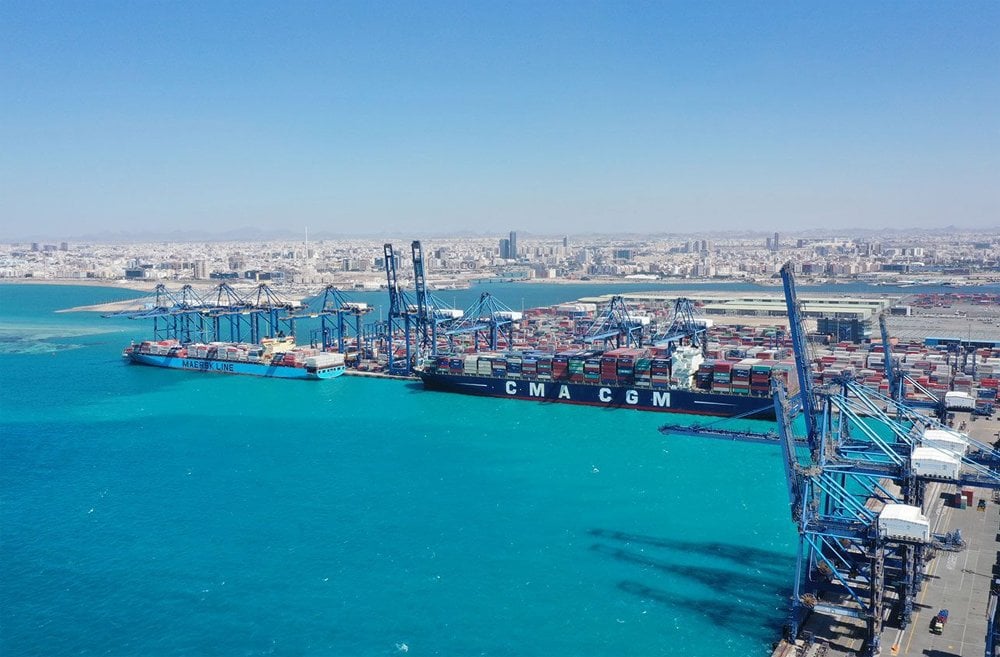
- Japan is likely to accelerate efforts to reduce its exposure to Strait of Hormuz disruption over the next 1 to 3 months, but these measures are unlikely to restore near-term energy flows to Asia. Japan plans to support pipelines bypassing Hormuz, strengthen risk financing through the Japan Organization for Metals and Energy Security, and secure insurance for vessels. Japanese refiners have already sought alternative supplies. Saudi Arabia and CMA CGM have announced a US$434 million expansion of Jeddah Islamic Port that is intended to add approximately 2.6 million TEUs of annual capacity, indicating longer-term route adaptation rather than immediate relief. This is an assessed, medium-confidence judgement based on multiple major-media and trade-publication reports, but there is no direct evidence that the infrastructure measures are operational. (Confidence: medium · ASSESSED)
- I&W: CONFIRM: Within 1 to 3 months, Japan approves financing or insurance arrangements for a named pipeline or vessel programme that bypasses Hormuz. (1 to 3 months)
- I&W: BREAK: Within 1 to 3 months, Japan abandons the bypass and insurance measures, while Japanese refiners report a sustained return to previous Gulf supply patterns. (1 to 3 months)
Outlook & scenarios
Managed coercive standoff (55%)
Iran maintains partial restrictions around the Strait of Hormuz, issues further warnings to Gulf states hosting US military bases, and sustains pressure on selected shipping. The United States maintains sanctions and naval pressure without launching new strikes. Oman continues discussions with Iran, while commercial vessels pass selectively with delays and elevated freight rates. This is the most likely scenario.
Limited maritime accommodation (30%)
Oman-Iran arrangements produce a controlled increase in commercial passages through a temporary corridor. Tehran retains the ability to restrict selected vessels and continues to link full traffic normalisation to US sanctions relief. Shipping conditions improve from the current position but do not return to pre-conflict levels.
Tanker or Gulf-base escalation (15%)
A further incident involving an oil tanker or a Persian Gulf state hosting US military bases triggers a direct US-Iran exchange. Iran tightens restrictions, the temporary-corridor discussions stall, and commercial traffic falls further. This is a low-probability, high-impact wildcard.
Recommendations
- For the next 14 days, maintain a daily Strait of Hormuz tracker covering vessel departures, vessels remaining in the Persian Gulf, reported incidents, sailor casualties, mine-clearance notices, and statements from Iran, Oman, the IMO, Donald Trump, Scott Bessent, and Marco Rubio.
- Create an evidence ledger that separates reporting dated 2026 from claims dated 2023. Prioritise resolution of the conflicting timelines for the US-Israel air campaign, sanctions announcements and effective dates, the Oman-Iran corridor, and the reported 25 August tanker strike.
- Treat attribution of the 25 August tanker incident as unresolved in all assessments until a named actor is identified by a credible investigation. Do not use the incident alone to support an assessment of Iranian responsibility.
- Monitor Iranian enforcement actions against named vessels, warnings from Ali Abdollahi and IRGC officials, and activity involving Persian Gulf states hosting US military bases. Escalate analytic review if two or more of these indicators occur within 14 days.
- Track whether Badr Albusaidi or Iranian officials announce an operating date, eligible vessels, and enforcement arrangements for a temporary corridor. Use those details to distinguish a functioning corridor from a diplomatic statement without operational effect.
- Assess Japan's pipeline, insurance, and risk-financing measures separately from near-term shipping relief. Track implementation milestones and the Jeddah Islamic Port expansion without treating announced capacity as immediately available.
Confidence & uncertainty
Overall confidence is low. The core reporting comes largely through major-media accounts, with limited independent corroboration for the maritime incident totals, the number of vessels unable to leave the Persian Gulf, and the status of mine clearance. The dataset also mixes 2023 and 2026 dates and contains direct contradictions over whether the Strait of Hormuz is open, whether a corridor has been established, and the timing of sanctions and military operations. Attribution for the 25 August tanker hit remains unknown.
Intelligence gaps
- [EEI 1.1 · UNCOVERED] Concentrations or unusual movements of IRGC-Navy fast attack craft, small boat swarms, or escort vessels within 200 km of US/allied ships, including approach distances and formation changes. Recommended collection: maritime/AIS
- [EEI 1.2 · UNCOVERED] Detected pre-launch activity at coastal missile or rocket batteries (vehicle dispersal, fuel/warhead handling, radars powering up, transport erector launchers moving to firing positions). Recommended collection: imagery/signals
- [EEI 1.3 · UNCOVERED] Increased launch/arming/positioning of armed UAVs (MALE/loitering munitions) or tactical aircraft at Iranian coastal bases with sortie generation rates and munitions loadouts. Recommended collection: air/ADS-B/imagery
- [EEI 1.4 · UNCOVERED] Command-and-control indications of attack orders or elevated rules-of-engagement from IRGC/General Staff (intercepted communications, internal order messages, force-wide alert messages). Recommended collection: signals/human
- [EEI 2.2 · UNCOVERED] Issuance of formal orders, mobilization directives, travel restrictions, or official internal communications within IRGC/Armed Forces indicating escalation posture or stand-down. Recommended collection: human/diplomatic
- [EEI 2.3 · UNCOVERED] Directives, logistics movements, or communications from Iranian commanders to regional proxy militias (Houthis, Iraqi Shia militias, Lebanese groups) that change their threat posture or task them with specific operations. Recommended collection: signals/human
- [EEI 3.2 · UNCOVERED] Discovery or reporting of naval mines, unexploded ordnance, or damage to fixed maritime infrastructure (oil platforms, terminals, pipelines) with geolocated imagery or on-scene assessments. Recommended collection: imagery/open-source
- [EEI 3.3 · PARTIAL] Commercial indicators of disruption: sudden increases in war-risk insurance premiums for Gulf transits, vessel re-routing decisions, port throughput reductions, or charter cancellations for Gulf shipments. Recommended collection: financial/commercial
- [EEI 3.4 · UNCOVERED] Movements or posture changes of regional state navies/air forces (Saudi, UAE, Kuwait, Bahrain, UK) such as task group departures, airbase dispersals, or announced maritime patrols near choke points. Recommended collection: open-source/imagery
Cited sources
[1] Wikipedia · Iran (B) · sha256:286487bfd18d [2] foreignpolicy.com · Why Iran Might Escalate (B) · sha256:36ec01b1a8e9 [3] NoonPost · Будет больно. Вот как Иран ответит на новые санкции США (NoonPost, Египет) (B) · sha256:2d7ebe4d753d [4] gcaptain.com · Iran Vows to Resist Widened U.S. Sanctions, Says Washington Seeks Talks (A) · sha256:3c4aeb5af642 [5] meduza.io · США и Иран договорились прекратить войну еще два месяца назад — но так и не прекратили. Что помешало миру? И возможен ли он вообще? (B) · sha256:a6f627322ff7 [6] gcaptain.com · Iran and Oman Plan for Temporary Hormuz Corridor as Impasse With US Persists (B) · sha256:c738d8d7272c [7] Deutsche Welle · إسرائيل بعد حرب إيران. ماذا كسب نتانياهو؟ (B) · sha256:971e3c08ad39 [8] kommersant.ru · ИМО: с начала марта в Ормузском и Персидском заливах погибли 19 моряков (B) · sha256:25015cda2596 [9] gcaptain.com · Iran, Oman Agree to Share Strait of Hormuz Revenue (B) · sha256:df5aeb2e41f1 [10] gcaptain.com · Japan Energy Plan Seeks to Back Pipelines Bypassing Hormuz (A) · sha256:03b01fa169e1 [11] maritime-executive.com · Korean LPG Carrier Sets Record With $5.3M Panama Canal Slot Auction (C) · sha256:c7ef37336fe8 [12] maritime-executive.com · CMA CGM and Saudi Arabia to Invest $434M to Expand Jeddah Islamic Port (C) · sha256:380f213ed51c
Source content hashes were computed at collection time; the cited text is preserved unmodified for the life of this product.
TLP:CLEAR