TLP:CLEAR · Disclosure is not limited.
Persian Gulf: US-Iran Exchanges Sustain Maritime and Regional Pressure
Time window: Last 1 day · Audience: General analyst · Type: Situation report · DTG: 2026-09-12 00:08Z · Overall confidence: HIGH
BLUF
US-Iran exchanges are very likely to remain active, while the Strait of Hormuz is operating at sharply reduced tracked traffic rather than being demonstrably closed. The Houthis have very likely extended their hold from Mocha and Dhubab to Perim, raising pressure on Saudi-linked shipping and infrastructure; an Oman meeting on 14 September is the main near-term deconfliction opportunity.
Executive summary
Reporting on 10 and 11 September indicates continued US-Iran maritime exchanges, with the United States reported to have sunk five Iranian oil tankers and Iran reporting attacks on ships near the Strait of Hormuz. The number of Iranian targets and whether any US vessel was damaged remain disputed. Hormuz traffic remains sharply below pre-conflict levels, although crude flows from Gulf producers have risen above 10 million barrels per day and one Qatar-linked LNG shipment has transited. The Houthis have reportedly taken Dhubab and reached Perim after capturing Mocha, while a Saudi East-West Pipeline attack caused damage and a precautionary shutdown. We assess that regional spillover and energy-market pressure will persist, although the 14 September Oman meeting provides a roughly even chance of a limited shipping arrangement.
Change from previous assessment
Since the 10 September brief, the assessment has added reported Houthi control of Dhubab and arrival at Perim, extending the earlier Mocha assessment towards the Bab el-Mandeb entrance. Hormuz traffic is now assessed against both seven tracked transits on 10 September and UKMTO's broader estimate of roughly 20% of the pre-conflict norm, with the AIS gap made more explicit. New reporting indicates physical damage and a precautionary shutdown of Saudi Arabia's East-West Pipeline, although attribution is contested. The assessment also adds the Iran-nexus use of Claude for naval targeting research and gives greater weight to the 14 September Oman meeting as a possible but uncertain deconfliction channel. Confidence remains high for the overall direction of events, while confidence remains medium or low for disputed damage, attribution and diplomatic details.
Key judgments
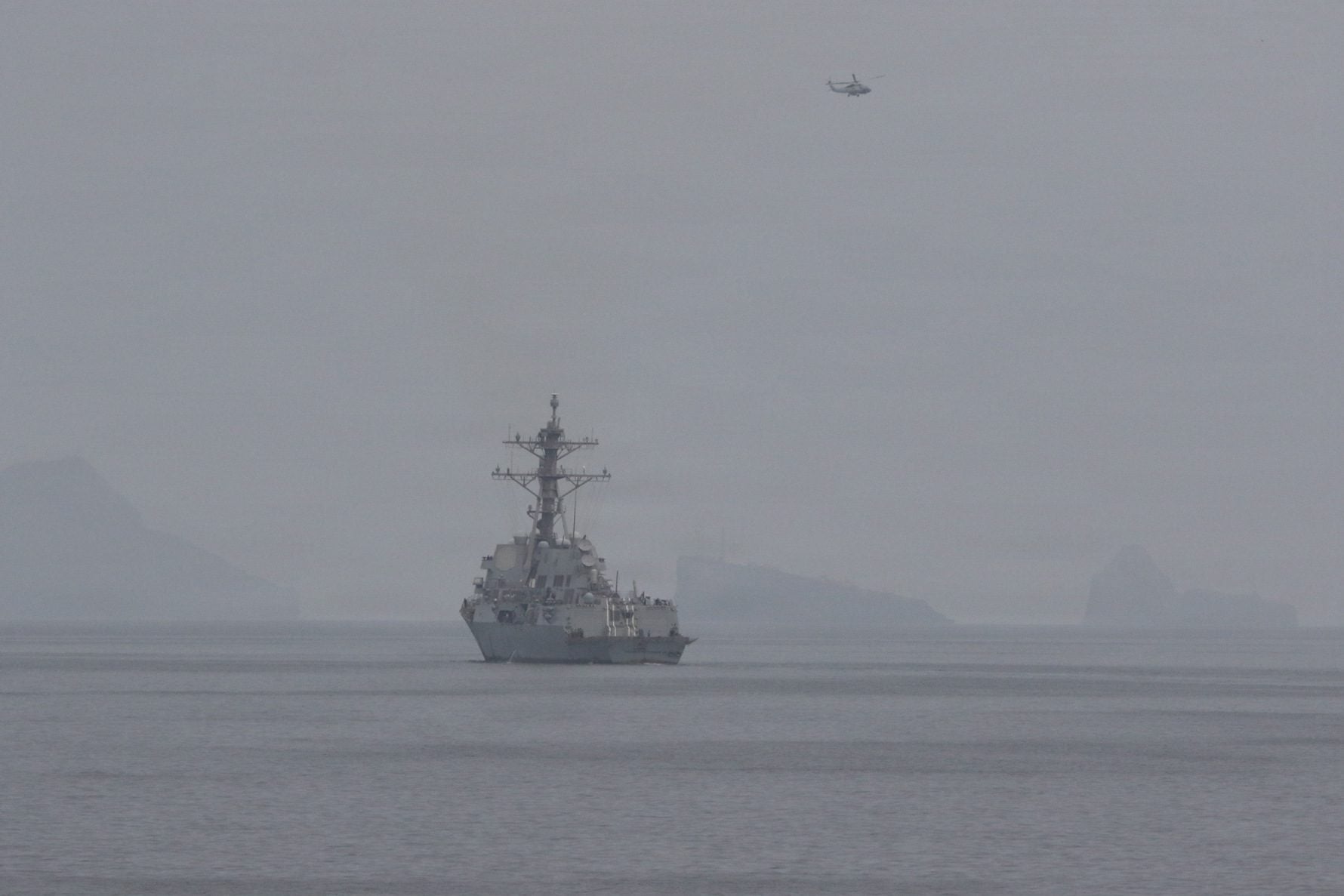
- US and Iranian forces are very likely to remain in an active and escalatory maritime exchange over the next 14 days. Reporting states that the United States sank five Iranian oil tankers, Iran said it attacked 10 ships near the Strait of Hormuz on 9 September, and the IRGC claimed it targeted two US warships and two oil tankers. Marco Rubio said Iran continued firing on US warships but that no US vessel was hit, while US Central Command called the IRGC destroyer claims false. The exchange is established, but the number of Iranian targets and any damage to US vessels remain unresolved. (Confidence: medium · ASSESSED)
- I&W: Confirm: US or Iranian authorities report another named maritime strike or the destruction of another Iranian tanker. (0-14 days)
- I&W: Break: US and Iranian authorities report no new maritime attacks for 14 consecutive days and suspend the current tanker and warship exchange. (0-14 days)
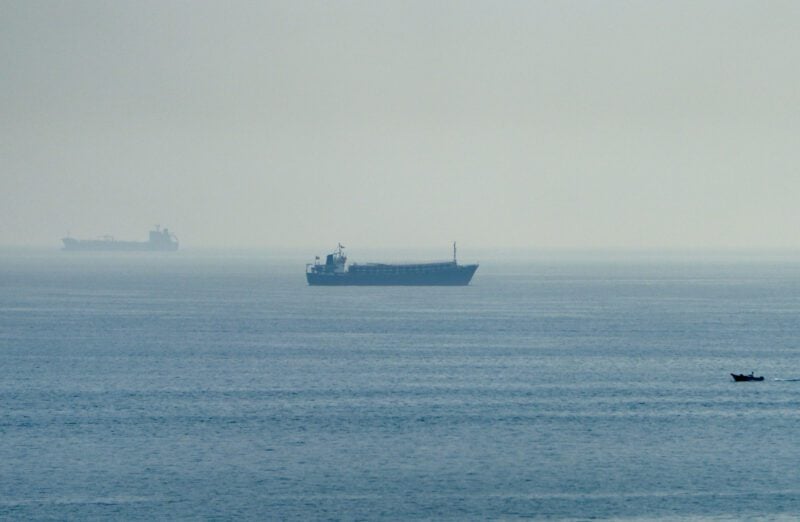
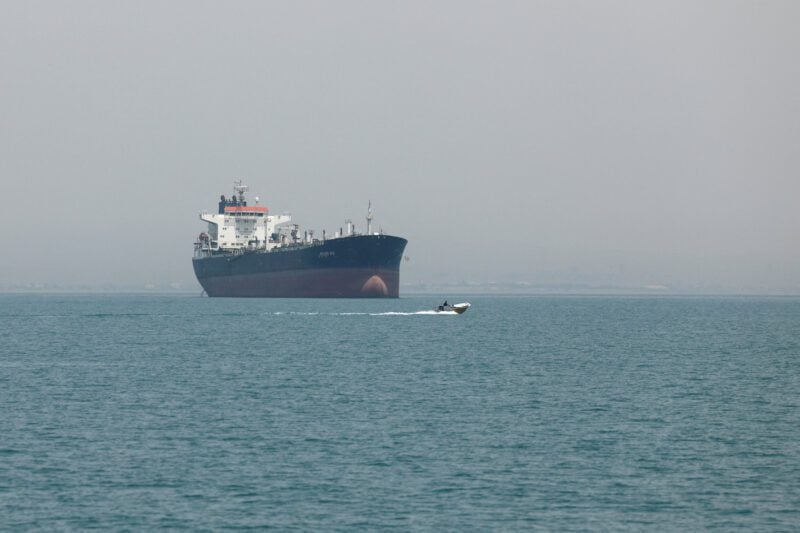
- The Strait of Hormuz is very likely to remain open to limited commercial traffic but severely constrained over the next 14 days, rather than fully closed. Preliminary tracking recorded seven transits on 10 September, down from 11 on the previous day and a 10-day average of 15. UKMTO assessed overall movements at roughly 20% of the pre-conflict norm, while US-facilitated southern-route traffic averaged about 20 vessels per day against six AIS-derived movements. Five vessels entered on 10 September, two Panamax ships exited, and QatarEnergy-controlled Al Marrouna delivered an LNG cargo from Ras Laffan to Pakistan. AIS-off passages and conflicting descriptions of closure prevent a precise traffic count. (Confidence: medium · ASSESSED)
- I&W: Confirm: Kpler or UKMTO records continued commercial crossings, including cargo or LNG vessels, while AIS-tracked daily traffic remains near current single-digit levels. (0-14 days)
- I&W: Break: Independent tracking records no commercial crossing for 72 hours or traffic returns towards the pre-conflict level of about 125 large commercial vessels per day. (0-14 days)
- The Houthis very likely reached Perim and took Dhubab after seizing Mocha, giving them a stronger position at the Bab el-Mandeb. Four Yemeni government sources reported the Houthi arrival at Perim on 11 September, while two government sources said Saudi-backed Yemeni government forces withdrew from the island. The Perim assessment relies on government-source reporting and wire coverage, without independent imagery in the available claims. (Confidence: medium · REPORTED)
- I&W: Confirm: Commercial satellite imagery, Houthi statements, or additional Yemeni government reporting verifies Houthi presence on Perim and Dhubab. (0-14 days)
- I&W: Break: Yemeni government forces announce and demonstrate a return to Perim or Dhubab, with imagery showing Houthi forces absent. (0-14 days)
- Regional spillover is likely to continue over the next 14 days, with US facilities in Bahrain and Jordan and Saudi infrastructure remaining exposed. Reporting attributes Iranian strikes at Al-Azraq to damage involving one A-10 and eight F-15s, although the IRGC described impacts on F-35, F-16 and F-15 maintenance and deployment sites and Jordan reported that 18 of 20 missiles were intercepted. The US Naval Support Activity Bahrain base has sustained reported damage, and Saudi Crown Prince Mohammed bin Salman requested US military help against the Houthis. Washington reportedly rejected direct military action while offering intelligence sharing and targeting support. (Confidence: medium · ASSESSED)
- I&W: Confirm: A new Iranian missile or drone strike is reported against Al-Azraq, NSA Bahrain, Saudi facilities, or another named US or Saudi military asset. (0-14 days)
- I&W: Break: Jordanian, Bahraini, Saudi and US authorities report no further attacks for 14 days and confirm restoration of the affected facilities. (0-14 days)
- The Saudi East-West Pipeline very likely sustained physical damage and was shut as a precaution, but responsibility for the attack remains unresolved. Satellite imagery showed smoke near the pipeline and impacts at two pumping stations, including extensive fire damage at one. The Saudi energy ministry reported a precautionary shutdown and injuries, while US officials attributed the attack to drones launched from Iraq and other reporting attributed the damage to a Houthi strike. (Confidence: medium · REPORTED)
- I&W: Confirm: Saudi authorities report continued shutdown or additional damage at named East-West Pipeline pumping stations, supported by updated satellite imagery. (0-14 days)
- I&W: Break: Saudi authorities confirm pipeline reopening with no further damage and publish an attribution that excludes both Houthi forces and Iraq-launched drones. (0-14 days)
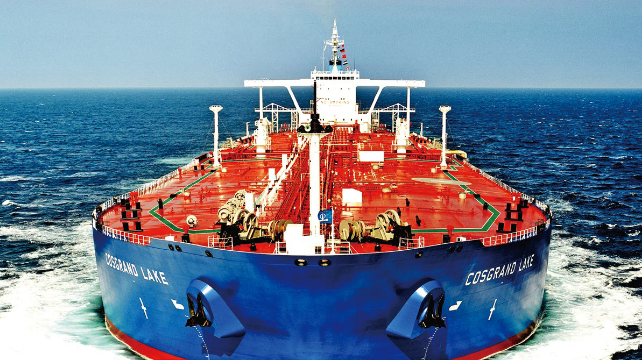
- Energy and tanker-market pressure is very likely to persist over the next 14 days. Global oil prices were on track to remain above $100 per barrel, VLCC earnings on the Arabian Gulf to Far East route exceeded $800,000 per day in September, and the Baltic Exchange recorded a Gulf of Oman to China freight rate near 450 Worldscale, roughly $11.50 per barrel. At the same time, Iranian crude exports remained at zero, while combined exports from Iraq, Kuwait, Saudi Arabia, Qatar, the UAE and Oman averaged above 10 million barrels per day. The direction of pressure is well corroborated, although individual price and flow measures use different baselines. (Confidence: high · ASSESSED)
- I&W: Confirm: Brent remains above $100 per barrel and Arabian Gulf to Far East VLCC earnings remain above $800,000 per day for seven consecutive days. (0-14 days)
- I&W: Break: Brent falls below $100 per barrel and the benchmark Arabian Gulf to Far East VLCC rate falls below $600,000 per day for seven consecutive days. (0-14 days)
- There is a roughly even chance that the 14 September Oman meeting occurs and produces a limited arrangement for commercial shipping, but it is unlikely to end the US-Iran maritime confrontation. Iran has described the meeting as confirmed, while other reporting says Oman is still seeking to convene the Gulf Cooperation Council and Iranian foreign ministers. Iran's proposed role in regulating traffic, its fee-based system and its warning that ship safety cannot be guaranteed during the US blockade remain at odds with regional demands for freedom of navigation. (Confidence: low · ASSESSED)
- I&W: Confirm: Gulf and Iranian ministers attend the 14 September meeting and issue a joint communiqué setting out enforceable transit procedures. (0-7 days)
- I&W: Break: Oman or Iran cancels the meeting, or the participants issue no agreement on safe commercial routes by 15 September. (0-7 days)
- An Iran-nexus threat actor likely used Claude to compile open-source targeting material on US naval forces, but the claim remains thin and single-source. Anthropic reported that the actor built a Python-based pipeline to track naval positions, assembled targeting handbooks, collected US personnel and transponder data, and researched vulnerabilities affecting maritime VSAT terminals, Cisco equipment and industrial control products. Anthropic did not identify the actor, the targeted ships or bases, or provide independent government confirmation. (Confidence: low · REPORTED)
- I&W: Confirm: US government authorities independently attribute the activity to an Iran-linked actor or identify matching targeting material used against a US naval system. (0-30 days)
- I&W: Break: Anthropic retracts the account or government review finds no link to Iran-nexus activity or US naval targeting. (0-30 days)
Outlook & scenarios
Constrained maritime confrontation (45%)
The most likely path is continued US-Iran exchanges without a verified settlement. The United States keeps two carrier strike groups in the Middle East, Iran sustains pressure on US-linked shipping, and Hormuz traffic remains at sharply reduced tracked levels. Gulf oil flows continue through selected routes, but tanker earnings and insurance pressure remain elevated.
Limited Oman-mediated shipping pause (27%)
The 14 September meeting in Oman takes place and produces a temporary arrangement among Iran, Iraq and Gulf states for selected commercial routes. Hormuz traffic rises from current levels, including additional cargo and LNG movements, but the US blockade, disputed control arrangements and Houthi pressure prevent a broader de-escalation.
Wider Saudi-Yemen spillover (20%)
The Houthis consolidate Perim and Dhubab, expand attacks against Saudi-linked shipping or energy assets, and increase pressure on Jazan and the East-West Pipeline. Riyadh requests additional US support, while Pakistan faces greater difficulty balancing its relationships with Saudi Arabia and Iran.
Direct US-Iran maritime rupture (8%)
A low-probability, high-impact path is a verified Iranian hit on a US warship or a US decision to strike Iranian naval or IRGC assets after another maritime attack. The result is a wider exchange around Hormuz, near-total commercial withdrawal from the strait, and a sharp increase in attacks on US and partner facilities.
Recommendations
- Maintain a daily Hormuz traffic picture that separates AIS-tracked movements, US-facilitated southern-route passages, UAE-facilitated AIS-off passages and confirmed cargo deliveries. Do not combine these measures into a single transit total.
- Prioritise independent validation of the disputed Iranian claims involving two US warships, two tankers and 10 ships. Compare US Central Command statements with ship movements, commercial imagery and subsequent vessel activity before assigning a damage figure.
- Treat the 14 September Oman meeting as the main near-term diplomatic indicator. Track attendance, whether the United States is included, the proposed role of Iran, any fee-based transit system and whether commercial traffic rises within 72 hours of an agreement.
- Monitor Perim, Dhubab and Mocha for evidence of Houthi consolidation, including imagery, port activity and the position of Yemeni government forces. Pair this with a dedicated watch on Saudi vessels, Jazan facilities and the East-West Pipeline.
- Separate confirmed Saudi pipeline damage from unresolved attribution. Report the Houthi and Iraq-launched-drone explanations as competing assessments until Saudi, US or independent technical reporting resolves the launch origin.
- Track whether the US decision to provide intelligence sharing and targeting support to Saudi Arabia develops into direct military action. A change in that posture would materially raise the risk of a wider US-Houthi confrontation.
- Circulate the Anthropic reporting on Iran-nexus targeting activity as a low-confidence warning, while seeking government corroboration. Review the exposure of publicly available naval movement data, personnel imagery, transponder identifiers and maritime communications systems.
Confidence & uncertainty
Overall confidence is high because the core developments are corroborated by multiple wire-service reports, official statements, ship-tracking data, UKMTO reporting, the International Energy Agency, Baltic Exchange data and tanker-market reporting. Confidence is lower for the number and effect of Iranian attacks on US vessels, the attribution of the Saudi pipeline attack, the exact scale of damage at Al-Azraq and Bahrain, the 14 September meeting, and the identity of the Iran-nexus actor reported by Anthropic. These uncertainties affect attribution and severity, not the broader assessment that maritime exchanges, shipping constraints and regional spillover are continuing.
Intelligence gaps
- [EEI 1.1 · PARTIAL] Concentrations or unusual movements of IRGC-Navy fast attack craft, small boat swarms, or escort vessels within 200 km of US/allied ships, including approach distances and formation changes. Recommended collection: maritime/AIS
- [EEI 1.2 · UNCOVERED] Detected pre-launch activity at coastal missile or rocket batteries (vehicle dispersal, fuel/warhead handling, radars powering up, transport erector launchers moving to firing positions). Recommended collection: imagery/signals
- [EEI 1.3 · UNCOVERED] Increased launch/arming/positioning of armed UAVs (MALE/loitering munitions) or tactical aircraft at Iranian coastal bases with sortie generation rates and munitions loadouts. Recommended collection: air/ADS-B/imagery
- [EEI 1.4 · UNCOVERED] Command-and-control indications of attack orders or elevated rules-of-engagement from IRGC/General Staff (intercepted communications, internal order messages, force-wide alert messages). Recommended collection: signals/human
- [EEI 2.2 · UNCOVERED] Issuance of formal orders, mobilization directives, travel restrictions, or official internal communications within IRGC/Armed Forces indicating escalation posture or stand-down. Recommended collection: human/diplomatic
- [EEI 3.4 · UNCOVERED] Movements or posture changes of regional state navies/air forces (Saudi, UAE, Kuwait, Bahrain, UK) such as task group departures, airbase dispersals, or announced maritime patrols near choke points. Recommended collection: open-source/imagery
TLP:CLEAR