TLP:CLEAR · Disclosure is not limited.
Persian Gulf: US-Iran Maritime Exchanges and Hormuz Disruption
Time window: Last 1 day · Audience: General analyst · Type: Situation report · DTG: 2026-09-14 01:06Z · Overall confidence: HIGH
BLUF
US-Iran maritime confrontation is very likely to continue over the next 14 days, while commercial traffic through the Strait of Hormuz is very likely to remain constrained. The 13 September tanker strike in the strait and the reported strike on an Iranian vessel near Qeshm Island have increased escalation risks, but responsibility for the Qeshm incident remains unresolved.
Executive summary
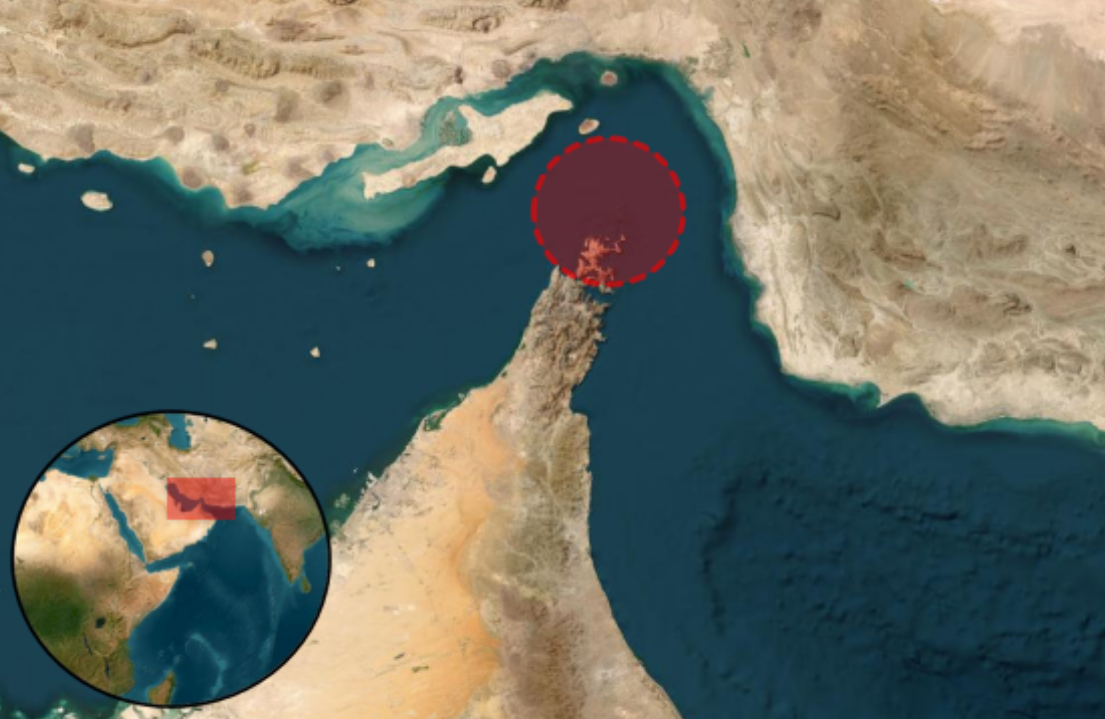
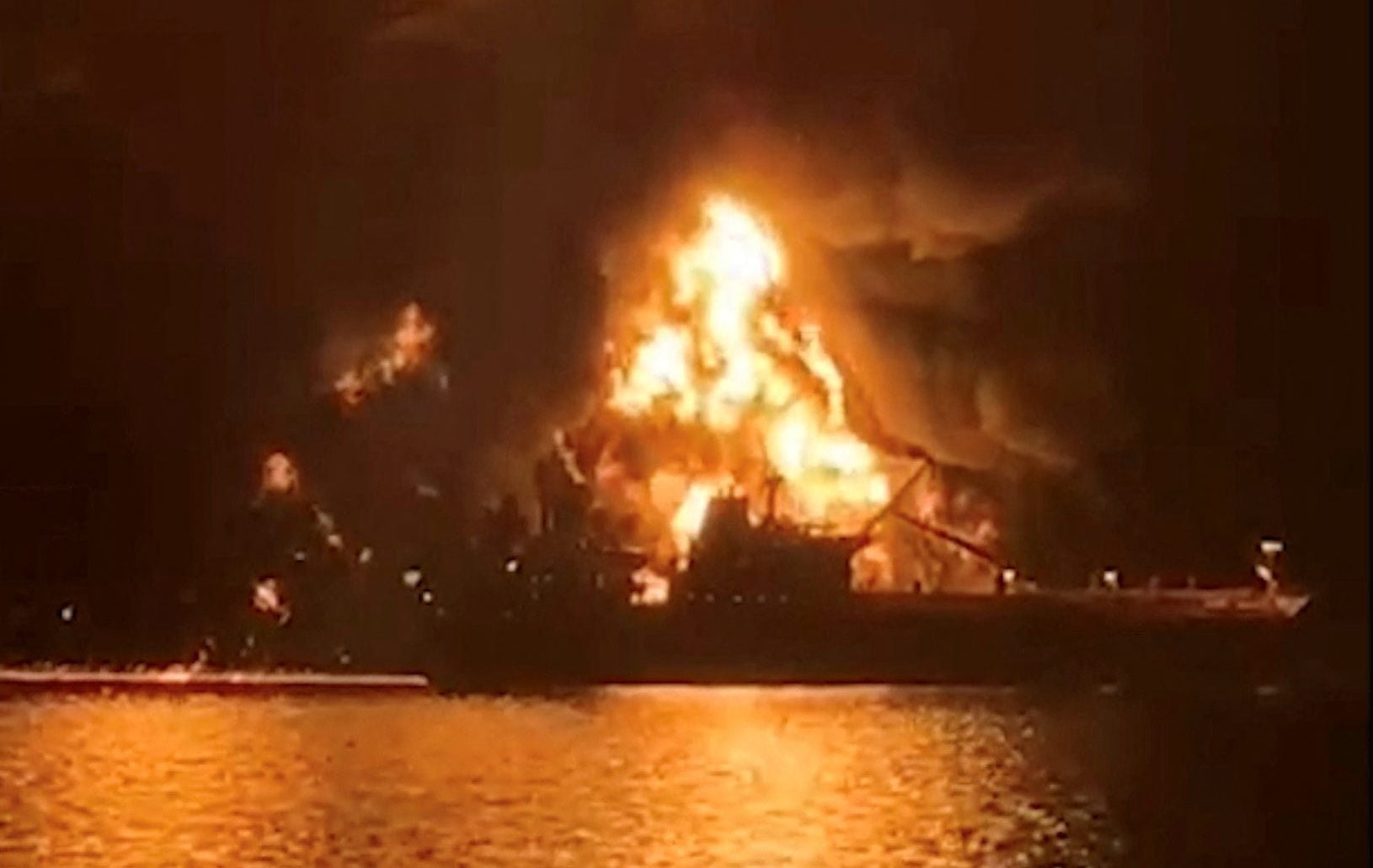
UKMTO reported on 13 September that an unidentified projectile struck a Panama-flagged tanker in the Strait of Hormuz, causing a fire and crew evacuation. Iranian state media and a local official separately reported that an Iranian commercial vessel was struck near Qeshm Island, killing one person and injuring three or four, although accounts differ on the time, casualty count and attacker. The United States is limiting protected tanker movements to two daily windows while maintaining a blockade of Iranian ports. Diplomatic prospects have weakened after Oman postponed a planned meeting, Bahrain announced a boycott and Iran conditioned reopening the waterway on the termination of the US blockade. Brent crude was trading at about $105 per barrel and average US diesel prices exceeded $6 per gallon.
Change from previous assessment
Since the prior brief dated 13 September, this assessment adds the 13 September UKMTO-reported projectile strike on a tanker in the Strait of Hormuz, including fire and crew evacuation, and the separately reported strike on an Iranian vessel near Qeshm Island. Confidence that maritime confrontation will continue has increased because the latest incidents provide more direct evidence of active danger in the strait, but confidence in attribution remains limited. The diplomatic outlook has shifted from a roughly even chance of a limited Iran-Oman shipping arrangement to an unlikely outcome after the postponement, Bahrain's boycott and continuing disagreement over fees, routing and the US blockade. The Saudi pipeline assessment remains cautious because reporting still conflicts over whether the closure was precautionary or directly caused by drone damage.
Key judgments
- US and Iranian forces are very likely to continue direct maritime confrontation over the next 14 days. The United States is reported to have struck Iranian-flagged vessels during its blockade of Iranian ports, while Iranian ballistic missiles have been launched at US warships and Iran-linked messaging has advocated attacks on tankers after each US strike. The unidentified tanker and Qeshm strikes add operational pressure, but do not by themselves establish Iranian or US responsibility. (Confidence: medium · ASSESSED)
- I&W: A further US strike on an Iranian-flagged vessel or an Iranian ballistic-missile launch at a US warship is reported. (0-14 days)
- I&W: The United States ends the blockade or restores unrestricted military protection for tanker movements through the Strait of Hormuz. (0-14 days)
- Commercial traffic through the Strait of Hormuz is very likely to remain constrained over the next 14 days. UKMTO reported a projectile strike, fire and crew evacuation on 13 September, while the United States has restricted protected movements to two daily time slots and directs tankers towards a route near the Omani coast. Iran's competing proposals for fees and routing through Iranian and Omani waters leave the operating status of the strait contested. (Confidence: medium · ASSESSED)
- I&W: UKMTO reports another projectile strike or fire in the strait, or the US naval co-ordination centre retains the two-window protection schedule. (0-14 days)
- I&W: The United States expands protection beyond two daily windows and reports unrestricted tanker transits through the strait. (0-14 days)
- An Iranian commercial or cargo vessel was very likely struck near Qeshm Island on 13 September, but responsibility remains unresolved. Iranian state media and the Qeshm governor reported the incident, with one death and three or four injuries, while a separate trade report attributed a similar strike to US forces acting in retaliation. The reporting is internally inconsistent on the time, casualty count and attacker, so confidence is lower on attribution than on the occurrence of the strike. (Confidence: medium · REPORTED)
- I&W: A US military statement identifies the Qeshm strike as the retaliatory action or an independent investigation names a different attacker. (0-14 days)
- I&W: An official Iranian casualty report reconciles the three-versus-four wounded discrepancy and confirms the vessel, location and time. (0-7 days)
- Energy-price pressure is very likely to persist over the next 14 days. Brent crude was trading at about $105 per barrel after approaching $110, average US diesel prices exceeded $6 per gallon and US unleaded gasoline prices were 54 per cent above their January low. Saudi Arabia has shut the East-West pipeline, although reporting conflicts over whether the closure reflects damage from drone strikes or a precautionary measure. (Confidence: medium · ASSESSED)
- I&W: Brent crude falls below $100 per barrel and average US diesel prices fall below $6 per gallon. (0-14 days)
- I&W: Saudi Arabia confirms that the East-West pipeline has resumed operations and reports no additional drone damage to the system. (0-14 days)
- A binding Oman-led regional arrangement on Strait of Hormuz shipping is unlikely within the next 14 days. Oman announced that its planned summit with Iran was postponed, Bahrain said it would boycott the meeting until diplomatic ties with Iran were restored, and Saudi officials sought amendments to prevent a new operating status in the strait. Iran's announcement that foreign ministers would meet on 14 September conflicts with the postponement reporting, while Iran's demand for an end to the US blockade remains incompatible with Washington's current policy. (Confidence: low · ASSESSED)
- I&W: Oman confirms that the meeting is cancelled or postponed again, with no joint communiqué issued by 27 September. (0-14 days)
- I&W: Iran, Oman, Bahrain and Saudi Arabia sign and publicly endorse an arrangement that removes disputed fees, permits and routing conditions. (0-14 days)
- Additional pressure on Saudi energy infrastructure is likely over the next 14 days, but direct Iranian responsibility for the East-West pipeline strikes remains unproven. The strikes were reportedly launched from inside Iraq, Iraqi Prime Minister Ali Al-Zaidi dismissed the Maysan operations commander and opened an investigation, while Iran-backed Houthi forces continue attacks on Saudi energy sites from Yemen's Red Sea coast. The attribution remains thin because the reported attackers are unidentified and the pipeline closure is described both as attack-caused and precautionary. (Confidence: low · ASSESSED)
- I&W: A new drone strike hits the Riyadh or Madinah regions or another Saudi energy site, or the Maysan investigation identifies a launch site or responsible organisation. (0-14 days)
- I&W: Saudi Arabia reopens the East-West pipeline and reports no further attacks on its energy infrastructure. (0-14 days)
Outlook & scenarios
Continued controlled maritime confrontation (60%)
The United States maintains its blockade of Iranian ports and two daily tanker-protection windows. Iranian forces continue maritime attacks or missile threats, while unidentified actors strike additional commercial vessels. Hormuz traffic remains constrained, Brent crude stays above $100 per barrel and no binding regional shipping agreement is reached.
Limited regional shipping arrangement (25%)
Oman reschedules the postponed meeting and secures a limited arrangement on tanker routing or protection. Iran, Oman and Gulf states accept temporary operating rules without resolving the wider US-Iran confrontation. Bahrain and Saudi Arabia remain the main tests of whether the arrangement has regional legitimacy.
High-impact escalation across Gulf shipping (15%)
A further US strike on an Iranian vessel prompts Iran to expand attacks against tankers in the Persian Gulf and Gulf of Oman. Iranian missile activity against US warships increases, the United States expands military protection or retaliatory strikes, and the Qeshm incident becomes a direct US-Iran escalation point.
Recommendations
- Maintain a daily 0-14 day watch on UKMTO incident reports, the US naval co-ordination centre's protected sailing windows and Iranian statements on tanker attacks. Separate confirmed vessel damage from unverified attribution.
- Treat the Qeshm incident as confirmed at the event level but unconfirmed at the attribution level. Seek an official US account, a reconciled Iranian casualty report and independent imagery before using the incident to assess deliberate US escalation.
- Track the status of the Oman meeting through Omani and Iranian official readouts. Do not treat Iran's announcement of a 14 September ministerial meeting as confirmation while the postponement reports remain unresolved.
- Monitor Brent crude, US diesel prices and the operational status of Saudi Arabia's East-West pipeline as linked indicators of continued economic pressure. Record whether any pipeline closure is precautionary or reflects confirmed physical damage.
- Prioritise reporting on the Maysan investigation, the Shalamcheh border crossing and Houthi attacks on Saudi energy sites. These indicators will help distinguish Iraqi-based proxy activity from direct Iranian direction.
- Use separate escalation thresholds for commercial shipping incidents, attacks on US military vessels and attacks on Saudi energy infrastructure. A new incident in any one category should not be treated as proof of responsibility for incidents in the others.
Confidence & uncertainty
Overall confidence is high for the main reported developments because the 13 September tanker strike is supported by UKMTO, wire-service and trade reporting, while the Qeshm vessel strike is supported by Iranian state media and a local official. Market conditions and US protection restrictions are also reported by multiple established media and trade sources. The principal uncertainties concern attribution of the Qeshm and Saudi pipeline strikes, the conflicting casualty count near Qeshm and the contradictory accounts of whether the Oman meeting is proceeding or postponed.
Intelligence gaps
- [EEI 1.1 · UNCOVERED] Concentrations or unusual movements of IRGC-Navy fast attack craft, small boat swarms, or escort vessels within 200 km of US/allied ships, including approach distances and formation changes. Recommended collection: maritime/AIS
- [EEI 1.2 · UNCOVERED] Detected pre-launch activity at coastal missile or rocket batteries (vehicle dispersal, fuel/warhead handling, radars powering up, transport erector launchers moving to firing positions). Recommended collection: imagery/signals
- [EEI 1.3 · UNCOVERED] Increased launch/arming/positioning of armed UAVs (MALE/loitering munitions) or tactical aircraft at Iranian coastal bases with sortie generation rates and munitions loadouts. Recommended collection: air/ADS-B/imagery
- [EEI 1.4 · UNCOVERED] Command-and-control indications of attack orders or elevated rules-of-engagement from IRGC/General Staff (intercepted communications, internal order messages, force-wide alert messages). Recommended collection: signals/human
- [EEI 2.2 · UNCOVERED] Issuance of formal orders, mobilization directives, travel restrictions, or official internal communications within IRGC/Armed Forces indicating escalation posture or stand-down. Recommended collection: human/diplomatic
- [EEI 2.3 · PARTIAL] Directives, logistics movements, or communications from Iranian commanders to regional proxy militias (Houthis, Iraqi Shia militias, Lebanese groups) that change their threat posture or task them with specific operations. Recommended collection: signals/human
- [EEI 3.2 · UNCOVERED] Discovery or reporting of naval mines, unexploded ordnance, or damage to fixed maritime infrastructure (oil platforms, terminals, pipelines) with geolocated imagery or on-scene assessments. Recommended collection: imagery/open-source
- [EEI 3.3 · PARTIAL] Commercial indicators of disruption: sudden increases in war-risk insurance premiums for Gulf transits, vessel re-routing decisions, port throughput reductions, or charter cancellations for Gulf shipments. Recommended collection: financial/commercial
- [EEI 3.4 · PARTIAL] Movements or posture changes of regional state navies/air forces (Saudi, UAE, Kuwait, Bahrain, UK) such as task group departures, airbase dispersals, or announced maritime patrols near choke points. Recommended collection: open-source/imagery
Cited sources
[1] Fortune · Oman hopes Hormuz meeting fill force Trump to 'recognize that the future of the strait will be decided by regional countries,' Iran expert says | Fortune (A) · Sun Sep 13 2026 14:13:09 GMT+0000 (Coordinated Universal Time) · sha256:566f8172377e [2] BBC · Brics summit 2026 Delhi: Iran war reshapes ties but exposes divides (A) · Sun Sep 13 2026 11:23:42 GMT+0000 (Coordinated Universal Time) · sha256:6e765a8d16b1 [3] The Maritime Executive · U.S. Shows More Restraint After Latest Iranian Tanker Strike (C) · sha256:875353b399be [4] gCaptain · US Limits Air Defense Time Slots For Tankers Sailing Through Hormuz (C) · Sun Sep 13 2026 14:20:18 GMT+0000 (Coordinated Universal Time) · sha256:f4be381706cc [5] Radio Free Europe/Radio Liberty (RFE/RL) · Iran-Gulf States Meeting In Oman Postponed, Awaits More 'Conducive' Conditions (A) · Sun Sep 13 2026 07:09:37 GMT+0000 (Coordinated Universal Time) · sha256:adb868a2be21 [6] Reuters (republished by gCaptain) · Crew Of Vessel Attacked In Hormuz Strait Evacuated (A) · Sun Sep 13 2026 14:46:08 GMT+0000 (Coordinated Universal Time) · sha256:b31229b45bac [7] gCaptain (republishing Bloomberg) · Iraq Under Pressure After Drone Strikes Close Key Saudi Pipeline (B) · Sun Sep 13 2026 15:19:32 GMT+0000 (Coordinated Universal Time) · sha256:13e849f83813 [8] Bloomberg (republished by gCaptain) · Trump Demands Ukraine Halt Refinery Strikes As Diesel Surges (A) · Sun Sep 13 2026 22:11:16 GMT+0000 (Coordinated Universal Time) · sha256:e17dcdca31be
Source content hashes were computed at collection time; the cited text is preserved unmodified for the life of this product.
Red cell review: CONCUR WITH COMMENT
TLP:CLEAR