TLP:CLEAR · Disclosure is not limited.
Persian Gulf: US strike risk rises amid Iranian and Houthi threats
Time window: Last 1 day · Audience: General analyst · Type: Situation report · DTG: 2026-10-25 08:40Z · Overall confidence: MEDIUM
BLUF
A US strike on Iran before 3 November is now a roughly even chance: on 25 October, Donald Trump said Washington was considering an attack as soon as that day or a deal with Tehran, in conflict with an earlier reported pledge to avoid strikes before the midterm elections. Iranian threats, disputed tanker damage and Houthi claims add pressure on Gulf shipping and Saudi aviation, but do not establish that a new US operation has been authorised.
Executive summary
On 25 October, Trump publicly raised the prospect of an attack on Iran as soon as Sunday while also referring to a possible deal. This reverses the prior brief’s assessment that a strike before the 3 November midterms was unlikely, although available reporting still does not establish authorisation. Iranian officials have threatened US Navy vessels and named Gulf bases, energy facilities, airports and undersea cables as potential targets; separate reporting based on anonymous Iranian officials says US diplomats and personnel have been added to Iran’s target list, without identifying targets or timing. Saudi coalition reports of interceptions near Riyadh and Houthi claims of attacks on Saudi Arabia raise aviation concerns, but accounts disagree on the intercepted weapon and number of projectiles. Reports of disabled tankers in the Strait of Hormuz remain contested on cause and lack independent attribution.
Change from previous assessment
Since the 24 October brief, Trump has said the US is considering an attack on Iran as soon as 25 October or a deal with Tehran. This raises the assessed chance of a strike before 3 November from unlikely to roughly even, while reporting still does not establish authorisation. New reporting adds Houthi claims of attacks on Saudi Arabia and Aden, Saudi interception reports near Riyadh, threats against US diplomatic personnel, and reports of disabled tankers near the Strait of Hormuz. Confidence remains low on tanker causation and on the specific threat to US personnel; the earlier assessment that Iranian naval threats do not prove physical exclusion of the US Navy remains in place.
Key judgments
- A US strike on Iran before 3 November is now a roughly even chance, up from unlikely in the prior brief. Trump said on 25 October that Washington was considering an attack as soon as Sunday or a deal with Tehran, in tension with the earlier reported pledge not to strike before the midterm elections. Reporting does not establish that an operation has been authorised. (Confidence: medium · ASSESSED)
- I&W: The White House or Pentagon announces strike authorisation, or US forces conduct a confirmed strike on Iranian territory. (0 to 14 days)
- I&W: Trump explicitly reaffirms the pre-election no-strike pledge and the US or Iran announces an agreement or active talks. (0 to 14 days)
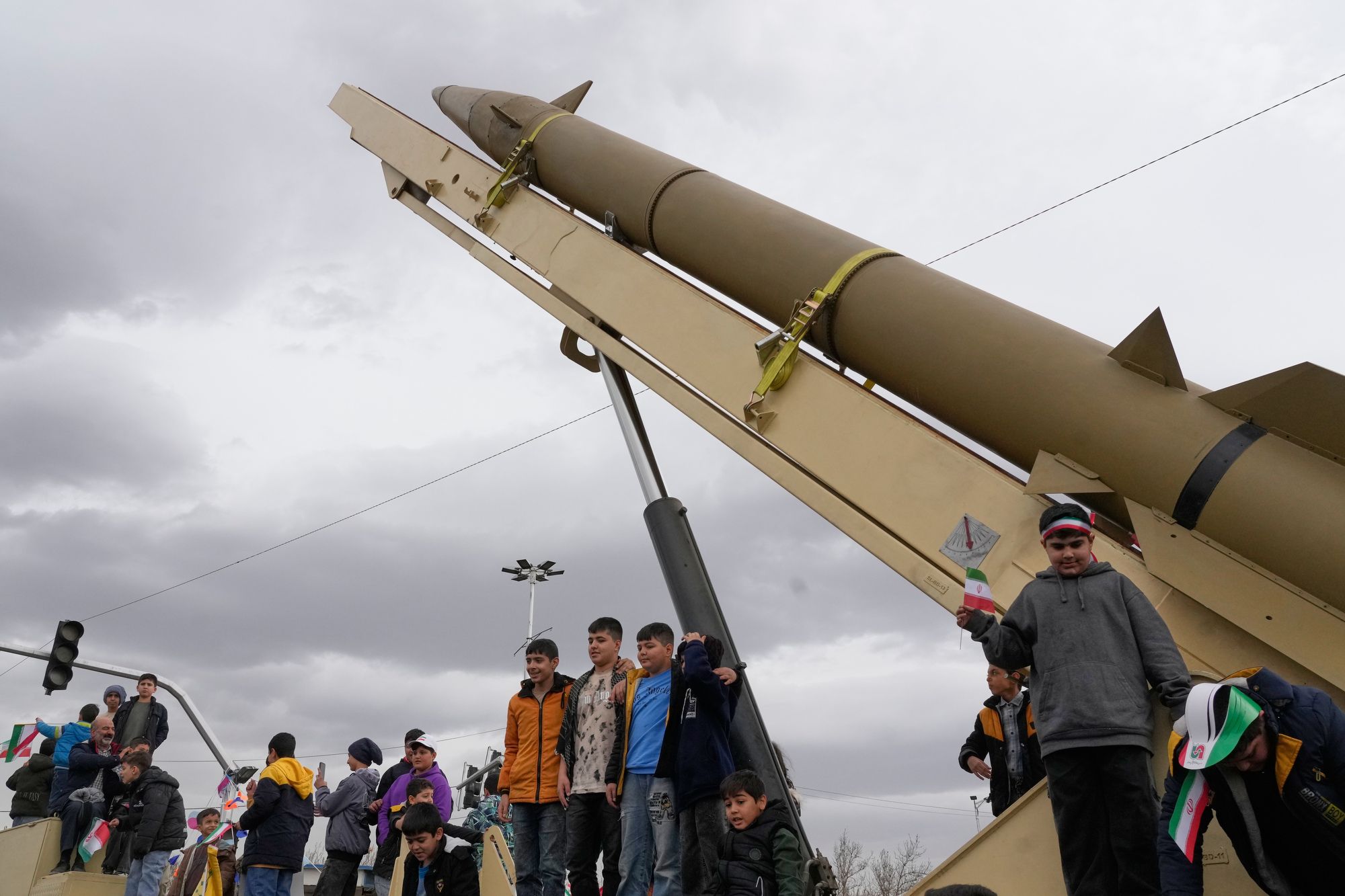
- Iranian military leaders are likely using threats against US Navy vessels and Gulf infrastructure to deter further US or Israeli strikes. The statements name US bases, warships, energy facilities, gas pipelines, airports and undersea communication cables, but do not establish operational orders or that Iran has physically excluded the US Navy from the Persian Gulf. An IRGC Navy commander’s claim that US ships withdrew 600 to 700 kilometres from the Strait of Hormuz has no independent confirmation. (Confidence: medium · ASSESSED)
- I&W: Iranian officials publicly tie the threats to a specific US action and state a condition under which Iran would suspend them. (0 to 14 days)
- I&W: Iranian forces attack or board a US Navy vessel, or strike a named Gulf energy facility, airport or undersea cable without a preceding new US strike. (0 to 14 days)
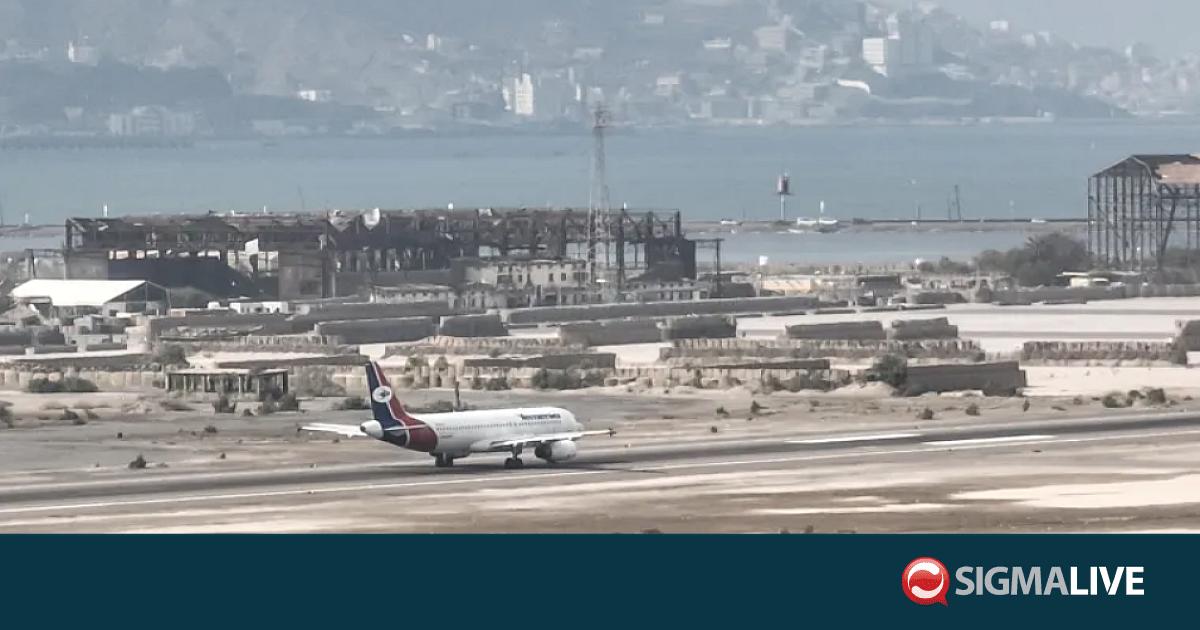
- Houthi claims and Saudi coalition interception reports are likely to keep pressure on Riyadh’s aviation security, but the scale and weapon type remain unresolved. The Saudi-led coalition reported intercepting projectiles near Riyadh; accounts differ on whether the incoming object was a drone or ballistic missile and whether one or three missiles were directed at the city. Houthi spokesman Yahya Saria claimed attacks on Riyadh, Dammam and Najran airports, Khamis Mushait airbase and oil infrastructure. King Khalid International Airport announced that flights would resume on 25 October, while the Houthis warned travellers to avoid it. (Confidence: medium · ASSESSED)
- I&W: King Khalid International Airport delays or suspends its announced flight resumption following a new Saudi coalition report of an interception near Riyadh. (0 to 14 days)
- I&W: The airport resumes and maintains scheduled operations, with no new Saudi coalition report of an interception near Riyadh. (0 to 14 days)
- Commercial shipping near the Strait of Hormuz is likely to remain at elevated risk, but the reported tanker damage and its cause are not independently established. The IRGC Navy said two supertankers carrying more than 4.5 million barrels of crude lost propulsion after hitting mines; another account described explosions, fires and engine-room damage, while the IRGC said the vessels were using a route not coordinated with Tehran. Separately, a report said an unknown projectile hit a tanker about 11 nautical miles from Bukha, Oman, on 21 October. The available reporting does not establish that these were the same incident or identify those responsible. (Confidence: low · ASSESSED)
- I&W: Shipowners, port authorities or salvage inspections identify the two supertankers and report damage consistent with mine strikes. (0 to 14 days)
- I&W: Shipowners or Omani authorities confirm normal passage near Bukha and no new tanker damage in the Strait of Hormuz. (0 to 14 days)
- Reporting that Iran has added US diplomats and personnel to a target list warrants continued monitoring, but an attack on any specific US person is not assessable from the available details. The claim rests on anonymous Iranian officials speaking to The New York Times; the reporting gives no targets, methods or timing. (Confidence: low · REPORTED)
- I&W: The US State Department or a US embassy issues a public security notice naming affected posts, locations or a specific period of concern. (0 to 14 days)
- I&W: US officials publicly retract the plot warning or state that a review found no credible threat to US diplomats or personnel. (0 to 14 days)
Outlook & scenarios
Coercive signalling continues without a US strike (35%)
Through 3 November, Trump keeps the strike option open while the US avoids a new attack. Iranian leaders continue public warnings, and Houthi claims and Saudi interception reports keep aviation and shipping security under pressure. No new US operation is reported.
Limited US strike followed by Iranian retaliation (30%)
The US conducts a limited strike on Iran before 3 November. Iran responds against a US military or civilian target in the Persian Gulf, consistent with its stated threats against bases, warships, energy facilities, gas pipelines or airports. Shipping and aviation disruption increases.
A diplomatic pause defers military action (25%)
Washington and Tehran reach an arrangement or resume talks, and the US does not strike before 3 November. Iran’s September proposal to open the Strait of Hormuz and resume peace talks provides a reported basis for this path, although the sides did not then reach agreement.
Low-probability, high-impact attack on Gulf infrastructure (10%)
An attack damages an undersea communication cable or Gulf energy infrastructure, or an Iranian plot targets US diplomatic personnel. A US response triggers a wider cycle of strikes and retaliation affecting Gulf shipping and aviation.
Recommendations
- Keep the pre-election strike assessment under review. Distinguish Trump’s public consideration of an attack from evidence of authorisation, and record any White House or Pentagon confirmation alongside his earlier reported pledge.
- Maintain separate incident records for the two supertankers reported by the IRGC Navy and the tanker struck near Bukha on 21 October. Seek vessel names, owner or flag confirmation, salvage findings and damage assessments before attributing cause or responsibility.
- Track Saudi coalition statements, King Khalid International Airport flight notices and Yahya Saria’s claims separately. Reconcile the reported missile and drone counts before describing the scale of the threat to Riyadh.
- Treat the reported plot against US diplomats and personnel as unverified at the individual-target level. Check for State Department or embassy security notices and do not infer a target, method or timing from anonymous-source reporting.
- Monitor Iranian statements about US Navy vessels, Gulf energy facilities, airports and undersea cables. Keep the reported nuclear-use comment by Mohammad-Saleh Jokar separate from evidence of Iranian government policy or operational direction.
Confidence & uncertainty
Overall confidence is medium because reporting from major media and wire services supports the main public statements and security developments, but several central details remain unresolved. Accounts conflict over Trump’s pre-election position, the number and type of projectiles intercepted near Riyadh, and the cause of the tanker damage. The report of a plot against US personnel relies on anonymous officials, while the tanker claims lack independent attribution.
Alternative analysis (red cell)
Iranian statements in claims, and 670250d0-5705-459d-a698-eae166a81516 are more defensibly read as rhetorical signaling or domestic messaging than as evidence of a deliberate deterrence campaign. Claims 9dd37916-c5a0-487e-8482-5980501035e3 and 31cd1363-73ae-4910-bf87-5e3f9a4a6952 show that threats were communicated, but do not establish their intended effect or operational backing. The unconfirmed withdrawal claim in 0344a051-4949-4f3e-b590-433d758e8322 provides no basis for concluding that the threats altered US naval behavior.
Intelligence gaps
- [EEI 1.1 · UNCOVERED] Concentrations or unusual movements of IRGC-Navy fast attack craft, small boat swarms, or escort vessels within 200 km of US/allied ships, including approach distances and formation changes. Recommended collection: maritime/AIS
- [EEI 1.2 · UNCOVERED] Detected pre-launch activity at coastal missile or rocket batteries (vehicle dispersal, fuel/warhead handling, radars powering up, transport erector launchers moving to firing positions). Recommended collection: imagery/signals
- [EEI 1.3 · UNCOVERED] Increased launch/arming/positioning of armed UAVs (MALE/loitering munitions) or tactical aircraft at Iranian coastal bases with sortie generation rates and munitions loadouts. Recommended collection: air/ADS-B/imagery
- [EEI 1.4 · PARTIAL] Command-and-control indications of attack orders or elevated rules-of-engagement from IRGC/General Staff (intercepted communications, internal order messages, force-wide alert messages). Recommended collection: signals/human
- [EEI 2.2 · UNCOVERED] Issuance of formal orders, mobilization directives, travel restrictions, or official internal communications within IRGC/Armed Forces indicating escalation posture or stand-down. Recommended collection: human/diplomatic
- [EEI 2.3 · PARTIAL] Directives, logistics movements, or communications from Iranian commanders to regional proxy militias (Houthis, Iraqi Shia militias, Lebanese groups) that change their threat posture or task them with specific operations. Recommended collection: signals/human
- [EEI 3.3 · PARTIAL] Commercial indicators of disruption: sudden increases in war-risk insurance premiums for Gulf transits, vessel re-routing decisions, port throughput reductions, or charter cancellations for Gulf shipments. Recommended collection: financial/commercial
- [EEI 3.4 · UNCOVERED] Movements or posture changes of regional state navies/air forces (Saudi, UAE, Kuwait, Bahrain, UK) such as task group departures, airbase dispersals, or announced maritime patrols near choke points. Recommended collection: open-source/imagery
Red cell review: PARTIAL DISSENT
TLP:CLEAR