TLP:CLEAR · Disclosure is not limited.
Persian Gulf: Vessel Attacks and Force-Preparation Claims, 8 October 2026
Time window: Last 1 day · Audience: General analyst · Type: Situation report · DTG: 2026-10-08 10:34Z · Overall confidence: LOW
BLUF
Further attacks or coercive interference with commercial vessels in or near the Strait of Hormuz are likely over the next 14 days. Reporting records nine IMO vessel incidents and at least 12 tanker attacks for 28 September to 5 October, but the counts use different measures and the attackers have not been identified. A report of Pentagon direction to CENTCOM to prepare for combat does not establish imminent US operations or a 10,000-person deployment.
Executive summary
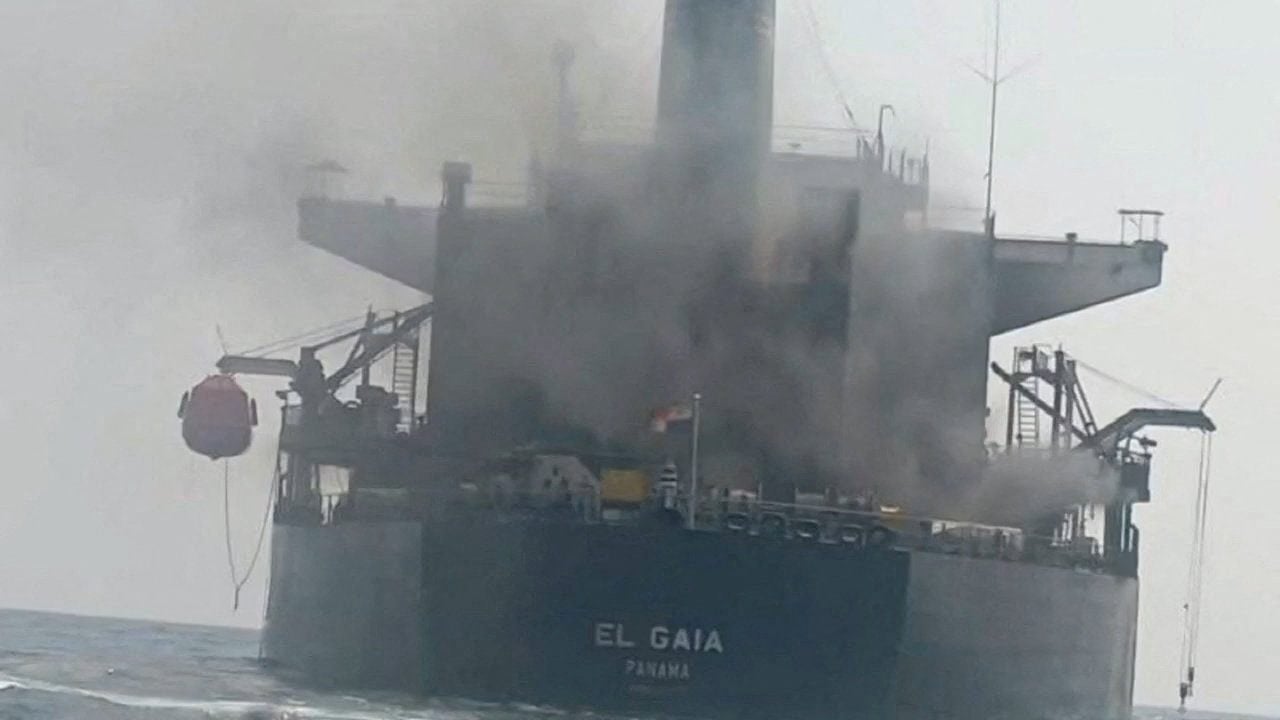
For 28 September to 5 October, maritime security sources reported at least 12 attacks on oil, LNG and LPG tankers around the Strait of Hormuz, while the IMO recorded nine vessel incidents. JMIC also reported persistent IRGC harassment, including drone overflights, surveillance and VHF hailing. India’s foreign ministry said an unknown projectile struck the Panama-flagged tanker On Peace on 7 October, injuring 12 crew. Separately, a low-reliability company blog reported that the Pentagon directed CENTCOM to prepare for possible combat operations involving Iran, but supplied no operational details; a former CIA analyst disputed the associated 10,000-person deployment figure. Yadollah Javani said the Strait would reopen only after Iran’s conditions were met, while US military and shipping reports described it as open and oil shipments as recovering. QatarEnergy had at least 12 ballast LNG carriers waiting near Qatar, even as September LNG traffic through Hormuz remained about 75 per cent below February levels. We assess that maritime risk remains elevated, but the incident count, attribution and force-posture picture are uncertain.
Change from previous assessment
Since the 7 October brief, reporting adds the IMO count of nine vessel incidents for 28 September to 5 October, a separate maritime-security count of at least 12 tanker attacks, JMIC’s description of persistent IRGC harassment, and India’s report of 12 crew injured aboard On Peace on 7 October. The assessment that further vessel attacks are likely is retained at medium confidence because the incident totals differ and attribution remains unknown. New reporting also adds a low-reliability account of a Pentagon directive to CENTCOM, a disputed 10,000-person deployment figure, and QatarEnergy’s LNG carrier staging. The earlier anti-ship missile-launch judgment is not carried forward because this run provides no supporting claim; the earlier ceasefire and reopening forecast is not refreshed because this run provides no reliable detail on negotiations.
Key judgments
- Further attacks or coercive interference with commercial vessels in or near the Strait of Hormuz are likely over the next 14 days. Maritime security sources described 28 September to 5 October as the highest weekly level of tanker attacks since the war began and reported at least 12 attacks; the IMO counted nine vessel incidents for the same period. JMIC also reported continuing IRGC harassment, including drone overflights, surveillance and VHF hailing. India’s foreign ministry said an unknown projectile struck the Panama-flagged On Peace on 7 October and injured 12 crew. The differing counts and unknown attacker limit confidence in the precise incident rate and attribution. (Confidence: medium · ASSESSED)
- I&W: New IMO or JMIC reporting of a vessel strike, attempted attack or IRGC harassment in the Strait would confirm continued pressure. (0-14 days)
- I&W: No new incident recorded by the IMO or JMIC, and no new flag-state report of an attack during the period, would weaken this assessment. (0-14 days)
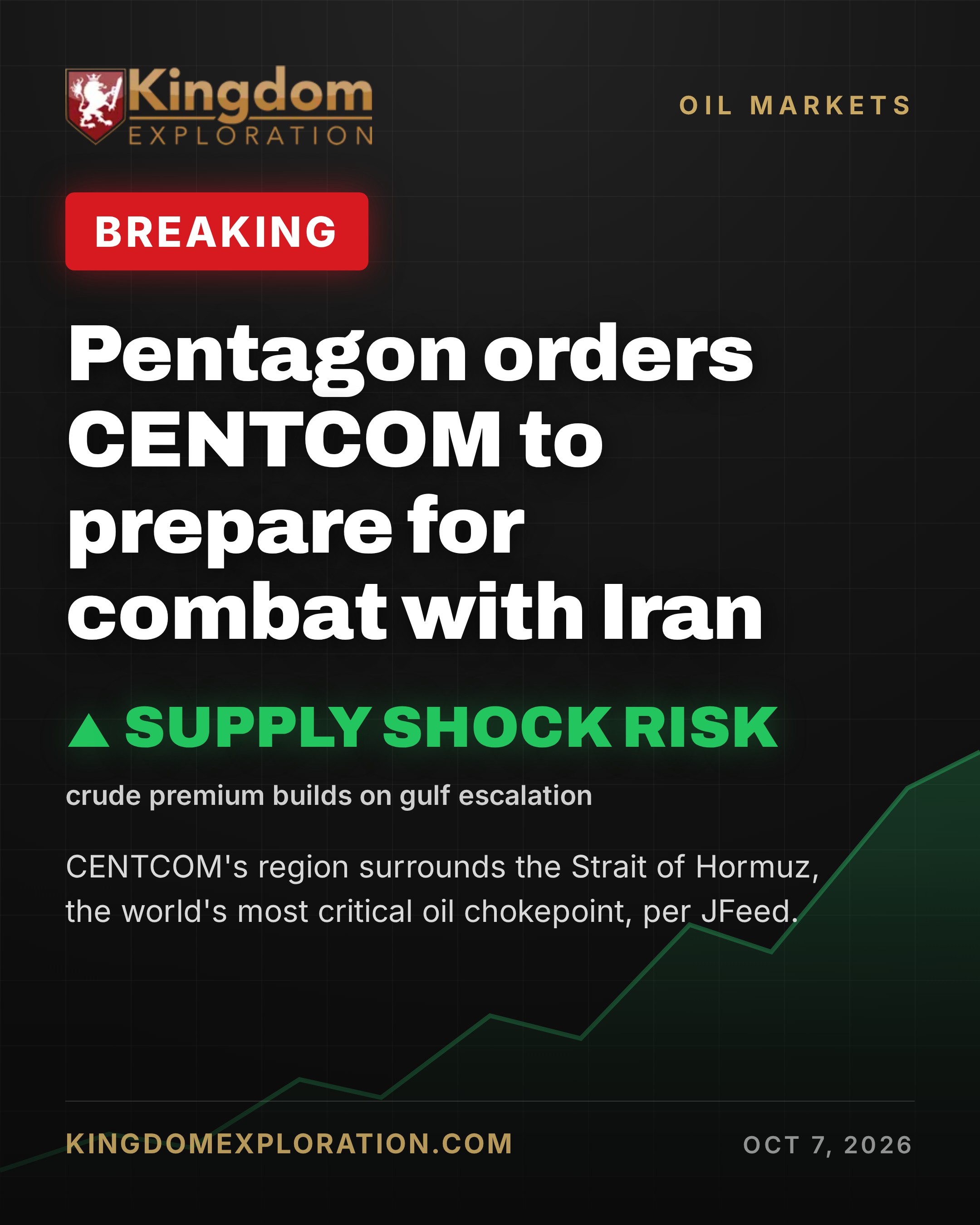
- It is unlikely that the reported CENTCOM preparation directive, by itself, means US combat operations against Iran are imminent. The directive appears only in a low-reliability company blog, which provides no operational details; a former CIA analyst disputes the associated report of 10,000 US personnel deploying, but that dispute does not establish whether a directive was issued. The available reporting therefore does not establish either imminent operations or a 10,000-person deployment. (Confidence: low · ASSESSED)
- I&W: A Pentagon or CENTCOM statement confirming combat preparations and identifying operational steps would break the assessment that the report alone does not indicate imminent operations. (0-14 days)
- I&W: Independent confirmation of a 10,000-person deployment, or official confirmation that no such deployment is under way, would resolve the disputed force figure. (0-30 days)
- Yadollah Javani’s conditional reopening statement is very likely coercive messaging, not proof that the Strait of Hormuz is closed or that US forces have withdrawn. Javani said the Strait would reopen only after Iran’s conditions were fully met and said US forces had moved away; a US military statement claimed the Strait was open, while shipping reports described oil shipments as sharply recovering. Those claims do not settle whether commercial transit is safe or establish US naval positions. The assessment rests on Iranian local-media reporting, a social-media account of the US military statement and shipping reports, so confidence is low. (Confidence: low · ASSESSED)
- I&W: Verified commercial transits continuing alongside an official US statement that the Strait remains open would support the assessment that Javani’s statement is not evidence of closure. (0-14 days)
- I&W: Independent confirmation that commercial transits have stopped and US forces have withdrawn from the Strait would break the assessment. (0-30 days)
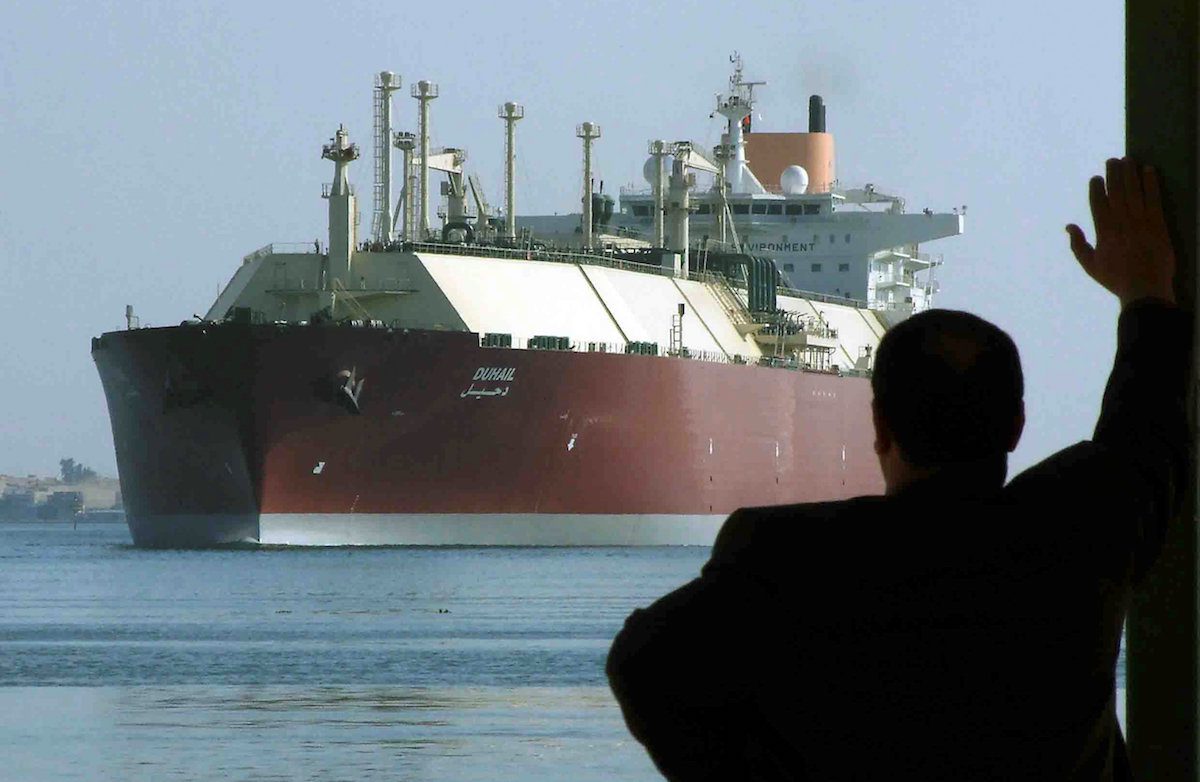
- QatarEnergy is likely positioning at least 12 ballast LNG carriers near Qatar for a possible increase in exports, but staging does not establish that cargoes have been loaded or dispatched. The vessels can carry about 1.1 million tonnes of LNG; September LNG traffic through Hormuz reached its highest level since the war began but remained about 75 per cent below February levels. The carrier count and traffic estimate come from wire-service reporting, while the reason for staging remains an inference. (Confidence: medium · ASSESSED)
- I&W: Reports that QatarEnergy carriers have loaded LNG and transited the Strait would confirm a move from staging towards resumed exports. (0-14 days)
- I&W: The carriers remaining in ballast near Qatar, with no reported loaded departures and LNG traffic still near 75 per cent below February levels, would weaken the export-resumption assessment. (1-3 months)
Outlook & scenarios
Continued maritime pressure (55%)
Further vessel attacks or coercive interference in or near the Strait of Hormuz are likely over the next 14 days. IRGC drone overflights, surveillance and VHF hailing continue, while attribution for individual attacks remains unresolved.
Cautious LNG export resumption (25%)
A limited dispatch of QatarEnergy LNG carriers is unlikely to remove shipping risk. Empty carriers are already waiting near Qatar, but LNG traffic through Hormuz remains well below February levels and reports warn that loaded vessels face attack risk.
Diplomatic containment (15%)
A negotiated pause and gradual improvement in commercial transits are unlikely in the near term. Claims of indirect US-Iran nuclear talks in New York and Pakistani efforts to reduce tensions are low-confidence, while Javani has publicly tied reopening the Strait to Iran’s conditions.
Maritime pressure widens towards Bab al-Mandab (5%)
An Iran-linked effort to widen maritime pressure towards Bab al-Mandab is very unlikely on the available evidence, but would have high impact if substantiated. The allegation appears in a low-reliability social-media report and is not independently corroborated.
Recommendations
- Maintain separate incident totals for the 28 September to 5 October period: nine IMO vessel incidents and at least 12 tanker attacks reported by maritime security sources. Do not merge them without clarification of their counting methods.
- Keep the On Peace attacker listed as unknown unless a flag-state, investigative or other reliable report establishes attribution. Distinguish reported IRGC harassment from responsibility for specific tanker strikes.
- Treat the CENTCOM preparation report and the 10,000-person deployment figure as unverified. Seek official Pentagon or CENTCOM confirmation before using either as an indicator of imminent operations.
- Track QatarEnergy’s ballast carriers for reported loading and Strait transits, and distinguish vessels waiting near Qatar from loaded cargoes that have departed.
- Keep the Bab al-Mandab allegation on a low-priority watch list. Do not present it as an established Iranian operation without independent corroboration.
Confidence & uncertainty
Overall confidence is low because the strongest maritime reporting establishes increased incident activity but gives conflicting totals, and the attackers behind the reported strikes remain unidentified. The On Peace injuries were attributed to India’s foreign ministry, while details of the CENTCOM directive depend on a low-reliability blog and the disputed 10,000-person figure is not independently established. Claims about US force positions and the Strait’s status also conflict, with some based on Iranian local media or social media rather than independent operational reporting.
Alternative analysis (red cell)
The available evidence does not distinguish coercive messaging from a conditional Iranian restriction that may reflect an actual operational posture. Javani's statements in 880182a1-36a5-478e-ac6c-df78fa58253d and cc46c910-3b60-442e-b189-d273afdcb388 conflict with the lower-reliability US claim in 69290526-28e7-46e0-9259-1bcb57804690, while the shipment recovery in 00742b95-7522-4fe6-b232-ba3d9f8cda52 does not demonstrate safe or routine transit. The more defensible reading is that the Strait's legal, physical, and commercial status remains unresolved rather than that the Iranian statement is probably messaging.
Intelligence gaps
- [EEI 1.1 · PARTIAL] Concentrations or unusual movements of IRGC-Navy fast attack craft, small boat swarms, or escort vessels within 200 km of US/allied ships, including approach distances and formation changes. Recommended collection: maritime/AIS
- [EEI 1.2 · UNCOVERED] Detected pre-launch activity at coastal missile or rocket batteries (vehicle dispersal, fuel/warhead handling, radars powering up, transport erector launchers moving to firing positions). Recommended collection: imagery/signals
- [EEI 1.3 · UNCOVERED] Increased launch/arming/positioning of armed UAVs (MALE/loitering munitions) or tactical aircraft at Iranian coastal bases with sortie generation rates and munitions loadouts. Recommended collection: air/ADS-B/imagery
- [EEI 1.4 · UNCOVERED] Command-and-control indications of attack orders or elevated rules-of-engagement from IRGC/General Staff (intercepted communications, internal order messages, force-wide alert messages). Recommended collection: signals/human
- [EEI 2.2 · PARTIAL] Issuance of formal orders, mobilization directives, travel restrictions, or official internal communications within IRGC/Armed Forces indicating escalation posture or stand-down. Recommended collection: human/diplomatic
- [EEI 2.4 · PARTIAL] Changes in Iran's diplomatic exchanges with key states (offers of negotiation, warnings, or coordination with Russia/China) or requests for deconfliction with maritime/naval actors. Recommended collection: diplomatic
- [EEI 3.2 · UNCOVERED] Discovery or reporting of naval mines, unexploded ordnance, or damage to fixed maritime infrastructure (oil platforms, terminals, pipelines) with geolocated imagery or on-scene assessments. Recommended collection: imagery/open-source
- [EEI 3.4 · UNCOVERED] Movements or posture changes of regional state navies/air forces (Saudi, UAE, Kuwait, Bahrain, UK) such as task group departures, airbase dispersals, or announced maritime patrols near choke points. Recommended collection: open-source/imagery
Cited sources
[1] Reuters (republished by gCaptain) · Attacks on Tankers in Hormuz Hit Highest of Any Week Since Start of Iran War, Sources Say (A) · 7 October 2026 · sha256:ea46bef7d328 [2] Kingdom Exploration LLC · US-Iran Military Tensions Today: Pentagon CENTCOM Order 2026 (E) · 7 October 2026 · sha256:2fac435a9a99 [3] khabarpu.com · حماسه 16مهرنقطه عطف رویارویی مستقیم با آمریکادرخلیجفارس (F) · sha256:6dd3411132dd [4] KhabarFarsi (news aggregator; content sourced from Iranian outlets such as Mehr and Shabestan) · عقب نشینی هزار کیلومتری بیگانگان از خلیج فارس (D) · sha256:e03e559db222 [5] India Global Review (igr.media) via Facebook · #PalkiSharmaShow: Oil supplies back to normal. So why are prices still high? Oil shipments through the Strait of Hormuz have almost rebounded to pre-war levels. The U.S. military claims the strait is open and millions of barrels of oil are leaving every day. Then why are oil prices more than 40% higher than pre-war levels? Palki Sharma decodes this Hormuz mystery. | India Global Review (E) · sha256:a8cb2a5b7e23 [6] Bloomberg (republished by gCaptain) · Qatar Brings Empty LNG Ships Into Gulf in Potential Export Boost (A) · 7 October 2026 · sha256:c2690a083a60
Source content hashes were computed at collection time; the cited text is preserved unmodified for the life of this product.
Red cell review: PARTIAL DISSENT
TLP:CLEAR