TLP:CLEAR · Disclosure is not limited.
Qeshm strike raises pressure as Qatar keeps US-Iran channel open
Time window: Last 1 day · Audience: General analyst · Type: Situation report · DTG: 2026-11-03 12:30Z · Overall confidence: HIGH
BLUF
The United States very likely carried out a limited strike on Qeshm Island on 2 November, but reporting does not establish a decision to resume a broader campaign. Qatar's mediation remains active; a further US strike in the next 14 days is a roughly even chance, while disruption in the Strait of Hormuz is likely to persist.
Executive summary
US officials and multiple media outlets reported strikes on Iranian targets on Qeshm Island on 2 November. Accounts differ on whether the action responded to IRGC fire on a US aircraft or to an anticipated missile threat, and reporting is inconsistent on whether the US military itself commented. On 3 November, the IRGC claimed it had downed US drones near Qeshm and the Strait of Hormuz; another Iranian account said two MQM-170 drones were captured intact. Qatar continued mediation between Washington and Tehran, but an Iranian official said the two sides remained far from agreement. JMIC reported 18 confirmed attacks in the Strait of Hormuz since 6 October and approximately 490 vessels waiting outside it as of 1 November.
Change from previous assessment
Since the 2 November brief, reporting now places a US strike on Qeshm Island on 2 November, before the previously assessed post-election window. The assessment that a broader renewed campaign remains a roughly even chance is unchanged because the strike was described as limited and defensive, Trump expressed reluctance to rush, and no approved wider strike order is reported. New reporting adds IRGC claims of US drone losses, further detail on tanker incidents and an active Qatari mediation effort; drone outcomes and tanker responsibility remain unresolved.
Key judgments
- The United States very likely conducted a limited strike on Iranian targets on Qeshm Island on 2 November, but the supplied reporting does not establish whether Washington views the action as isolated or as the start of a wider campaign. US officials described the strikes as defensive. Their accounts differ on whether the IRGC had fired at a US aircraft or was assessed to be preparing missile attacks; reports also differ on whether the US military itself publicly commented. (Confidence: medium · REPORTED)
- I&W: CENTCOM or the Pentagon publicly identifies the Qeshm targets and describes the action as a single defensive operation, with no additional target area named. (0-7 days)
- I&W: US forces conduct another strike on Iranian mainland targets or a nuclear-related site, breaking the assessment that the Qeshm action remained limited. (0-14 days)
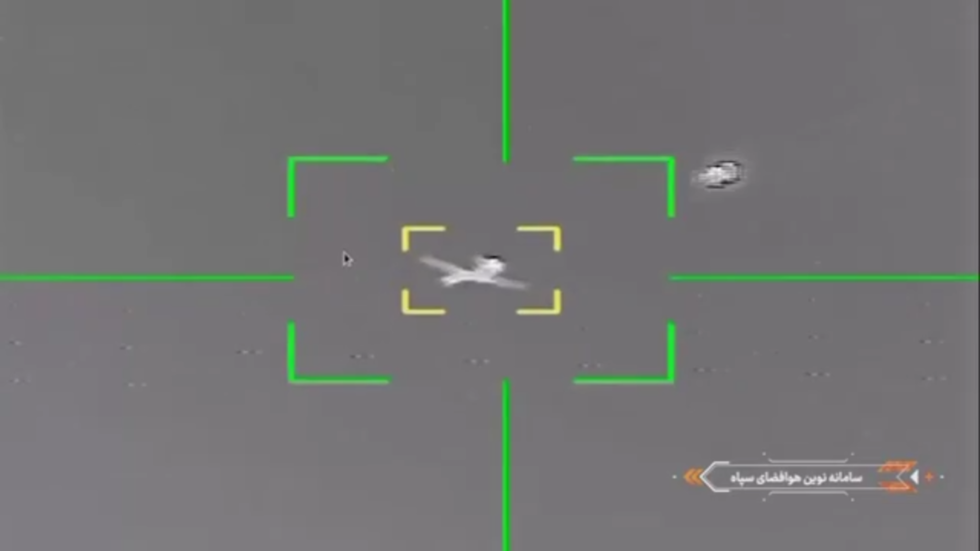
- The IRGC's reported 3 November drone account remains unverified: it claimed two US MQM-170 drones were downed south of Qeshm and an MQ-9 was destroyed east of the Strait of Hormuz, while another Iranian report said the two MQM-170s were captured intact. The repeated reporting traces these claims to Iranian sources, and the supplied material provides no independent confirmation of the losses or the drones' disposition. (Confidence: low · ASSESSED)
- I&W: US officials confirm specific aircraft losses, or independently geolocated imagery shows matching wreckage south of Qeshm or east of the Strait of Hormuz. (0-14 days)
- I&W: US officials provide platform-specific evidence that the named aircraft returned or remained operational, with independent reporting corroborating that account. (0-14 days)
- A further US strike or joint US-Israeli campaign against Iran after 3 November is a roughly even chance over the next 14 days. Qeshm has now been struck, Benjamin Netanyahu reportedly pressed Donald Trump for another wave after the US elections, and Trump has named Pickaxe Mountain as a possible target. Against this, Trump said he was in no hurry to resume fighting, Qatar's mediation remains active, and the supplied reporting does not establish an approved strike order. (Confidence: medium · ASSESSED)
- I&W: US or Israeli officials announce or conduct strikes on Iranian targets beyond the reported Qeshm operation. (0-14 days)
- I&W: Washington and Tehran publicly accept the same interim text through Qatari mediation, reducing the near-term likelihood of further strikes. (0-14 days)
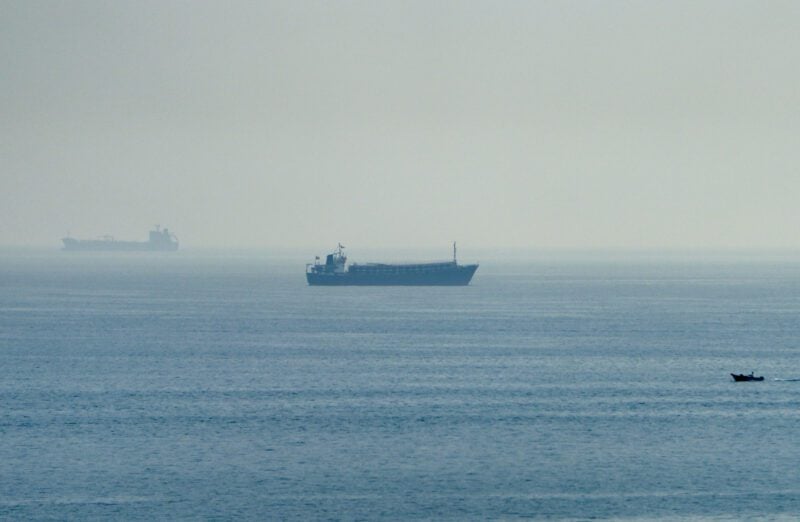
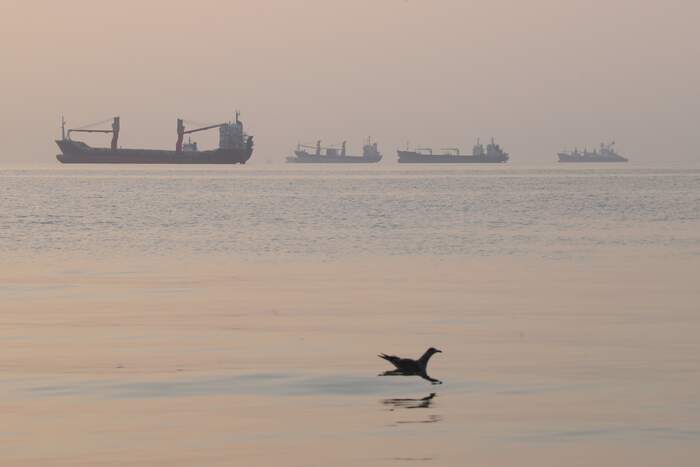
- Disruption to commercial shipping in the Strait of Hormuz is likely to remain elevated over the next 14 days. JMIC recorded 18 confirmed attacks there since 6 October and approximately 490 vessels waiting outside the Strait on 1 November; reporting also describes incidents involving RITI, LOUISE 1, ARZANAH and AL MAYEDA. Responsibility remains uncertain: some reporting attributes attacks to Iran, while the IRGC Navy has attributed tanker explosions to mines. (Confidence: medium · ASSESSED)
- I&W: JMIC or UKMTO reports another confirmed attack or projectile strike on a commercial vessel transiting the Strait. (0-14 days)
- I&W: JMIC reports fewer than 250 vessels waiting outside the Strait and no confirmed attacks for 14 consecutive days. (0-14 days)
- Qatari mediation is likely to remain active over the next 14 days, but a near-term US-Iran agreement is unlikely. Qatar says both sides are studying proposals and maintains contact through mediators; Qatari negotiators have held talks in Tehran. However, the 1 November round ended without a breakthrough, and a senior Iranian official said Washington and Tehran remained far from agreement. (Confidence: medium · ASSESSED)
- I&W: Qatar announces another negotiation session and both Washington and Tehran publicly confirm they are considering the same written proposal. (0-14 days)
- I&W: Qatar reports that the mediation channel has been suspended, or either Washington or Tehran publicly rejects the other side's terms. (0-14 days)
Outlook & scenarios
Limited military activity continues alongside mediation (42%)
US activity remains limited to the reported Qeshm operation, while Iran continues to issue warnings and drone claims that remain unverified. Qatar keeps the US-Iran channel active, but no agreement is reached and shipping risk in the Strait of Hormuz stays elevated.
Renewed US or joint US-Israeli strike campaign (30%)
Washington or Washington and Israel resume strikes on Iranian targets, with Pickaxe Mountain among the sites already named in Trump's remarks. Iran responds militarily, and the confrontation expands beyond the Qeshm incident.
Qatari mediation produces a pause (20%)
Qatar brokers an interim understanding between Washington and Tehran. The parties pause direct military action and begin implementing Iran's stated plan for reopening the Strait of Hormuz and resuming nuclear talks.
Regional retaliation disrupts US interests and shipping (8%)
In a low-probability, high-impact path, Iranian retaliation extends beyond Israel to US forces or commercial shipping. Further attacks in the Strait of Hormuz compound the existing vessel backlog and draw additional regional actors into the confrontation.
Recommendations
- Maintain separate reporting lines for confirmed US strikes, official statements about their rationale, and Iranian claims of aircraft losses. Do not treat the IRGC drone account as independently verified until US confirmation or independently geolocated evidence emerges.
- Track Qatari mediation through named meetings, public statements on proposals, and explicit acceptance or rejection by Washington and Tehran. Flag any agreed interim text separately from expressions of willingness to negotiate.
- Update the Strait of Hormuz incident log from JMIC and UKMTO notices. Track confirmed attacks, vessel waiting counts and transit reports, while keeping responsibility unattributed unless investigations identify an actor.
- Use a specific escalation trigger for any strike beyond Qeshm, including a strike on an Iranian nuclear-related site. Do not infer a broad renewed campaign from the Qeshm action alone.
- Keep the conflicting accounts of the Qeshm strike rationale and the tanker incidents visible in briefings. Separate confirmed damage and location from claims about intent or responsibility.
Confidence & uncertainty
Overall confidence is high in the broad picture: multiple major media outlets report the US strike on Qeshm, Iranian state reporting describes explosions there, and JMIC figures and vessel-specific reporting document serious shipping disruption. Qatar's public statements provide direct evidence that mediation remains active. Confidence is lower on the Qeshm strike rationale, the IRGC's drone claims, responsibility for attacks on tankers, and whether negotiations can produce an agreement.
Alternative analysis (red cell)
The evidence supports continued diplomatic contact and a nontrivial risk of renewed strikes, but it does not clearly support an even chance of a further US or joint US-Israeli campaign within 14 days. Claims d67b4307-7c21-42d1-bee0-eb8cc45f5667 and 0b5ad3b2-d395-480e-8617-41d0654f7f51 show Israeli advocacy, while claims b5334273-ae52-4217-afe4-65c66a2d9a28 and d2085422-a047-485e-bd55-eae63af05294 indicate that Trump had not committed to renewed major combat. On the supplied evidence, a lower-than-even probability is defensible absent proof of an approved operational order.
Intelligence gaps
- [EEI 1.1 · UNCOVERED] Observed repositioning, sustained increases, or new forward basing of Iranian conventional or IRGC forces (armored units, missile batteries, aircraft, naval vessels) toward borders or regional launch points. Recommended collection: IMINT/satellite
- [EEI 1.2 · UNCOVERED] Hezbollah or other Iran-aligned proxy forces conducting mass mobilization, visible rocket/artillery emplacements, cross-border firing incidents, or preparations for cross-border operations from Lebanon, Syria, Iraq or Yemen. Recommended collection: HUMINT/ground ISR
- [EEI 1.4 · UNCOVERED] Interdicted or observed shipments (air, sea, land manifests, seizures, satellite imagery of transfers) of advanced weapons or missile components from Iran toward proxy groups or forward staging points. Recommended collection: maritime/AIS
- [EEI 2.1 · UNCOVERED] Satellite or on-the-ground imagery showing fires, damage, or operational shutdown at major oil export facilities, refineries, storage terminals, or key pipeline infrastructure in the Gulf and Red Sea. Recommended collection: IMINT/satellite
- [EEI 2.4 · UNCOVERED] Rapid increases in war-risk insurance premiums for Middle East routes, shipping company advisories to avoid region, or major charter cancellations tied to the conflict. Recommended collection: financial/open-source
- [EEI 3.1 · PARTIAL] Movement/arrival of major foreign military assets into the region: US carrier strike groups, amphibious ready groups, strategic bomber flights, Russian/Chinese naval taskings, or allied expeditionary units (visible in AIS, NOTAMs, satellite imagery, official releases). Recommended collection: IMINT/satellite
- [EEI 3.2 · UNCOVERED] Official expedited arms transfers, basing/overflight agreements, or declarations of operational support (formal government announcements, defense ministry releases, logistics flight manifests). Recommended collection: open-source/diplomatic
- [EEI 3.3 · UNCOVERED] Embassy evacuations, large-scale personnel movements, issuance of government travel bans/advisories, or multinational security alerts affecting foreign nationals and diplomatic posture in the region. Recommended collection: diplomatic/open-source
Red cell review: PARTIAL DISSENT
TLP:CLEAR