TLP:CLEAR · Disclosure is not limited.
Red Sea, Bab el-Mandeb: Elevated shipping threat from Houthi activity and Somali piracy amid regional spillover
Time window: Last 7 days · Audience: General analyst · Type: Situation report · DTG: 2026-07-09 01:13Z · Overall confidence: MEDIUM
BLUF
Shipping risk through the Red Sea and Bab el-Mandeb remains high due to Houthi activity and a concurrent spike in Somali piracy, and major carriers are still avoiding the strait. Fresh disruptions around the Strait of Hormuz this week are compounding diversions, queues and costs for energy shipping.
Executive summary
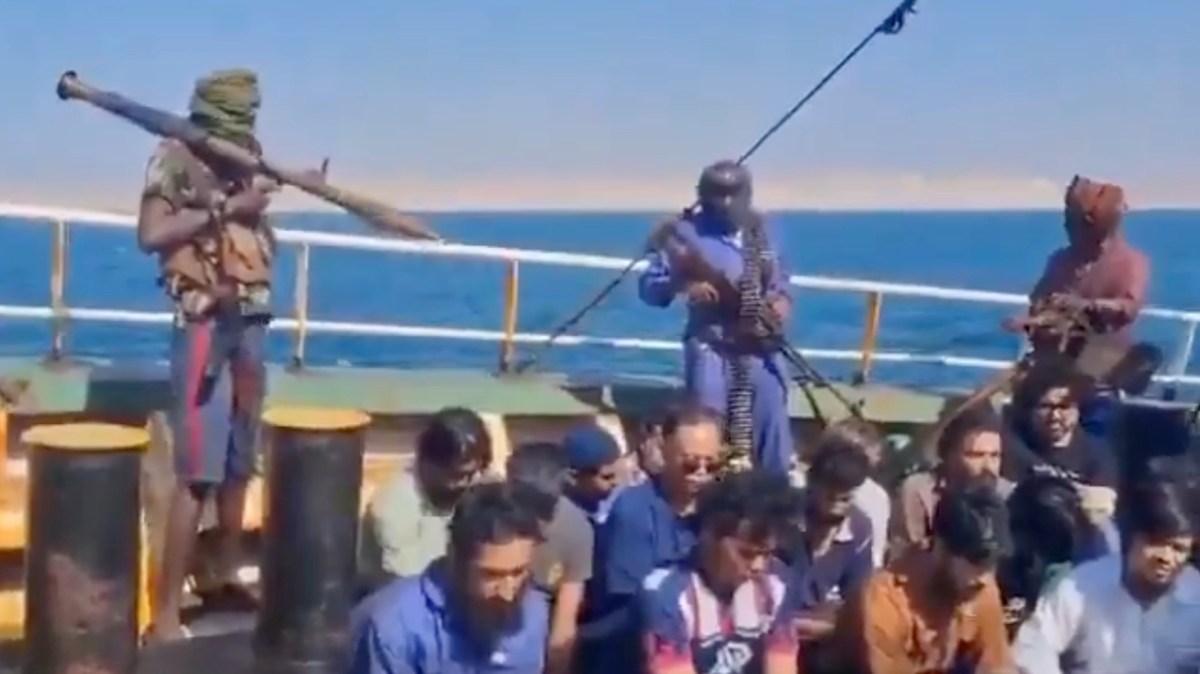
Houthi attacks on Red Sea shipping and rising Somali piracy in the Red Sea, Gulf of Aden corridor keep the transit threat elevated, with reported hijackings and the Palau‑flagged Lady Naeima attacked by pirates. Major container lines have suspended Bab el‑Mandeb transits, and traffic has been depressed since late 2023. Regional instability intensified this week with a Qatari LNG carrier, Al Rekayyat, disabled off Oman, multiple tankers turning back, and a growing LNG anchorage off Qatar’s Ras Laffan, unsettling markets and reinforcing route and schedule disruption. Coalition naval operations under Operation Prosperity Guardian and U.S. strikes have not removed the threat to merchant shipping. NASA thermal anomaly detections near Bab el‑Mandeb in the past two days require corroboration, as they record heat sources rather than attack causation.
Change from previous assessment
Since the 8 July brief, this assessment adds detail on Somali piracy, including the attack on the Palau‑flagged Lady Naeima, and incorporates this week’s Hormuz‑area disruptions affecting LNG carriers and tanker routing. It also formalises a standing caution on interpreting NASA thermal anomalies without maritime corroboration. Given continued reporting of carrier suspensions, we judge a slower return to routine Suez routings than previously anticipated and emphasise elevated risk to Israel‑linked vessels.
Key judgments
- The maritime threat to commercial shipping transiting the Red Sea and Bab el‑Mandeb is very likely elevated, driven by Houthi attacks and a concurrent rise in Somali piracy, including a recent attack on the Palau‑flagged bulk carrier Lady Naeima and reports of hijackings with crew held hostage. (Confidence: high · ASSESSED)
- I&W: UKMTO or naval task force reporting of another boarding, hijacking or weapons use within 100 nm of Bab el‑Mandeb. (0-14 days)
- I&W: A 30‑day period without UKMTO‑reported approaches, boardings or weapons use in the Red Sea, Gulf of Aden corridor. (1-3 months)
- Global container lines including Maersk and Hapag‑Lloyd are likely to sustain diversions away from Bab el‑Mandeb rather than a rapid return to routine Suez routings, keeping Red Sea throughput depressed relative to pre‑2023 levels. (Confidence: medium · ASSESSED)
- I&W: Continued carrier advisories maintaining Bab el‑Mandeb suspensions or war‑risk surcharges on Suez services. (1-3 months)
- I&W: Verified AIS transits by multiple Maersk and Hapag‑Lloyd mainline vessels through Bab el‑Mandeb on scheduled loops. (0-14 days)
- Escalation around the Strait of Hormuz this week is likely to compound Red Sea routing and schedule disruption for energy carriers, as evidenced by a Qatari LNG tanker disabled off Oman, tanker turnbacks, and an LNG queue off Ras Laffan. (Confidence: medium · ASSESSED)
- I&W: Additional LNG or product tankers anchoring off Ras Laffan or reversing course after entering the Gulf of Oman. (0-14 days)
- I&W: Reported normalisation of inbound and outbound tanker counts through Hormuz by maritime security centres for at least two consecutive weeks. (1-3 months)
- Thermal detections near Bab el‑Mandeb in the last 48 hours almost certainly cannot, by themselves, verify an attack at sea and require corroboration from maritime incident reporting. (Confidence: high · REPORTED)
- I&W: FIRMS thermal anomalies over Bab el‑Mandeb without corresponding UKMTO, operator or naval incident reports in the next 24 hours. (0-14 days)
- I&W: An authoritative maritime report explicitly validating an attack based solely on a satellite thermal signature. (1-3 months)
- Coalition naval operations and U.S. strikes on Houthi capabilities are unlikely to eliminate risk to merchant shipping in the Red Sea, and they impose high defensive costs relative to low‑cost Houthi drones. (Confidence: medium · ASSESSED)
- I&W: Continued reports of coalition interceptor launches against low‑cost Houthi UAVs or munitions over the Red Sea. (1-3 months)
- I&W: A sustained 30‑day period with no coalition intercepts reported and no Houthi targeting claims. (1-3 months)
- Vessels with Israeli links remain at heightened risk along Red Sea lanes, given Houthi declarations that any Israel‑linked ship is a target and stated solidarity with Gaza. (Confidence: medium · ASSESSED)
- I&W: UKMTO or operator reporting of a threat, boarding or strike against an Israel‑linked vessel north or south of Bab el‑Mandeb. (1-3 months)
- I&W: A public Houthi statement rescinding targeting of Israel‑linked ships sustained for at least 30 days without related incidents. (1-3 months)
Outlook & scenarios
Protracted high‑risk steady state (60%)
Houthi threats and Somali piracy continue at a low but persistent tempo. Major liners keep Bab el‑Mandeb suspensions in place, and energy carriers manage schedules conservatively. Naval escorts and air defences limit mass‑casualty events but do not remove the harassment risk. Costs, delays and insurance premia remain elevated.
Escalatory spillover from Hormuz (35%)
Attacks and turnbacks around the Strait of Hormuz intensify, reinforcing carrier diversions and stretching escort capacity across both choke points. LNG queues lengthen off Ras Laffan and more energy cargoes avoid the corridor entirely. Markets react with heightened price volatility.
Managed de‑escalation and guarded reopening (25%)
Sustained naval pressure, sanctions on Houthi supply chains, and diplomatic messaging reduce attack attempts. Carriers run limited, convoy‑style Suez services with enhanced reporting. Piracy risk remains but is better contained through patrols and improved information sharing.
Wildcard: Houthi, pirate collaboration enables a high‑value hijack (10%)
Houthi facilitation of Somali pirates contributes to a coordinated hijacking near Bab el‑Mandeb, producing a prolonged hostage crisis and a temporary halt to transits by several operators.
Recommendations
- Maintain a daily watch on UKMTO, JMIC and naval task force advisories for the Red Sea, Gulf of Aden corridor, and fuse with operator incident reports to update risk to transit windows.
- Track AIS/LRIT patterns for Maersk and Hapag‑Lloyd mainline services through Bab el‑Mandeb to detect any shift from diversions to resumed routings.
- Build and maintain a flagged list of vessels with Israeli beneficial ownership or management links to support routing and risk assessments along Red Sea lanes.
- Monitor LNG traffic health using ship‑tracking: count anchored LNG carriers off Ras Laffan and note tanker turnbacks after entering the Gulf of Oman; brief on 48‑hour trends.
- Use NASA FIRMS thermal detections only as cues, not confirmation; require corroboration from UKMTO, naval or operator reporting before escalating incident assessments.
- Engage with Operation Prosperity Guardian liaison channels for pattern‑of‑life, intercept usage rates and strike reporting to anticipate residual risk to merchant traffic.
Confidence & uncertainty
Multiple independent and credible sources support the core judgments: major media and multilateral reporting on Houthi attacks and piracy, operator and maritime security references to carrier suspensions and depressed Red Sea traffic, official NASA data on thermal detections, and widely reported energy‑shipping disruptions around Hormuz. Some elements rely on single‑source or generalised reporting without tight dating, and there are timeline inconsistencies across claims on specific tanker incidents and policy statements. These gaps and cross‑strait dynamics reduce certainty, hence an overall medium confidence despite strong corroboration on key threat vectors.
Alternative analysis (red cell)
The available reporting documents multiple maritime incidents and troubling rhetoric, but the record as cited mixes geographically distinct phenomena (Red Sea Houthi activity vs Somali piracy vs Strait of Hormuz incidents) and relies on a set of high‑confidence incident reports without demonstrating sustained trends or clear chains of causation. An alternative, evidence‑based estimate is that recent events represent a cluster of episodic disruptions with localized effects; attribution, operational linkage, and durable shifts in commercial routing require more direct, time‑series, and source‑corroborated data before concluding a broad, sustained elevation of systemic maritime threat.
Intelligence gaps
- [EEI 1.2 · PARTIAL] Public Houthi claims of attacks or warnings tied to specific dates/routes, including social-media posts, official statements, and timing relative to merchant transits. Recommended collection: open-source/social_media
- [EEI 1.3 · UNCOVERED] Unusual Houthi force posture indicators along Yemen’s Red Sea coast: movement or concentration of small boats, visible coastal missile/rocket emplacements, or logistics buildup at known launch sites (locations, timestamps). Recommended collection: imagery/satellite
- [EEI 1.4 · PARTIAL] Intercepts or communications indicating orders, targeting lists, or intent to strike merchant shipping (messages referencing specific vessel classes, companies, or chokepoints). Recommended collection: signals/communications
- [EEI 2.1 · UNCOVERED] Reports or visual confirmation of floating or moored mines and debris fields in shipping lanes or approaches to Bab-el-Mandeb, with geolocation and time. Recommended collection: imagery/satellite
- [EEI 2.2 · UNCOVERED] Detection of mine-laying activity: small vessels loitering in lane approaches, unexpected AIS track patterns consistent with mine deployment, or salvage/mining vessels operating in the area. Recommended collection: maritime/AIS
- [EEI 2.3 · PARTIAL] Hydrographic notices, naval warnings, or port authority advisories closing lanes or imposing route restrictions (text of Notice to Mariners, issuing agency, effective times/areas). Recommended collection: naval/port_authority
- [EEI 2.4 · UNCOVERED] Naval or commercial reports of mine-countermeasure operations or confirmed mine removal events (location, time, platforms involved). Recommended collection: naval/intelligence
- [EEI 3.2 · PARTIAL] Official announcements or directives from states/coalitions regarding convoys, armed escorts, protected corridor establishment, or changes to rules of engagement for merchant protection. Recommended collection: diplomatic/public_affairs
- [EEI 3.4 · UNCOVERED] Planned or ongoing multinational exercises, air ISR sorties, or logistics moves that increase or decrease naval capacity in the area (exercise name, participating units, dates, locations). Recommended collection: open-source/military_reporting
- [EEI 4.2 · UNCOVERED] War-risk and hull insurance coverage changes: issuance refusals, premium increases for Red Sea transits, or explicit route exclusions by underwriters (policy notices or market rate data with dates). Recommended collection: commercial/insurance_data
Cited sources
[1] marinelink.com · Gulf-Europe Oil Pipeline Could Minimize Red Sea Dependency (B) · sha256:674ef597c622 [2] Wikipedia · Red Sea crisis (B) · sha256:6cbfe91cb801 [3] twz.com · Pirate Attacks Spike Off The Horn Of Africa (B) · sha256:309ab73dabf0 [4] bitcoinworld.co.in · Iran Frames Red Sea Ship Attacks As 'Customer Service' As US Responds With Military Force (B) · sha256:841a0986bcc1 [5] theprint.in · Iran wants to charge fees for Hormuz. How do other waterways work (B) · sha256:5166defc0c4e [6] United Nations · US-Iran war: Renewed attacks in Strait of Hormuz prompts another global energy alert (A) · sha256:bcdfc80bfd0f [7] marinelink.com · Qatari LNG Tanker Remains Stranded After Projectile Strike (A) · sha256:39a57617e456 [8] NASA · NASA FIRMS thermal detections — Bab-el-Mandeb (2d) (A) · sha256:e19e8feb28bf [9] smallwarsjournal.com · Iran Didn't Need to Win The War. It Needed to Outlast It (C) · sha256:b2a0bc3dc706
Source content hashes were computed at collection time; the cited text is preserved unmodified for the life of this product.
Red cell review: PARTIAL DISSENT
TLP:CLEAR