TLP:CLEAR · Disclosure is not limited.
Red Sea: Cautious Suez Reopening Amid Persistent Houthi Threat and Hormuz Shock
Time window: Last 7 days · Audience: General analyst · Type: Situation report · DTG: 2026-07-12 01:11Z · Overall confidence: HIGH
BLUF
A.P. Moller-Maersk is restarting select Suez routings through the Red Sea, but the Houthi threat at Bab el Mandeb and the near-standstill, high-cost risk environment around the Strait of Hormuz very likely preclude a broad industry return in the near term. Expect a controlled reopening by a few majors while most owners remain on the sidelines.
Executive summary
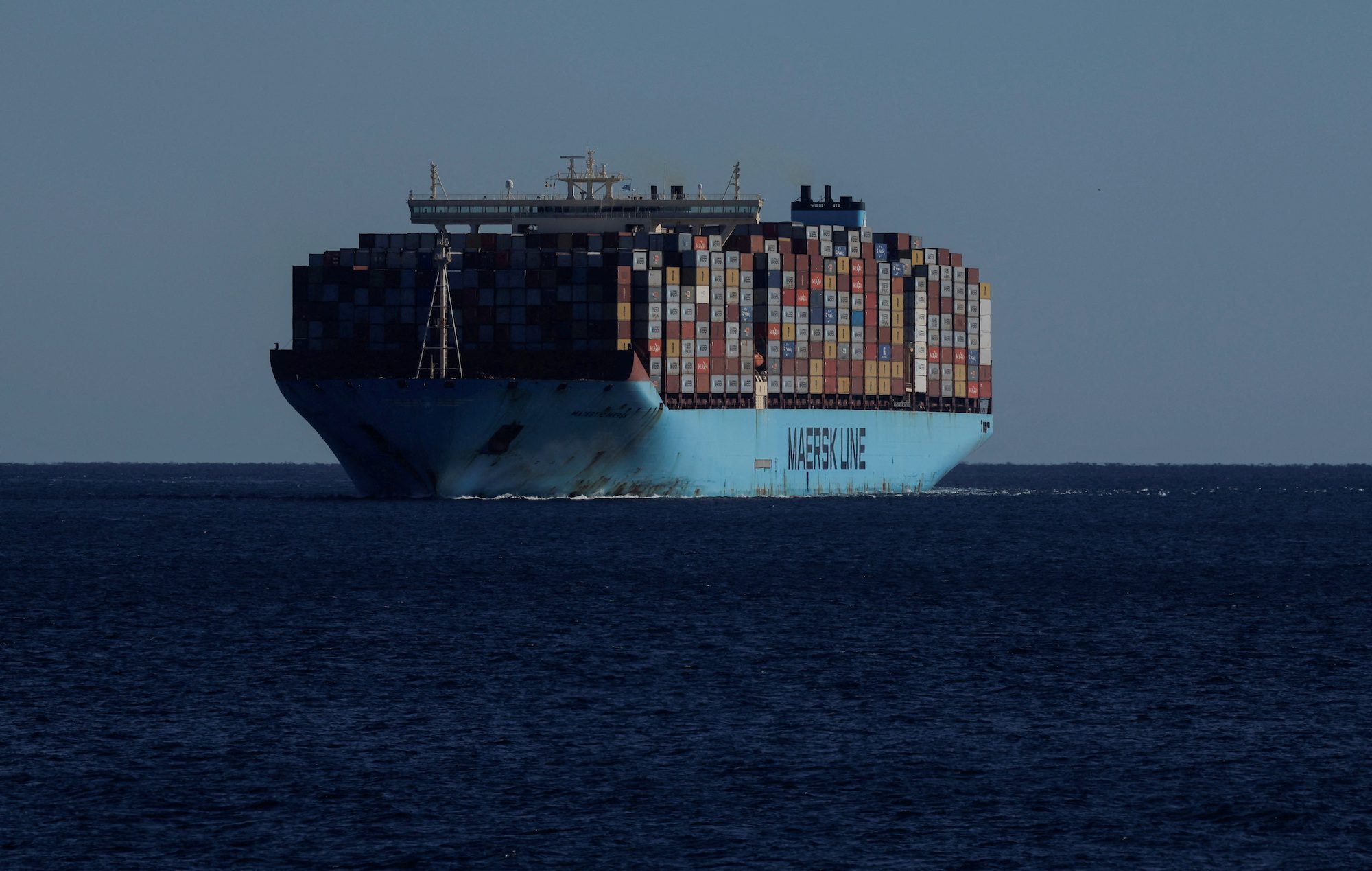
The maritime threat to commercial shipping in the southern Red Sea remains elevated, anchored in Ansarallah’s sustained campaign since October 2023, reported hijackings, and explicit targeting of Israel-linked vessels, all against the backdrop of Yemen’s ongoing civil war and international censure. A.P. Moller-Maersk has announced and executed specific steps to resume Suez routings, including a Middle East, US East Coast service, an added Jeddah call, and a confirmed Bab el Mandeb transit by Majestic Maersk, signalling a controlled reopening. However, US, Iran hostilities in and around the Strait of Hormuz have depressed traffic, produced vessel damage and casualties, and driven war-risk premiums sharply higher, reinforcing owner caution about adding Red Sea exposure.
Change from previous assessment
Since the prior brief, Maersk’s controlled return via Suez is reinforced by further detail on restored services, a new Jeddah call, and a confirmed Bab el Mandeb passage by Majestic Maersk. Separately, IRGC closure statements, reported vessel damage with a missing crew member, reduced insurer appetite, and elevated war‑risk pricing around Hormuz have solidified the judgment that most owners will stay cautious. Our overall assessment is unchanged: the Red Sea route is reopening selectively under heightened risk, and a broad return remains unlikely in the near term.
Key judgments
- The maritime threat to merchant shipping in the southern Red Sea and Bab el Mandeb is very likely to remain elevated in the near term, given Ansarallah’s ongoing campaign, two reported hijackings with 36 crew taken, and the Houthis’ declared intent to attack Israel‑linked vessels, amid Yemen’s civil war and international condemnation of such attacks. (Confidence: high · ASSESSED)
- I&W: UKMTO reports of missile, drone, or small-boat approaches against merchant vessels in the Bab el Mandeb traffic lane. (0-14 days)
- I&W: No UKMTO‑recorded attacks or boardings in the southern Red Sea and Houthi statements dialling back target sets for at least one month. (1-3 months)
- Container carriers are restarting limited Suez routings via the Red Sea, led by A.P. Moller‑Maersk, but a wholesale industry return is unlikely near term; observed and announced sailings indicate a controlled, service‑by‑service reopening under a generally cautious posture. (Confidence: high · ASSESSED)
- I&W: Additional Maersk or partner loops publish Suez routings and complete Bab el Mandeb transits without diversion. (0-14 days)
- I&W: Announcements reversing the MECL Suez routing or cancelling the Jeddah call, or diversion of scheduled Red Sea voyages around the Cape. (0-14 days)
- US, Iran hostilities around the Strait of Hormuz are very likely to suppress a broad‑based return to Red Sea transits in the short term, given IRGC closure claims, vessel strikes with casualties, depressed traffic, and sharply higher war‑risk pricing alongside reduced insurer appetite. (Confidence: high · ASSESSED)
- I&W: War‑risk premia remain above 2% of hull value for voyages touching the northern Indian Ocean and UKMTO maintains an elevated threat posture. (0-14 days)
- I&W: AIS‑broadcasting large vessels increase usage of the US‑coordinated Hormuz corridor and broker quotes fall below 2% for war‑risk cover. (1-3 months)
- There is a roughly even chance that Tehran‑linked pressure will sustain or escalate Houthi threats to Red Sea traffic if US, Iran tensions persist, given open‑source characterisations of the Houthi movement as an Iranian proxy and assessments that Iran may seek leverage at Bab el Mandeb. (Confidence: medium · ASSESSED)
- I&W: Iranian officials or state media link Bab el Mandeb access to political concessions or echo closure rhetoric applied to Hormuz. (1-3 months)
- I&W: Public Houthi statements narrowing the target set and a sustained lull in Red Sea incidents. (1-3 months)
Outlook & scenarios
Managed reopening under tight risk controls (60%)
Maersk executes additional Suez routings, including the restored Middle East, US East Coast service and the new Jeddah call, and completes further Bab el Mandeb transits without diversion. Other blue‑chip carriers selectively follow on a lane‑by‑lane basis. UKMTO continues to describe a cautious industry posture and owners retain higher cover thresholds, but schedule reliability through Suez improves modestly.
Red Sea relapse with renewed interdictions (35%)
Houthi units resume or intensify interdictions near Bab el Mandeb, including attempted boardings or missiles and drones against Israel‑linked or misidentified ships. A small number of successful strikes or a fresh hijacking prompt carriers to suspend newly restored services and re‑route around the Cape, reversing recent schedule gains.
Diplomatic de‑escalation boosts confidence (25%)
Oman‑led efforts and Qatari mediation generate limited Hormuz de‑escalation steps and clearer mechanisms on safe passage. With lower rhetoric and fewer incidents, insurers ease war‑risk pricing. Carriers accelerate Suez reinstatements beyond Maersk’s portfolio, creating a faster‑than‑expected normalisation through the Red Sea.
Recommendations
- Maintain a conservative routing policy that allows case‑by‑case Suez transits on services with demonstrated recent Red Sea passages, while preserving pre‑cleared Cape of Good Hope contingencies for rapid diversion if risk indicators deteriorate.
- Task collection to track announced and executed carrier routings, focusing on Maersk’s MECL service and Jeddah call, plus confirmed Bab el Mandeb transits, to quantify the true pace of reopening and inform logistics planning.
- Engage marine insurers and brokers weekly to obtain live war‑risk quotes and coverage conditions; treat premia above 2% of hull value or exclusions tied to the southern Red Sea as a practical ceiling on acceptable exposure.
- Use UKMTO threat assessments and incident reports to drive a standing tripwire matrix for Red Sea transits, with predefined go/no‑go thresholds tied to missile or boarding alerts in the Bab el Mandeb corridor.
- Avoid any calls at Yemeni ports and review counterparties against Ansarallah’s FTO status and UNSC 2722 language to manage sanctions, compliance, and liability risks in Red Sea operations.
- Refresh crew duty‑of‑care protocols for Suez‑bound sailings, to include communications blackout procedures, citadel drills, and embarkation criteria for armed guards where policy permits.
Confidence & uncertainty
Assessments draw on multiple independent and mutually reinforcing sources: UN system reporting, official government advisories, company statements, and major media. The Houthi threat picture, Maersk’s route changes, and the Hormuz risk environment are all supported by several high‑confidence claims. Uncertainties remain on the exact scale of traffic through Hormuz and the durability of any de‑escalation, with some divergence between reports showing near‑standstill flows and evidence of limited transits continuing. These gaps constrain precision on timing but do not alter the headline judgments.
Alternative analysis (red cell)
While Houthis have demonstrated maritime strike capability and conducted high‑impact incidents (273e9ee4; c96f4205; 44f269ee), the currently cited evidence does not conclusively show a sustained, Tehran‑directed escalation that will keep the entire southern Red Sea/Bab el Mandeb corridor continuously at 'very high' threat levels. Company‑specific mitigations and some continuing movements (c69b9ee8; d9921225; 8e64f2f7) indicate the risk may be episodic and contingent; without direct indicators of Iranian operational control or clear, sustained attack trends, a less categorical estimate is defensible.
Intelligence gaps
- [EEI 1.1 · UNCOVERED] Incidents of hostile action against commercial vessels: vessel name/IMO, position (lat/long), time/date, observable damage or casualties, and weapon type reported (missile, drone, small-arms, explosive-laden boat). Recommended collection: maritime/AIS
- [EEI 1.2 · UNCOVERED] Public Houthi claims of attacks or warnings tied to specific dates/routes, including social-media posts, official statements, and timing relative to merchant transits. Recommended collection: open-source/social_media
- [EEI 1.3 · UNCOVERED] Unusual Houthi force posture indicators along Yemen’s Red Sea coast: movement or concentration of small boats, visible coastal missile/rocket emplacements, or logistics buildup at known launch sites (locations, timestamps). Recommended collection: imagery/satellite
- [EEI 1.4 · UNCOVERED] Intercepts or communications indicating orders, targeting lists, or intent to strike merchant shipping (messages referencing specific vessel classes, companies, or chokepoints). Recommended collection: signals/communications
- [EEI 2.1 · UNCOVERED] Reports or visual confirmation of floating or moored mines and debris fields in shipping lanes or approaches to Bab-el-Mandeb, with geolocation and time. Recommended collection: imagery/satellite
- [EEI 2.2 · UNCOVERED] Detection of mine-laying activity: small vessels loitering in lane approaches, unexpected AIS track patterns consistent with mine deployment, or salvage/mining vessels operating in the area. Recommended collection: maritime/AIS
- [EEI 2.3 · UNCOVERED] Hydrographic notices, naval warnings, or port authority advisories closing lanes or imposing route restrictions (text of Notice to Mariners, issuing agency, effective times/areas). Recommended collection: naval/port_authority
- [EEI 2.4 · UNCOVERED] Naval or commercial reports of mine-countermeasure operations or confirmed mine removal events (location, time, platforms involved). Recommended collection: naval/intelligence
- [EEI 3.1 · UNCOVERED] Movements and presence of foreign warships and support vessels: names/classes, task group compositions, patrol areas and timelines, and whether vessels are conducting escort or interdiction operations. Recommended collection: naval/intelligence
- [EEI 3.2 · UNCOVERED] Official announcements or directives from states/coalitions regarding convoys, armed escorts, protected corridor establishment, or changes to rules of engagement for merchant protection. Recommended collection: diplomatic/public_affairs
- [EEI 3.3 · UNCOVERED] Recorded interactions between naval forces and vessels in the corridor (hailings, boardings, warnings, defensive strikes), including timestamps and outcomes. Recommended collection: maritime/AIS
- [EEI 3.4 · UNCOVERED] Planned or ongoing multinational exercises, air ISR sorties, or logistics moves that increase or decrease naval capacity in the area (exercise name, participating units, dates, locations). Recommended collection: open-source/military_reporting
- [EEI 4.1 · UNCOVERED] Transit volume and pattern changes: number of commercial transits per day/week through Bab-el-Mandeb and southern Red Sea compared with baseline, and instances of rerouting around Africa (position/time data). Recommended collection: maritime/AIS
- [EEI 4.2 · UNCOVERED] War-risk and hull insurance coverage changes: issuance refusals, premium increases for Red Sea transits, or explicit route exclusions by underwriters (policy notices or market rate data with dates). Recommended collection: commercial/insurance_data
- [EEI 4.3 · UNCOVERED] Freight and charter market signals tied to the corridor: spot rates for container, tanker, and dry bulk routes affected by Red Sea disruptions, and reported port congestion or turnaround-time increases at nearby hubs. Recommended collection: commercial/market_data
- [EEI 4.4 · UNCOVERED] Incidents of cargo denial or diversion for critical goods (crude oil, refined products, LNG, high-value container cargo) including vessel IDs, cargo type, reroute/turnback actions, and economic impact estimates where available. Recommended collection: maritime/AIS
Cited sources
[1] Wikipedia · Middle Eastern crisis (2023–present) (B) · sha256:0dd79b411c4a [2] Wikipedia · Red Sea crisis (B) · sha256:a06024efa561 [3] U.S. Department of State · Yemen Travel Advisory | Travel.State.gov (A) · sha256:d87365caec69 [4] africa.businessinsider.com · World’s second-largest shipping giant resumes operations on Africa’s busiest shipping waterway as Egypt eyes revenue recovery (B) · sha256:c53f29c4f981 [5] gcaptain.com · Container Spot Rates Edge Higher as Peak Season Faces Mid-July Test (C) · sha256:e376ab8ce132 [6] Al Jazeera · Strait of Hormuz traffic plunges as US, Iran resume fighting (A) · sha256:21a47b5646d7 [7] The Guardian · US and Iran exchange strikes as Tehran again says strait of Hormuz is closed (A) · sha256:ec0d8fe84711 [8] ynetnews.com · Iran attacks ship in Strait of Hormuz, declares waterway 'closed until further notice' (B) · sha256:a6ef492db3f4 [9] gcaptain.com · Hormuz War-Risk Cover Climbs as Shipowners Pull Back (B) · sha256:6fdbdccd9f3c [10] gcaptain.com · More LNG, Japan-Linked Vessels Transit Hormuz Despite Renewed Mideast Tensions (A) · sha256:c10a7327839c [11] The Media Line · From Hormuz to Bab el Mandeb: The Lesson the World Must Not Ignore - The Media Line (B) · sha256:8daa2376873b
Source content hashes were computed at collection time; the cited text is preserved unmodified for the life of this product.
Red cell review: PARTIAL DISSENT
TLP:CLEAR