TLP:CLEAR · Disclosure is not limited.
Red Sea: Houthi ban and Bab el‑Mandeb incident keep Israel‑linked shipping at acute risk
Time window: Last 7 days · Audience: General analyst · Type: Situation report · DTG: 2026-06-15 04:26Z · Overall confidence: MEDIUM
BLUF
The Houthis have declared a complete ban on Israeli shipping in the Red Sea and say Israel‑linked movements are military targets. A UKMTO‑reported small‑boat approach and exchange of fire near Bab el‑Mandeb on 10 June highlights persistent risk to transits, and near‑term rerouting pressure is likely to continue.
Executive summary
In the past week the Houthis announced a complete ban on Israeli maritime navigation in the Red Sea, clarifying it covers ships with Israeli markings and those bound for Israeli ports, and warned of further action. On 10 June a cargo vessel off south‑west Balhaf, Yemen, reported a close approach by a small craft carrying six armed men and an exchange of fire near the Bab el‑Mandeb; no casualties or damage were reported and vessels were advised to sail with caution. Local and regional outlets report expectations of a temporary blockade, potential rerouting by shipping lines, and higher freight costs, with some estimates putting current impact at about 150 ships. Expert commentary argues the Houthis are unlikely to fully close the strait and are more likely to pursue intermittent operations that raise risk and cost. Separate diplomatic reporting points to a prospective U.S.‑Iran framework, but Houthi rhetoric and actions in the Red Sea suggest limited near‑term relief for Israel‑linked traffic.
Change from previous assessment
New reporting of a 10 June small‑boat approach and exchange of fire near Bab el‑Mandeb, with no casualties, confirms persistent tactical risk on the Yemen littoral. Additional regional reporting details the Houthi’s complete Red Sea ban, clarifies that Israel‑bound ships are included, and flags expectations of short‑term blockade dynamics, potential rerouting, and higher freight costs. Diplomatic commentary about a prospective U.S.‑Iran framework has increased, but we maintain our assessment that this is unlikely to reduce Houthi enforcement pressure in the Red Sea over the next two weeks. Initial assessment of quantitative impact indicators this run relies on local media and should be monitored for corroboration.
Key judgments
- The Houthis very likely intend to enforce a renewed, total ban on Israeli‑linked shipping through the Red Sea and Bab el‑Mandeb in the near term. (Confidence: medium · ASSESSED)
- I&W: Official Houthi statements issue new targeting notices for Israel‑linked vessels transiting Bab el‑Mandeb. (0-14 days)
- I&W: UKMTO or flag‑state reporting of an Israel‑flagged or Israel‑destined vessel transiting Bab el‑Mandeb without incident. (0-14 days)
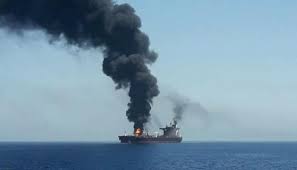
- Merchant vessels off south‑west Balhaf, Yemen, likely face a persistent risk from small armed craft, as evidenced by the 10 June approach by a six‑man boat and exchange of fire near the Bab el‑Mandeb, with no casualties reported. (Confidence: medium · ASSESSED)
- I&W: Further UKMTO alerts of armed small‑craft approaches in the Bab el‑Mandeb approaches. (0-14 days)
- I&W: No UKMTO reports of suspicious approaches in Yemen’s littoral waters. (0-14 days)
- Near‑term operator avoidance of the Red Sea is likely to persist, with some carriers rerouting and freight costs rising as the declared ban and a mooted 10‑day blockade affect at least scores of vessels. (Confidence: medium · ASSESSED)
- I&W: Public carrier or port‑agent notices announcing diversions around the Cape of Good Hope for services that normally use Suez. (0-14 days)
- I&W: Resumption of scheduled voyages via Bab el‑Mandeb by lines that had warned of diversions. (1-3 months)
- The Houthis are unlikely to be able to completely close the Bab el‑Mandeb, but are likely to conduct intermittent, limited operations that raise risk and cost rather than a sustained shutdown. (Confidence: medium · ASSESSED)
- I&W: Sporadic harassment incidents without general navigation halts in the strait. (1-3 months)
- I&W: Authoritative navigation warnings or coalition advisories declaring the strait unsafe for all commercial traffic for several consecutive days. (0-14 days)
- Announcements of a prospective U.S.‑Iran framework or ceasefire are unlikely to materially reduce Houthi enforcement pressure on Israel‑linked shipping in the Red Sea within the next two weeks. (Confidence: low · ASSESSED)
- I&W: Houthi statements reiterate the Red Sea ban after any U.S.‑Iran signing event. (0-14 days)
- I&W: Houthi authorities issue a formal exemption or pause for Red Sea enforcement tied to the framework. (0-14 days)
- Seafarer harm risk across the wider region remains elevated, given UN‑reported fatalities and a lethal strike near Oman, although the 10 June Bab el‑Mandeb incident caused no casualties. (Confidence: medium · ASSESSED)
- I&W: Additional UN or flag‑state reports of crew fatalities or injuries from maritime strikes in regional sea lanes. (1-3 months)
- I&W: A 30‑day period without reported crew casualties from regional maritime attacks. (1-3 months)
Outlook & scenarios
Enforcement grind: sporadic attacks and steady rerouting (60%)
The Houthis keep the Red Sea ban in force and conduct sporadic small‑boat or standoff harassment near Bab el‑Mandeb. Israel‑linked traffic stays away, and non‑linked carriers selectively reroute, keeping freight rates elevated and schedules stretched.
Framework bifurcation: Hormuz eases, Red Sea pressure persists (40%)
A U.S.‑Iran framework reduces immediate risk around Hormuz, but Houthi leaders maintain their Red Sea ban tied to Israel. Risk to Israel‑linked voyages through Bab el‑Mandeb remains high, with only marginal improvement for unrelated transits.
Wildcard escalation: high‑impact strike in Bab el‑Mandeb (20%)
A successful high‑impact attack on a vessel identified as Israel‑linked inside the Red Sea triggers temporary traffic pauses and wider naval responses. Insurance and freight costs jump and discretionary Suez routings are curtailed for several weeks.
Recommendations
- Advise all shipowners and charterers with any Israel‑linked exposure to avoid the Red Sea corridor and Bab el‑Mandeb in the near term, and plan for diversions via the Cape of Good Hope.
- Direct voyage planners to review and act on UKMTO advisories for the Yemen littoral; mandate enhanced bridge watches, hardening measures, and rehearsed citadel procedures during high‑risk legs.
- Model schedule and cost impacts for at least a 10‑day disruption window and a rolling extension risk, including bunker, crew, and inventory buffers for rerouted services.
- Task collection to track official Houthi statements for targeting guidance and changes to the declared ban; cross‑check with UKMTO incident feeds for signs of increased enforcement activity.
- Use thermal anomaly monitoring as a supplementary cue for maritime incidents near the strait, recognising that heat signatures record effects and require correlation with maritime reporting before operational action.
- Maintain heightened duty‑of‑care measures for crews transiting regional sea lanes, including medical evacuation plans and crisis communications protocols.
Confidence & uncertainty
Overall confidence is medium. The Bab el‑Mandeb incident is supported by UKMTO‑sourced reporting via major media, which is reliable. The Houthi ban and target set are reported by multiple regional outlets and encyclopaedic summaries, which are consistent but less authoritative. Economic impact expectations and ship counts come from local media and should be treated cautiously. Diplomatic signals on a U.S.‑Iran framework are reported by mainstream outlets but do not directly address Houthi behaviour in the Red Sea, which lowers confidence in de‑escalation effects.
Alternative analysis (red cell)
While the Houthis have issued declaratory bans and framed Israel‑related movements as legitimate targets, the record lacks independent operational evidence that they can or will enforce a comprehensive maritime closure. It is therefore plausible they will continue to issue threats and conduct episodic harassment rather than sustain a reliable, total ban; similarly, commercial reactions (rerouting, freight increases) may be uneven and transitory absent corroborated AIS and market data. Finally, given Iran’s potential leverage, a credible US‑Iran framework could plausibly prompt measurable Houthi de‑escalation in the near term, but the current reporting does not adjudicate that pathway.
Intelligence gaps
- [EEI 1.3 · PARTIAL] Unusual Houthi force posture indicators along Yemen’s Red Sea coast: movement or concentration of small boats, visible coastal missile/rocket emplacements, or logistics buildup at known launch sites (locations, timestamps). Recommended collection: imagery/satellite
- [EEI 1.4 · UNCOVERED] Intercepts or communications indicating orders, targeting lists, or intent to strike merchant shipping (messages referencing specific vessel classes, companies, or chokepoints). Recommended collection: signals/communications
- [EEI 2.1 · UNCOVERED] Reports or visual confirmation of floating or moored mines and debris fields in shipping lanes or approaches to Bab-el-Mandeb, with geolocation and time. Recommended collection: imagery/satellite
- [EEI 2.2 · UNCOVERED] Detection of mine-laying activity: small vessels loitering in lane approaches, unexpected AIS track patterns consistent with mine deployment, or salvage/mining vessels operating in the area. Recommended collection: maritime/AIS
- [EEI 2.3 · PARTIAL] Hydrographic notices, naval warnings, or port authority advisories closing lanes or imposing route restrictions (text of Notice to Mariners, issuing agency, effective times/areas). Recommended collection: naval/port_authority
- [EEI 2.4 · UNCOVERED] Naval or commercial reports of mine-countermeasure operations or confirmed mine removal events (location, time, platforms involved). Recommended collection: naval/intelligence
- [EEI 3.1 · PARTIAL] Movements and presence of foreign warships and support vessels: names/classes, task group compositions, patrol areas and timelines, and whether vessels are conducting escort or interdiction operations. Recommended collection: naval/intelligence
- [EEI 3.2 · UNCOVERED] Official announcements or directives from states/coalitions regarding convoys, armed escorts, protected corridor establishment, or changes to rules of engagement for merchant protection. Recommended collection: diplomatic/public_affairs
- [EEI 3.4 · UNCOVERED] Planned or ongoing multinational exercises, air ISR sorties, or logistics moves that increase or decrease naval capacity in the area (exercise name, participating units, dates, locations). Recommended collection: open-source/military_reporting
- [EEI 4.1 · PARTIAL] Transit volume and pattern changes: number of commercial transits per day/week through Bab-el-Mandeb and southern Red Sea compared with baseline, and instances of rerouting around Africa (position/time data). Recommended collection: maritime/AIS
- [EEI 4.2 · UNCOVERED] War-risk and hull insurance coverage changes: issuance refusals, premium increases for Red Sea transits, or explicit route exclusions by underwriters (policy notices or market rate data with dates). Recommended collection: commercial/insurance_data
- [EEI 4.3 · PARTIAL] Freight and charter market signals tied to the corridor: spot rates for container, tanker, and dry bulk routes affected by Red Sea disruptions, and reported port congestion or turnaround-time increases at nearby hubs. Recommended collection: commercial/market_data
- [EEI 4.4 · UNCOVERED] Incidents of cargo denial or diversion for critical goods (crude oil, refined products, LNG, high-value container cargo) including vessel IDs, cargo type, reroute/turnback actions, and economic impact estimates where available. Recommended collection: maritime/AIS
Cited sources
[1] egnews.net · الحوثيون يغلقون البحر الأحمر أمام إسرائيل (D) · sha256:316abee660fd [2] alwatanskynewss.com · باب المندب في مرمى التصعيد الحوثي. نُذر مواجهة جديدة في البحر الأحمر (B) · sha256:ada485635fc1 [3] WION · Red Sea On Edge: Houthis Threaten Israel-Linked Shipping Routes | WION (B) · sha256:6351663d467d [4] The National · Guards on cargo vessel fight off attack from small boat near Yemeni coast (A) · sha256:e257a642ae61 [5] almethaqnews.com · ����� �� ���� ������ ��������: ����� ��������� ������� �� ����� ������ �������� ����� ������ (D) · sha256:dd64d28eb64b [6] ynetnews.com · Tensions persist as US-Iran agreement nears and drones target Israel and Hormuz shipping (B) · sha256:32b715464452 [7] bbc.com · BBC Audio | Weekend | Iranian drones targeting ships in Strait of Hormuz shot down (A) · sha256:f90494878e8d [8] United Nations · Three seafarers killed in Hormuz strike as UN warns of widening fallout (A) · sha256:e9d1d27ef113
Source content hashes were computed at collection time; the cited text is preserved unmodified for the life of this product.
Red cell review: PARTIAL DISSENT
TLP:CLEAR