TLP:CLEAR · Disclosure is not limited.
Red Sea shipping disruption amid Yemen-Saudi escalation
Time window: Last 7 days · Audience: General analyst · Type: Situation report · DTG: 2026-10-30 01:12Z · Overall confidence: HIGH
BLUF
Commercial shipping through the Red Sea and Bab al-Mandab is likely to remain exposed to Houthi-related disruption. New Houthi claims of attacks on six Saudi facilities and reported damage at Ras Tanura raise escalation concerns, but the reporting does not confirm all claimed impacts, and crude-oil loading reportedly continued.
Executive summary
Reporting this week describes continuing Houthi-related disruption to Red Sea trade, Asia-Europe vessels routing around the Cape of Good Hope, and added insurance and freight costs. Morbi ceramic exporters report that Red Sea trade remains affected, although some have routed limited cargo to Dubai through Oman. Houthi spokesman Yahya Saree claimed attacks on six Saudi facilities; Saudi accounts reported missile interceptions and one person wounded by shrapnel, while independent confirmation of the full set of Houthi claims is absent. Satellite reporting indicates damage at the Ras Tanura refining complex, but separate reporting describes crude-oil tankers loading at Ras Tanura and Juaymah. The reporting does not establish a closure of Bab al-Mandab or provide a current absolute transit count.
Change from previous assessment
Since the 29 October prior brief, reporting has added Houthi claims of attacks on six Saudi facilities and a satellite-based report of damage at Ras Tanura. Separate reporting that nine very large crude carriers loaded at Ras Tanura and Juaymah narrows the concern to refinery damage rather than an established halt to Saudi crude exports. Reporting also gives more detail on continuing trade effects, including Cape of Good Hope diversions and Morbi exporters' workarounds. The prior report's modest mid-October transit increase remains without a new absolute count, and the contested Aden International Airport incident is not treated here as evidence of a change in Red Sea shipping conditions.
Key judgments
- Commercial shipping through the Red Sea and Bab al-Mandab is likely to remain exposed to Houthi-related disruption over the next 1-3 months. Reporting describes Houthi attacks on commercial vessels, blockade declarations affecting Saudi-linked shipping, continued Cape of Good Hope diversions, and added insurance and freight costs; it does not establish a closure of Bab al-Mandab or provide an absolute current transit count. (Confidence: medium · ASSESSED)
- I&W: A Joint Maritime Information Center update records a confirmed attack, attempted attack, or navigational warning in Bab al-Mandab or the Gulf of Aden. Repeated incidents confirm the assessment; a downgraded threat with no new incidents would weaken it. (0-14 days)
- I&W: Carrier notices and vessel-routing data show Asia-Europe sailings continuing around the Cape of Good Hope, with container freight rates remaining above the reported pre-disruption range of $1,500-$2,000 per container. A return to Red Sea routing and rates near that baseline would weaken the assessment. (1-3 months)
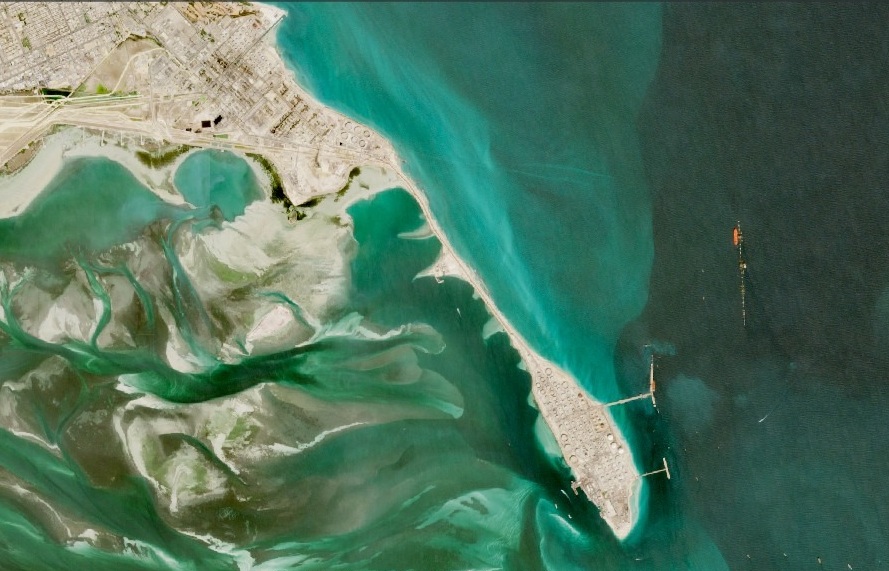
- A strike at Ras Tanura likely damaged a cracking unit and curtailed refining operations, while crude-oil loading at Ras Tanura and Juaymah continued. Commercial satellite reporting describes damage and stopped flaring; separate reporting says nine very large crude carriers loaded simultaneously. The extent of the refinery impairment and attribution to Houthi forces remain uncertain. (Confidence: medium · ASSESSED)
- I&W: New commercial satellite imagery shows continued absence of flaring or visible damage at the Ras Tanura cracking unit. Persistent damage and curtailed activity would confirm the assessment; resumed flaring and visible repair would weaken it. (0-14 days)
- I&W: Vessel or satellite reporting shows crude-oil tankers continuing to load at Ras Tanura or Juaymah. A multi-day interruption to loading would weaken the finding that crude exports continued. (0-14 days)
- The Houthi claim, reported on 30 October, of attacks on six Saudi facilities remains unverified as a set. Yahya Saree named Ras Tanura, Abqaiq, King Khalid International Airport, King Fahd International Airport, Rabigh, and a military headquarters in Najran; Saudi accounts reported missile interceptions towards Riyadh and one person wounded by shrapnel, while independent reporting found no independent corroboration of the Houthi claims. (Confidence: low · REPORTED)
- I&W: Commercial satellite imagery or independently verified damage reports identify physical damage at Abqaiq, King Khalid International Airport, King Fahd International Airport, Rabigh, or the Najran military headquarters. Such evidence would confirm additional impacts; evidence of interceptions only would weaken the Houthi account. (0-14 days)
- I&W: Saudi Civil Defence or facility operators publish verified casualty or damage updates beyond the reported Riyadh shrapnel injury. Corroborated reports would confirm additional impacts; no further verified damage would leave the claim unsubstantiated. (0-14 days)
Outlook & scenarios
Continued disruption with partial rerouting (65%)
Houthi pressure on shipping and Saudi-linked targets continues, while carriers maintain some Asia-Europe sailings around the Cape of Good Hope. Red Sea trade remains affected, but the available reporting does not indicate a closure of Bab al-Mandab.
Reduced attacks and partial return to Red Sea routing (25%)
Saudi, Iranian, and regional diplomatic engagement produces a sustained reduction in attacks. Carriers resume more Red Sea sailings and insurance and freight costs ease from current levels.
Bab al-Mandab closure threat becomes operational (10%)
In a low-probability, high-impact scenario, Houthi forces act on the previously reported warning to close Bab al-Mandab and attack shipping there. Further Cape of Good Hope diversions follow, affecting a waterway reported to carry about 12-15 per cent of global maritime trade.
Recommendations
- Maintain a daily watch of JMIC advisories, carrier notices, and vessel-routing information for Bab al-Mandab, the Gulf of Aden, and Cape of Good Hope. Record confirmed incidents separately from claims by Houthi forces or Saudi authorities.
- Seek independent confirmation of the Ras Tanura damage and the other five Saudi targets through commercial satellite imagery, facility updates, and vessel-loading information. Do not treat the Houthi list of targets as confirmation that each site was hit.
- Track Red Sea disruption using specific commercial indicators: Asia-Europe routing notices, reported container rates, and updates from Morbi exporters. Separate Red Sea effects from reporting about the Strait of Hormuz and Saudi facilities that does not establish an impact on Red Sea transit.
- Add a Bab al-Mandab closure order, a confirmed attack on a commercial vessel at the strait, or a sustained pause in tanker loading at Ras Tanura and Juaymah as escalation triggers for an immediate reassessment.
Confidence & uncertainty
Overall confidence is high in the broad picture because major media, trade reporting, company reporting, and satellite-imagery reporting converge on continuing Red Sea-related disruption, rerouting, and commercial effects. Confidence is lower on the claimed impacts of the 30 October attacks on Saudi facilities: Houthi claims are not independently corroborated, Saudi accounts describe interceptions, and reporting on Ras Tanura damage does not establish the extent or duration of refinery impairment. No absolute current Bab al-Mandab transit count is available.
Alternative analysis (red cell)
The Ras Tanura evidence may indicate an operational change, but it does not establish that a Houthi missile caused physical damage to a cracking unit. Stopped flaring is an ambiguous indicator, the attack attribution is supported by a D1 claim (0b28f6a1-2d88-4505-a3f4-cbb555ded8f6), and the absence of independent corroboration (86824a73-535a-4c4a-9fd8-d951a7444464) leaves open the possibility that the observed change was unrelated. Continued loading by nine VLCCs (eb1859ba-444c-43b8-b9ac-ea788c695378) further supports treating the scale and cause of impairment as unresolved rather than probably established.
Intelligence gaps
- [EEI 1.1 · PARTIAL] Incidents of hostile action against commercial vessels: vessel name/IMO, position (lat/long), time/date, observable damage or casualties, and weapon type reported (missile, drone, small-arms, explosive-laden boat). Recommended collection: maritime/AIS
- [EEI 1.3 · UNCOVERED] Unusual Houthi force posture indicators along Yemen’s Red Sea coast: movement or concentration of small boats, visible coastal missile/rocket emplacements, or logistics buildup at known launch sites (locations, timestamps). Recommended collection: imagery/satellite
- [EEI 1.4 · PARTIAL] Intercepts or communications indicating orders, targeting lists, or intent to strike merchant shipping (messages referencing specific vessel classes, companies, or chokepoints). Recommended collection: signals/communications
- [EEI 2.1 · UNCOVERED] Reports or visual confirmation of floating or moored mines and debris fields in shipping lanes or approaches to Bab-el-Mandeb, with geolocation and time. Recommended collection: imagery/satellite
- [EEI 2.2 · UNCOVERED] Detection of mine-laying activity: small vessels loitering in lane approaches, unexpected AIS track patterns consistent with mine deployment, or salvage/mining vessels operating in the area. Recommended collection: maritime/AIS
- [EEI 2.3 · UNCOVERED] Hydrographic notices, naval warnings, or port authority advisories closing lanes or imposing route restrictions (text of Notice to Mariners, issuing agency, effective times/areas). Recommended collection: naval/port_authority
- [EEI 2.4 · UNCOVERED] Naval or commercial reports of mine-countermeasure operations or confirmed mine removal events (location, time, platforms involved). Recommended collection: naval/intelligence
- [EEI 3.1 · PARTIAL] Movements and presence of foreign warships and support vessels: names/classes, task group compositions, patrol areas and timelines, and whether vessels are conducting escort or interdiction operations. Recommended collection: naval/intelligence
- [EEI 3.2 · PARTIAL] Official announcements or directives from states/coalitions regarding convoys, armed escorts, protected corridor establishment, or changes to rules of engagement for merchant protection. Recommended collection: diplomatic/public_affairs
- [EEI 3.3 · UNCOVERED] Recorded interactions between naval forces and vessels in the corridor (hailings, boardings, warnings, defensive strikes), including timestamps and outcomes. Recommended collection: maritime/AIS
- [EEI 3.4 · UNCOVERED] Planned or ongoing multinational exercises, air ISR sorties, or logistics moves that increase or decrease naval capacity in the area (exercise name, participating units, dates, locations). Recommended collection: open-source/military_reporting
- [EEI 4.1 · PARTIAL] Transit volume and pattern changes: number of commercial transits per day/week through Bab-el-Mandeb and southern Red Sea compared with baseline, and instances of rerouting around Africa (position/time data). Recommended collection: maritime/AIS
- [EEI 4.2 · PARTIAL] War-risk and hull insurance coverage changes: issuance refusals, premium increases for Red Sea transits, or explicit route exclusions by underwriters (policy notices or market rate data with dates). Recommended collection: commercial/insurance_data
- [EEI 4.3 · PARTIAL] Freight and charter market signals tied to the corridor: spot rates for container, tanker, and dry bulk routes affected by Red Sea disruptions, and reported port congestion or turnaround-time increases at nearby hubs. Recommended collection: commercial/market_data
- [EEI 4.4 · PARTIAL] Incidents of cargo denial or diversion for critical goods (crude oil, refined products, LNG, high-value container cargo) including vessel IDs, cargo type, reroute/turnback actions, and economic impact estimates where available. Recommended collection: maritime/AIS
Red cell review: PARTIAL DISSENT
TLP:CLEAR