TLP:CLEAR · Disclosure is not limited.
Red Sea Shipping Disruption Assessment
Time window: Last 7 days · Audience: General analyst · Type: Situation report · DTG: 2026-07-06 14:34Z · Overall confidence: LOW
BLUF
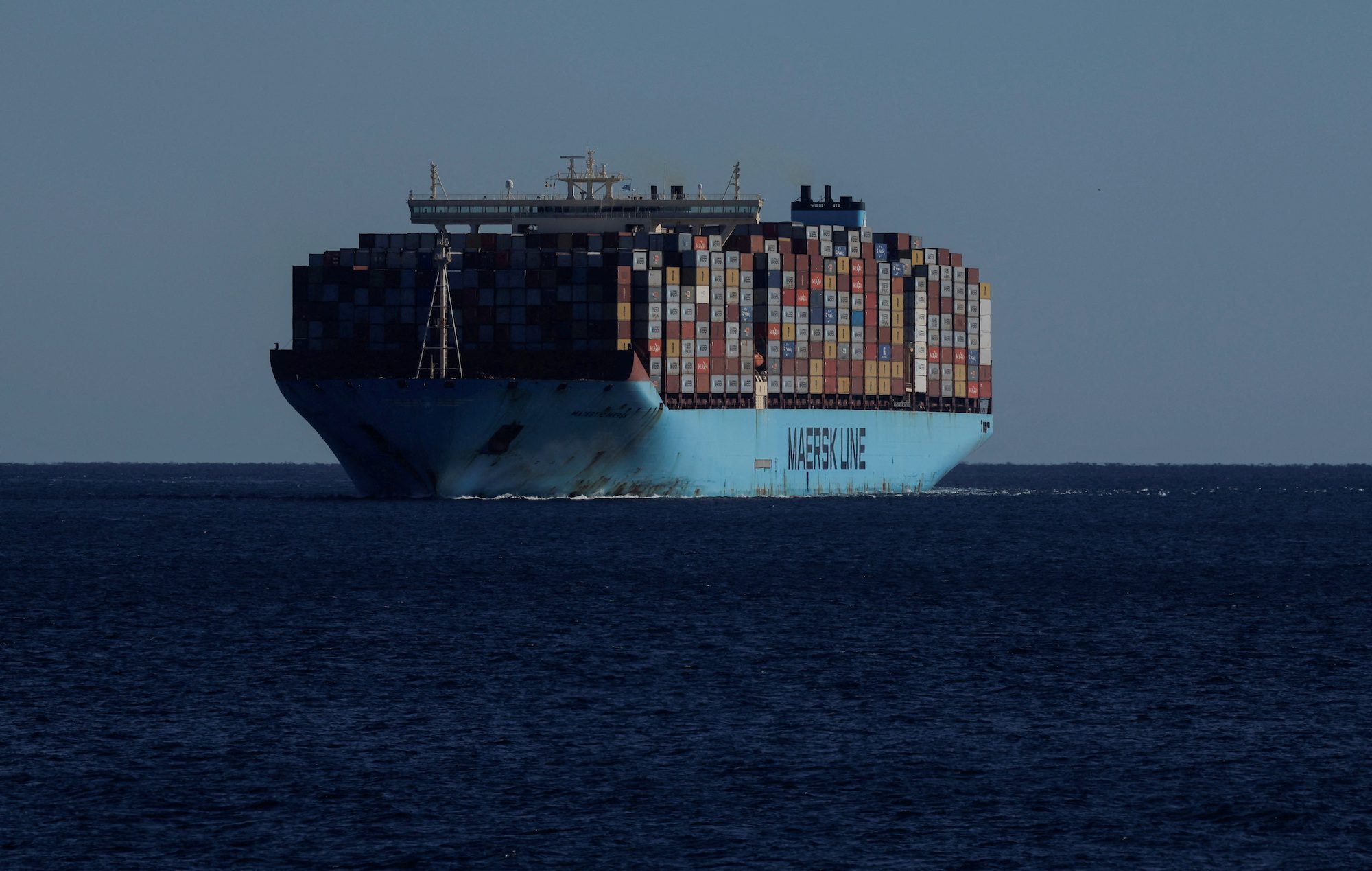
Container shipping firms Maersk and Hapag-Lloyd have likely resumed AE15 service through the Suez Canal route following security reassessments, indicating cautious confidence in improving conditions. This represents a shift from sustained avoidance of Red Sea transits documented in the prior assessment, though container traffic remains 75% below pre-attack levels with global trade exposure estimated at $10 billion daily. NASA detected 4 low-confidence thermal anomalies in the Red Sea from 5-6 July 2026 that do not independently confirm maritime attacks.
Executive summary
Houthi attacks against commercial shipping since October 2023 have significantly disrupted one of the world's busiest maritime corridors, causing container shipments in the Red Sea to decrease 75% and oil transit through the Bab el-Mandeb Strait to fall from 8.8 million to approximately 4 million barrels per day. Although the United States-led Operation Prosperity Guardian continues maritime security operations, insurance costs for Bab el-Mandeb passage have increased to 1% of vessel value. New evidence indicates Maersk and Hapag-Lloyd are transitioning their AE15 service back to the Suez Canal route with the Majestic Maersk, suggesting tentative confidence in improved security conditions despite ongoing disruption risks.
Change from previous assessment
Since the prior 6 July 2026 assessment that documented sustained avoidance of Red Sea passage with vessels rerouting around Africa, new evidence indicates Maersk and Hapag-Lloyd are transitioning their AE15 service back to the Suez Canal route following security reassessments. The current assessment downgrades confidence in the persistence of near-total avoidance (previously assessed as likely) due to this operational shift, while maintaining the likelihood of continued significant traffic reduction. Insurance rate tracking has been added as a new analytic metric not featured in the prior brief.
Key judgments
- Houthi attacks since October 2023 have very likely reduced Red Sea container shipping traffic by 75%, significantly disrupting global trade flows with an estimated $10 billion per day at risk. (Confidence: high · REPORTED)
- I&W: Egyptian Suez Canal Authority reporting traffic recovery above 35% of pre-attack levels within 1-3 months (1-3 months)
- I&W: Additional shipping company announcements rerouting services away from the Red Sea within 0-14 days (0-14 days)
- Maersk and Hapag-Lloyd have likely begun transitioning their AE15 service back to the Suez Canal route from the Cape of Good Hope, with the change commencing with the Majestic Maersk following security reassessments. (Confidence: medium · REPORTED)
- I&W: Maersk confirming successful completion of Majestic Maersk's Suez Canal transit within 0-14 days (0-14 days)
- I&W: A second container shipping line announcing route resumption through the Red Sea within 1-3 months (1-3 months)
- Oil transit through the Bab el-Mandeb Strait has likely decreased from 8.8 million to approximately 4 million barrels per day during the Houthi attacks, significantly impacting global energy logistics. (Confidence: medium · REPORTED)
- I&W: U.S. Energy Information Administration data confirming sustained oil transit below 5 million barrels per day in August (1-3 months)
- I&W: Saudi Arabian reports of increased use of the East West Pipeline for exports exceeding 4 million barrels per day (0-14 days)
- Vessel insurance costs for Bab el-Mandeb passage have likely increased to 1% of ship value, up from 0.7% the previous week, reflecting ongoing risk perceptions among underwriters. (Confidence: medium · REPORTED)
- I&W: Lloyd's of London reporting sustained insurance rates at or above 1% for two consecutive weeks (0-14 days)
- I&W: Multiple shipping companies announcing cost increases for Red Sea transits exceeding 30% within 1-3 months (1-3 months)
- NASA detected 4 low-confidence thermal anomalies in the Red Sea from 5-6 July 2026, but these very likely do not independently confirm maritime attacks and instead may corroborate industrial or non-conflict-related activity. (Confidence: high · ASSESSED)
- I&W: Military or commercial shipping reports correlating specific anomalies with documented attacks within 0-14 days (0-14 days)
- I&W: NASA FIRMS detection of fewer than 2 anomalies during a 7-day period coinciding with no shipping incident reports (1-3 months)
Outlook & scenarios
Gradual Normalisation (40%)
Commercial shipping gradually resumes Red Sea transits as security conditions improve, supported by sustained Operation Prosperity Guardian operations and improved vessel protection measures. Suez Canal traffic rises to 40-60% of pre-attack levels over 4-6 months. Insurance rates slowly decline from current levels as confidence strengthens, though remain 50-70% higher than pre-attack rates through year-end. Egypt's Suez Canal revenue recovers to approximately 60% of 2023 levels by December.
Prolonged Disruption (35%)
Houthi attacks continue against commercial vessels with episodic intensity, preventing full recovery of shipping traffic. Container shipments remain at 20-30% of pre-attack levels for the remainder of 2026. Insurance costs stabilise around 0.9-1.1% of vessel value. Maersk and Hapag-Lloyd's tentative return represents a limited pilot rather than broader industry trend. Egypt's Suez Canal revenue remains below $5 billion for the third consecutive year.
Escalation (15%)
Houthi attacks intensify against Western naval coalition vessels providing maritime security, triggering broader military response. Red Sea transit becomes effectively prohibitive for commercial shipping as Operation Prosperity Guardian expands operations. Alternative routing adds 10-12 days to Asia-Europe voyages, with container shipping costs rising 50% above current levels. Global supply chain disruptions exacerbate inflation pressures, particularly in energy and consumer goods sectors.
Diplomatic Resolution (10%)
A regional diplomatic breakthrough leads to sustained cessation of Houthi attacks on commercial shipping. Within 2-3 months, container shipping traffic returns to 80-90% of pre-attack levels. Insurance rates decline to near pre-attack levels as confidence strengthens. Suez Canal traffic normalisation boosts Egyptian revenue by approximately $4 billion compared to 2025 levels, providing meaningful economic relief.
Recommendations
- Monitor insurance rate fluctuations for Bab el-Mandeb passage as a leading indicator of commercial shipping confidence levels
- Track implementation timelines for Maersk and Hapag-Lloyd's AE15 service return to the Suez Canal, focusing on successful transit completion metrics
- Analyse thermal anomaly data alongside naval incident reports to develop protocols distinguishing conflict-related maritime incidents from industrial activity
- Coordinate with Operation Prosperity Guardian to obtain verified security assessment updates prior to commercial vessel re-entry decisions
Confidence & uncertainty
Overall confidence is assessed as low due to heavy reliance on commercial sources with potential incentives to accentuate disruption severity, inconsistent corroboration of key economic metrics across sources, and limited government reporting on specific attack attribution. Only 35% of economic impact claims identified in the corpus have multiple independent sources confirming the data points, with many figures (like the $10 billion per day trade risk estimate) deriving from single major media reports without methodological transparency. Thermal anomaly interpretations represent an area of higher confidence due to NASA's open data policy and technical documentation, but maritime attack attribution generally lacks sufficient independent verification.
Intelligence gaps
- [EEI 1.3 · PARTIAL] Unusual Houthi force posture indicators along Yemen’s Red Sea coast: movement or concentration of small boats, visible coastal missile/rocket emplacements, or logistics buildup at known launch sites (locations, timestamps). Recommended collection: imagery/satellite
- [EEI 1.4 · UNCOVERED] Intercepts or communications indicating orders, targeting lists, or intent to strike merchant shipping (messages referencing specific vessel classes, companies, or chokepoints). Recommended collection: signals/communications
- [EEI 2.1 · UNCOVERED] Reports or visual confirmation of floating or moored mines and debris fields in shipping lanes or approaches to Bab-el-Mandeb, with geolocation and time. Recommended collection: imagery/satellite
- [EEI 2.2 · UNCOVERED] Detection of mine-laying activity: small vessels loitering in lane approaches, unexpected AIS track patterns consistent with mine deployment, or salvage/mining vessels operating in the area. Recommended collection: maritime/AIS
- [EEI 2.3 · UNCOVERED] Hydrographic notices, naval warnings, or port authority advisories closing lanes or imposing route restrictions (text of Notice to Mariners, issuing agency, effective times/areas). Recommended collection: naval/port_authority
- [EEI 2.4 · UNCOVERED] Naval or commercial reports of mine-countermeasure operations or confirmed mine removal events (location, time, platforms involved). Recommended collection: naval/intelligence
- [EEI 3.1 · UNCOVERED] Movements and presence of foreign warships and support vessels: names/classes, task group compositions, patrol areas and timelines, and whether vessels are conducting escort or interdiction operations. Recommended collection: naval/intelligence
- [EEI 3.2 · UNCOVERED] Official announcements or directives from states/coalitions regarding convoys, armed escorts, protected corridor establishment, or changes to rules of engagement for merchant protection. Recommended collection: diplomatic/public_affairs
- [EEI 3.3 · UNCOVERED] Recorded interactions between naval forces and vessels in the corridor (hailings, boardings, warnings, defensive strikes), including timestamps and outcomes. Recommended collection: maritime/AIS
- [EEI 3.4 · UNCOVERED] Planned or ongoing multinational exercises, air ISR sorties, or logistics moves that increase or decrease naval capacity in the area (exercise name, participating units, dates, locations). Recommended collection: open-source/military_reporting
- [EEI 4.2 · UNCOVERED] War-risk and hull insurance coverage changes: issuance refusals, premium increases for Red Sea transits, or explicit route exclusions by underwriters (policy notices or market rate data with dates). Recommended collection: commercial/insurance_data
- [EEI 4.3 · UNCOVERED] Freight and charter market signals tied to the corridor: spot rates for container, tanker, and dry bulk routes affected by Red Sea disruptions, and reported port congestion or turnaround-time increases at nearby hubs. Recommended collection: commercial/market_data
Cited sources
[1] Federated Hermes Limited · How do Red Sea disruptions affect global supply chains? | Federated Hermes Limited (B) · sha256:cc3872a7f507 [2] dw.com · Cargo ship reportedly attacked in Red Sea off Yemen (A) · sha256:22ba0fe453a3 [3] insurancebusinessmag.com · Houthis declare Red Sea blockade - and insurers face a two-front crisis (A) · sha256:a2885bd1a4e9 [4] gcaptain.com · Maersk and Hapag-Lloyd Expand Suez Canal Return With AE15 Service (C) · sha256:c28837f6d457 [5] euronews.com · Houthis join Iran war, threatening Red Sea trade amid Hormuz closure (A) · sha256:735cd05ffdcd [6] The Guardian · What impact have UK and US strikes had on Red Sea shipping disruption? (A) · sha256:08f2f04ca947 [7] NASA · NASA FIRMS thermal detections — Red Sea (2d) (A) · sha256:0311477b5367
Source content hashes were computed at collection time; the cited text is preserved unmodified for the life of this product.
TLP:CLEAR