TLP:CLEAR · Disclosure is not limited.
Red Sea shipping disruption: Bab al-Mandab risk rises
Time window: Last 7 days · Audience: General analyst · Type: Situation report · DTG: 2026-09-09 01:07Z · Overall confidence: HIGH
BLUF
Very likely, Houthi attacks and fighting around Yemen's Bab al-Mandab approach will keep commercial transit reduced over the next 0-14 days, although available reporting does not establish a complete closure. The 8 September attacks on Abha, Khamis Mushait, Jazan and Najran, combined with renewed US-Iran maritime escalation, raise the risk of further diversion, higher insurance costs and wider energy-market disruption.
Executive summary
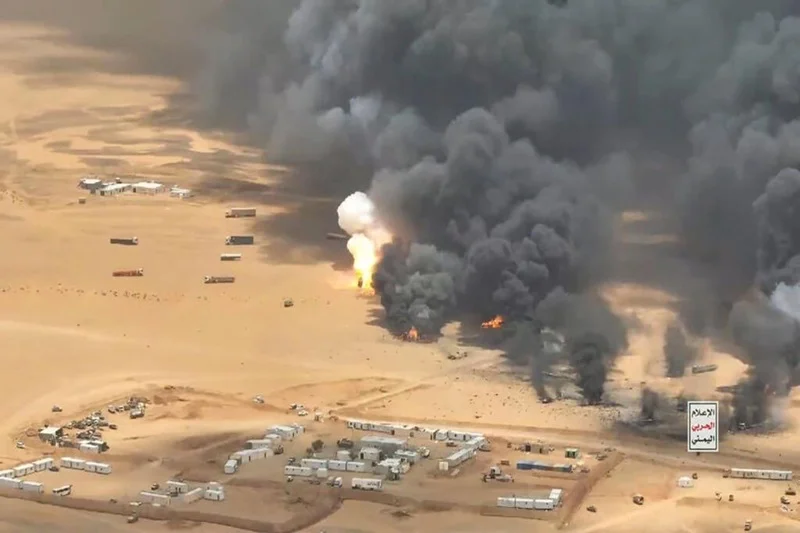
The Houthis have intensified pressure on Saudi Arabia and the Bab al-Mandab corridor. Reports link the 8 September attacks on southern Saudi Arabia to 73 injuries, fires at energy facilities and a temporary halt at the Jazan refinery. Since 3 September, Houthi forces have also fought Yemeni pro-government forces in an effort to take control of the strait. Vessels are avoiding the Bab al-Mandab and Red Sea, while EUNAVFOR ASPIDES has reported safe transits for some merchant vessels. US strikes on eight Iranian tankers since 5 September and Iranian warnings to ships near Kuwait and Bahrain add a separate escalation risk, but conflicting reporting leaves the precise tanker-strike locations unresolved.
Change from previous assessment
Since the 8 September prior brief, the assessment now gives greater weight to the 8 September Houthi attacks on Abha, Khamis Mushait, Jazan and Najran, including reported damage to the Jazan refinery and 73 injuries. The brief also adds the Houthi offensive launched on 3 September to seize the Bab al-Mandab and the US-Iran tanker-strike sequence and Iranian warnings to ships near Kuwait and Bahrain. Confidence in continued disruption remains medium because commercial transit is still reported as ongoing and the scale of any Saudi production loss is unclear, but the risk of wider regional spillover is assessed as higher.
Key judgments
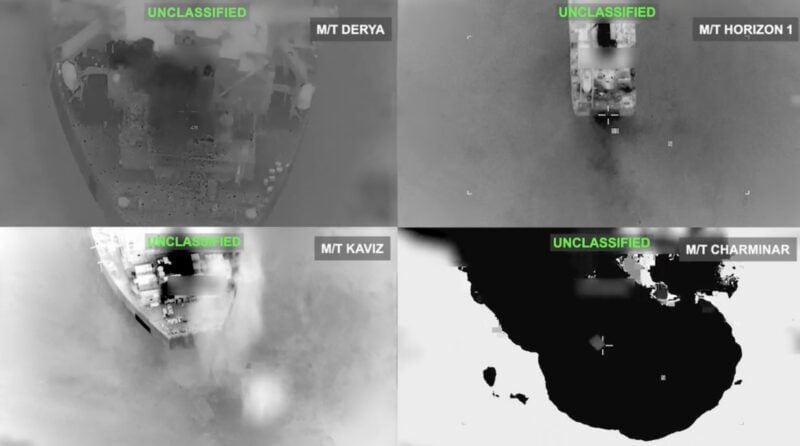
- Very likely, Houthi operations and Saudi-Houthi fighting will continue to constrain the Bab al-Mandab over the next 0-14 days. Since 3 September, the Houthis have conducted an offensive against Yemeni pro-government forces aimed at taking control of the strait, with reports of more than 300 deaths and 18,500 displaced. On 8 September, Houthi missile and drone attacks struck Abha, Khamis Mushait, Jazan and Najran, while the group warned that operations inside Saudi Arabia would continue. Saudi-led coalition spokesman Maj Gen Turki al-Maliki responded by pledging further operational measures against the Houthis. (Confidence: high · ASSESSED)
- I&W: Confirming indicator: Within 0-14 days, the Houthis launch another missile or drone attack on a Saudi tanker, port, airport or energy facility, or new ground fighting is reported between Houthi and pro-government forces at the Bab al-Mandab approach. (0-14 days)
- I&W: Breaking indicator: EUNAVFOR ASPIDES reports repeated safe merchant-vessel transits through the Bab al-Mandab while no new Houthi attacks or Saudi-led coalition operations are reported for 14 days. (0-14 days)
- Likely, commercial transit through the Bab al-Mandab and Red Sea will remain reduced but ongoing over the next 0-14 days rather than fully halted. Vessels are avoiding the strait because of Houthi attacks, taking longer routes that increase fuel consumption and bunker demand. The Financial Times reported that tankers were abandoning the route and that regional insurance costs had risen sharply, while EUNAVFOR ASPIDES reported that merchant vessels completed Red Sea journeys safely under its protection. Confidence is medium because the evidence combines broad shipping reporting with one reported escort success and does not provide a verified current transit count. (Confidence: medium · ASSESSED)
- I&W: Confirming indicator: Within 0-14 days, shipping advisories record additional vessels avoiding the Bab al-Mandab or Red Sea, and war-risk insurance costs rise further. (0-14 days)
- I&W: Breaking indicator: EUNAVFOR ASPIDES escorts repeated merchant-vessel passages through the Red Sea and shipping reports show a return to direct Bab al-Mandab transits. (0-14 days)
- Likely, energy-market and freight pressure will remain elevated over the next 0-14 days, while a major Saudi production loss is unlikely on current reporting. The 8 September attacks caused fires and temporary operational halts at Saudi energy facilities; AP reported damage and a temporary shutdown at the Jazan refinery, which has a stated capacity of 400,000 barrels per day. Saudi authorities reported 73 injuries, while Brent briefly traded above $99 per barrel and WTI reached about $93.70. Current reporting does not show a Saudi production decline comparable to the 2019 Abqaiq-Khurais attacks. Confidence is medium because the reported market response also reflects the Iran war and wider refinery disruption, not the Houthi attacks alone. (Confidence: medium · ASSESSED)
- I&W: Confirming indicator: Within 0-14 days, Saudi Arabia reports further operational halts at Jazan or other energy installations, while Brent remains at or above $99 per barrel or VLSFO remains near $825 per metric tonne. (0-14 days)
- I&W: Breaking indicator: Saudi Arabia reports restored Jazan operations and no production effect, while no further energy-site fires or temporary halts are reported. (0-14 days)
- Very likely, US-Iran maritime escalation will remain a material source of risk around the Red Sea approaches, the Gulf of Oman and the Persian Gulf over the next 0-14 days. US forces reportedly struck five Iranian tankers on 8 September, bringing the reported total to eight since 5 September, after Iran launched ballistic missiles at a US Navy warship. The Islamic Revolutionary Guard Corps also warned tanker crews near Kuwait and Bahrain to abandon their vessels. The precise locations of the five tanker strikes are contested, with separate reporting placing them in the Red Sea region or near Kharg Island and the Gulf of Oman. Confidence is medium because this geographic contradiction changes the operational picture. (Confidence: medium · ASSESSED)
- I&W: Confirming indicator: Within 0-14 days, the IRGC issues another warning targeting ships near Kuwait or Bahrain, or CENTCOM reports another strike on an Iran-linked tanker. (0-14 days)
- I&W: Breaking indicator: No additional Iranian missile attacks, tanker strikes or enforcement of the planned exclusion zone are reported for 14 days, while the targeted US warship continues its patrol. (0-14 days)
- Likely, Red Sea rerouting, bunker-fuel constraints and insurance premiums will remain elevated over the next 1-3 months. Rerouting around Africa can add up to two weeks to a voyage. VLSFO prices in Singapore rose 76 percent to nearly $825 per metric tonne, fuel-oil inventories in Singapore, Amsterdam-Rotterdam-Antwerp and Fujairah were about 30 percent below three-year seasonal averages, and crude tanker earnings on the Saudi Arabia to China route reached $728,000 per day on 7 September. Tanker owners are demanding additional premiums to enter the Persian Gulf. Confidence is medium because the Iran war, Russian refinery disruption and Houthi attacks are all identified as drivers of the market effects. (Confidence: medium · ASSESSED)
- I&W: Confirming indicator: Over 1-3 months, fuel-oil inventories remain about 30 percent below seasonal averages, VLSFO remains near $825 per metric tonne, and shipping reports continued abandonment of the Bab al-Mandab route. (1-3 months)
- I&W: Breaking indicator: Direct Red Sea transits resume, insurance premiums ease and tanker earnings fall from the 7 September assessment of $728,000 per day. (1-3 months)
Outlook & scenarios
Constrained transit persists (55%)
Houthi attacks and Saudi-led coalition operations continue over the next 0-14 days. Merchant vessels keep avoiding the Bab al-Mandab and Red Sea, while EUNAVFOR ASPIDES escorts some ships. Transit remains operational but reduced, with rerouting, insurance and bunker costs staying elevated.
Saudi-Houthi escalation (25%)
A further Houthi strike on Saudi energy or shipping targets prompts expanded Saudi-led coalition operations. The temporary disruption at Jazan or other Saudi energy facilities extends, and commercial transit through the Bab al-Mandab falls further towards an effective blockade.
US-Iran maritime spillover (20%)
US strikes on Iran-linked tankers and Iranian warnings to ships near Kuwait and Bahrain continue in parallel with the Houthi campaign. Tanker owners demand higher premiums, vessels divert cargoes from the Gulf of Oman and Persian Gulf, and Red Sea disruption persists.
Dual-waterway closure (8%)
Unlikely but high impact. Houthi attacks at the Bab al-Mandab coincide with Iranian enforcement of the planned exclusion zone near the Strait of Hormuz. Commercial transit through both waterways halts, routes around Africa become the primary alternative, and oil and bunker prices rise beyond current levels.
Recommendations
- Maintain a 0-14 day watch focused on Houthi attacks against Saudi tankers, ports, airports and energy facilities, alongside Saudi-led coalition operations near the Bab al-Mandab approach.
- Separate Red Sea, Bab al-Mandab, Gulf of Oman and Kharg Island reporting in all situation updates. Reconcile the conflicting tanker-strike locations against primary CENTCOM releases and vessel-position data before using the strikes to assess Red Sea risk.
- Compare EUNAVFOR ASPIDES escort reports with commercial rerouting and insurance reporting. Treat safe escorted passages as evidence that the route remains usable, not as evidence that normal commercial transit has resumed.
- Track the operational status of the Jazan refinery and other named Saudi energy facilities, recording temporary halts separately from confirmed changes in Saudi production or exports.
- Monitor VLSFO prices, fuel-oil inventories, tanker earnings and Red Sea war-risk premiums as separate indicators. Attribute market changes to Houthi attacks, US-Iran escalation, Russian refinery disruption or other reported drivers rather than treating all price movement as a Red Sea effect.
Confidence & uncertainty
Overall confidence is high because the core developments are corroborated across major media, wire services, trade publications, Saudi official statements, EUNAVFOR ASPIDES reporting and market data. Multiple sources support the Houthi attacks on southern Saudi Arabia, the resulting fires and injuries, vessel avoidance of the Bab al-Mandab and elevated freight and bunker costs. The main uncertainties are the precise locations of the 8 September US tanker strikes, the scale of any lasting Saudi production loss and whether escorted transits represent a durable return of commercial traffic.
Intelligence gaps
- [EEI 1.1 · PARTIAL] Incidents of hostile action against commercial vessels: vessel name/IMO, position (lat/long), time/date, observable damage or casualties, and weapon type reported (missile, drone, small-arms, explosive-laden boat). Recommended collection: maritime/AIS
- [EEI 1.2 · PARTIAL] Public Houthi claims of attacks or warnings tied to specific dates/routes, including social-media posts, official statements, and timing relative to merchant transits. Recommended collection: open-source/social_media
- [EEI 1.3 · UNCOVERED] Unusual Houthi force posture indicators along Yemen’s Red Sea coast: movement or concentration of small boats, visible coastal missile/rocket emplacements, or logistics buildup at known launch sites (locations, timestamps). Recommended collection: imagery/satellite
- [EEI 1.4 · UNCOVERED] Intercepts or communications indicating orders, targeting lists, or intent to strike merchant shipping (messages referencing specific vessel classes, companies, or chokepoints). Recommended collection: signals/communications
- [EEI 2.1 · UNCOVERED] Reports or visual confirmation of floating or moored mines and debris fields in shipping lanes or approaches to Bab-el-Mandeb, with geolocation and time. Recommended collection: imagery/satellite
- [EEI 2.2 · UNCOVERED] Detection of mine-laying activity: small vessels loitering in lane approaches, unexpected AIS track patterns consistent with mine deployment, or salvage/mining vessels operating in the area. Recommended collection: maritime/AIS
- [EEI 2.3 · UNCOVERED] Hydrographic notices, naval warnings, or port authority advisories closing lanes or imposing route restrictions (text of Notice to Mariners, issuing agency, effective times/areas). Recommended collection: naval/port_authority
- [EEI 2.4 · UNCOVERED] Naval or commercial reports of mine-countermeasure operations or confirmed mine removal events (location, time, platforms involved). Recommended collection: naval/intelligence
- [EEI 3.1 · PARTIAL] Movements and presence of foreign warships and support vessels: names/classes, task group compositions, patrol areas and timelines, and whether vessels are conducting escort or interdiction operations. Recommended collection: naval/intelligence
- [EEI 3.2 · PARTIAL] Official announcements or directives from states/coalitions regarding convoys, armed escorts, protected corridor establishment, or changes to rules of engagement for merchant protection. Recommended collection: diplomatic/public_affairs
- [EEI 3.3 · UNCOVERED] Recorded interactions between naval forces and vessels in the corridor (hailings, boardings, warnings, defensive strikes), including timestamps and outcomes. Recommended collection: maritime/AIS
- [EEI 3.4 · UNCOVERED] Planned or ongoing multinational exercises, air ISR sorties, or logistics moves that increase or decrease naval capacity in the area (exercise name, participating units, dates, locations). Recommended collection: open-source/military_reporting
- [EEI 4.2 · PARTIAL] War-risk and hull insurance coverage changes: issuance refusals, premium increases for Red Sea transits, or explicit route exclusions by underwriters (policy notices or market rate data with dates). Recommended collection: commercial/insurance_data
- [EEI 4.3 · PARTIAL] Freight and charter market signals tied to the corridor: spot rates for container, tanker, and dry bulk routes affected by Red Sea disruptions, and reported port congestion or turnaround-time increases at nearby hubs. Recommended collection: commercial/market_data
- [EEI 4.4 · PARTIAL] Incidents of cargo denial or diversion for critical goods (crude oil, refined products, LNG, high-value container cargo) including vessel IDs, cargo type, reroute/turnback actions, and economic impact estimates where available. Recommended collection: maritime/AIS
TLP:CLEAR