TLP:CLEAR · Disclosure is not limited.
Red Sea Shipping Disruption: Elevated but Selective Risk
Time window: Last 7 days · Audience: General analyst · Type: Situation report · DTG: 2026-08-23 01:06Z · Overall confidence: HIGH
BLUF
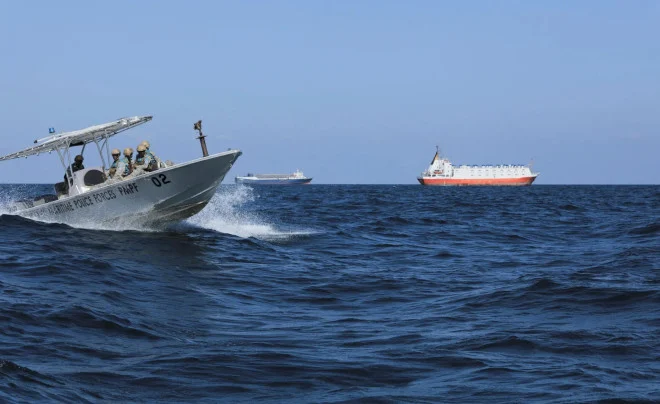
Commercial shipping risk in the southern Red Sea and Bab-el-Mandeb is very likely to remain elevated over the next 14 days. The record supports selective disruption, including the closure of Al-Mokha Port and damage to a cargo ship, while Somali pirate seizures in the Gulf of Aden create a separate burden. A sustained closure of all traffic remains unlikely.
Executive summary
The Joint Maritime Information Center continues to rate the threat in the Bab-el-Mandeb and southern Red Sea as SUBSTANTIAL. Al-Mokha Port remains closed after repeated missile impacts, and UKMTO has advised vessels near Al Mukha to transit cautiously. Houthi claims of attacks against vessels remain insufficiently corroborated, but the maritime risk is reinforced by reported vessel damage and by recent Somali pirate seizures of the Sibu 1, Lutuf and Seamull. Commercial traffic has not stopped altogether: Maersk reports that approximately one-third of its normal traffic still uses the Suez Canal and Bab-el-Mandeb, while some Saudi-flagged vessels are rerouting around the Cape of Good Hope.
Change from previous assessment
The core assessment is unchanged: risk remains elevated, but a sustained closure of all Red Sea and Bab-el-Mandeb traffic remains unlikely. This brief adds the reported seizure of the Seamull, widening the named piracy picture beyond the Sibu 1 and Lutuf, while retaining medium confidence because vessel counts and incident sequencing are not fully consistent. The brief also gives greater weight to the closure of Al-Mokha Port and the reported constructive total loss of a cargo ship. The low-confidence judgement on direct Iranian operational control is retained, with the 23 August 2026 threats making that relationship a higher-priority watch item. No prior judgement is retired.
Key judgments
- It is very likely that commercial shipping risk will remain elevated in the southern Red Sea and Bab-el-Mandeb over the next 0-14 days. The Joint Maritime Information Center rates the threat as SUBSTANTIAL, Al-Mokha Port remains closed to commercial traffic after more than 25 missile impacts and fires at its berths, a cargo ship off Yemen has been declared a constructive total loss after projectile strikes, and UKMTO has advised vessels near Al Mukha to transit with caution. These reports support high confidence in the risk assessment, but they do not establish that every incident was conducted by the Houthis. (Confidence: high · ASSESSED)
- I&W: Confirm: UKMTO issues a new incident warning for vessels near Al Mukha or the Bab-el-Mandeb, or reports further damage to a named commercial vessel. (0-14 days)
- I&W: Break: Al-Mokha Port resumes commercial operations and the Joint Maritime Information Center lowers its Bab-el-Mandeb and southern Red Sea threat rating. (0-14 days)
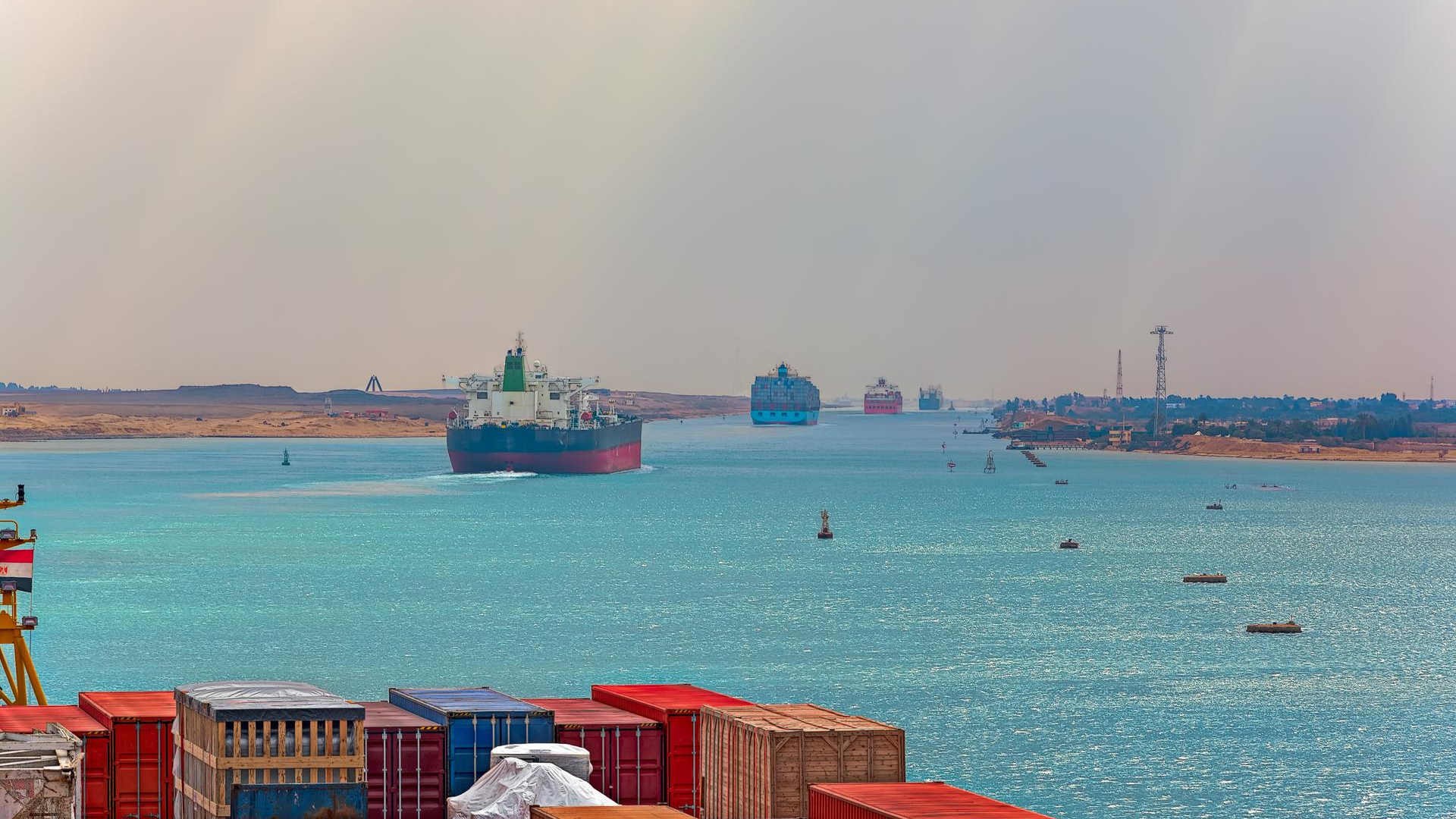
- It is likely that disruption will remain selective rather than become a sustained closure of all commercial shipping through the Bab-el-Mandeb over the next 1-3 months. Maersk reports that approximately one-third of its normal traffic still sails through the Suez Canal and Bab-el-Mandeb, Hapag-Lloyd describes any expansion of Suez transits as gradual, and two Pakistan-flagged crude oil tankers transited the strait towards Yanbu in August 2026. Countervailing evidence includes twelve Saudi-flagged vessels rerouting via the Cape of Good Hope. Confidence is medium because the rerouting figures rely partly on blog reporting and several commercial statements are undated. (Confidence: medium · ASSESSED)
- I&W: Confirm: Maersk traffic through the Suez Canal and Bab-el-Mandeb falls below its reported one-third level while the number of Saudi-flagged vessels using the Cape of Good Hope rises above twelve. (0-14 days)
- I&W: Break: Maersk and Hapag-Lloyd announce broad, sustained expansion of Suez transits and additional Saudi-flagged vessels return through the Bab-el-Mandeb. (1-3 months)
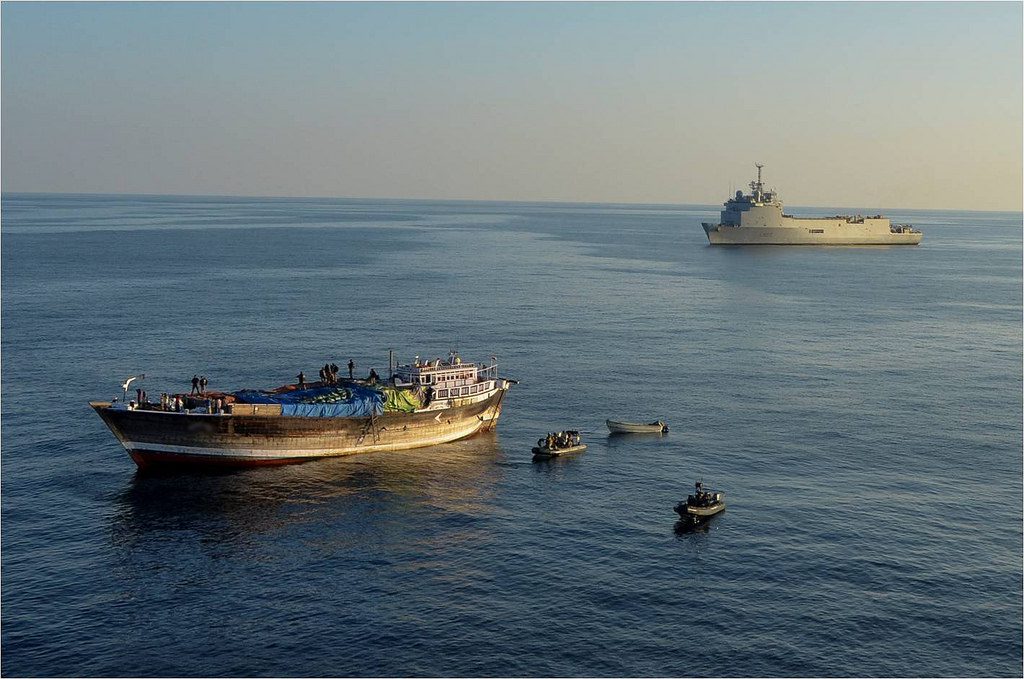
- It is likely that Somali piracy will add a separate maritime security burden in the Gulf of Aden and off Yemen over the next 0-14 days. Somali pirates reportedly seized the suspected Iranian shadow-fleet tanker Sibu 1 off Yemen, captured the Cameroon-flagged Lutuf off Puntland State, and seized the Seamull after boarding it off Yemen. Naval authorities reported attacks on two ships during the week of 21 August, while another report states that Somali pirates are holding six ships. Confidence is medium because the occurrence of recent seizures is supported by multiple reports, but the total number of vessels and the sequence of incidents are not fully consistent. (Confidence: medium · ASSESSED)
- I&W: Confirm: UKMTO or naval authorities report another boarding, hijacking or ransom-related movement involving a vessel in the Gulf of Aden or off Puntland State. (0-14 days)
- I&W: Break: the Sibu 1, Lutuf and Seamull are released or recovered, with no new piracy incident reported in the Gulf of Aden or off Somalia. (0-14 days)
- It is unlikely that the current record establishes direct Iranian operational control of Houthi attacks affecting Red Sea shipping. Iran threatened to expand maritime pressure into the Red Sea, and Tehran warned on 23 August 2026 that it would target the interests of states joining US sanctions. The Houthis have claimed maritime attacks but have not provided independently verifiable evidence or sufficient details to assess the claims. A separate report states that the Houthis and Somali pirates built an alliance, but it does not establish Iranian direction of a named attack. Confidence is low because the evidence is partly single-source, politically interested and source-unknown. (Confidence: low · ASSESSED)
- I&W: Confirm: independent reporting identifies Iranian orders, personnel, platforms or intelligence support linked to a named Houthi attack on a commercial vessel. (0-14 days)
- I&W: Break: independently verified reporting attributes a named attack solely to Houthi forces and identifies no Iranian operational involvement. (0-14 days)
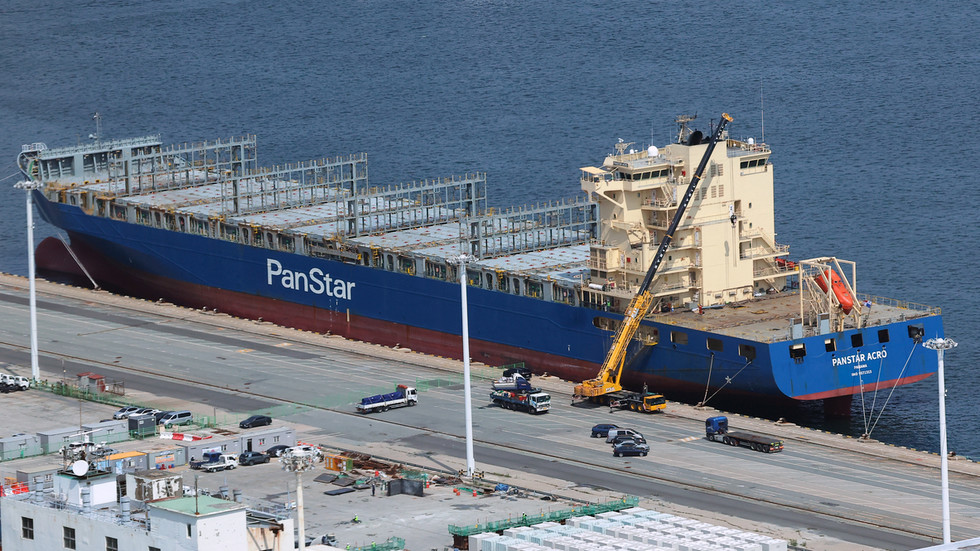
- It is likely that carriers will continue using a mixed routing strategy over the next 1-3 months rather than rely on a single alternative to the Red Sea route. Twelve Saudi-flagged vessels are reported to be rerouting via the Cape of Good Hope, Maersk continues to send part of its normal traffic through the Suez Canal and Bab-el-Mandeb, and South Korea has launched a first trial container voyage through the Northern Sea Route. The Northern Sea Route is not an immediate universal substitute because CMA CGM, MSC and Hapag-Lloyd have pledged to avoid Arctic routes. Confidence is medium because the evidence combines company statements, blog reporting and a trial voyage rather than sustained commercial traffic data. (Confidence: medium · ASSESSED)
- I&W: Confirm: additional named carriers publish Cape of Good Hope diversions or report lower Suez and Bab-el-Mandeb utilisation, while South Korea schedules further Northern Sea Route trials. (1-3 months)
- I&W: Break: Maersk and Hapag-Lloyd announce sustained expansion of Red Sea transits and no further increase in Saudi-flagged diversions around the Cape of Good Hope. (1-3 months)
Outlook & scenarios
Selective disruption with guarded transit (55%)
The Houthis maintain pressure on selected Saudi-linked or Israel-linked maritime interests while Al-Mokha Port remains closed. Maersk and some other operators continue limited Bab-el-Mandeb transits, supported by heightened warnings and escorts. Somali piracy remains active in the Gulf of Aden without closing the corridor.
Wider Houthi campaign and partial commercial withdrawal (20%)
Further attacks on named commercial vessels prompt more carriers to suspend Bab-el-Mandeb transits. Saudi-flagged vessels increase Cape of Good Hope diversions, insurance and scheduling pressure intensify, and the Suez route loses a larger share of traffic.
Piracy-led deterioration in the Gulf of Aden (20%)
Somali pirates conduct additional boardings or hold more vessels, concentrating risk in the Gulf of Aden and off Puntland State. The Houthi threat remains separate, but operators lengthen routes because crews face two distinct maritime security problems.
Iran-linked regional maritime escalation (5%)
Iranian threats translate into direct maritime action or demonstrable operational support for Houthi attacks. Commercial traffic through the Bab-el-Mandeb and nearby approaches contracts sharply, producing a high-impact disruption across Red Sea shipping.
Recommendations
- Maintain an elevated watch for the southern Red Sea, Bab-el-Mandeb and waters near Al Mukha. Review UKMTO and Joint Maritime Information Center reporting at least daily and immediately after any reported vessel incident.
- Run separate watchlists for Houthi activity and Somali piracy. Track the Sibu 1, Lutuf and Seamull individually, including flag, ownership indicators, last reported position, AIS behaviour and any release or ransom reporting.
- Treat Houthi claims of attacks against vessels as unconfirmed until supported by UKMTO, naval authorities, vessel operators, imagery or other independent reporting. Do not use a Houthi statement alone to assess damage, vessel identity or attribution.
- Use a 0-14 day planning case based on selective disruption and a 1-3 month case based on partial commercial withdrawal. Include specific decision points for Al-Mokha Port reopening, a new UKMTO incident, a fall in Maersk Red Sea utilisation, or additional Saudi-flagged diversions.
- Monitor Iran-related rhetoric separately from attack attribution. Escalate the assessment only if independent reporting links Iranian orders, personnel, platforms or intelligence support to a named Houthi maritime attack.
- Track route substitution as a capacity issue rather than assuming the Northern Sea Route is an immediate replacement. Compare Cape of Good Hope diversions, Suez utilisation, Panama Canal congestion and further South Korean Arctic trials.
Confidence & uncertainty
Overall confidence is high for the headline assessment that maritime risk is elevated and disruption remains selective. The assessment draws on corroboration from the Joint Maritime Information Center, UKMTO, naval authorities, vessel operators and multiple major-media reports. Confidence is lower for the attribution of individual attacks, the precise number and sequence of pirate seizures, direct Iranian operational involvement and the long-term commercial viability of alternative routes.
Intelligence gaps
- [EEI 1.3 · UNCOVERED] Unusual Houthi force posture indicators along Yemen’s Red Sea coast: movement or concentration of small boats, visible coastal missile/rocket emplacements, or logistics buildup at known launch sites (locations, timestamps). Recommended collection: imagery/satellite
- [EEI 1.4 · UNCOVERED] Intercepts or communications indicating orders, targeting lists, or intent to strike merchant shipping (messages referencing specific vessel classes, companies, or chokepoints). Recommended collection: signals/communications
- [EEI 2.1 · UNCOVERED] Reports or visual confirmation of floating or moored mines and debris fields in shipping lanes or approaches to Bab-el-Mandeb, with geolocation and time. Recommended collection: imagery/satellite
- [EEI 2.2 · UNCOVERED] Detection of mine-laying activity: small vessels loitering in lane approaches, unexpected AIS track patterns consistent with mine deployment, or salvage/mining vessels operating in the area. Recommended collection: maritime/AIS
- [EEI 2.3 · PARTIAL] Hydrographic notices, naval warnings, or port authority advisories closing lanes or imposing route restrictions (text of Notice to Mariners, issuing agency, effective times/areas). Recommended collection: naval/port_authority
- [EEI 2.4 · UNCOVERED] Naval or commercial reports of mine-countermeasure operations or confirmed mine removal events (location, time, platforms involved). Recommended collection: naval/intelligence
- [EEI 3.1 · UNCOVERED] Movements and presence of foreign warships and support vessels: names/classes, task group compositions, patrol areas and timelines, and whether vessels are conducting escort or interdiction operations. Recommended collection: naval/intelligence
- [EEI 3.2 · PARTIAL] Official announcements or directives from states/coalitions regarding convoys, armed escorts, protected corridor establishment, or changes to rules of engagement for merchant protection. Recommended collection: diplomatic/public_affairs
- [EEI 3.3 · UNCOVERED] Recorded interactions between naval forces and vessels in the corridor (hailings, boardings, warnings, defensive strikes), including timestamps and outcomes. Recommended collection: maritime/AIS
- [EEI 3.4 · UNCOVERED] Planned or ongoing multinational exercises, air ISR sorties, or logistics moves that increase or decrease naval capacity in the area (exercise name, participating units, dates, locations). Recommended collection: open-source/military_reporting
- [EEI 4.1 · PARTIAL] Transit volume and pattern changes: number of commercial transits per day/week through Bab-el-Mandeb and southern Red Sea compared with baseline, and instances of rerouting around Africa (position/time data). Recommended collection: maritime/AIS
- [EEI 4.2 · UNCOVERED] War-risk and hull insurance coverage changes: issuance refusals, premium increases for Red Sea transits, or explicit route exclusions by underwriters (policy notices or market rate data with dates). Recommended collection: commercial/insurance_data
- [EEI 4.3 · UNCOVERED] Freight and charter market signals tied to the corridor: spot rates for container, tanker, and dry bulk routes affected by Red Sea disruptions, and reported port congestion or turnaround-time increases at nearby hubs. Recommended collection: commercial/market_data
- [EEI 4.4 · UNCOVERED] Incidents of cargo denial or diversion for critical goods (crude oil, refined products, LNG, high-value container cargo) including vessel IDs, cargo type, reroute/turnback actions, and economic impact estimates where available. Recommended collection: maritime/AIS
Cited sources
[1] gcaptain.com · Cargo Ship Destroyed in New Attack Off Yemen (B) · sha256:7e5767319be4 [2] Kuehne + Nagel · Maersk sees full Suez Canal return by 2026 as Red Sea conditions improve (B) · sha256:aaca84217228 [3] windward.ai · A Second ADNOC Strike and an Evasion Hub at Koh-e-Mubarak (D) · sha256:1af94a80fb24 [4] axadletimes.com · Somali Piracy Rises After Two Hijackings in Four Days – Axadle (B) · sha256:52e8a5ec378b [5] axadletimes.com · Gunmen Seize Tanker Off Yemen as Somali Piracy Resurges – Axadle (B) · sha256:681f08d66586 [6] gcaptain.com · Piracy Observer Says Somali Incidents Rising as Navies Stretched (B) · sha256:8a3c3a8b2aaf [7] JOHN POLITICS · Iran Threatened to Shut the Red Sea — Then America Moved 20 Warships Into Position (E) · sha256:8c3765d7242b [8] aljazeera.com · Iran war live: Tehran warns neighbours against joining US economic war (A) · sha256:28d4ece00117 [9] news.az · Did Houthi missiles hit Saudi vessels in the Red Sea | News.az (B) · sha256:444ce0a3ba55 [10] rt.com · Major Asian exporter tests Russian Arctic shortcut to Europe (B) · sha256:13bdcf0cfd66 [11] aljazeera.com · South Korea sending first container ship through Arctic route (A) · sha256:832abbd9bc61
Source content hashes were computed at collection time; the cited text is preserved unmodified for the life of this product.
TLP:CLEAR