TLP:CLEAR · Disclosure is not limited.
Red Sea Shipping Disruption: Houthi Advance Raises Bab al-Mandab Risk
Time window: Last 7 days · Audience: General analyst · Type: Situation report · DTG: 2026-09-05 01:06Z · Overall confidence: HIGH
BLUF
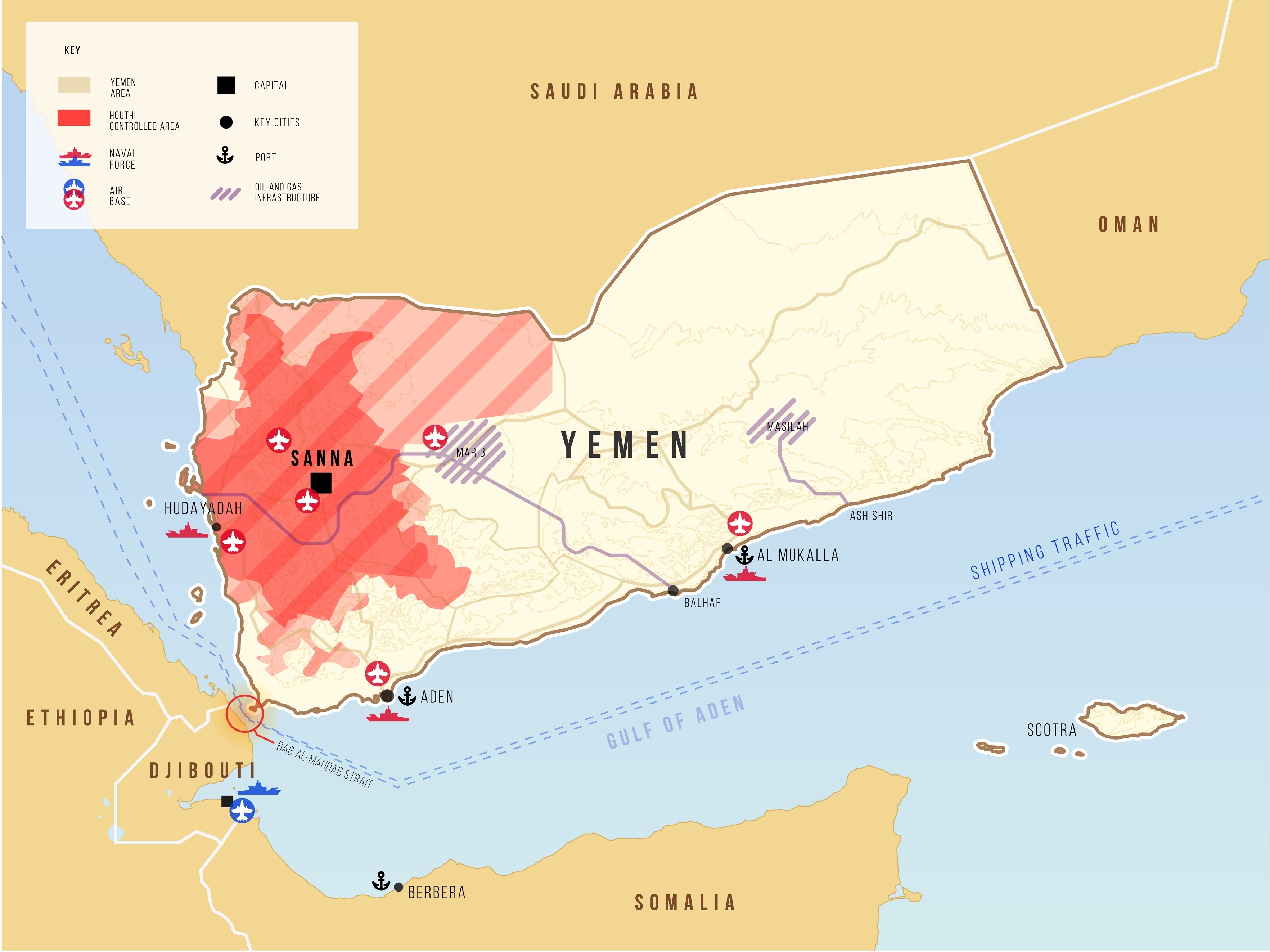
The Houthi offensive in western Yemen has intensified since 3 September, with forces pushing towards Mokha and positions overlooking the Bab al-Mandab Strait. Bab al-Mandab transit is likely to remain constrained rather than fully closed over the next 0-14 days, while uncertainty over Strait of Hormuz traffic increases the risk of wider shipping disruption.
Executive summary
Reporting from 3-5 September describes Houthi ground operations near Taiz and Hodeidah, at least 14 ballistic missiles, drone strikes and efforts to cut off Mokha, which lies less than 50 miles from Bab al-Mandab. Major shipping companies continue to divert Asia-Europe traffic around the Cape of Good Hope, adding distance and cost. The exact extent of Houthi territorial gains and the status of Strait of Hormuz traffic remain contested, but the combined evidence supports a continued elevated threat to Red Sea shipping and humanitarian access through Hodeidah.
Change from previous assessment
Since the 4 September prior brief, the assessment of Houthi operational proximity to Bab al-Mandab has strengthened. New reporting describes an active push towards Mokha, attempts to cut its supply routes and the city's location less than 50 miles from the strait. Confidence remains high that the shipping threat is elevated, while the assessment that Bab al-Mandab will remain constrained rather than fully closed is unchanged. No prior judgment has been retired.
Key judgments
- The Houthi threat to commercial shipping near Bab al-Mandab is very likely to remain elevated and intensify over the next 0-14 days. Multiple major-media reports, later local reporting and trade analysis describe a 3 September ground assault in western Yemen, at least 14 ballistic missiles and drone strikes, attempts to cut off Mokha, and a push towards positions overlooking Mokha and the strait. The exact extent of Houthi territorial control remains unconfirmed, so this is an assessment of threat trajectory rather than a finding that the strait is closed. (Confidence: high · ASSESSED)
- I&W: CONFIRM: Within 0-14 days, independent reporting or imagery shows Houthi forces occupying positions overlooking Mokha or the Bab al-Mandab approaches, or a new Houthi missile or drone strike hits a vessel or port. (0-14 days)
- I&W: BREAK: For 14 consecutive days, no Houthi missile or drone attack is reported against Red Sea shipping, Mokha or western-coast military positions, and government forces reopen supply routes into Mokha. (0-14 days)
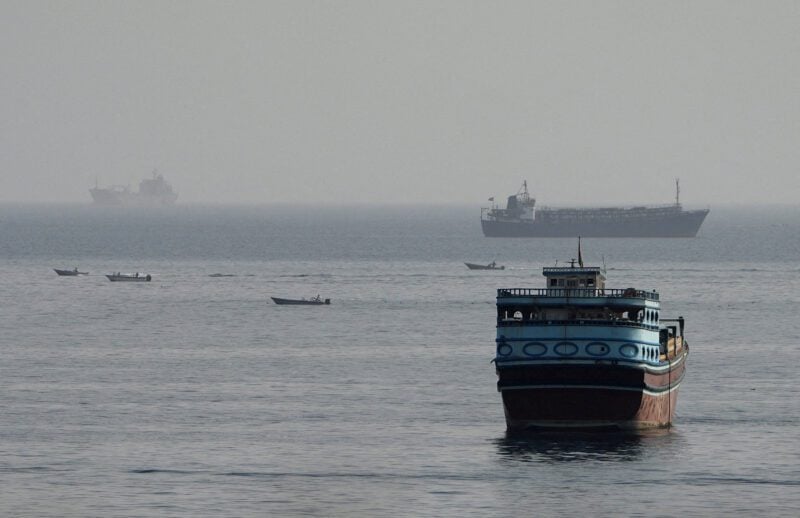
- Bab al-Mandab commercial transit is likely to remain constrained rather than fully closed over the next 0-14 days. Major shipping companies are diverting Asia-Europe traffic around the Cape of Good Hope, while other reporting describes resumed Houthi attacks and an informal blockade. A separate account says the Houthis have closed the strait in the past, but the available evidence more directly supports dangerous and reduced access than a complete current closure. The conflict between rerouting evidence and closure language supports medium confidence. (Confidence: medium · ASSESSED)
- I&W: CONFIRM: Within 0-14 days, two or more major shipping companies extend Cape of Good Hope diversions and issue notices suspending remaining Bab al-Mandab transits. (0-14 days)
- I&W: BREAK: Within 0-14 days, major operators announce regular Bab al-Mandab sailings and vessel movement resumes without a new Houthi attack on commercial shipping. (0-14 days)
- The Red Sea disruption is likely to sustain higher voyage times and insurance costs while producing uneven commercial effects over the next 0-14 days. Asia-Europe rerouting adds an 11,000 kilometre detour and up to two weeks to voyages, Yemen's Deputy Transport Minister reports a large rise in ship insurance fees, and Hafnia management describes fragmented trade and increased voyage distances. The evidence is stronger for routing and insurance pressure than for a uniform rise in freight rates. (Confidence: medium · ASSESSED)
- I&W: CONFIRM: Within 0-14 days, operator schedules continue to show Cape routing and insurers or Yemen's Transport Ministry report another increase in ship insurance fees. (0-14 days)
- I&W: BREAK: Within 0-14 days, major operators restore Red Sea schedules and reported ship insurance fees decline. (0-14 days)
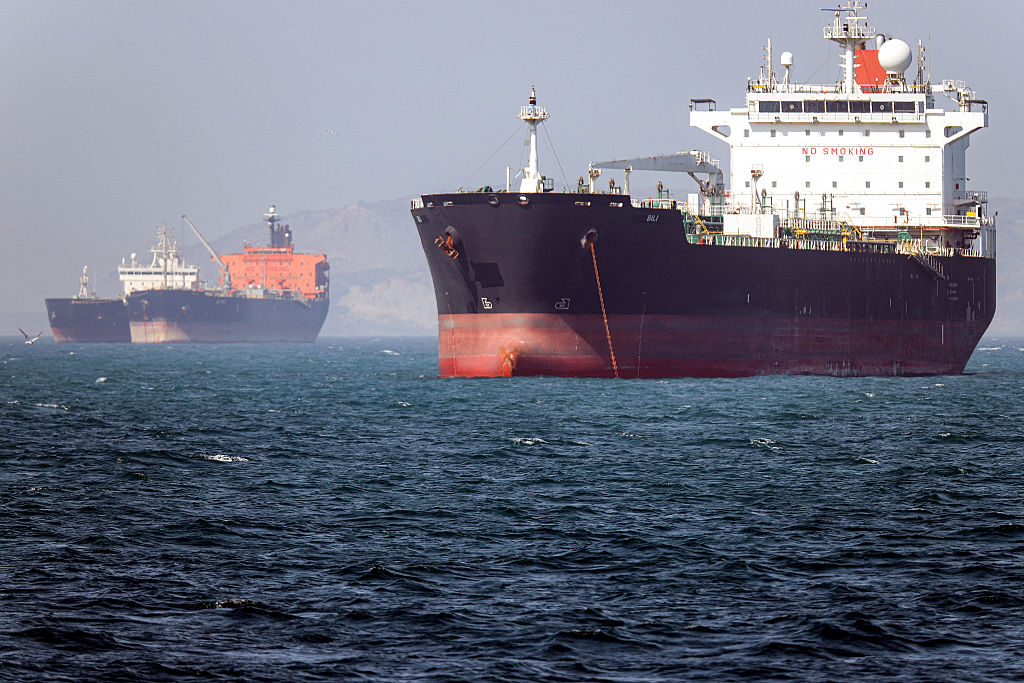
- The wider US-Iran maritime confrontation is likely to compound pressure on Red Sea shipping over the next 0-14 days, but the status of Strait of Hormuz traffic remains unresolved. Reporting variously describes collapsed shipping, an effective Iranian closure, and disrupted but continuing tanker movement, while other accounts describe intensified US-Iran strikes after a 14 June ceasefire memorandum. Conflicting major-media, think-tank and contextual reporting lowers confidence in the precise severity of the Hormuz disruption, not in the risk of spillover to Bab al-Mandab. (Confidence: medium · ASSESSED)
- I&W: CONFIRM: Within 0-14 days, new Iranian attacks on merchant vessels and US strikes on Islamic Revolutionary Guard Corps sites used to target ships are reported while Hormuz traffic remains sharply reduced. (0-14 days)
- I&W: BREAK: Within 0-14 days, a verified ceasefire holds and tanker movement returns to normal through the Strait of Hormuz. (0-14 days)
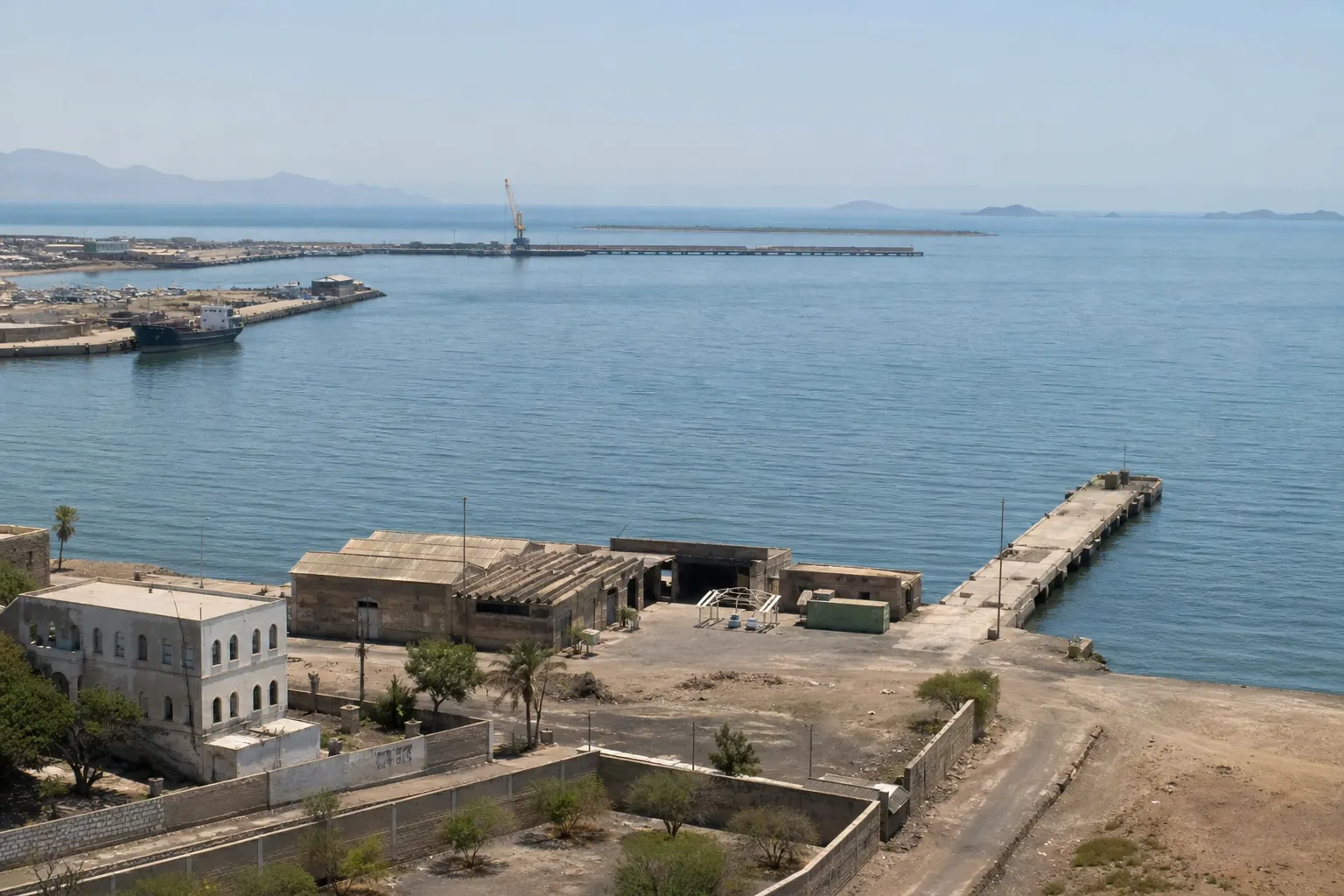
- Humanitarian exposure around Hodeidah is likely to rise over the next 0-14 days as fighting continues across areas near Taiz and Hodeidah. Hodeidah handles approximately 80 per cent of food and humanitarian aid destined for Yemen, while the Transport Minister has ordered rapid cargo clearance and assessment reports amid reported damage to Mokha port and higher insurance fees. This is a medium-confidence inference because the reporting does not establish that Hodeidah operations have stopped. (Confidence: medium · ASSESSED)
- I&W: CONFIRM: Within 0-14 days, Hodeidah reports closure, damage or material cargo accumulation, or humanitarian operators announce diversion of aid through other Yemeni ports. (0-14 days)
- I&W: BREAK: Within 0-14 days, Hodeidah maintains normal cargo clearance and no additional security-related rise in ship insurance fees is reported. (0-14 days)
Outlook & scenarios
Constrained transit persists (65%)
Over the next 0-14 days, Houthi pressure around Taiz and Mokha continues without a decisive seizure of Bab al-Mandab approaches. Major shipping companies maintain Cape of Good Hope diversions, while limited commercial traffic continues through the strait.
Houthi advance drives effective commercial closure (30%)
Houthi forces reach positions overlooking Mokha or Bab al-Mandab and conduct further attacks on vessels or port facilities. Major operators suspend remaining transits, turning the existing informal blockade into an effective commercial closure.
Local containment and selective return (20%)
Yemeni government forces and the National Resistance Forces contain the Houthi advance around Mokha, while no new attack hits commercial shipping. Some operators resume Bab al-Mandab sailings, but insurance and routing costs remain above pre-disruption levels.
Low-probability, high-impact compound chokepoint crisis (10%)
US-Iran maritime strikes keep Strait of Hormuz traffic sharply reduced while Houthi attacks intensify around Bab al-Mandab. Simultaneous pressure on both waterways produces wider tanker and container rerouting, higher insurance costs and stronger energy-market effects.
Recommendations
- Maintain a daily watch on Houthi movements around western Taiz, Mokha, Hodeidah and the Bab al-Mandab approaches. Separate confirmed territorial changes from claims based only on local or anonymous reporting.
- Track Bab al-Mandab access through three distinct measures: major operator route notices, observed vessel movements and attacks on commercial vessels or port facilities. Do not label the strait fully closed unless these measures converge.
- Reconcile the Strait of Hormuz timeline before using it as a firm driver of Red Sea forecasts. Track merchant-vessel attacks, US strikes on Islamic Revolutionary Guard Corps maritime sites and evidence of continuing tanker movement against the 14 June ceasefire account.
- Prioritise Hodeidah in humanitarian monitoring. Flag any port closure, cargo accumulation, damage report or aid diversion immediately because the port handles approximately 80 per cent of Yemen's food and humanitarian aid.
- Update commercial-impact estimates using the observable duration of Cape diversions, voyage extensions and ship insurance fees. Keep route disruption, insurance pressure and energy-price effects as separate analytic lines rather than treating them as one market outcome.
Confidence & uncertainty
Overall confidence is high because multiple major-media reports, later local reporting, trade analysis and company reporting corroborate the core pattern of renewed Houthi fighting, missile and drone use, pressure on Mokha and continued commercial rerouting around southern Africa. The main uncertainties concern the extent of Houthi territorial gains, whether Bab al-Mandab is fully closed or primarily avoided by operators, and the contradictory reporting on the scale and status of Strait of Hormuz disruption.
Intelligence gaps
- [EEI 1.1 · PARTIAL] Incidents of hostile action against commercial vessels: vessel name/IMO, position (lat/long), time/date, observable damage or casualties, and weapon type reported (missile, drone, small-arms, explosive-laden boat). Recommended collection: maritime/AIS
- [EEI 1.3 · PARTIAL] Unusual Houthi force posture indicators along Yemen’s Red Sea coast: movement or concentration of small boats, visible coastal missile/rocket emplacements, or logistics buildup at known launch sites (locations, timestamps). Recommended collection: imagery/satellite
- [EEI 1.4 · PARTIAL] Intercepts or communications indicating orders, targeting lists, or intent to strike merchant shipping (messages referencing specific vessel classes, companies, or chokepoints). Recommended collection: signals/communications
- [EEI 2.1 · PARTIAL] Reports or visual confirmation of floating or moored mines and debris fields in shipping lanes or approaches to Bab-el-Mandeb, with geolocation and time. Recommended collection: imagery/satellite
- [EEI 2.2 · PARTIAL] Detection of mine-laying activity: small vessels loitering in lane approaches, unexpected AIS track patterns consistent with mine deployment, or salvage/mining vessels operating in the area. Recommended collection: maritime/AIS
- [EEI 2.3 · UNCOVERED] Hydrographic notices, naval warnings, or port authority advisories closing lanes or imposing route restrictions (text of Notice to Mariners, issuing agency, effective times/areas). Recommended collection: naval/port_authority
- [EEI 2.4 · UNCOVERED] Naval or commercial reports of mine-countermeasure operations or confirmed mine removal events (location, time, platforms involved). Recommended collection: naval/intelligence
- [EEI 3.1 · UNCOVERED] Movements and presence of foreign warships and support vessels: names/classes, task group compositions, patrol areas and timelines, and whether vessels are conducting escort or interdiction operations. Recommended collection: naval/intelligence
- [EEI 3.2 · UNCOVERED] Official announcements or directives from states/coalitions regarding convoys, armed escorts, protected corridor establishment, or changes to rules of engagement for merchant protection. Recommended collection: diplomatic/public_affairs
- [EEI 3.3 · PARTIAL] Recorded interactions between naval forces and vessels in the corridor (hailings, boardings, warnings, defensive strikes), including timestamps and outcomes. Recommended collection: maritime/AIS
- [EEI 3.4 · UNCOVERED] Planned or ongoing multinational exercises, air ISR sorties, or logistics moves that increase or decrease naval capacity in the area (exercise name, participating units, dates, locations). Recommended collection: open-source/military_reporting
- [EEI 4.1 · PARTIAL] Transit volume and pattern changes: number of commercial transits per day/week through Bab-el-Mandeb and southern Red Sea compared with baseline, and instances of rerouting around Africa (position/time data). Recommended collection: maritime/AIS
- [EEI 4.3 · PARTIAL] Freight and charter market signals tied to the corridor: spot rates for container, tanker, and dry bulk routes affected by Red Sea disruptions, and reported port congestion or turnaround-time increases at nearby hubs. Recommended collection: commercial/market_data
- [EEI 4.4 · PARTIAL] Incidents of cargo denial or diversion for critical goods (crude oil, refined products, LNG, high-value container cargo) including vessel IDs, cargo type, reroute/turnback actions, and economic impact estimates where available. Recommended collection: maritime/AIS
TLP:CLEAR