TLP:CLEAR · Disclosure is not limited.
Red Sea Shipping Disruption: Houthi Blockade and Gulf Spillover
Time window: Last 7 days · Audience: General analyst · Type: Situation report · DTG: 2026-09-10 01:05Z · Overall confidence: HIGH
BLUF
Very likely, Houthi attacks and the declared blockade will keep commercial transit through the Red Sea and Bab al-Mandab constrained over the next 0-14 days, with Saudi tankers particularly exposed. The risk picture has widened to the Gulf of Oman and Strait of Hormuz, where US-Iran maritime attacks and an announced Iranian prohibited zone are adding pressure to already disrupted shipping routes.
Executive summary
Houthi attacks on 8 September struck Abha, Khamis Mushait, Jazan and Najran, causing fires at Saudi facilities and 73 reported injuries. Since late July, the Houthis have reportedly conducted more than a dozen attacks against Saudi oil facilities and tankers in the Red Sea, declared a blockade of Saudi shipping and prompted Saudi tankers to use dark transit practices. On 9 September, US Central Command reported strikes on Iranian tankers, while Iran claimed attacks on 10 ships and the IRGC announced plans for a prohibited zone near the Strait of Hormuz. Saudi oil flows through Yanbu, Suez and the SUMED pipeline have increased, showing rerouting rather than a verified halt to all regional maritime trade. The core disruption is well corroborated, but the precise status of Hormuz, attack counts and battle-damage claims remain contested.
Change from previous assessment
Since the 9 September prior brief, the assessment has shifted from reduced but ongoing transit under Houthi pressure to a higher likelihood of sustained, selective disruption of Saudi shipping and broader spillover into the Gulf of Oman and Strait of Hormuz. New reporting adds the Houthi declaration of a Saudi shipping blockade, more than a dozen reported attacks since late July, Saudi use of dark transit practices, US strikes on named Iranian tankers, an Iranian plan for a prohibited zone and further crew casualties. The prior judgement that a complete Bab al-Mandab closure was not established remains unchanged.
Key judgments
- Very likely, Houthi attacks will continue to constrain commercial transit through the Red Sea and Bab al-Mandab over the next 0-14 days, with Saudi shipping particularly exposed. The Houthis have declared a blockade of Saudi shipping, ACLED reporting records more than a dozen attacks against Saudi oil facilities and tankers since late July, and Saudi Arabia has reportedly turned off tracking signals on some Red Sea tankers. A reported missile strike on a Saudi tanker in the northern Red Sea, roughly 1,000 kilometres from Houthi territory, indicates that the threat extends beyond the immediate Bab al-Mandab approaches. Confidence is high for continued disruption, but current reporting does not establish the proportion of traffic still moving. (Confidence: high · ASSESSED)
- I&W: Confirm: Within 0-14 days, maritime authorities report another attack, disabling fire or Houthi threat against a vessel in the Red Sea or Bab al-Mandab, or additional Saudi tankers transmit without AIS for part of their voyage. (0-14 days)
- I&W: Break: Over 14 days, named commercial vessels complete Bab al-Mandab transits with tracking signals visible and no further Houthi attack or blockade reports. (0-14 days)
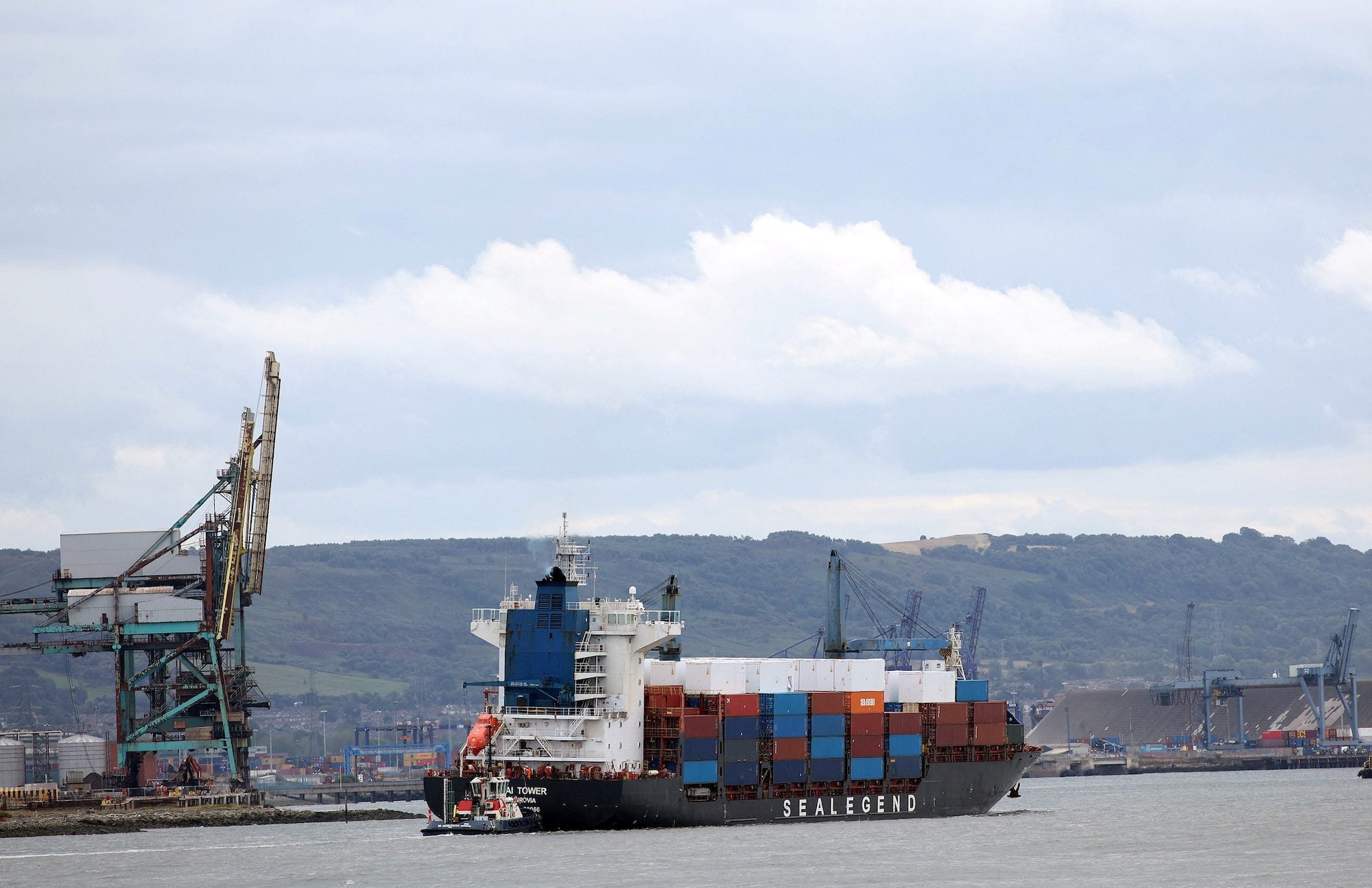
- Likely, commercial operators will sustain rerouting and Saudi Arabia will continue shifting crude through Yanbu, Suez and the SUMED pipeline rather than rely fully on exposed Red Sea transit. SUMED flows reportedly rose from 650,000 barrels per day in June to more than 1.9 million in August, while Saudi Arabia reportedly rerouted most crude exports through Yanbu. The Dubai Tower's Arctic voyage and planned China-Russia North Sea Route service show operators testing alternatives, although the Arctic route's commercial feasibility remains uncertain. Confidence is medium because the Saudi rerouting and future Arctic service reporting contains single-source elements. (Confidence: medium · ASSESSED)
- I&W: Confirm: New flow reports keep SUMED movements above the June level of 650,000 barrels per day, while Saudi crude tankers continue using Yanbu or tracking signals remain absent during Red Sea voyages. (0-14 days)
- I&W: Break: Shipping data show Saudi crude tankers returning to routine, continuously tracked Bab al-Mandab voyages and no further use of alternative routes is reported. (1-3 months)
- Very likely, maritime risk will remain elevated across the Gulf of Oman and Strait of Hormuz over the next 0-14 days, reinforcing the Red Sea disruption. US Central Command reported destroying the tankers Kaviz, Charminar, Horizon 1 and Riesco in the Gulf of Oman, while separate reporting identified the tanker Derya near Kharg Island. Iran said it attacked 10 ships, the IRGC announced a forthcoming prohibited zone along routes leading to Hormuz, and UKMTO reporting described merchant vessels subjected to disabling fire. The number of vessels attacked and the damage assessments remain contested: the IRGC claimed heavy damage to two US destroyers, while Centcom said that claim was false. Confidence is medium because the competing accounts lack independent confirmation and some reporting contains location and date discrepancies. (Confidence: medium · ASSESSED)
- I&W: Confirm: The IRGC publishes coordinates for the proposed prohibited zone, or maritime authorities report another disabling-fire incident, tanker casualty or crew casualty in the Gulf of Oman or northern Gulf. (0-14 days)
- I&W: Break: Maritime reporting verifies commercial vessels transiting the Strait of Hormuz without attack, disabling fire or enforced exclusion-zone measures for 14 consecutive days. (0-14 days)
- Likely, energy-price and route pressure will remain elevated over the next 1-3 months. Brent crude breached $100 per barrel on 9 September, US diesel reached above $5.94 per gallon, and Saudi Arabia has increased flows through Suez and the SUMED pipeline as maritime routes are disrupted. The market response reflects both Houthi attacks and the wider US-Iran confrontation, so the reporting does not isolate the Houthi contribution. Confidence is medium because the price movements have several simultaneous drivers. (Confidence: medium · ASSESSED)
- I&W: Confirm: Brent remains above $100 per barrel and US diesel remains above $5.94 per gallon in fresh market reporting while Saudi rerouting through Suez and SUMED continues. (0-14 days)
- I&W: Break: Brent falls below $100, US diesel falls below $5.94 per gallon and SUMED flows decline from the reported August level of more than 1.9 million barrels per day. (1-3 months)
- Likely, continued Saudi-Houthi fighting will produce additional humanitarian costs in Yemen and among commercial crews over the next 0-14 days. The International Organization for Migration reported that more than 18,500 people fled homes along Yemen's west coast in three days; Saudi authorities reported 73 wounded in the 8 September attacks; and the charterer Peninsula reported one death and one missing crew member aboard Hercules Star off Dubai. The Houthi report of 23 civilian deaths at a prison in Hazm remains a single-party allegation and should not be treated as independently verified. Confidence is medium. (Confidence: medium · ASSESSED)
- I&W: Confirm: The International Organization for Migration reports further displacement along Yemen's west coast, or a charterer reports another death or missing crew member after a Red Sea or Gulf incident. (0-14 days)
- I&W: Break: No additional displacement is reported and all crews are accounted for after newly reported maritime incidents during the next 14 days. (0-14 days)
Outlook & scenarios
Degraded but functioning Red Sea transit (55%)
The Houthis continue attacks and maintain the declared blockade against Saudi shipping. Saudi tankers use dark transit practices, commercial operators reroute, and the Bab al-Mandab remains dangerous but not verified as fully closed. Suez and SUMED flows remain elevated as Saudi Arabia shifts crude northwards.
Expanded regional maritime confrontation (25%)
Iran publishes and enforces the proposed prohibited zone, while further US-Iran strikes and disabling-fire incidents spread across the Gulf of Oman and Strait of Hormuz. The additional disruption drives more tankers and container ships away from Middle Eastern routes and increases pressure on energy prices.
Temporary stabilisation (15%)
No new Houthi attacks or Gulf shipping casualties are reported over the next two weeks. Saudi and US operational measures reduce the immediate incident rate, some commercial traffic resumes tracked Red Sea voyages, and market pressure eases without resolving the underlying confrontation.
High-impact dual closure (5%)
Houthi attacks force a near-total suspension of Saudi and other commercial shipping through the Red Sea while Iran's prohibited zone and attacks make the Strait of Hormuz effectively unusable. This would produce a sharp additional shock to oil availability, tanker routing and crew safety.
Recommendations
- Maintain a 0-14 day watchlist for Houthi statements, attacks on Saudi tankers, AIS gaps involving Saudi vessels and maritime warnings around Bab al-Mandab. Report vessel names, locations and cargoes rather than using an unqualified regional closure label.
- Separate Red Sea and Strait of Hormuz assessments. Treat the claim that Hormuz is effectively blocked as unconfirmed until vessel movements and maritime authority reports reconcile it with claims that ships remain navigable but are being attacked or deterred.
- Track the named vessels Kaviz, Charminar, Horizon 1, Riesco, Derya, New Andros and Hercules Star. Reconcile US, Iranian, Iraqi and charterer reporting before using casualty, damage or attack-count figures in a headline assessment.
- Monitor Saudi crude movements through Yanbu, the Suez Canal and the SUMED pipeline against the reported baseline of 650,000 barrels per day in June and more than 1.9 million in August. Flag any return to routine tracked Red Sea voyages or a sustained fall in SUMED flows.
- Include crew safety and displacement in daily reporting. Maintain separate entries for the International Organization for Migration estimate of more than 18,500 displaced people, Saudi reports of 73 wounded, the Hercules Star death and missing crew member, and the uncorroborated Houthi allegation concerning 23 deaths in Hazm.
- Use NASA FIRMS thermal detections only as corroborative evidence of heat. Do not infer the cause of a fire or strike from a thermal signature without vessel, maritime authority or local reporting.
Confidence & uncertainty
Overall confidence is high because the core pattern is supported by multiple high-confidence claims from major media, wire services, official government data and maritime reporting. These sources corroborate Houthi attacks on Saudi facilities and shipping, reduced Red Sea transit, tanker incidents in the Gulf of Oman and continued energy rerouting. The main uncertainties concern the exact proportion of traffic still moving, whether Hormuz is effectively blocked, competing US and Iranian accounts of tanker attacks and warship damage, and date discrepancies in some trade reporting.
Intelligence gaps
- [EEI 1.1 · PARTIAL] Incidents of hostile action against commercial vessels: vessel name/IMO, position (lat/long), time/date, observable damage or casualties, and weapon type reported (missile, drone, small-arms, explosive-laden boat). Recommended collection: maritime/AIS
- [EEI 1.2 · PARTIAL] Public Houthi claims of attacks or warnings tied to specific dates/routes, including social-media posts, official statements, and timing relative to merchant transits. Recommended collection: open-source/social_media
- [EEI 1.3 · UNCOVERED] Unusual Houthi force posture indicators along Yemen’s Red Sea coast: movement or concentration of small boats, visible coastal missile/rocket emplacements, or logistics buildup at known launch sites (locations, timestamps). Recommended collection: imagery/satellite
- [EEI 1.4 · UNCOVERED] Intercepts or communications indicating orders, targeting lists, or intent to strike merchant shipping (messages referencing specific vessel classes, companies, or chokepoints). Recommended collection: signals/communications
- [EEI 2.1 · UNCOVERED] Reports or visual confirmation of floating or moored mines and debris fields in shipping lanes or approaches to Bab-el-Mandeb, with geolocation and time. Recommended collection: imagery/satellite
- [EEI 2.2 · UNCOVERED] Detection of mine-laying activity: small vessels loitering in lane approaches, unexpected AIS track patterns consistent with mine deployment, or salvage/mining vessels operating in the area. Recommended collection: maritime/AIS
- [EEI 2.3 · UNCOVERED] Hydrographic notices, naval warnings, or port authority advisories closing lanes or imposing route restrictions (text of Notice to Mariners, issuing agency, effective times/areas). Recommended collection: naval/port_authority
- [EEI 2.4 · UNCOVERED] Naval or commercial reports of mine-countermeasure operations or confirmed mine removal events (location, time, platforms involved). Recommended collection: naval/intelligence
- [EEI 3.1 · PARTIAL] Movements and presence of foreign warships and support vessels: names/classes, task group compositions, patrol areas and timelines, and whether vessels are conducting escort or interdiction operations. Recommended collection: naval/intelligence
- [EEI 3.2 · PARTIAL] Official announcements or directives from states/coalitions regarding convoys, armed escorts, protected corridor establishment, or changes to rules of engagement for merchant protection. Recommended collection: diplomatic/public_affairs
- [EEI 3.3 · UNCOVERED] Recorded interactions between naval forces and vessels in the corridor (hailings, boardings, warnings, defensive strikes), including timestamps and outcomes. Recommended collection: maritime/AIS
- [EEI 3.4 · UNCOVERED] Planned or ongoing multinational exercises, air ISR sorties, or logistics moves that increase or decrease naval capacity in the area (exercise name, participating units, dates, locations). Recommended collection: open-source/military_reporting
- [EEI 4.1 · PARTIAL] Transit volume and pattern changes: number of commercial transits per day/week through Bab-el-Mandeb and southern Red Sea compared with baseline, and instances of rerouting around Africa (position/time data). Recommended collection: maritime/AIS
- [EEI 4.2 · UNCOVERED] War-risk and hull insurance coverage changes: issuance refusals, premium increases for Red Sea transits, or explicit route exclusions by underwriters (policy notices or market rate data with dates). Recommended collection: commercial/insurance_data
- [EEI 4.3 · UNCOVERED] Freight and charter market signals tied to the corridor: spot rates for container, tanker, and dry bulk routes affected by Red Sea disruptions, and reported port congestion or turnaround-time increases at nearby hubs. Recommended collection: commercial/market_data
- [EEI 4.4 · PARTIAL] Incidents of cargo denial or diversion for critical goods (crude oil, refined products, LNG, high-value container cargo) including vessel IDs, cargo type, reroute/turnback actions, and economic impact estimates where available. Recommended collection: maritime/AIS
TLP:CLEAR