TLP:CLEAR · Disclosure is not limited.
Red Sea Shipping Disruption: Houthi Leverage, Saudi Rerouting and Escalation
Time window: Last 7 days · Audience: General analyst · Type: Situation report · DTG: 2026-09-21 17:31Z · Overall confidence: HIGH
BLUF
Very likely, Houthi forces will continue to disrupt shipping near Bab-el-Mandeb over the next 0-14 days, but a complete halt is unlikely because vessels are still transiting the strait. Saudi attacks on Houthi positions and Houthi strikes claimed against Riyadh and Yanbu will keep the risk to Saudi-linked shipping and energy infrastructure high.
Executive summary
Houthi forces have captured or reportedly captured Mocha, Perim Island and the Hanish Islands, giving them a strong position from which to threaten shipping near Bab-el-Mandeb. Commercial traffic has continued, although reporting differs sharply on its scale, and operators are relying on rerouting, alternative pipelines and ship-to-ship transfers. Saudi Arabia is conducting sustained air strikes in Yemen while the Houthis have claimed attacks on Riyadh and Yanbu. The main uncertainties are the exact extent of Houthi territorial control, the true level of Bab-el-Mandeb traffic, the scale of damage to Saudi energy infrastructure and whether the US will conduct direct strikes in Yemen.
Change from previous assessment
Since the prior brief, the assessment gives greater weight to newly reported Houthi control of Mocha, Perim Island and the Hanish Islands, Saudi air strikes numbering in the hundreds, and Houthi-claimed attacks on Riyadh and Yanbu. The assessment of continued shipping disruption remains very likely, but confidence stays medium because reported traffic ranges from 318 ships over 10-18 September to 45 daily transits on Sunday and the evidence does not show a complete closure. Confidence in continued Saudi export disruption is tempered by the reported recovery above 4 million barrels per day in September. Humanitarian deterioration remains high confidence and is now supported by reporting of more than 112,000 displaced people and more than 3,000 arrivals in Djibouti. A new low-confidence judgement addresses the unresolved possibility of direct US strikes against Houthi targets.
Key judgments
- Likely, Houthi forces will retain the ability to disrupt shipping at Bab-el-Mandeb during the next 0-14 days without establishing a verified complete closure. Reporting places Houthi forces in Mocha, on Perim Island and in the Hanish Islands, while more conservative reporting describes those positions as enabling effective disruption rather than physical control of the strait. The Houthi government reported 318 ship transits between 10 and 18 September, and Windward reported traffic recovering to 45 daily transits on Sunday. The assessment remains medium confidence because claims of control over the entire Yemeni Red Sea coastline conflict with reporting that identifies only specific captured districts and islands. (Confidence: medium · ASSESSED)
- I&W: Confirm: independently observed Bab-el-Mandeb traffic falls below 25 transits per day for three consecutive days, or a new attack on a named Saudi tanker is reported. (0-14 days)
- I&W: Break: Bab-el-Mandeb traffic reaches at least 45 daily transits for three consecutive days without a new reported attack on commercial shipping. (0-14 days)
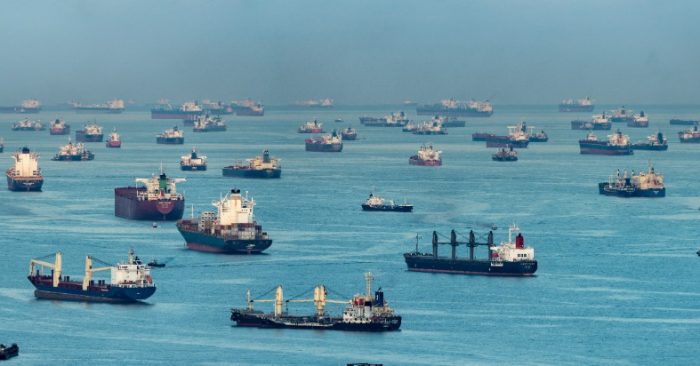
- Likely, Red Sea commercial shipping will remain rerouted and selectively operated rather than completely halted over the next 0-14 days. Houthi declarations specifically target Saudi shipping, while reports of continued transits indicate that the threat is not producing a universal stop. Diversions around the Cape of Good Hope are adding time, fuel and insurance costs, with one estimate placing the additional cost of a Houston-to-Asia crude cargo at about 26 US dollars per barrel, or 52 million US dollars per cargo. Confidence is medium because Houthi-reported traffic and independent tracking data provide materially different pictures of operating levels. (Confidence: medium · ASSESSED)
- I&W: Confirm: shipping companies announce additional Cape of Good Hope diversions or insurers raise Red Sea premiums again after a new Houthi attack. (0-14 days)
- I&W: Break: independent tracking records at least 40 Bab-el-Mandeb transits per day for seven consecutive days while major operators maintain Red Sea routing. (0-14 days)
- Likely, Saudi-Houthi hostilities will continue to extend the disruption risk beyond Yemen's western coast during the next 0-14 days, keeping Riyadh, Yanbu and Saudi Red Sea infrastructure exposed. Saudi Arabia has conducted hundreds of air strikes along the coastal plain, while Houthi forces have claimed missile and drone attacks against Riyadh and an Aramco facility in Yanbu. Saudi authorities reported intercepting a ballistic missile and thwarting attacks on Bisha, Taif, Farasan and Yanbu, although photographs reportedly showed smoke near an Aramco facility. Confidence is medium because the parties disagree over the dates, locations, scale and success of the attacks. (Confidence: medium · ASSESSED)
- I&W: Confirm: a new missile or drone incident at Riyadh or Yanbu is acknowledged by Saudi authorities and accompanied by physical evidence of an impact or fire. (0-14 days)
- I&W: Break: Saudi Arabia reports no new strikes on the coastal plain, Riyadh or Yanbu for 14 consecutive days and Houthi forces announce a suspension of attacks on Saudi-linked shipping. (0-14 days)
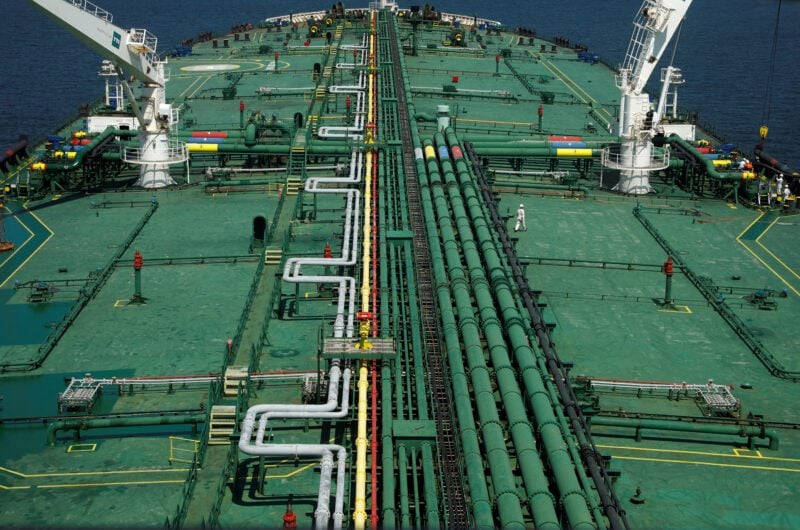
- Likely, Saudi oil exports will remain partially available but dependent on route substitution during the next 1-3 months. Provisional data show exports recovering to more than 4 million barrels per day in September from 2.4 million barrels per day in August, while Saudi Aramco has increased use of the Strait of Hormuz, alternative shipping arrangements and planned ship-to-ship transfers at Sohar. The East-West pipeline attack and suspended Yanbu shipments still constrain the Red Sea route. Confidence is medium because reported export levels range from 3.2 million to about 5 million barrels per day and the evidence does not consistently distinguish crude exports, total exports or different time periods. (Confidence: medium · ASSESSED)
- I&W: Confirm: Saudi export data fall back towards 2.4 million barrels per day, Yanbu shipments remain suspended, or the East-West pipeline outage extends beyond September. (1-3 months)
- I&W: Break: Saudi exports remain above 4 million barrels per day for 30 consecutive days while Aramco reports restored Yanbu operations and no reliance on emergency ship-to-ship transfers. (1-3 months)
- Roughly even chance, current US-Houthi contact and diplomatic pressure on Iran will prevent direct US strikes against Houthi targets during the next 0-14 days, but this restraint will not end Saudi-Houthi attacks. Oman reportedly hosted US-Houthi representatives, China reportedly asked Iran to rein in the Houthis, and President Donald Trump said the US was in contact with the group. Reporting also says Trump considered or prepared air strikes before halting them, while other accounts say he rejected Saudi requests and limited support to intelligence and targeting data. The diplomatic and policy reporting is thin and partly contradictory, so confidence is low. (Confidence: low · ASSESSED)
- I&W: Confirm: the US administration publicly maintains that there will be no strikes on Houthi targets and Oman reports a follow-up US-Houthi meeting. (0-14 days)
- I&W: Break: US forces conduct an air strike in Yemen or the Houthis attack a US vessel in or near Bab-el-Mandeb. (0-14 days)
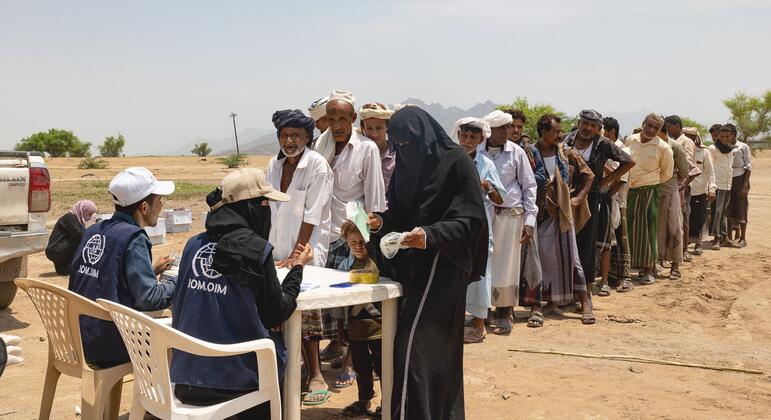
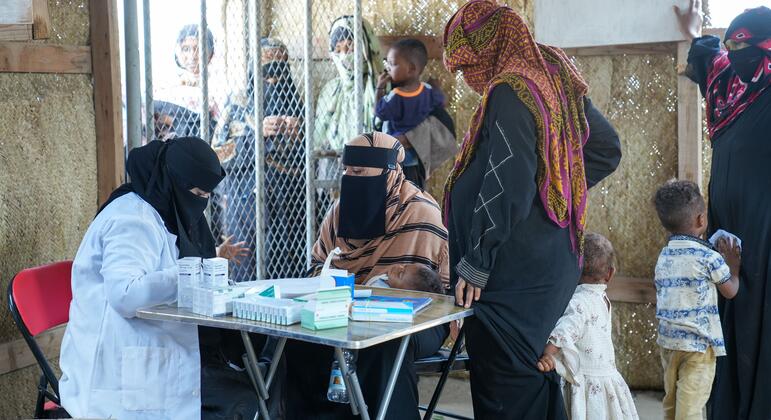
- Very likely, humanitarian pressure will remain elevated and aid access will deteriorate in western Yemen and Djibouti over the next 1-3 months. UN reporting puts recent displacement at more than 112,000 people across Aden, Hudaydah, Abyan and Taiz, while UNICEF reports more than 57,000 displaced children. More than 3,000 people have crossed Bab-el-Mandeb to Djibouti, although arrival figures from different reporting windows should not be added together. UNICEF reports disruption at 26 health facilities and the closure or suspension of 243 schools affecting more than 137,000 students. Confidence is high because UN agencies independently report displacement, service disruption and aid-access problems, despite differences in counting periods and definitions. (Confidence: high · ASSESSED)
- I&W: Confirm: UN, UNICEF or UNHCR report additional displacement from Aden, Hudaydah, Abyan or Taiz, or Djibouti records continued arrivals above the currently reported 3,000-person level. (1-3 months)
- I&W: Break: the UN reports restored humanitarian access in Houthi-controlled areas and no new displacement or school and health-facility closures for 30 consecutive days. (1-3 months)
Outlook & scenarios
Managed disruption and continued rerouting (50%)
Over the next 0-14 days, Houthi forces maintain pressure on Saudi-linked shipping near Bab-el-Mandeb, while commercial operators continue selected transits and divert other voyages around the Cape of Good Hope. Saudi Arabia continues air strikes in western Yemen, but the US does not conduct direct strikes. Saudi oil exports remain available through a mix of Hormuz traffic, Red Sea routes and alternative shipping arrangements.
Saudi-Houthi escalation without immediate US entry (20%)
Houthi forces intensify attacks against Riyadh, Yanbu and Saudi tankers while Saudi Arabia increases strikes against Mocha, coastal positions and other Houthi-held areas. Bab-el-Mandeb traffic falls below recent levels, insurance and freight costs rise, and Saudi exports depend more heavily on Hormuz and ship-to-ship transfers. The US provides intelligence or targeting support but continues to avoid direct strikes.
Short diplomatic pause (20%)
Oman-hosted US-Houthi contacts produce a temporary reduction in attacks, while Chinese pressure on Iran contributes to restraint by the Houthis. Bab-el-Mandeb traffic moves back towards the higher end of recent reported levels, Saudi air strikes decline, and energy operators reduce emergency rerouting. Humanitarian access remains impaired because displacement and aid restrictions do not reverse quickly.
Wildcard: direct US action triggers a wider maritime shock (10%)
The US conducts strikes against Houthi targets after further attacks on Saudi infrastructure. Houthi forces resume attacks on US or Saudi vessels in Bab-el-Mandeb, while Iranian officials implement their threat to retaliate against US bases and interests. Red Sea shipping approaches a near halt, Saudi export routes face simultaneous pressure, and the disruption compounds the existing instability around the Strait of Hormuz.
Recommendations
- Maintain a separate daily picture for Bab-el-Mandeb observed transits, Houthi-reported transits and commercial rerouting. Do not combine the 318-ship Houthi figure with Windward's daily counts without reconciling the reporting windows.
- Prioritise named indicators around Mocha, Perim Island, the Hanish Islands, Hays, Al Khawkhah and Dhubab. Treat claims of total Houthi control of the Yemeni Red Sea coastline as unverified until independent reporting confirms the wider territorial extent.
- Track Saudi-linked vessels and other commercial vessels separately. Flag a material change when a Saudi tanker is attacked, when Bab-el-Mandeb traffic remains below 25 daily transits for three days, or when traffic falls below the current reported range without a corresponding increase in diversions.
- Reconcile Saudi export figures by measure and time period. Track Kpler and JPMorgan estimates alongside Aramco statements on Yanbu, the East-West pipeline, Suez and SUMED, and Sohar ship-to-ship transfers. Report crude exports, total exports and route volumes as separate series.
- Treat the extent of US involvement as an unresolved warning issue. Seek confirmation of any strike order, air operation against Yemen, new US-Houthi contact through Oman or Houthi attacks on US shipping before revising the direct-intervention assessment.
- Maintain a humanitarian watch focused on Aden, Hudaydah, Abyan, Taiz and Djibouti's Obock, Khor Angar, Moulhoule and Godoria. Keep child displacement, total displacement and Djibouti arrivals as separate measures and avoid adding figures from different reporting periods.
- Record the cause of the tanker fire as unresolved. Do not attribute the incident to a naval mine, an Iranian strike or a mechanical failure until an official investigation or independent authoritative reporting resolves the dispute.
Confidence & uncertainty
Overall confidence is high because the principal developments are corroborated by multiple independent sources, including UN agencies, UNICEF, IMO, Reuters, commercial tracking data, Saudi statements and major media reporting. Confidence is highest for the humanitarian deterioration and the existence of sustained Saudi-Houthi hostilities. The main uncertainties concern the exact extent of Houthi territorial control, conflicting Bab-el-Mandeb transit counts, disputed damage and attribution in Saudi attacks, inconsistent Saudi export measures and contradictory reporting on whether the US prepared or rejected direct strikes.
Intelligence gaps
- [EEI 1.3 · UNCOVERED] Unusual Houthi force posture indicators along Yemen’s Red Sea coast: movement or concentration of small boats, visible coastal missile/rocket emplacements, or logistics buildup at known launch sites (locations, timestamps). Recommended collection: imagery/satellite
- [EEI 1.4 · PARTIAL] Intercepts or communications indicating orders, targeting lists, or intent to strike merchant shipping (messages referencing specific vessel classes, companies, or chokepoints). Recommended collection: signals/communications
- [EEI 2.1 · UNCOVERED] Reports or visual confirmation of floating or moored mines and debris fields in shipping lanes or approaches to Bab-el-Mandeb, with geolocation and time. Recommended collection: imagery/satellite
- [EEI 2.2 · UNCOVERED] Detection of mine-laying activity: small vessels loitering in lane approaches, unexpected AIS track patterns consistent with mine deployment, or salvage/mining vessels operating in the area. Recommended collection: maritime/AIS
- [EEI 2.3 · UNCOVERED] Hydrographic notices, naval warnings, or port authority advisories closing lanes or imposing route restrictions (text of Notice to Mariners, issuing agency, effective times/areas). Recommended collection: naval/port_authority
- [EEI 2.4 · UNCOVERED] Naval or commercial reports of mine-countermeasure operations or confirmed mine removal events (location, time, platforms involved). Recommended collection: naval/intelligence
- [EEI 3.1 · UNCOVERED] Movements and presence of foreign warships and support vessels: names/classes, task group compositions, patrol areas and timelines, and whether vessels are conducting escort or interdiction operations. Recommended collection: naval/intelligence
- [EEI 3.2 · PARTIAL] Official announcements or directives from states/coalitions regarding convoys, armed escorts, protected corridor establishment, or changes to rules of engagement for merchant protection. Recommended collection: diplomatic/public_affairs
- [EEI 3.3 · UNCOVERED] Recorded interactions between naval forces and vessels in the corridor (hailings, boardings, warnings, defensive strikes), including timestamps and outcomes. Recommended collection: maritime/AIS
- [EEI 3.4 · UNCOVERED] Planned or ongoing multinational exercises, air ISR sorties, or logistics moves that increase or decrease naval capacity in the area (exercise name, participating units, dates, locations). Recommended collection: open-source/military_reporting
- [EEI 4.1 · PARTIAL] Transit volume and pattern changes: number of commercial transits per day/week through Bab-el-Mandeb and southern Red Sea compared with baseline, and instances of rerouting around Africa (position/time data). Recommended collection: maritime/AIS
- [EEI 4.2 · PARTIAL] War-risk and hull insurance coverage changes: issuance refusals, premium increases for Red Sea transits, or explicit route exclusions by underwriters (policy notices or market rate data with dates). Recommended collection: commercial/insurance_data
- [EEI 4.3 · UNCOVERED] Freight and charter market signals tied to the corridor: spot rates for container, tanker, and dry bulk routes affected by Red Sea disruptions, and reported port congestion or turnaround-time increases at nearby hubs. Recommended collection: commercial/market_data
- [EEI 4.4 · PARTIAL] Incidents of cargo denial or diversion for critical goods (crude oil, refined products, LNG, high-value container cargo) including vessel IDs, cargo type, reroute/turnback actions, and economic impact estimates where available. Recommended collection: maritime/AIS
Cited sources
[1] Credendo · Red Sea: Houthi advances in Yemen risk widening the Middle East conflict and its economic fallout | Credendo (B) · Fri Sep 18 2026 07:16:12 GMT+0000 (Coordinated Universal Time) · sha256:e7c8029c174f [2] Wikipedia · 2026 Yemen offensives (C) · Mon Sep 07 2026 15:40:28 GMT+0000 (Coordinated Universal Time) · sha256:4da2a44f840c [3] UNSW Sydney (republished from The Conversation) · The Houthis have further tightened their grip on the Red Sea. Here’s what it could mean for the world (C) · sha256:c9f460e62981 [4] Responsible Statecraft (Quincy Institute) · The Houthis could tip the Iran war in Tehran's favor (C) · Fri Sep 18 2026 04:05:02 GMT+0000 (Coordinated Universal Time) · sha256:e161e1cead70 [5] Firstpost · US issues travel alert, Iran warns of renewed strikes as fears of wider conflict loom over West Asia (B) · Mon Sep 21 2026 01:45:22 GMT+0000 (Coordinated Universal Time) · sha256:1c32aaa1c90c [6] npr.org · What to know after a week of Houthi attacks that threaten Saudi oil (F) · Fri Sep 18 2026 08:02:41 GMT+0000 (Coordinated Universal Time) · sha256:b22feff1a208 [7] Business Insider Africa · Egypt’s Sisi, Saudi Arabia’s crown prince move to protect Red Sea shipping route carrying 12% of global trade (B) · Wed Sep 16 2026 07:00:00 GMT+0000 (Coordinated Universal Time) · sha256:50f7c59ebed3 [8] Wikipedia · Houthi blockade of Saudi Arabia (C) · Sat Jul 25 2026 12:04:49 GMT+0000 (Coordinated Universal Time) · sha256:94fc75a406cd [9] Bloomberg (republished by gCaptain) · World Running Short Of Supertankers Threatens Long-Haul Oil Flow (A) · Sat Sep 19 2026 15:28:46 GMT+0000 (Coordinated Universal Time) · sha256:c188215dd88d [10] bbc.co.uk · Yemenis flee across Red Sea as Houthis and Saudi-backed forces escalate war (F) · Mon Sep 21 2026 14:14:16 GMT+0000 (Coordinated Universal Time) · sha256:4fa0dca36bb0 [11] Sunday Guardian Live · US-Israel-Iran War Latest Live News: UKMTO Says Strait of Hormuz Traffic Remains Below US Figures as Oil Prices Dip Despite Houthi Attacks on Saudi Arabia Amid Gulf Security Escalates (B) · Mon Sep 21 2026 02:56:11 GMT+0000 (Coordinated Universal Time) · sha256:306910685338 [12] The Economic Times · Oil Price Today (September 21): Crude oil falls for 4th day, below $102. What’s triggering the fall? (A) · Mon Sep 21 2026 02:16:00 GMT+0000 (Coordinated Universal Time) · sha256:b189174bcab0 [13] Gulf News · US-Iran conflict: What UAE residents need to know today (Sept. 21) (B) · Mon Sep 21 2026 03:00:10 GMT+0000 (Coordinated Universal Time) · sha256:c6ac03795971 [14] Mathrubhumi (English edition) · Oil prices today: Brent slips as Saudi exports recover despite Middle East tensions (D) · Mon Sep 21 2026 03:51:44 GMT+0000 (Coordinated Universal Time) · sha256:a168f804836c [15] InvestingLive · ICYMI: JPMorgan says Middle East oil flows holding up despite Saudi pipeline outage (D) · Mon Sep 21 2026 02:31:02 GMT+0000 (Coordinated Universal Time) · sha256:473c9eebbe8e [16] Moneycontrol · Trump was ready to strike Houthis in Yemen after Saudi plea, then pulled back- Moneycontrol.com (B) · Mon Sep 21 2026 04:46:52 GMT+0000 (Coordinated Universal Time) · sha256:034f169ec4ff [17] InvestingLive · Trump flips twice on Houthi airstrikes after call with Saudi crown prince (D) · Mon Sep 21 2026 03:13:23 GMT+0000 (Coordinated Universal Time) · sha256:4ee7108c7edd [18] United Nations News · Yemen’s humanitarian crisis growing by the hour amid spike in displacement (A) · Fri Sep 18 2026 12:07:17 GMT+0000 (Coordinated Universal Time) · sha256:d190663b8c65 [19] United Nations (UN News) · Yemen escalation displaces more than 57,000 children: UNICEF (A) · Thu Sep 17 2026 09:45:30 GMT+0000 (Coordinated Universal Time) · sha256:a1a4ae4333be
Source content hashes were computed at collection time; the cited text is preserved unmodified for the life of this product.
TLP:CLEAR