TLP:CLEAR · Disclosure is not limited.
Red Sea Shipping Disruption: Houthi Pressure and Maritime Risk
Time window: Last 7 days · Audience: General analyst · Type: Situation report · DTG: 2026-09-08 01:05Z · Overall confidence: HIGH
BLUF
Red Sea shipping will very likely remain constrained over the next 0-14 days as Houthi attacks and threats persist around Bab al-Mandab and fighting continues near Taiz, Hodeidah and Mokha. Current reporting supports reduced transit and higher route risk, but not a confirmed complete closure of Bab al-Mandab.
Executive summary
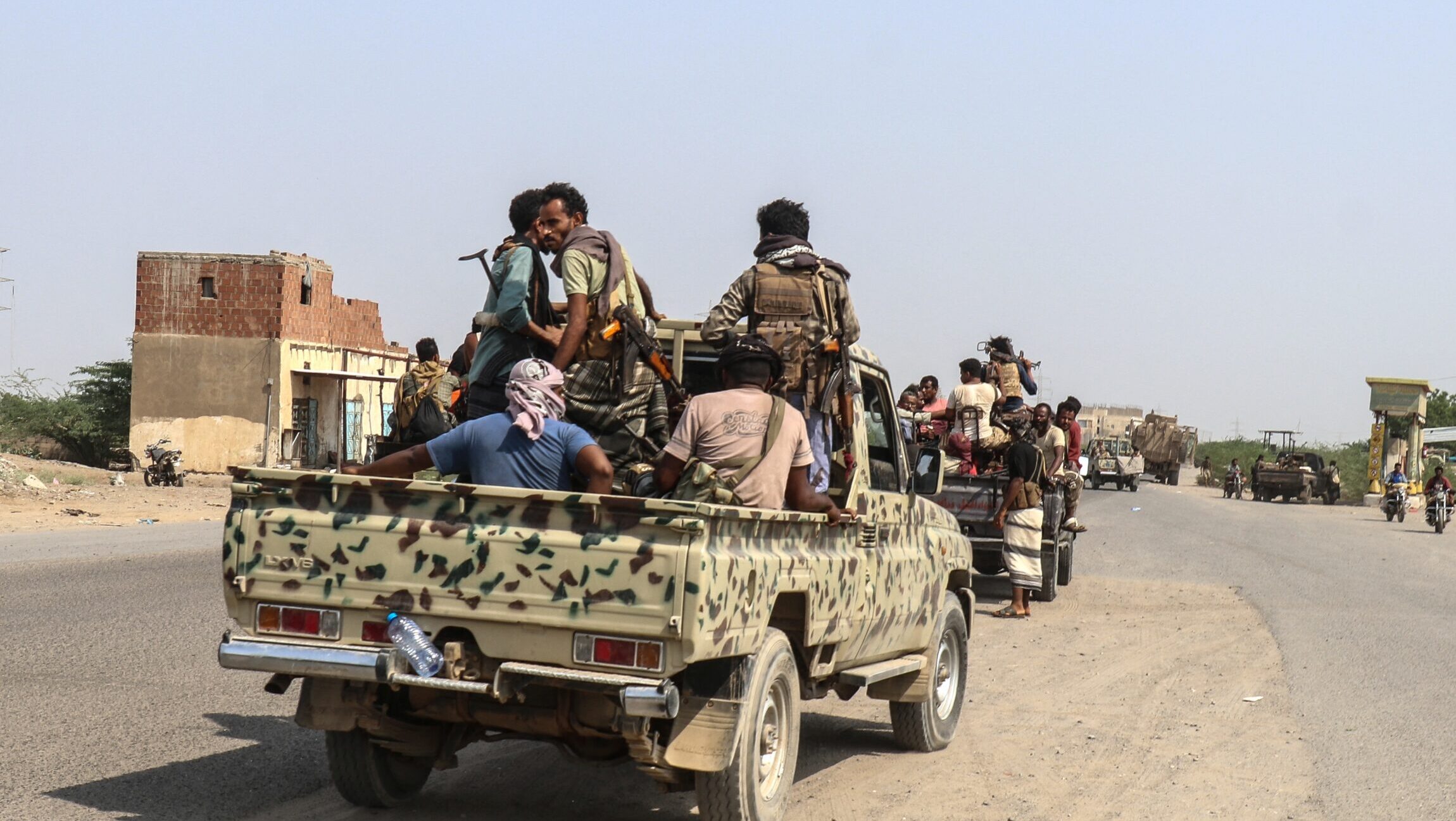
Houthi forces launched a major offensive in southwest Yemen against a government supply route near the Red Sea coast and Bab al-Mandab. Reporting indicates more than 300 fighters and civilians were killed, nearly 1,800 households were displaced, and fighting continued around Taiz, southern Hodeidah and Mokha. Reports disagree over whether Houthi forces severed the Taiz-Mokha highway or were repelled near Bab al-Mandab. Commercial shipping faces a second pressure point from the wider US-Iran confrontation, while piracy incidents in the Gulf of Aden have increased the risks associated with routes near the Somali coast.
Change from previous assessment
Since the 7 September brief, the assessment raises the expected humanitarian trajectory from likely exposure to likely increasing pressure, based on reporting of more than 300 deaths, nearly 1,800 displaced households and further camp arrivals. New reporting also records Yemeni government gains at Hays, Jabal Koura and Tabet al-Khazan, sharpening the judgement that battlefield control is contested rather than uniformly shifting towards the Houthis. The prior judgements that Bab al-Mandab transit will remain constrained and that Hormuz disruption will compound regional shipping pressure are retained. This brief adds a distinct Gulf of Aden piracy pathway and keeps full closure of Bab al-Mandab as an unconfirmed scenario.
Key judgments
- Very likely, fighting between Houthi forces and Yemeni government forces will continue in western Taiz, southern Hodeidah and the Bab al-Mandab approaches during the next 0-14 days. The 7 September reporting describes a major Houthi offensive, more than 300 deaths, three ballistic missiles fired at Taiz city, and continued government operations. Government gains at Hays, Jabal Koura and Tabet al-Khazan indicate active counterpressure, but reports conflict over whether the Houthis severed the Taiz-Mokha highway or were repelled near Bab al-Mandab. Exact territorial control therefore remains uncertain. (Confidence: high · ASSESSED)
- I&W: CONFIRM: A fresh Houthi ballistic-missile, artillery or ground attack is reported in western Taiz, southern Hodeidah or the Bab al-Mandab approaches. (0-14 days)
- I&W: BREAK: Yemeni government forces and independent reporting establish a sustained cessation of fighting across all three areas for at least seven days. (0-14 days)
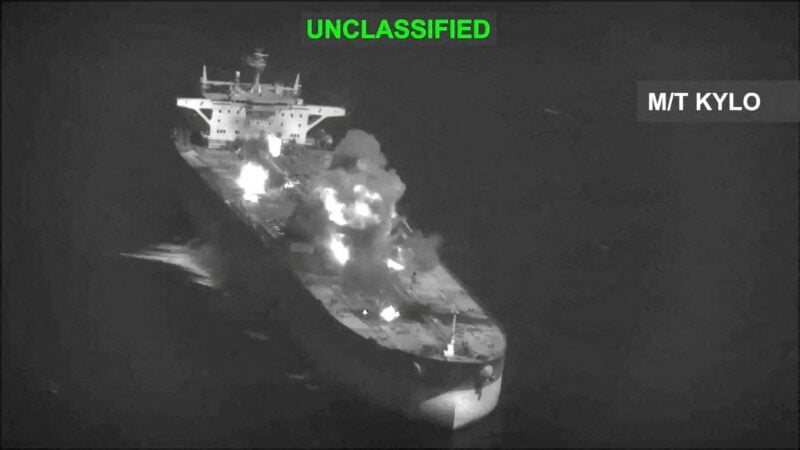
- Likely, commercial transit through Bab al-Mandab will remain reduced but ongoing rather than fully halted during the next 0-14 days. Reporting describes Houthi strikes on vessels, renewed threats to disrupt or close the strait, and declining ship traffic. The contradictory accounts distinguish reported executed attacks from threats alone, so the evidence does not establish a complete closure. (Confidence: medium · ASSESSED)
- I&W: CONFIRM: Independently verified maritime incident reporting records a new Houthi attack on a vessel transiting Bab al-Mandab. (0-14 days)
- I&W: BREAK: Vessel-tracking data show no commercial transit through Bab al-Mandab for 72 consecutive hours, indicating a halt rather than reduced traffic. (0-14 days)
- Likely, the reported decline in Bab al-Mandab traffic will sustain longer routing and higher insurance and shipping costs over the next 0-14 days. The cost assessment is conditional on continued disruption, and available reporting does not quantify current premiums, voyage extensions or operator-level losses. Confidence is low on the precise economic effect because the cost evidence rests largely on a local-media assessment rather than direct commercial data. (Confidence: low · ASSESSED)
- I&W: CONFIRM: Vessel-tracking data and carrier notices show continued avoidance of Bab al-Mandab alongside longer voyage times or higher war-risk charges. (0-14 days)
- I&W: BREAK: Commercial tracking shows sustained normalisation of Bab al-Mandab traffic with no reported increase in voyage duration or shipping charges. (1-3 months)
- Likely, the wider US-Iran maritime confrontation will add pressure to Red Sea shipping decisions during the next 0-14 days, but current reporting does not establish operational coordination between Iran and the Houthis. US Central Command reported redirecting 92 commercial vessels, while Kpler recorded only one commodity vessel crossing Hormuz on 5 September. Competing US and Iranian accounts of tanker attacks and the absence of direct evidence linking those operations to Houthi activity lower confidence in the attribution and scale of spillover. (Confidence: medium · ASSESSED)
- I&W: CONFIRM: Kpler or comparable tracking records another sharp fall in Hormuz traffic while US Central Command reports further vessel redirections, boardings or disablements. (0-14 days)
- I&W: BREAK: Hormuz traffic returns to sustained normal levels and no further tanker incidents are reported for 14 days. (0-14 days)
- Likely, maritime security exposure in the Gulf of Aden will remain elevated as Houthi pressure encourages ships to operate nearer the Somali coast, where recent piracy and armed-robbery incidents have occurred. The International Maritime Bureau recorded 24 attempted or actual incidents between April and July, while separate reporting described the seizure of a cargo vessel off Somalia and a Tanzanian-flagged tanker in the Gulf of Aden. The route-displacement link rests on a single expert assessment, so confidence is medium. (Confidence: medium · ASSESSED)
- I&W: CONFIRM: A new boarding, seizure or attempted armed robbery is reported against a vessel in the Gulf of Aden or off the Somali coast. (0-14 days)
- I&W: BREAK: No new incidents are recorded and vessel-tracking data show traffic moving away from the Somali coast for at least one month. (1-3 months)
- Likely, humanitarian pressure will increase in western Taiz and Hodeidah during the next 0-14 days if the current fighting continues. Reporting records more than 300 deaths, nearly 1,800 displaced households, arrivals at Al-Bareen and other displacement camps, and a Houthi ballistic-missile strike that killed four people and wounded nine in Taiz province. Casualty figures derive from different military and media sources, while the effect on Hodeidah port operations remains unreported. (Confidence: medium · ASSESSED)
- I&W: CONFIRM: OCHA or independent field reporting records additional displaced households or new camp arrivals from Taiz and Hodeidah. (0-14 days)
- I&W: BREAK: No additional displacement is reported and camps record no new arrivals for 14 consecutive days despite continued fighting claims. (0-14 days)
Outlook & scenarios
Sustained constrained transit (55%)
Houthi attacks or threats continue around Bab al-Mandab while fighting persists in western Taiz and southern Hodeidah. Commercial vessels continue to transit intermittently, but traffic remains below normal and operators retain a strong incentive to avoid the strait.
De facto closure after a confirmed maritime attack (20%)
A confirmed Houthi attack on a vessel, combined with further pressure on Mokha and the Bab al-Mandab approaches, drives commercial traffic towards zero. The result is a sharp shift to longer routes and increased exposure along the Somali coast. This is a lower-probability, high-impact path.
Partial battlefield stabilisation and gradual traffic recovery (20%)
Yemeni government forces consolidate gains at Hays, Jabal Koura and Tabet al-Khazan, while their reported counterattacks repel further Houthi advances towards Bab al-Mandab. A decline in attacks and threats allows commercial traffic to recover gradually, although the underlying risk around Mokha remains.
Compound Red Sea and Gulf of Aden crisis (5%)
Hormuz traffic remains sparse, Houthi pressure keeps ships nearer the Somali coast, and piracy produces a new boarding or seizure. The combination creates a wider maritime-security crisis even without a confirmed full closure of Bab al-Mandab.
Recommendations
- Maintain a daily Bab al-Mandab vessel-count baseline and compare it with incident reporting from the International Maritime Organization, UKMTO and commercial tracking providers. Record executed attacks separately from closure threats.
- Require two independent sources before classifying Bab al-Mandab as closed. Treat claims of Houthi strikes, attempted attacks and threats to close the strait as separate reporting categories.
- Prioritise collection on Mokha port, the Taiz-Mokha highway, Hays district, Jabal Koura, Tabet al-Khazan and the islands and sites overlooking Bab al-Mandab. Seek independent confirmation of territorial control and port access.
- Track US Central Command reports of redirected, boarded or disabled vessels alongside Kpler data on Hormuz crossings. Use changes in Hormuz traffic as an early warning for additional Red Sea rerouting pressure, not as proof of Houthi-Iran operational coordination.
- Fuse Red Sea shipping tracks with International Maritime Bureau and maritime-security reporting on the Gulf of Aden and Somali coast. Flag any new boarding or seizure involving vessels diverted towards Somali pirate hotspots.
- Use OCHA reporting and camp-level field updates to monitor displacement from Taiz and Hodeidah. Escalate the humanitarian assessment if new household displacement or camp arrivals are reported while fighting continues.
Confidence & uncertainty
Overall confidence is high in the broad assessment that Houthi military pressure and regional maritime disruption are active. The reporting draws on multiple major-media accounts, OCHA reporting, US Central Command statements, Kpler traffic data, International Maritime Bureau incident data and maritime-security reporting. The main uncertainties concern the exact battlefield outcome around the Taiz-Mokha route, whether reported Houthi attacks on Bab al-Mandab shipping are executed or threatened, and the extent of operational coordination between Iran and the Houthis.
Intelligence gaps
- [EEI 1.1 · PARTIAL] Incidents of hostile action against commercial vessels: vessel name/IMO, position (lat/long), time/date, observable damage or casualties, and weapon type reported (missile, drone, small-arms, explosive-laden boat). Recommended collection: maritime/AIS
- [EEI 1.2 · PARTIAL] Public Houthi claims of attacks or warnings tied to specific dates/routes, including social-media posts, official statements, and timing relative to merchant transits. Recommended collection: open-source/social_media
- [EEI 1.3 · PARTIAL] Unusual Houthi force posture indicators along Yemen’s Red Sea coast: movement or concentration of small boats, visible coastal missile/rocket emplacements, or logistics buildup at known launch sites (locations, timestamps). Recommended collection: imagery/satellite
- [EEI 1.4 · PARTIAL] Intercepts or communications indicating orders, targeting lists, or intent to strike merchant shipping (messages referencing specific vessel classes, companies, or chokepoints). Recommended collection: signals/communications
- [EEI 2.1 · UNCOVERED] Reports or visual confirmation of floating or moored mines and debris fields in shipping lanes or approaches to Bab-el-Mandeb, with geolocation and time. Recommended collection: imagery/satellite
- [EEI 2.2 · UNCOVERED] Detection of mine-laying activity: small vessels loitering in lane approaches, unexpected AIS track patterns consistent with mine deployment, or salvage/mining vessels operating in the area. Recommended collection: maritime/AIS
- [EEI 2.3 · UNCOVERED] Hydrographic notices, naval warnings, or port authority advisories closing lanes or imposing route restrictions (text of Notice to Mariners, issuing agency, effective times/areas). Recommended collection: naval/port_authority
- [EEI 2.4 · UNCOVERED] Naval or commercial reports of mine-countermeasure operations or confirmed mine removal events (location, time, platforms involved). Recommended collection: naval/intelligence
- [EEI 3.1 · PARTIAL] Movements and presence of foreign warships and support vessels: names/classes, task group compositions, patrol areas and timelines, and whether vessels are conducting escort or interdiction operations. Recommended collection: naval/intelligence
- [EEI 3.2 · UNCOVERED] Official announcements or directives from states/coalitions regarding convoys, armed escorts, protected corridor establishment, or changes to rules of engagement for merchant protection. Recommended collection: diplomatic/public_affairs
- [EEI 3.3 · PARTIAL] Recorded interactions between naval forces and vessels in the corridor (hailings, boardings, warnings, defensive strikes), including timestamps and outcomes. Recommended collection: maritime/AIS
- [EEI 3.4 · UNCOVERED] Planned or ongoing multinational exercises, air ISR sorties, or logistics moves that increase or decrease naval capacity in the area (exercise name, participating units, dates, locations). Recommended collection: open-source/military_reporting
- [EEI 4.1 · PARTIAL] Transit volume and pattern changes: number of commercial transits per day/week through Bab-el-Mandeb and southern Red Sea compared with baseline, and instances of rerouting around Africa (position/time data). Recommended collection: maritime/AIS
- [EEI 4.2 · PARTIAL] War-risk and hull insurance coverage changes: issuance refusals, premium increases for Red Sea transits, or explicit route exclusions by underwriters (policy notices or market rate data with dates). Recommended collection: commercial/insurance_data
- [EEI 4.3 · PARTIAL] Freight and charter market signals tied to the corridor: spot rates for container, tanker, and dry bulk routes affected by Red Sea disruptions, and reported port congestion or turnaround-time increases at nearby hubs. Recommended collection: commercial/market_data
- [EEI 4.4 · UNCOVERED] Incidents of cargo denial or diversion for critical goods (crude oil, refined products, LNG, high-value container cargo) including vessel IDs, cargo type, reroute/turnback actions, and economic impact estimates where available. Recommended collection: maritime/AIS
TLP:CLEAR