TLP:CLEAR · Disclosure is not limited.
Red Sea shipping disruption: Houthi pressure, monetised passage, and Suez strain
Time window: Last 7 days · Audience: General analyst · Type: Situation report · DTG: 2026-06-25 01:14Z · Overall confidence: MEDIUM
BLUF
Houthi targeting of Red Sea commerce is very likely to persist, now paired with a reported “safety fee” scheme and a declared ban on Israeli maritime navigation. Suez transits are sharply depressed and diversions via the Cape of Good Hope continue, while coalition naval efforts will reduce but not remove risk.
Executive summary
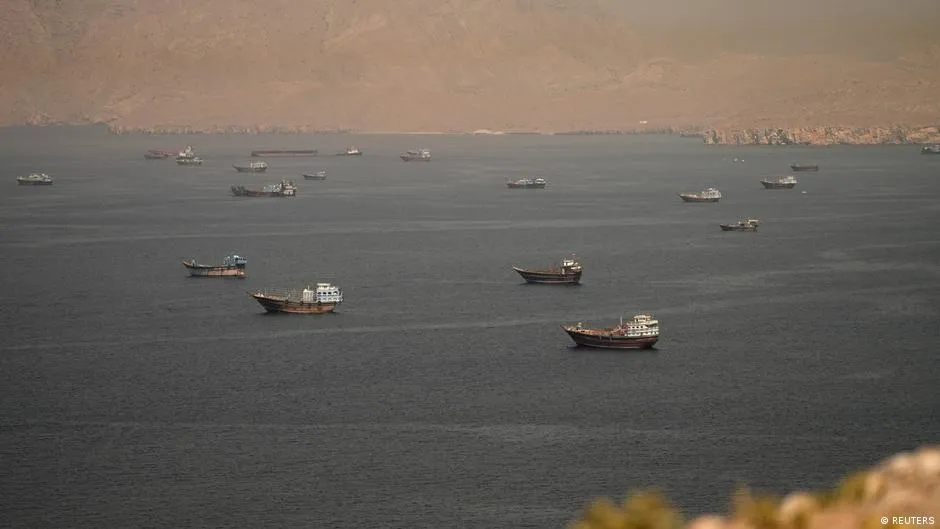
Yemen’s Houthi movement continues to target international commercial shipping in the Red Sea, has declared Israeli maritime navigation banned since 8 June, and appears to be monetising selective non‑targeting through “safety fee” payments routed to temporary digital wallets. Bab el‑Mandeb shows fresh thermal activity consistent with ongoing kinetic events, though satellite detections register heat rather than cause. The disruption has driven a steep drop in Suez traffic and sustained diversions via the Cape of Good Hope, absorbing capacity and raising costs. Coalition activity that includes the US‑led Operation Prosperity Guardian and allied mine‑hunting deployments transiting the Red Sea is intended to reassure operators, but it is unlikely to neutralise the threat fully.
Change from previous assessment
New reporting since the prior brief adds: the Houthis’ 8 June ban on Israeli maritime navigation; fresh NASA thermal detections at Bab el‑Mandeb; and detailed accounts of a Houthi “safety fee” scheme using temporary digital wallets. Quantification of disruption sharpened with a reported 80 percent fall in Suez transits and continued Cape diversions. Our confidence on persistence of risk is unchanged, while confidence in monetisation dynamics is raised from not assessed to medium.
Key judgments
- Houthi risk to commercial shipping in the Red Sea and through the Bab el‑Mandeb is very likely to persist for at least the next 1-3 months, indicated by repeated Houthi targeting of international shipping, a 8 June ban on Israeli maritime navigation, and fresh thermal activity in the Bab el‑Mandeb area. (Confidence: medium · ASSESSED)
- I&W: A new Houthi claim or attempt against a named merchant vessel in the southern Red Sea or Bab el‑Mandeb. (0-14 days)
- I&W: A 14‑day period with no Houthi maritime claims and no NASA FIRMS detections within the Bab el‑Mandeb bounding box 10.07,40.81 to 15.07,45.81. (0-14 days)
- The Houthis are likely operating a protection‑payment scheme in the Red Sea that directs “safety fees” for non‑targeting guarantees into temporary digital wallets, providing immediate, hard‑to‑trace liquidity. (Confidence: medium · REPORTED)
- I&W: P&I club or shipowner circulars referencing Houthi “safety fee” demands, including wallet addresses or payment instructions. (1-3 months)
- I&W: Credible blockchain reporting linking maritime‑related payments to wallets assessed as Houthi‑controlled. (1-3 months)
- Red Sea disruption has very likely depressed Suez Canal transits and is sustaining diversions via the Cape of Good Hope that absorb capacity and raise costs. (Confidence: medium · REPORTED)
- I&W: Suez Authority or independent counts show daily transits remaining roughly 80 percent below normal levels. (1-3 months)
- I&W: Major carriers keep Suez services suspended while Cape routings remain in schedules and rate indices stay elevated. (1-3 months)
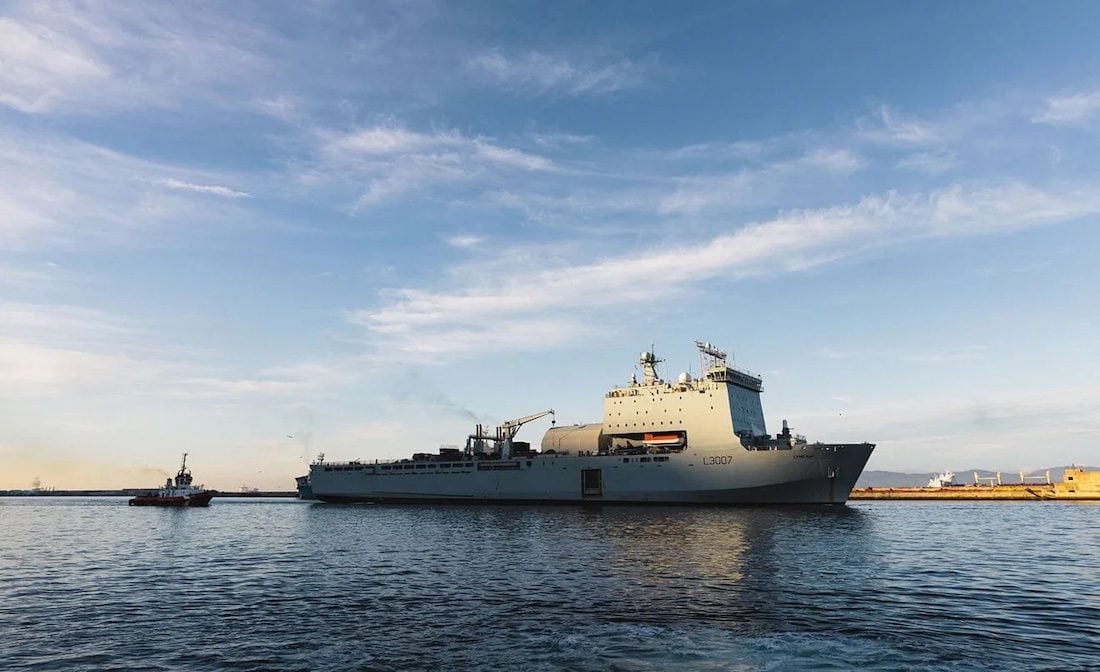
- Coalition naval activity, including the US‑led Operation Prosperity Guardian and allied mine‑hunting deployments transiting the Red Sea, is likely to reduce but not eliminate risk to merchant shipping. (Confidence: medium · ASSESSED)
- I&W: Public announcements of additional escorts, convoys, or mine‑countermeasure tasking for Red Sea lanes. (0-3 months)
- I&W: A successful Houthi strike on an escorted or recently escorted vessel in the Red Sea. (0-3 months)
- Iran is likely enabling Houthi long‑range operations, including at least some coordination against Israel, but this rests partly on thin or single‑source reporting. (Confidence: medium · ASSESSED)
- I&W: Credible reporting of Iranian advisers or materiel transfers supporting Houthi operations in Yemen. (1-3 months)
- I&W: A visible reduction in Houthi strike capability following a documented change in Iran’s support posture. (1-3 months)
- Israel‑linked vessels are very likely at heightened risk in the Red Sea after the Houthi 8 June ban on Israeli maritime navigation and prior declarations designating Israel‑linked ships as targets. (Confidence: high · REPORTED)
- I&W: A Houthi claim or attack attempt explicitly referencing ownership, flag, or port calls linking a targeted vessel to Israel. (0-14 days)
- I&W: Houthi public messaging rescinds or softens the declared ban on Israeli maritime navigation. (1-3 months)
Outlook & scenarios
Attritional status quo (60%)
Houthi harassment and strike attempts continue at a steady pace in the southern Red Sea and Bab el‑Mandeb. Suez transits remain far below normal and carriers persist with Cape of Good Hope routings. Naval escorts deter some attacks but cannot assure unimpeded passage.
Monetised corridor (40%)
The reported Houthi “safety fee” scheme scales up. Non‑Israel‑linked operators that comply face lower targeting risk, while those that refuse or are Israel‑linked remain exposed. Attack tempo falls modestly but extortion dynamics take hold, complicating compliance and sanctions risk.
High‑impact escalation (20%)
A successful Houthi strike causes a mass‑casualty event or a major total loss in the Red Sea. Suez traffic pauses temporarily as insurers reassess cover and coalition forces surge escorts and counter‑measures.
Guarded stabilisation (30%)
Expanded coalition presence, more escorts, and refined routing lower incident rates. Some carriers cautiously reinstate Suez loops, but Israel‑linked traffic remains at elevated risk and operators continue to price in security and delay costs.
Recommendations
- Maintain a standing watch on Houthi official channels and maritime incident reporting for Red Sea and Bab el‑Mandeb, and cross‑check with NASA FIRMS detections inside 10.07,40.81 to 15.07,45.81 to cue rapid assessments.
- Task collection and analytic support to document the reported “safety fee” mechanism, including gathering shipowner and P&I circulars and any wallet identifiers, to assess exposure and potential sanctions implications.
- Track Suez Canal daily and weekly transit counts alongside carrier schedule updates to quantify the persistence of Cape of Good Hope diversions and anticipate capacity effects on lanes relevant to US trade.
- Engage with maritime insurance interlocutors to monitor war‑risk pricing changes for Red Sea transits and clarify how escort availability and routing affect premiums and cover terms.
- Map vessels with Israeli beneficial ownership, management links, or declared Israeli port calls and flag their Red Sea transits for heightened alerting and contingency planning.
- Monitor coalition naval activity tied to Operation Prosperity Guardian and allied mine‑hunting deployments, including escort announcements and areas covered, to brief operators on windows of reduced risk.
Confidence & uncertainty
Overall confidence is medium. Multiple independent and generally reliable sources report Houthi targeting of Red Sea shipping and an 8 June ban on Israeli maritime navigation, and satellite data show fresh thermal activity near Bab el‑Mandeb. The steep reduction in Suez traffic and ongoing Cape diversions are reported by insurer and trade sources but rely on limited transparency on baselines. The reported Houthi “safety fee” scheme is consistent across media accounts but lacks broad documentary corroboration. Judgments on Iranian enabling rest partly on attribution and one item from an unknown source, lowering confidence. Satellite thermal detections register heat, not cause, which also tempers confidence when inferring kinetic activity.
Alternative analysis (red cell)
While Houthi rhetoric and some incidents have raised shipping risk, the current evidence base contains notable caveats, single‑source or low‑grade items, and internal contradictions that make sustained, high‑confidence assertions about duration, scale, financial schemes, and direct Iranian operational control premature. More direct transactional, forensic, movement, and SIGINT evidence is required to distinguish episodic signaling from an organized, sustained campaign or to confirm financial/IRGC enabling links.
Intelligence gaps
- [EEI 1.1 · PARTIAL] Incidents of hostile action against commercial vessels: vessel name/IMO, position (lat/long), time/date, observable damage or casualties, and weapon type reported (missile, drone, small-arms, explosive-laden boat). Recommended collection: maritime/AIS
- [EEI 1.3 · PARTIAL] Unusual Houthi force posture indicators along Yemen’s Red Sea coast: movement or concentration of small boats, visible coastal missile/rocket emplacements, or logistics buildup at known launch sites (locations, timestamps). Recommended collection: imagery/satellite
- [EEI 1.4 · UNCOVERED] Intercepts or communications indicating orders, targeting lists, or intent to strike merchant shipping (messages referencing specific vessel classes, companies, or chokepoints). Recommended collection: signals/communications
- [EEI 2.1 · PARTIAL] Reports or visual confirmation of floating or moored mines and debris fields in shipping lanes or approaches to Bab-el-Mandeb, with geolocation and time. Recommended collection: imagery/satellite
- [EEI 2.2 · UNCOVERED] Detection of mine-laying activity: small vessels loitering in lane approaches, unexpected AIS track patterns consistent with mine deployment, or salvage/mining vessels operating in the area. Recommended collection: maritime/AIS
- [EEI 2.3 · PARTIAL] Hydrographic notices, naval warnings, or port authority advisories closing lanes or imposing route restrictions (text of Notice to Mariners, issuing agency, effective times/areas). Recommended collection: naval/port_authority
- [EEI 2.4 · PARTIAL] Naval or commercial reports of mine-countermeasure operations or confirmed mine removal events (location, time, platforms involved). Recommended collection: naval/intelligence
- [EEI 3.3 · UNCOVERED] Recorded interactions between naval forces and vessels in the corridor (hailings, boardings, warnings, defensive strikes), including timestamps and outcomes. Recommended collection: maritime/AIS
- [EEI 4.3 · PARTIAL] Freight and charter market signals tied to the corridor: spot rates for container, tanker, and dry bulk routes affected by Red Sea disruptions, and reported port congestion or turnaround-time increases at nearby hubs. Recommended collection: commercial/market_data
- [EEI 4.4 · PARTIAL] Incidents of cargo denial or diversion for critical goods (crude oil, refined products, LNG, high-value container cargo) including vessel IDs, cargo type, reroute/turnback actions, and economic impact estimates where available. Recommended collection: maritime/AIS
Cited sources
[1] ABP Live · Energy Security In Focus: Why India Is Banking On The Eastern Maritime Corridor (B) · sha256:adb41ed3df58 [2] sovanews.tv · Allianz: В Персидском заливе заблокированы более тысячи судов (B) · sha256:938c6db525ed [3] Wikipedia · 2026 Houthi strikes on Israel (B) · sha256:54e4427f70e0 [4] NASA · NASA FIRMS thermal detections — Bab-el-Mandeb (2d) (A) · sha256:26abac34790e [5] ynetnews.com · Crypto networks fuel the Houthi war machine (B) · sha256:0e4938ecf7ac [6] marinelink.com · Markets: When Will Container Shipping Return to "Normal" (C) · sha256:17646bf7d875 [7] Middle Eastern Observer · Houthis: How They Paralyzed Global Shipping (B) · sha256:8e600979aed6 [8] Wikipedia · Red Sea crisis (B) · sha256:5271498b1cd0 [9] gcaptain.com · UK Minehunting Force Arrives in Middle East as Multinational Hormuz Mission Takes Shape (A) · sha256:c3e2cea96ee4 [10] U.S. Department of State · Saudi Arabia Travel Advisory | Travel.State.gov (A) · sha256:daca1c743c76 [11] Rise of Jiang · 300 Iranian Commandos in Yemen — The Red Sea Will Never Be the Same | Rise of Jiang (E) · sha256:3ebd18740488
Source content hashes were computed at collection time; the cited text is preserved unmodified for the life of this product.
Red cell review: PARTIAL DISSENT
TLP:CLEAR