TLP:CLEAR · Disclosure is not limited.
Red Sea shipping disruption: Houthi pressure persists and small‑boat threats endure off Yemen
Time window: Last 7 days · Audience: General analyst · Type: Situation report · DTG: 2026-06-22 01:13Z · Overall confidence: MEDIUM
BLUF
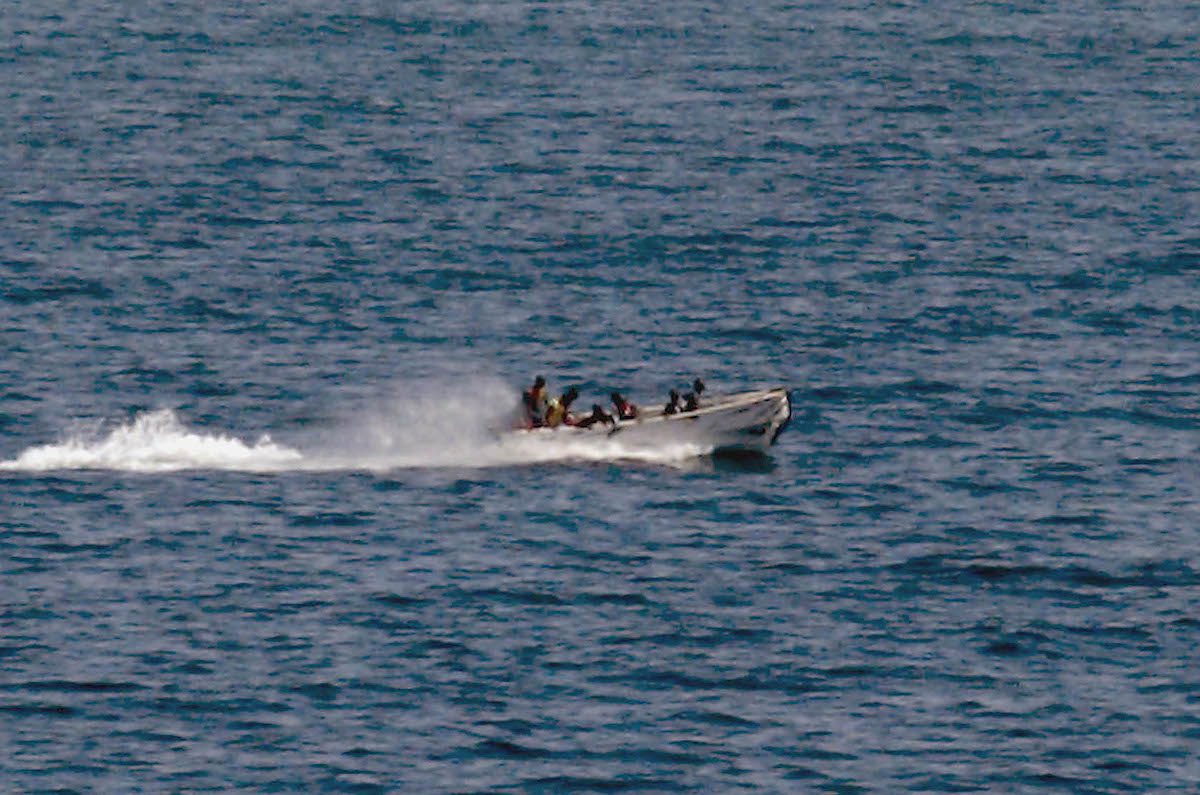
Houthi restrictions and attacks on Israel‑linked shipping in the Red Sea and Bab el‑Mandeb are very likely to persist over the coming weeks, keeping risk elevated for transits off Yemen. A UKMTO‑reported armed skiff approach off Al‑Shihr shows opportunistic boarding attempts remain an immediate hazard along Yemen’s coasts.
Executive summary
Since early June, the Houthis have declared a blockade and a complete ban on Israeli maritime navigation in the Red Sea while continuing to claim and conduct attacks on shipping, prompting ongoing coalition protection efforts. A tanker reported being approached by a skiff carrying five armed individuals about 50 nautical miles southeast of Al‑Shihr, with the vessel later resuming its voyage, highlighting persistent lower‑grade threats in waters off Yemen. The operating environment in Yemen remains highly permissive for armed actors and hostile to consular or port security engagement, limiting prospects for rapid diplomatic mitigation of maritime risk.
Change from previous assessment
Since the prior brief, we have incorporated the UKMTO‑reported armed skiff approach off Al‑Shihr and subsequent safe continuation of the voyage, sharpening the assessment on persistent small‑boat threats off Yemen’s coasts. We also added detail on the declared Houthi blockade and ban on Israeli maritime navigation earlier in June to anchor the outlook. Confidence remains medium given mixed‑source reporting and limited corroboration on some trend indicators. Initial assessment of this topic for the current weekly cycle.
Key judgments
- Houthi restrictions and targeted attacks against Israel‑linked merchant traffic in the Red Sea and Bab el‑Mandeb are very likely to persist for at least the next 1-3 months. (Confidence: medium · ASSESSED)
- I&W: UKMTO or coalition notices of interdictions or missile or UAV launches against Israel‑linked vessels in the southern Red Sea or Bab el‑Mandeb (0-14 days)
- I&W: A formal Houthi statement rescinding Red Sea restrictions on Israel‑linked shipping followed by 30 days without UKMTO reporting of Houthi‑attributed maritime incidents (1-3 months)
- Opportunistic small‑boat approaches and attempted boardings will likely recur along Yemen’s littoral, including approaches to the Gulf of Aden, despite naval presence. (Confidence: medium · ASSESSED)
- I&W: Further UKMTO reports of armed skiff approaches or boarding attempts within 50-150 nautical miles of Yemen’s coast (0-14 days)
- I&W: A 30‑day absence of UKMTO reports of small‑boat approaches in waters off Yemen (1-3 months)
- Near‑term diplomatic de‑escalation that materially reduces maritime risk off Yemen is unlikely, given the absence of functioning consular services in Sana’a, the lack of evacuation mechanisms, ongoing conflict, and poor port security. (Confidence: high · ASSESSED)
- I&W: Continuation of do‑not‑travel advisories for Yemen with no restoration of embassy or consular services (1-3 months)
- I&W: Public reopening of embassy services in Sana’a or activation of government‑assisted evacuation or maritime liaison mechanisms with Yemeni authorities (1-3 months)
- Saudi Arabia’s East‑West pipeline to the Red Sea remains a viable Hormuz bypass but is likely to stay at risk from missile or UAV attack, which could reverberate into Red Sea energy export flows. (Confidence: medium · ASSESSED)
- I&W: Reporting of strikes, sabotage, or unexplained throughput reductions at East‑West pipeline pumping stations or along the route to Yanbu (1-3 months)
- I&W: Sustained public reporting of uninterrupted full‑capacity pipeline operations without security incidents (1-3 months)
Outlook & scenarios
Baseline: Targeted interdiction persists (60%)
The Houthis continue to prioritise Israel‑linked vessels for interdiction and strike attempts in the southern Red Sea and Bab el‑Mandeb. Coalition patrols limit but do not eliminate incidents. Owners with real or perceived Israeli ties face the highest risk, and some operators maintain diversions or delays around Yemen.
Negotiated lull (35%)
US, Iran engagement produces a temporary easing of regional tensions that translates into a reduced Houthi operational tempo at sea. Maritime incidents fall but do not cease, as Yemen’s internal conflict dynamics and limited governance constrain enforcement.
Wider campaign (20%)
Houthi actions expand beyond Israel‑linked ships to a broader set of targets transiting the Bab el‑Mandeb. Attempted boardings and standoff strikes increase, prompting more diversions and higher war‑risk premiums. Any disruption to Saudi export alternatives into the Red Sea would amplify market and route instability.
Recommendations
- Maintain a daily watch on UKMTO releases and coalition maritime advisories for the Red Sea and Bab el‑Mandeb, and keep a rolling 30‑day incident log to detect patterns in location, time of day, and vessel profiles.
- Map fleet exposure by beneficial ownership, operator, cargo, and recent port calls to identify vessels most likely to be treated as Israel‑linked and prioritise alternative routing or timing for those transits.
- Brief operators on immediate actions against small‑boat approaches off Yemen, including early detection, hardening, evasive manoeuvres, and rapid reporting to UKMTO, aligned with the latest guidance.
- Task OSINT monitoring of Houthi public statements for any changes to declared targeting rules or lists, and alert owners whose vessels or cargoes match newly signalled criteria.
- Track the status of Saudi Arabia’s East‑West pipeline and Yanbu exports as a Red Sea‑facing pressure valve; pre‑plan contingencies for fuel and crude cargoes if throughput is degraded.
Confidence & uncertainty
Overall confidence is medium because the core picture rests on multiple, generally reliable sources that point in the same direction but vary in proximity and granularity. Houthi intent and actions are supported by several major‑media reports and official designations, while the UKMTO‑reported skiff incident is corroborated across wire service updates. Assessments on the durability of risk rely on inference from Yemen’s degraded diplomatic and security environment documented by official advisories. Some inputs come from think‑tank material with lower confidence scores, and there are no high‑fidelity, multi‑source datasets quantifying current Red Sea transits by risk category in this window, which tempers confidence.
Alternative analysis (red cell)
The reporting shows Houthi declarations and capability to disrupt shipping, limited consular and port capacity, and some naval protection efforts, but it also includes active diplomatic reporting (e.g., Switzerland negotiations, a US‑Iran MOU) and several medium/low‑grade incidents rather than sustained, corroborated interdictions. Therefore, while maritime risk is elevated and episodic attacks are plausible, the evidence does not yet decisively demonstrate a sustained, uncontested blockade of Israel‑linked shipping for 1–3 months or an imminent, high‑probability strike on the East‑West pipeline.
Intelligence gaps
- [EEI 1.2 · PARTIAL] Public Houthi claims of attacks or warnings tied to specific dates/routes, including social-media posts, official statements, and timing relative to merchant transits. Recommended collection: open-source/social_media
- [EEI 1.3 · UNCOVERED] Unusual Houthi force posture indicators along Yemen’s Red Sea coast: movement or concentration of small boats, visible coastal missile/rocket emplacements, or logistics buildup at known launch sites (locations, timestamps). Recommended collection: imagery/satellite
- [EEI 1.4 · UNCOVERED] Intercepts or communications indicating orders, targeting lists, or intent to strike merchant shipping (messages referencing specific vessel classes, companies, or chokepoints). Recommended collection: signals/communications
- [EEI 2.1 · UNCOVERED] Reports or visual confirmation of floating or moored mines and debris fields in shipping lanes or approaches to Bab-el-Mandeb, with geolocation and time. Recommended collection: imagery/satellite
- [EEI 2.2 · UNCOVERED] Detection of mine-laying activity: small vessels loitering in lane approaches, unexpected AIS track patterns consistent with mine deployment, or salvage/mining vessels operating in the area. Recommended collection: maritime/AIS
- [EEI 2.3 · UNCOVERED] Hydrographic notices, naval warnings, or port authority advisories closing lanes or imposing route restrictions (text of Notice to Mariners, issuing agency, effective times/areas). Recommended collection: naval/port_authority
- [EEI 2.4 · UNCOVERED] Naval or commercial reports of mine-countermeasure operations or confirmed mine removal events (location, time, platforms involved). Recommended collection: naval/intelligence
- [EEI 3.1 · PARTIAL] Movements and presence of foreign warships and support vessels: names/classes, task group compositions, patrol areas and timelines, and whether vessels are conducting escort or interdiction operations. Recommended collection: naval/intelligence
- [EEI 3.2 · PARTIAL] Official announcements or directives from states/coalitions regarding convoys, armed escorts, protected corridor establishment, or changes to rules of engagement for merchant protection. Recommended collection: diplomatic/public_affairs
- [EEI 3.3 · UNCOVERED] Recorded interactions between naval forces and vessels in the corridor (hailings, boardings, warnings, defensive strikes), including timestamps and outcomes. Recommended collection: maritime/AIS
- [EEI 3.4 · UNCOVERED] Planned or ongoing multinational exercises, air ISR sorties, or logistics moves that increase or decrease naval capacity in the area (exercise name, participating units, dates, locations). Recommended collection: open-source/military_reporting
- [EEI 4.2 · UNCOVERED] War-risk and hull insurance coverage changes: issuance refusals, premium increases for Red Sea transits, or explicit route exclusions by underwriters (policy notices or market rate data with dates). Recommended collection: commercial/insurance_data
- [EEI 4.3 · UNCOVERED] Freight and charter market signals tied to the corridor: spot rates for container, tanker, and dry bulk routes affected by Red Sea disruptions, and reported port congestion or turnaround-time increases at nearby hubs. Recommended collection: commercial/market_data
- [EEI 4.4 · PARTIAL] Incidents of cargo denial or diversion for critical goods (crude oil, refined products, LNG, high-value container cargo) including vessel IDs, cargo type, reroute/turnback actions, and economic impact estimates where available. Recommended collection: maritime/AIS
Cited sources
[1] mokhacenter.org · اليمن في التناولات البحثية والإعلامية الدولية (C) · sha256:79caa31a67ca [2] Wikipedia · 2026 Houthi strikes on Israel (B) · sha256:54e4427f70e0 [3] Wikipedia · Red Sea crisis (B) · sha256:627d5731f3e4 [4] U.S. Department of State · Yemen Travel Advisory | Travel.State.gov (A) · sha256:d87365caec69 [5] Middle Eastern Observer · How Houthis Weaponized the Red Sea (B) · sha256:0dea7cbc7daa [6] gcaptain.com · UKMTO Receives Report Of Tanker Incident Southeast Of Al-shihr, Yemen (A) · sha256:68af1570c435 [7] UK Government (FCDO) · Yemen travel advice (A) · sha256:386c4aa8ce67 [8] Wikipedia · East–West Crude Oil Pipeline (B) · sha256:b47bf8a3929e [9] U.S. Department of State · Saudi Arabia Travel Advisory | Travel.State.gov (A) · sha256:daca1c743c76
Source content hashes were computed at collection time; the cited text is preserved unmodified for the life of this product.
Red cell review: PARTIAL DISSENT
TLP:CLEAR