TLP:CLEAR · Disclosure is not limited.
Red Sea shipping disruption: Houthi threat persists as routes adapt
Time window: Last 7 days · Audience: General analyst · Type: Situation report · DTG: 2026-08-30 01:05Z · Overall confidence: LOW
BLUF
Commercial shipping risk in the southern Red Sea and Bab-el-Mandeb is likely to remain elevated over the next 0-14 days. Reported Houthi attacks and blockade measures are driving Saudi Arabia and shipowners towards northern Red Sea, Mediterranean and Cape of Good Hope routes, but the evidence does not establish a complete closure.
Executive summary
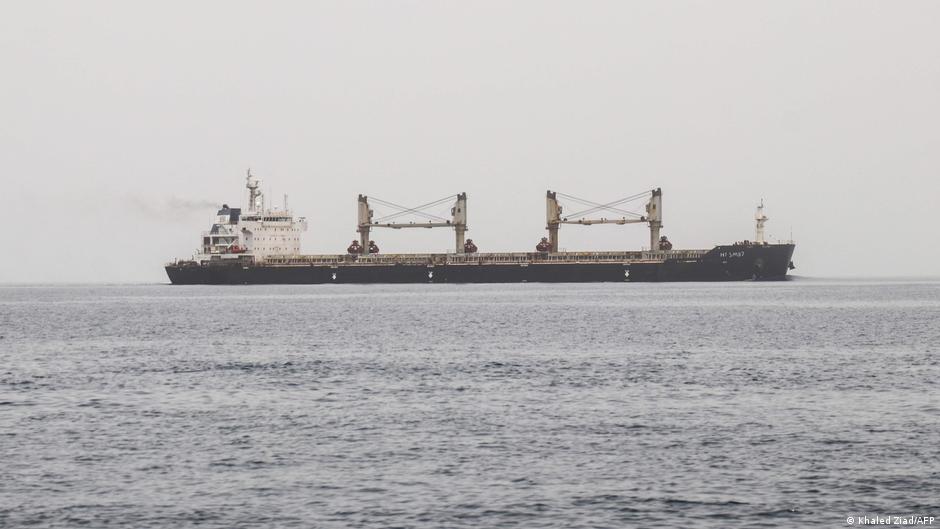
The Houthis announced a maritime blockade against Saudi Arabia on 20 July 2026 and subsequently reported attacks on Saudi tankers, including conflicting reports dated 22 and 23 July, as well as a ballistic missile attack on the tanker Wafa on 5 August. Separate reporting describes a Saudi tanker struck by an unknown projectile and a fire on its main deck, but does not independently confirm Houthi responsibility. Saudi Arabia and shipowners are shifting crude movements through Yanbu, Sidi Kerir and routes around southern Africa. A multinational maritime alliance and a UN Office on Drugs and Crime facilitated dialogue in Nairobi indicate growing regional coordination, but no evidence shows that these efforts have yet reduced shipping risk.
Change from previous assessment
Since the 29 August prior brief, the direction of the assessment is unchanged: shipping risk remains elevated without evidence of a complete Bab-el-Mandeb closure. This brief broadens the threat judgment to include the reported Saudi tanker fire, the 5 August attack on Wafa and Yemeni naval activity near al-Makha. It retains the mixed-routing judgment and adds the reported Multinational Maritime Defense Alliance as a new coordination development. The previous standalone judgement on insurance and transport costs is retired because the supplied reporting does not separate Red Sea effects from disruption around the Strait of Hormuz.
Key judgments
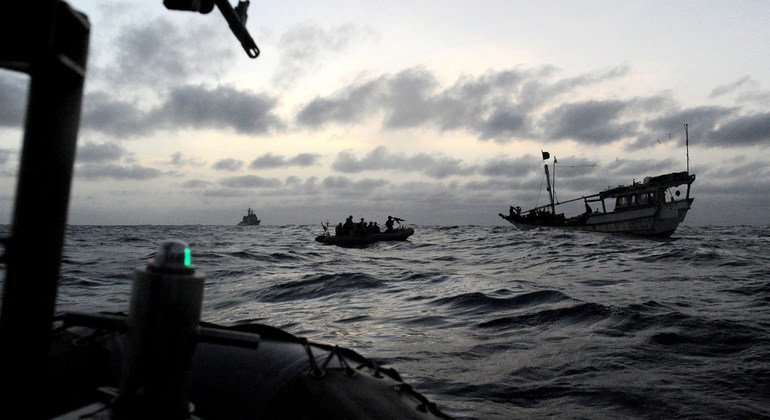
- The Houthi maritime threat to Saudi-linked shipping in the Red Sea and Bab-el-Mandeb is likely to remain elevated over the next 0-14 days. The Houthis announced a maritime blockade on 20 July 2026, reported attacks on two Saudi tankers on dates given as both 22 and 23 July, and launched ballistic missiles at the tanker Wafa on 5 August. Reporting also describes Yemeni naval forces intercepting drone-manufacturing equipment near al-Makha, firing on five Houthi boats and claiming to have shot down a Houthi reconnaissance drone. The conflicting tanker dates, the unknown projectile attribution and the absence of a confirmed current-week Houthi attack lower confidence in the near-term forecast. (Confidence: medium · ASSESSED)
- I&W: UKMTO or another named maritime authority reports a new attack, attempted seizure, explosive-boat incident or drone incident involving a Saudi-linked tanker in the Red Sea or Bab-el-Mandeb. (0-14 days)
- I&W: The Houthis publicly rescind the maritime blockade and no new maritime incident is reported by UKMTO during the following two weeks. (0-14 days)
- Commercial transit through Bab-el-Mandeb is likely to remain constrained rather than fully closed over the next 0-14 days. Reporting describes an informal blockade linked to Houthi attacks, continued diversions around the Cape of Good Hope, voyage extensions of up to two weeks, tighter tanker availability and higher freight rates. No supplied claim provides an independent current traffic count for Bab-el-Mandeb, so this assessment rests on route behaviour and threat reporting rather than a verified measure of vessel movements. (Confidence: medium · ASSESSED)
- I&W: Vessel-tracking data show continued diversions around the Cape of Good Hope and repeated avoidance of the southern Red Sea by commercial operators. (0-14 days)
- I&W: Two consecutive weekly vessel counts show broad restoration of commercial transits through Bab-el-Mandeb, accompanied by renewed port calls through the southern Red Sea. (0-14 days)
- Saudi-linked crude exports are likely to continue using mixed routing over the next 1-3 months rather than restore full reliance on Bab-el-Mandeb. Saudi Arabia has reported rerouting about 5 million barrels per day through its East-West pipeline for Red Sea export, increasing exports through Yanbu, and raising northern Red Sea exports to about 1.1 million barrels per day after the 20 July blockade announcement. Saudi Aramco has also used Sidi Kerir in the Mediterranean, while about four tankers reportedly completed repeated Yanbu to Ain Sukhna shuttles carrying about 16 million barrels and other tankers sailed around southern Africa. These figures are not directly additive, and the reporting does not establish their duration. (Confidence: medium · ASSESSED)
- I&W: Saudi Aramco or shipowners continue loading crude at Sidi Kerir and Yanbu, while tankers repeat the Yanbu to Ain Sukhna shuttle or route around southern Africa. (1-3 months)
- I&W: Verified shipping data show Saudi oil tankers resuming regular sailings through the southern Red Sea and Bab-el-Mandeb without continued use of the alternative routes. (1-3 months)
- Regional maritime cooperation is likely to improve information-sharing but is unlikely to offset immediate shipping risk over the next 0-14 days. On 30 July 2026, Saudi Arabia, Turkiye, Pakistan, Egypt, Bahrain, Qatar, Jordan, Kuwait, Bangladesh, Djibouti, Somalia, Yemen, Sudan and Comoros reportedly formed a Multinational Maritime Defense Alliance. Officials from Ethiopia, Yemen, Djibouti and Somalia also met in Nairobi in a UN Office on Drugs and Crime facilitated dialogue and discussed maritime domain awareness and operational cooperation. The reporting identifies discussions and an announced alliance, but no patrol schedule, escort mechanism or measurable reduction in incidents. (Confidence: medium · ASSESSED)
- I&W: Alliance members publish a Bab-el-Mandeb or Gulf of Aden patrol plan, escort arrangement or shared maritime incident-reporting mechanism. (0-14 days)
- I&W: A new attack is reported by UKMTO while no alliance operational measure or joint incident response is announced. (0-14 days)
Outlook & scenarios
Constrained transit persists (65%)
This is the most likely outcome over the next 0-14 days. The Houthis maintain the announced blockade and continue targeting Saudi-linked shipping, while commercial operators limit use of Bab-el-Mandeb. Saudi Arabia and shipowners sustain routing through Yanbu, Sidi Kerir, Ain Sukhna and around southern Africa. The corridor remains operational for some traffic but does not return to normal conditions.
Partial stabilisation through coordination (25%)
This outcome is unlikely over the next 0-14 days. The Multinational Maritime Defense Alliance and the Nairobi dialogue produce practical information-sharing or escort arrangements, while the Houthis reduce attacks without formally ending the blockade. Some commercial operators resume southern Red Sea movements, but Saudi Arabia retains alternative crude routes because confidence in the corridor remains limited.
Linked Red Sea and Hormuz escalation (15%)
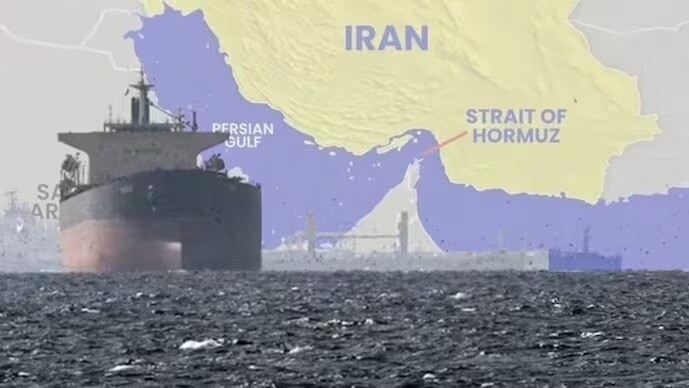
This is an unlikely, high-impact wildcard. Reports that Iran has blocked vessels in the Strait of Hormuz and that Houthi attacks are limiting Bab-el-Mandeb transit both prove accurate over the same period. Gulf crude shipments to Asia then face major disruption, while Asia-Europe vessels divert around southern Africa. The assessment remains uncertain because other reporting indicates that more oil was flowing through Hormuz and that the waterway remained open.
Recommendations
- Maintain a 0-14 day incident watch focused on Saudi-linked tankers, the southern Red Sea, Bab-el-Mandeb and the waters near al-Makha. Separate UKMTO-confirmed incidents from Houthi claims and unattributed reports.
- Build a daily vessel-tracking series for Bab-el-Mandeb and compare it with calls at Yanbu, Sidi Kerir and Ain Sukhna, plus diversions around the Cape of Good Hope. Do not combine the reported 5 million barrels per day, 1.1 million barrels per day and 16 million barrel figures until their time periods and cargo categories are reconciled.
- Track the Multinational Maritime Defense Alliance and the Nairobi dialogue for concrete outputs, especially patrol assignments, escort arrangements, shared reporting procedures and responses to incidents near al-Makha.
- Keep the Iran and Hormuz track linked to Red Sea analysis. Escalate the risk assessment if verified reporting shows simultaneous restrictions at Hormuz and new Houthi attacks in Bab-el-Mandeb.
- Use the reported tanker fire and NASA thermal anomaly as prompts for verification, not as proof of Houthi responsibility. Seek vessel identity, flag, damage assessment, imagery and an official incident investigation before attributing the attack.
Confidence & uncertainty
Overall confidence is low because the available reporting does not provide a single, coherent current picture. Core judgments rely on repeated major-media reporting, medium-confidence think-tank material and some unknown-source claims. The record contains unresolved disagreements over the dates of the Saudi tanker attacks, the status of the Houthi blockade and whether the Strait of Hormuz is blocked or carrying increased oil flows. The current Bab-el-Mandeb traffic level, the identity of the tanker reportedly hit near Saudi Arabia and the cause of the NASA thermal anomaly are not independently established.
Intelligence gaps
- [EEI 1.1 · PARTIAL] Incidents of hostile action against commercial vessels: vessel name/IMO, position (lat/long), time/date, observable damage or casualties, and weapon type reported (missile, drone, small-arms, explosive-laden boat). Recommended collection: maritime/AIS
- [EEI 1.3 · UNCOVERED] Unusual Houthi force posture indicators along Yemen’s Red Sea coast: movement or concentration of small boats, visible coastal missile/rocket emplacements, or logistics buildup at known launch sites (locations, timestamps). Recommended collection: imagery/satellite
- [EEI 1.4 · UNCOVERED] Intercepts or communications indicating orders, targeting lists, or intent to strike merchant shipping (messages referencing specific vessel classes, companies, or chokepoints). Recommended collection: signals/communications
- [EEI 2.1 · UNCOVERED] Reports or visual confirmation of floating or moored mines and debris fields in shipping lanes or approaches to Bab-el-Mandeb, with geolocation and time. Recommended collection: imagery/satellite
- [EEI 2.2 · UNCOVERED] Detection of mine-laying activity: small vessels loitering in lane approaches, unexpected AIS track patterns consistent with mine deployment, or salvage/mining vessels operating in the area. Recommended collection: maritime/AIS
- [EEI 2.3 · UNCOVERED] Hydrographic notices, naval warnings, or port authority advisories closing lanes or imposing route restrictions (text of Notice to Mariners, issuing agency, effective times/areas). Recommended collection: naval/port_authority
- [EEI 2.4 · UNCOVERED] Naval or commercial reports of mine-countermeasure operations or confirmed mine removal events (location, time, platforms involved). Recommended collection: naval/intelligence
- [EEI 3.1 · PARTIAL] Movements and presence of foreign warships and support vessels: names/classes, task group compositions, patrol areas and timelines, and whether vessels are conducting escort or interdiction operations. Recommended collection: naval/intelligence
- [EEI 3.2 · PARTIAL] Official announcements or directives from states/coalitions regarding convoys, armed escorts, protected corridor establishment, or changes to rules of engagement for merchant protection. Recommended collection: diplomatic/public_affairs
- [EEI 3.3 · PARTIAL] Recorded interactions between naval forces and vessels in the corridor (hailings, boardings, warnings, defensive strikes), including timestamps and outcomes. Recommended collection: maritime/AIS
- [EEI 3.4 · UNCOVERED] Planned or ongoing multinational exercises, air ISR sorties, or logistics moves that increase or decrease naval capacity in the area (exercise name, participating units, dates, locations). Recommended collection: open-source/military_reporting
- [EEI 4.1 · PARTIAL] Transit volume and pattern changes: number of commercial transits per day/week through Bab-el-Mandeb and southern Red Sea compared with baseline, and instances of rerouting around Africa (position/time data). Recommended collection: maritime/AIS
- [EEI 4.2 · PARTIAL] War-risk and hull insurance coverage changes: issuance refusals, premium increases for Red Sea transits, or explicit route exclusions by underwriters (policy notices or market rate data with dates). Recommended collection: commercial/insurance_data
- [EEI 4.3 · PARTIAL] Freight and charter market signals tied to the corridor: spot rates for container, tanker, and dry bulk routes affected by Red Sea disruptions, and reported port congestion or turnaround-time increases at nearby hubs. Recommended collection: commercial/market_data
- [EEI 4.4 · PARTIAL] Incidents of cargo denial or diversion for critical goods (crude oil, refined products, LNG, high-value container cargo) including vessel IDs, cargo type, reroute/turnback actions, and economic impact estimates where available. Recommended collection: maritime/AIS
Cited sources
[1] Wikipedia · Red Sea crisis (B) · sha256:034e442d01d5 [2] Wikipedia · Houthis in the 2026 Iran war (B) · sha256:c2286a9c50a6 [3] kommersant.ru · Лента новостей (Москва) (B) · sha256:2365ab149b6d [4] dw.com · В Красном море после удара загорелся саудовский танкер (B) · sha256:4d41ffb3907c [5] life.ru · Танкер загорелся после удара в Красном море (B) · sha256:1f1d29140455 [6] daily-sun.com · Just a moment.. (B) · sha256:b3b3ae696a34 [7] news.az · Why the seizure of drone equipment is raising tensions in Yemen and the Red Sea | News.az (B) · sha256:eb30acafbc7d [8] Atlantic Council · Maritime trade routes are under threat—and markets still underprice the risks (C) · sha256:2740d0a23976 [9] Times of India · From Suez to Russia’s Arctic: Why India, China are betting on Northern Sea Route & why it matters (B) · sha256:b17479c20702 [10] Business Today · Bypassing Strait of Hormuz? Viral post claims US dredged a new corridor on Omani side - BusinessToday (B) · sha256:8c13391e5fdb [11] Deutsche Welle · Houthi attacks in the Red Sea threaten return of war in Yemen — DW (A) · sha256:34d622b042df [12] Wikipedia · Bab-el-Mandeb (B) · sha256:b110238cc266 [13] egyptindependent.com · ‘We will retaliate like an earthquake’: How Iran could respond to Trump’s economic ‘D-Day’ (B) · sha256:e2532a4d79dc [14] marineinsight.com · Shuttle Tankers Ship Saudi Oil To Asia Via Safer Northern Red Sea Route To Evade Houthi Attacks (B) · sha256:8d5d448c0912 [15] United Nations · Red Sea nations step up maritime cooperation as regional threats grow (A) · sha256:8dee734336be
Source content hashes were computed at collection time; the cited text is preserved unmodified for the life of this product.
Red cell review: CONCUR WITH COMMENT
TLP:CLEAR