TLP:CLEAR · Disclosure is not limited.
Red Sea shipping disruption persists as Houthi forces consolidate coastal gains
Time window: Last 7 days · Audience: General analyst · Type: Situation report · DTG: 2026-09-23 01:11Z · Overall confidence: HIGH
BLUF
Very likely, Houthi advances along Yemen's Red Sea coast will sustain disruption around Bab al-Mandab over the next 0-14 days, while a return to normal commercial traffic is very unlikely. Saudi Arabia's East-West Pipeline restart and reduced-volume exports from Yanbu will cushion, but not remove, the disruption. US restraint towards the Houthis remains uncertain.
Executive summary
The immediate outlook is continued selective disruption rather than a verified complete closure of Bab al-Mandab. Reporting places Houthi forces in Mocha and on Mayyun, describes control of Bab al-Mandab, and records threats to Saudi oil exports. Saudi Arabia has restarted its East-West Pipeline and is preparing reduced-volume exports from Yanbu, while the EU, Italy and UK are increasing limited defensive maritime or air support. Humanitarian pressure is worsening, with more than 130,000 people displaced in Yemen since the start of September and more than 3,000 arrivals in Djibouti. Exact Houthi territorial control, responsibility for the East-West Pipeline attack and the durability of US restraint remain uncertain.
Change from previous assessment
Since the 22 September prior brief, the core assessment is unchanged: selective disruption around Bab al-Mandab remains very likely, while a verified complete closure remains unlikely. Confidence in the shipping-disruption assessment is raised from medium to high because the current reporting adds corroboration on reduced Saudi crude transit, halved Suez traffic and the G7's formal warning. The assessment of Houthi coastal control remains medium and now explicitly discounts the less precise claim of control over the entire coast. A new reported development is Saudi Arabia's restart of East-West Pipeline operations and its reduced-volume Yanbu export plan. The humanitarian judgement remains high, while the US restraint judgement remains low because the strike cancellation is single-source and opposed by public escalation signals.
Key judgments
- Very likely, commercial shipping will remain materially constrained around Bab al-Mandab over the next 0-14 days, and normal traffic levels are very unlikely to return in that period. Saudi crude transit through the strait had fallen from 3.5 million barrels per day in early July to near zero by August, while Suez Canal traffic had roughly halved since the Houthi attacks began. The G7's 22 September call for the Houthis to cease attacks on civilian shipping indicates that international authorities assess the threat as continuing. (Confidence: high · ASSESSED)
- I&W: Confirm: Kpler or comparable maritime tracking continues to show Saudi crude movements through Bab al-Mandab near zero, alongside additional commercial operators suspending transits through the strait. (0-14 days)
- I&W: Break: Saudi crude movements through Bab al-Mandab return towards 3.5 million barrels per day and Suez Canal traffic shows a sustained recovery towards pre-disruption levels. (1-3 months)
- Likely, Houthi control of Mocha, Mayyun and approaches to Bab al-Mandab will improve the group's ability to monitor and threaten shipping, but the extent of physical control remains contested. Reports that Houthi forces control Yemen's entire Red Sea coast conflict with the more specific account that one district near the Saudi border remains outside their control. Confidence is medium because the territorial advances are reported by major media, while the precise status of Bab al-Mandab and the remaining coastal areas includes conflicting and partly single-source reporting. (Confidence: medium · ASSESSED)
- I&W: Confirm: Independent imagery or maritime reporting verifies sustained Houthi presence on Mayyun and at Mocha, plus activity around the Kahboub Mountains overlooking the Red Sea coast. (0-14 days)
- I&W: Break: Saudi-backed forces retake Mocha or Mayyun, or independent reporting disproves Houthi control of Bab al-Mandab. (0-14 days)
- Likely, Saudi Arabia will continue using the East-West Pipeline and Yanbu for reduced-volume exports while Red Sea shipping remains constrained. The reported restart restores an alternative route after the pipeline was shut following attacks on 10 September, but it does not establish a return to normal export capacity. Confidence is medium because the restart is corroborated across wire-service reporting, while responsibility for the pipeline attack remains contested between Houthi forces and Iranian-backed groups in Iraq. (Confidence: medium · ASSESSED)
- I&W: Confirm: Saudi authorities or commercial data show sustained East-West Pipeline throughput and regular reduced-volume loading from Yanbu. (0-14 days)
- I&W: Break: The pipeline is shut again, Yanbu exports stop, or reported Saudi crude movements through Bab al-Mandab return to sustained high volume. (0-14 days)
- Likely, Houthi missile and drone attacks will continue to expose Saudi cities, energy infrastructure and shipping over the next 0-14 days. Saudi Arabia has reported attempted attacks against Baish, Taif, Farasan and Yanbu, a ballistic missile towards Riyadh and a drone towards Mecca. UK air-to-air refuelling support, the EU's higher Red Sea mission alert level and Italy's planned warship deployment will improve defensive coverage but are unlikely to eliminate the threat. Confidence is medium because the attacks and interceptions are reported through official or major-media channels, while some details, including smoke near King Khalid International Airport, remain disputed or incompletely corroborated. (Confidence: medium · ASSESSED)
- I&W: Confirm: Saudi Arabia reports another attempted Houthi strike against Riyadh, Yanbu, Mecca or energy infrastructure, or maritime authorities record a new attack on a commercial vessel. (0-14 days)
- I&W: Break: A continuous 14-day period passes without a reported Houthi missile, drone or maritime attack and Saudi authorities reduce interception alerts. (0-14 days)
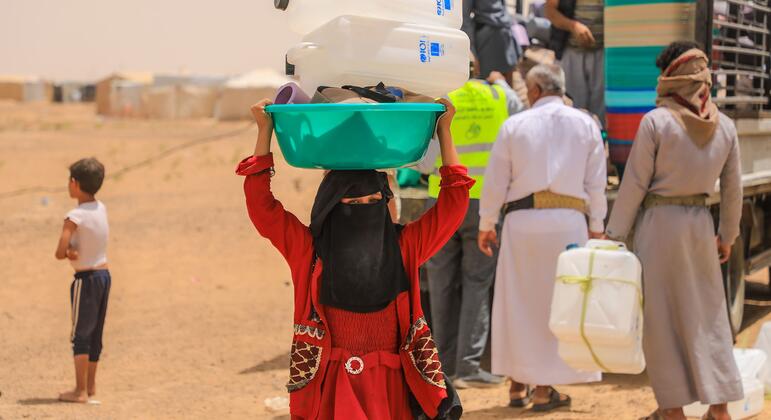
- Very likely, humanitarian pressure in western Yemen and across the Gulf of Aden will worsen over the next 1-3 months. UNHCR reports more than 130,000 people displaced in Yemen since the start of September, with Taiz accounting for more than 60 per cent of overall displacement. More than 3,000 Yemenis have reached Djibouti, more than 10,000 arrivals are expected as sea conditions improve by mid-October, and UNHCR has received only 34 million US dollars of the 194 million US dollars required for its Yemen operation. Confidence is high because UNHCR, OCHA and other UN reporting corroborate the displacement, food insecurity, cross-border arrivals and funding shortfall, although published displacement totals range from more than 120,000 to more than 130,000. (Confidence: high · ASSESSED)
- I&W: Confirm: UNHCR records Djibouti arrivals approaching 10,000 by mid-October and reports new displacement from Taiz, Al Jawf, Marib or Hudaydah. (1-3 months)
- I&W: Break: UNHCR reports no material increase in displacement or Djibouti arrivals and humanitarian funding rises substantially above current levels. (1-3 months)
- Roughly even chance, the United States will continue to withhold direct strikes against Houthi positions over the next 0-14 days. Donald Trump reportedly cancelled prepared strikes on 20 September, while Secretary of State Marco Rubio and US envoys maintained contact with Iranian intermediaries. However, Trump's 22 September warning towards Iran and the Iranian Armed Forces' declaration of readiness for more severe action preserve a credible escalation pathway. Confidence is low because the reported cancellation is based on limited reporting and public diplomatic signals point in opposing directions. (Confidence: low · ASSESSED)
- I&W: Confirm: The White House or Department of Defense publicly confirms strike preparations against Houthi positions, or reports indicate US aircraft and munitions are again being readied for operations against Yemen. (0-14 days)
- I&W: Break: The United States publicly reaffirms the existing restraint arrangement and no new US strike preparations or direct attacks are reported during the period. (0-14 days)
Outlook & scenarios
Selective disruption persists (55%)
Very likely, Houthi forces sustain pressure on shipping without establishing a verified complete closure of Bab al-Mandab. Commercial operators continue to limit transits, Saudi Arabia relies on the East-West Pipeline and Yanbu, and defensive deployments expand without direct US strikes on Houthi positions.
Houthi coastal consolidation widens the disruption (25%)
Likely, Houthi forces consolidate Mocha, Mayyun and the approaches to Bab al-Mandab, followed by additional attacks on commercial shipping or energy infrastructure. A low-confidence report of naval mines in the strait is confirmed, prompting near-total commercial avoidance and a sharper humanitarian outflow towards Djibouti.
Diplomatic and operational containment (15%)
Unlikely, US-Iran and wider diplomatic contacts produce enough restraint for shipping operators to test limited returns through Bab al-Mandab. Saudi pipeline operations and Yanbu exports continue, while EU, Italian and UK defensive measures reduce the perceived risk of transit.
Direct US strikes and regional widening (5%)
Very unlikely, the United States launches direct strikes against Houthi positions after another attack on Saudi cities, energy infrastructure or shipping. Iran responds through regional partners, Saudi defensive operations intensify, and commercial traffic through Bab al-Mandab falls towards a de facto closure.
Recommendations
- Maintain a daily maritime and energy dashboard covering Saudi crude movements through Bab al-Mandab, Suez Canal traffic, East-West Pipeline throughput, Yanbu loading activity and reported attacks on commercial vessels.
- Prioritise independent collection on Houthi positions at Mocha, Mayyun, Bab al-Mandab and the Kahboub Mountains. Treat claims of control over Yemen's entire Red Sea coast as unconfirmed until supported by independent imagery or maritime reporting.
- Track the East-West Pipeline attack as an unresolved attribution issue. Separate confirmed physical damage and operating status from competing claims implicating Houthi forces or Iranian-backed groups in Iraq.
- Establish a 0-14 day escalation watch for attacks on Riyadh, Yanbu, Mecca and Saudi energy infrastructure, alongside changes in UK, EU and Italian defensive deployments.
- Monitor US military preparations and official statements for evidence that the reported 20 September strike cancellation has been reversed. Do not infer a settled US policy from diplomatic contacts alone.
- Prioritise humanitarian reporting from Taiz, Al Jawf, Marib and Hudaydah, and assess Djibouti's reception capacity against the forecast of more than 10,000 arrivals by mid-October.
- Use the most recent UNHCR displacement figure, more than 130,000 since the start of September, while retaining the lower UN estimate as a reporting-date discrepancy rather than presenting the figures as a settled single count.
Confidence & uncertainty
Overall confidence is high because the central event picture is corroborated by UN and UNHCR reporting, the G7 statement, Reuters and other wire-service reporting, and major media accounts. These sources independently support continued Houthi advances, shipping disruption, Saudi route adaptation and worsening displacement. The main uncertainties concern the precise extent of Houthi territorial control, responsibility for the East-West Pipeline attack, the operational effect of new defensive deployments and whether US restraint will persist.
Intelligence gaps
- [EEI 1.1 · PARTIAL] Incidents of hostile action against commercial vessels: vessel name/IMO, position (lat/long), time/date, observable damage or casualties, and weapon type reported (missile, drone, small-arms, explosive-laden boat). Recommended collection: maritime/AIS
- [EEI 1.2 · UNCOVERED] Public Houthi claims of attacks or warnings tied to specific dates/routes, including social-media posts, official statements, and timing relative to merchant transits. Recommended collection: open-source/social_media
- [EEI 1.3 · PARTIAL] Unusual Houthi force posture indicators along Yemen’s Red Sea coast: movement or concentration of small boats, visible coastal missile/rocket emplacements, or logistics buildup at known launch sites (locations, timestamps). Recommended collection: imagery/satellite
- [EEI 1.4 · UNCOVERED] Intercepts or communications indicating orders, targeting lists, or intent to strike merchant shipping (messages referencing specific vessel classes, companies, or chokepoints). Recommended collection: signals/communications
- [EEI 2.1 · PARTIAL] Reports or visual confirmation of floating or moored mines and debris fields in shipping lanes or approaches to Bab-el-Mandeb, with geolocation and time. Recommended collection: imagery/satellite
- [EEI 2.2 · UNCOVERED] Detection of mine-laying activity: small vessels loitering in lane approaches, unexpected AIS track patterns consistent with mine deployment, or salvage/mining vessels operating in the area. Recommended collection: maritime/AIS
- [EEI 2.3 · UNCOVERED] Hydrographic notices, naval warnings, or port authority advisories closing lanes or imposing route restrictions (text of Notice to Mariners, issuing agency, effective times/areas). Recommended collection: naval/port_authority
- [EEI 2.4 · UNCOVERED] Naval or commercial reports of mine-countermeasure operations or confirmed mine removal events (location, time, platforms involved). Recommended collection: naval/intelligence
- [EEI 3.1 · PARTIAL] Movements and presence of foreign warships and support vessels: names/classes, task group compositions, patrol areas and timelines, and whether vessels are conducting escort or interdiction operations. Recommended collection: naval/intelligence
- [EEI 3.2 · PARTIAL] Official announcements or directives from states/coalitions regarding convoys, armed escorts, protected corridor establishment, or changes to rules of engagement for merchant protection. Recommended collection: diplomatic/public_affairs
- [EEI 3.3 · UNCOVERED] Recorded interactions between naval forces and vessels in the corridor (hailings, boardings, warnings, defensive strikes), including timestamps and outcomes. Recommended collection: maritime/AIS
- [EEI 3.4 · PARTIAL] Planned or ongoing multinational exercises, air ISR sorties, or logistics moves that increase or decrease naval capacity in the area (exercise name, participating units, dates, locations). Recommended collection: open-source/military_reporting
- [EEI 4.2 · PARTIAL] War-risk and hull insurance coverage changes: issuance refusals, premium increases for Red Sea transits, or explicit route exclusions by underwriters (policy notices or market rate data with dates). Recommended collection: commercial/insurance_data
- [EEI 4.3 · PARTIAL] Freight and charter market signals tied to the corridor: spot rates for container, tanker, and dry bulk routes affected by Red Sea disruptions, and reported port congestion or turnaround-time increases at nearby hubs. Recommended collection: commercial/market_data
- [EEI 4.4 · PARTIAL] Incidents of cargo denial or diversion for critical goods (crude oil, refined products, LNG, high-value container cargo) including vessel IDs, cargo type, reroute/turnback actions, and economic impact estimates where available. Recommended collection: maritime/AIS
Cited sources
[1] Gulf News · Bab Al Mandab: Houthi aggression threatens a vital gateway for global trade (B) · Tue Sep 22 2026 01:03:00 GMT+0000 (Coordinated Universal Time) · sha256:048cc970eedc [2] G7 (hosted on gov.uk) · G7 Statement on Bab al-Mandab and Navigational Rights and Freedoms (A) · Tue Sep 22 2026 08:27:00 GMT+0000 (Coordinated Universal Time) · sha256:e5c0734834fb [3] BBC News · Iran must stop arming Houthis in Yemen, G7 says ahead of UN General Assembly (A) · Tue Sep 22 2026 04:21:11 GMT+0000 (Coordinated Universal Time) · sha256:cd7a972ed75c [4] Reuters (via headtopics.com aggregator) · Tehran hints at Hormuz talks with US as leaders gather at UN (B) · Tue Sep 22 2026 12:55:00 GMT+0000 (Coordinated Universal Time) · sha256:0ee16ababb79 [5] Thomson Reuters (republished by gCaptain) · Trump Calls for Iran’s Economic Isolation at UN as Tehran Offers Hormuz Reopening (A) · Tue Sep 22 2026 16:05:08 GMT+0000 (Coordinated Universal Time) · sha256:7b5f2f262755 [6] Al Jazeera · Saudi Arabia’s King Salman slams targeting of Mecca by ‘terrorist’ Houthis (A) · Tue Sep 22 2026 20:27:45 GMT+0000 (Coordinated Universal Time) · sha256:4add629c36a7 [7] Tathastu ICS · Can Houthis Choke the Bab el-Mandeb Strait? Bab el-Mandeb—meaning “Gate of Tears”—is the narrow passage between Yemen and Djibouti-Eritrea. It connects the Red Sea with the Gulf of Aden, making it essential for ships travelling between Asia and Europe through the Suez Canal. Yemen’s Iran-aligned Houthi movement has used missiles, drones and maritime attacks to pressure regional and international actors. Its latest advances near Yemen’s Red Sea coast have intensified fears that shipping through Bab el-Mandeb could face further disruption. The consequences extend far beyond Yemen. Shipping companies may reroute vessels around Africa’s Cape of Good Hope, increasing travel time, freight charges, insurance costs and fuel consumption. Energy supplies and container trade can also face delays. For India, this threatens exports to Europe, supply-chain stability and energy security. New Delhi has consequently warned that the escalation endangers regional stability and freedom of navigation. The challenge is to protect commercial shipping while preventing a wider military escalation and supporting a political settlement in Yemen. Follow for verified UPSC analysis. Course enquiries: https://cutt.ly/teVkMxvt | 9560-300-770 | enquiry@tathastuics.com Can naval deployments secure this chokepoint without deepening the conflict? #Houthis #BabElMandeb #RedSea #YemenConflict #MaritimeSecurity #GlobalTrade #India #EnergySecurity #InternationalRelations #UPSC [Houthis Bab el Mandeb, Red Sea crisis 2026, Yemen conflict explained, Bab el Mandeb map, Houthi shipping attacks, Red Sea trade route, India maritime security, Suez Canal disruption, global trade chokepoints, Houthi crisis UPSC] | Tathastu ICS (E) · sha256:d17aaec1ac9f [8] Rappler · Tehran hints at Hormuz talks with US as leaders gather at UN (A) · Tue Sep 22 2026 12:59:34 GMT+0000 (Coordinated Universal Time) · sha256:3f7d123ceac1 [9] Reuters (republished by Al-Monitor) · Trump threatens to annihilate Iran as diplomats push for deal at UN (A) · Tue Sep 22 2026 21:54:42 GMT+0000 (Coordinated Universal Time) · sha256:baa8e04a370d [10] zerohedge.com · UK's Burnham Approves Military Support To Saudis, Limited To Aerial Refueling (F) · Tue Sep 22 2026 12:35:00 GMT+0000 (Coordinated Universal Time) · sha256:7cc87b8c153f [11] Arab News · UN chief condemns Houthi attacks on Saudi Arabia (B) · Sun Sep 20 2026 19:37:50 GMT+0000 (Coordinated Universal Time) · sha256:9d0ec67b4e79 [12] UN News (United Nations) · Displacement on the rise in Yemen as fighting continues (A) · Tue Sep 22 2026 11:46:37 GMT+0000 (Coordinated Universal Time) · sha256:0c23aad4e581
Source content hashes were computed at collection time; the cited text is preserved unmodified for the life of this product.
Red cell review: CONCUR WITH COMMENT
TLP:CLEAR