TLP:CLEAR · Disclosure is not limited.
Red Sea shipping disruption: sustained Houthi threat, escorts in theatre, and rising cost pressures
Time window: Last 7 days · Audience: General analyst · Type: Situation report · DTG: 2026-06-26 01:12Z · Overall confidence: MEDIUM
BLUF
Houthi intent and capability to hit commercial shipping in the southern Red Sea and Bab el‑Mandeb remain active, with Israel‑linked vessels at very high risk. Allied escorts and mine‑countermeasures are now operating through the Red Sea, which will help but will not remove the hazard, while freight and fuel costs tied to the disruption are mounting in Yemen.
Executive summary
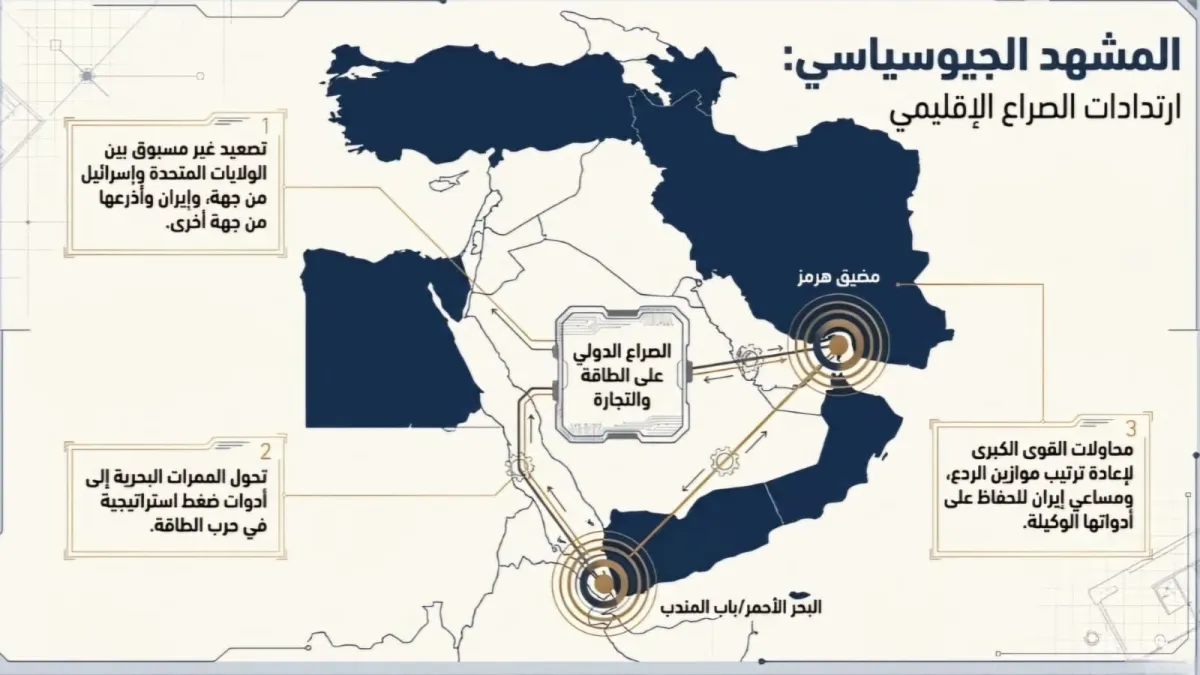
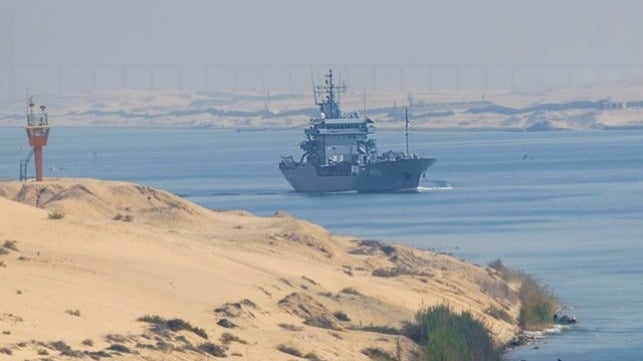
The Houthis have demonstrated both capability and intent to target merchant vessels in the Red Sea, including Israel‑linked ships, using long‑range drones and anti‑ship missiles, and have publicly designated Israel‑linked shipping as fair game. Cargo throughput via Bab el‑Mandeb fell markedly by January 2024, and reporting links the conflict to higher transport costs, with Yemen seeing shipping‑related price rises and government fuel price hikes. Fresh thermal activity has been detected around Bab el‑Mandeb. In response, allied naval units, including HMS Dragon and a UK‑German mine‑countermeasures group centred on RFA Lyme Bay and FGS Mosel, have transited the Suez and are operating through the Red Sea to support safer passage. Separately, Iranian strategy is framed by regional outlets as a multi‑theatre maritime deterrent extending from the Gulf to the Red Sea, which likely sustains Houthi pressure on Red Sea lanes.
Change from previous assessment
New allied mine‑countermeasures and escort movements through the Red Sea are now documented, and fresh thermal activity has been detected around Bab el‑Mandeb. Reporting also details shipping‑related cost pressure in Yemen, including government fuel price hikes. We retain the judgments on persistent Houthi risk and heightened peril for Israel‑linked vessels, with similar confidence. We drop the prior assessment of a Houthi “safety fee” scheme in this run for lack of fresh corroborating reporting in the provided claims. Initial assessment of broader Iranian strategy’s linkage to Red Sea risk is added with medium confidence.
Key judgments
- Houthi risk to commercial shipping in the southern Red Sea and Bab el‑Mandeb is very likely to persist for at least the next 1-3 months. (Confidence: medium · ASSESSED)
- I&W: Another Houthi‑claimed strike or attempted strike against a merchant vessel between Mocha and the Hanish Islands reported by industry advisories or local media. (0-14 days)
- I&W: A sustained 30‑day pause in Houthi maritime attack claims paired with reduced hostile messaging towards Red Sea shipping. (1-3 months)
- Israel‑linked vessels are very likely at heightened risk in the Red Sea, given Houthi targeting declarations and recent attack dates. (Confidence: high · ASSESSED)
- I&W: Advisories or claims naming an Israel‑linked owner, operator, or recent Israeli port call in connection with an attack in the southern Red Sea. (0-14 days)
- I&W: Documented transits by known Israel‑linked hulls through Bab el‑Mandeb without harassment for at least one month. (1-3 months)
- The Red Sea disruption is already depressing throughput and raising costs, with Yemen facing higher shipping‑driven prices and fuel hikes. (Confidence: high · REPORTED)
- I&W: Further Yemen Oil Company retail fuel price increases or government notices citing maritime disruptions. (1-3 months)
- I&W: Freight quotes for Red Sea east‑west lanes remain elevated versus pre‑disruption baselines or widen further. (0-14 days)
- Allied naval escorts and mine‑countermeasures transiting the Red Sea will likely reduce, but not eliminate, risk to merchant shipping. (Confidence: medium · ASSESSED)
- I&W: Announced or observed escorted convoy schedules through Bab el‑Mandeb with multiple uneventful passages. (0-14 days)
- I&W: A successful attack on an escorted vessel or a mine incident inside an escorted corridor. (0-14 days)
- Iran’s multi‑theatre maritime deterrence posture that includes the Red Sea likely sustains Houthi pressure on Red Sea shipping. (Confidence: medium · ASSESSED)
- I&W: Iranian or aligned media explicitly frame Red Sea attacks as part of a broader deterrence system alongside the Gulf. (1-3 months)
- I&W: Noticeable downsizing of Houthi maritime operations in tandem with reduced Iranian regional signalling. (1-3 months)
Outlook & scenarios
Baseline: persistent high-threat environment with episodic strikes and escorted transits (60%)
Houthi targeting and harassment continue at a steady tempo focused on Israel‑linked and high‑visibility hulls. Allied escorts and mine‑countermeasures enable more ships to risk the route, but insurance premia and re‑routing remain common. Yemen’s domestic prices stay under pressure.
Escalation: successful high‑impact attack at Bab el‑Mandeb (30%)
A Houthi anti‑ship missile or long‑range drone causes major damage to a large merchantman transiting near Bab el‑Mandeb, prompting a spike in diversions and further cost inflation. Naval forces intensify presence, but owners increasingly avoid the southern Red Sea.
De‑escalation: operational pause in Red Sea attacks while regional talks proceed elsewhere (20%)
Houthi leadership tempers maritime operations in the Red Sea for a period while maintaining other lines of effort, producing a measurable fall in Red Sea incidents and stabilising freight rates. Escorts continue, but owners slowly test returns to route.
Recommendations
- Maintain a continuous watch on Houthi public messaging and incident reporting to flag any naming of hulls, flags, owners or routes, and brief operators on short‑notice tripwires.
- Prioritise dynamic routing and timing guidance for transits between Mocha and the Hanish Islands, including convoy or escort options where available from allied navies operating in theatre.
- Catalogue and continuously update exposure of Israel‑linked and Israel‑calling hulls in portfolios transiting the Red Sea, and elevate their risk posture and protective measures.
- Task collection on Red Sea mine‑countermeasures activity and escorted convoy performance to refine likelihood estimates for safe passage windows.
- Track Yemen retail fuel price notices and freight rate benchmarks for Red Sea lanes to quantify ongoing cost impacts and support decision‑makers on rerouting thresholds.
Confidence & uncertainty
Multiple independent and generally reliable sources report Houthi capabilities and intent, declared targeting of Israel‑linked ships, reduced Bab el‑Mandeb throughput, cost impacts in Yemen, and the presence of allied escorts and mine‑countermeasures in the Red Sea. These streams are mutually reinforcing. Some elements rely on regional media characterisations of Iranian maritime strategy and analytic inference on persistence, which introduces uncertainty. The latest observable activity at Bab el‑Mandeb is based on credible satellite detections but does not directly attribute intent. Taken together, the corpus supports a medium overall confidence level.
Alternative analysis (red cell)
The open-source record here is suggestive but episodic: Houthis have declared intentions and executed discrete maritime attacks, and Iran has signaled a broader maritime posture, but the available claims do not demonstrate clear, sustained operational linkage or persistent attack tempo that would guarantee continued high risk across the next 1–3 months. It is therefore equally defensible to estimate a continued pattern of intermittent, opportunistic attacks rather than an assured, sustained campaign—particularly absent direct evidence of Houthi sustainment logistics, proven effectiveness of allied countermeasures, or documented Iranian command-and-control of maritime operations.
Intelligence gaps
- [EEI 1.2 · PARTIAL] Public Houthi claims of attacks or warnings tied to specific dates/routes, including social-media posts, official statements, and timing relative to merchant transits. Recommended collection: open-source/social_media
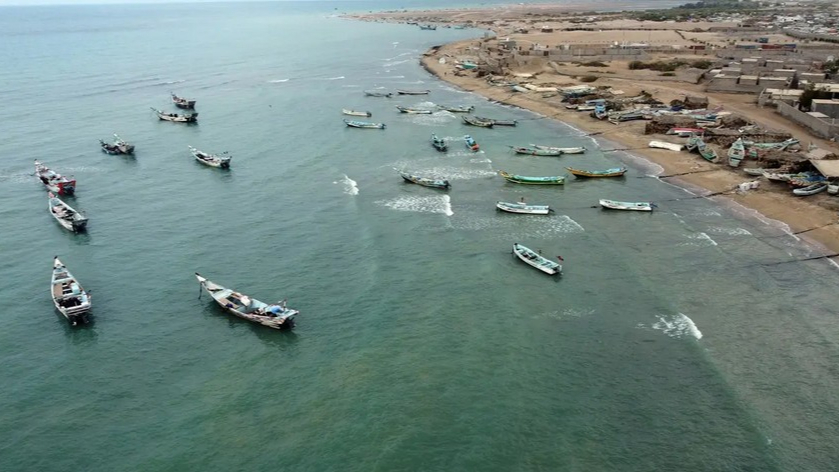
- [EEI 1.3 · PARTIAL] Unusual Houthi force posture indicators along Yemen’s Red Sea coast: movement or concentration of small boats, visible coastal missile/rocket emplacements, or logistics buildup at known launch sites (locations, timestamps). Recommended collection: imagery/satellite
- [EEI 1.4 · PARTIAL] Intercepts or communications indicating orders, targeting lists, or intent to strike merchant shipping (messages referencing specific vessel classes, companies, or chokepoints). Recommended collection: signals/communications
- [EEI 2.1 · UNCOVERED] Reports or visual confirmation of floating or moored mines and debris fields in shipping lanes or approaches to Bab-el-Mandeb, with geolocation and time. Recommended collection: imagery/satellite
- [EEI 2.2 · UNCOVERED] Detection of mine-laying activity: small vessels loitering in lane approaches, unexpected AIS track patterns consistent with mine deployment, or salvage/mining vessels operating in the area. Recommended collection: maritime/AIS
- [EEI 2.4 · UNCOVERED] Naval or commercial reports of mine-countermeasure operations or confirmed mine removal events (location, time, platforms involved). Recommended collection: naval/intelligence
- [EEI 3.1 · PARTIAL] Movements and presence of foreign warships and support vessels: names/classes, task group compositions, patrol areas and timelines, and whether vessels are conducting escort or interdiction operations. Recommended collection: naval/intelligence
- [EEI 3.4 · UNCOVERED] Planned or ongoing multinational exercises, air ISR sorties, or logistics moves that increase or decrease naval capacity in the area (exercise name, participating units, dates, locations). Recommended collection: open-source/military_reporting
- [EEI 4.2 · PARTIAL] War-risk and hull insurance coverage changes: issuance refusals, premium increases for Red Sea transits, or explicit route exclusions by underwriters (policy notices or market rate data with dates). Recommended collection: commercial/insurance_data
- [EEI 4.3 · PARTIAL] Freight and charter market signals tied to the corridor: spot rates for container, tanker, and dry bulk routes affected by Red Sea disruptions, and reported port congestion or turnaround-time increases at nearby hubs. Recommended collection: commercial/market_data
- [EEI 4.4 · PARTIAL] Incidents of cargo denial or diversion for critical goods (crude oil, refined products, LNG, high-value container cargo) including vessel IDs, cargo type, reroute/turnback actions, and economic impact estimates where available. Recommended collection: maritime/AIS
Cited sources
[1] Wikipedia · Red Sea crisis (B) · sha256:78cfc6ade42a [2] belqees.net · بين هرمز وباب المندب. سلاح الممرات البحرية يعيد تشكيل موازين القوة في المنطقة (B) · sha256:03ca1b152ed4 [3] alsahil.net · البحر الأحمر بين الردع الإيراني والتصعيد الحوثي: هل تتحول الممرات البحرية إلى سلاح لإعادة تشكيل النظام الإقليمي؟ | الساحل الغربي (B) · sha256:151c238f9e66 [4] Middle Eastern Observer · Houthis: How They Paralyzed Global Shipping (B) · sha256:8e600979aed6 [5] NASA · NASA FIRMS thermal detections — Bab-el-Mandeb (2d) (A) · sha256:2d83412724e4 [6] maritime-executive.com · Will the European Strait of Hormuz Force Float? (B) · sha256:517e1c45fc38 [7] yemenshabab.net · Just a moment.. (D) · sha256:8e50f7b800df
Source content hashes were computed at collection time; the cited text is preserved unmodified for the life of this product.
Red cell review: PARTIAL DISSENT
TLP:CLEAR