TLP:CLEAR · Disclosure is not limited.
Red Sea Shipping Risk Remains Elevated Amid Houthi and Piracy Threats
Time window: Last 7 days · Audience: General analyst · Type: Situation report · DTG: 2026-09-01 01:11Z · Overall confidence: HIGH
BLUF
Commercial shipping risk in the Red Sea and Bab-el-Mandeb is likely to remain elevated over the next 0-14 days. Houthi attacks and reported attempts by four Houthi suicide boats to approach Hanish and Zuqar islands are reinforcing route caution, while diverging carrier decisions support a constrained but not fully closed waterway.
Executive summary
The Houthi movement announced nine attacks on Saudi-linked shipping between its 20 July blockade declaration and 24 August, including the reported targeting of the Saudi tanker Amzan off Yanbu. On 31 August, Yemeni naval forces reported repelling four Houthi suicide boats near Hanish and Zuqar islands, in what a Yemeni military source described as the second such clash in less than a week. Commercial responses remain mixed: Hapag-Lloyd suspended new bookings to Aden on 25 August, while MSC had decided on 24 August to return some east-west voyages to the Red Sea and Suez route. Saudi crude exports and alternative transport corridors remain under pressure, with August exports tracking below the previous low and SUMED flows near operational limits. Piracy in the Gulf of Aden adds a separate risk, despite Turkish and Somali forces freeing Lutuf after a 10-day operation.
Change from previous assessment
Since the 30 August prior brief, the assessment retains the judgement that Red Sea and Bab-el-Mandeb shipping risk is likely to remain elevated, but the evidence base now includes the 24 August Houthi announcement concerning Amzan and the 31 August report of four Houthi suicide boats approaching Hanish and Zuqar islands. The 25 August Hapag-Lloyd booking suspension strengthens the case for continued disruption, while MSC's return of some voyages keeps the assessment at constrained rather than fully closed. A separate piracy judgement has been added after the reported hijackings of Lutuf and Seamull, the 31 August Lutuf rescue, and the continuing report of captive vessels and seafarers. The coalition-effectiveness judgement is no longer presented as a standalone key judgement because the supplied reporting still describes announced plans and conflicting membership accounts rather than verified operational effects.
Key judgments
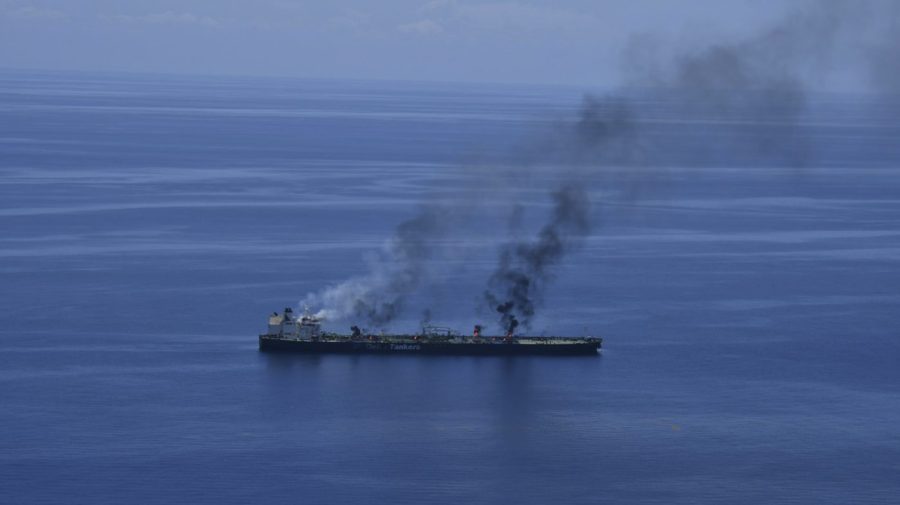
- The Houthi threat to Saudi-linked shipping in the Red Sea and Bab-el-Mandeb is likely to remain elevated over the next 0-14 days. Reporting states that Ansar Allah declared a naval blockade on 20 July, announced nine attacks on ships linked to Saudi Arabia through 24 August, and claimed to have targeted the Saudi tanker Amzan off Yanbu on 24 August. Yemeni naval forces also reported repelling four Houthi suicide boats near Hanish and Zuqar islands on 31 August, following an earlier report of a Houthi suicide boat destroyed before it attacked shipping. We assess that the combination of continued Houthi claims and recent attempted boat activity sustains a high threat to Saudi-linked vessels. Most recent maritime details rely on Houthi statements and Yemeni government or local reporting, and independent confirmation of damage to Amzan is not supplied, so confidence remains medium. (Confidence: medium · ASSESSED)
- I&W: Ansar Allah announces another attack on a Saudi-linked vessel, or Yemeni naval forces report another Houthi boat approach to Hanish, Zuqar, or the international shipping corridor. (0-14 days)
- I&W: No new Houthi maritime attack claim or reported boat approach occurs while Saudi-linked tankers continue transiting Red Sea routes. (0-14 days)
- Commercial transit through the Red Sea and Bab-el-Mandeb is likely to remain constrained rather than fully closed over the next 0-14 days. Reporting describes an earlier Kpler count of only 11 cargo vessels passing through the strait, Hapag-Lloyd's suspension of new Aden bookings on 25 August, and continued diversions around the Cape of Good Hope that add more than 30 days to some deliveries. Countervailing evidence includes MSC's decision on 24 August to return some east-west voyages to the Red Sea and Suez route and reporting that oil tankers continue sailing despite Houthi threats. We assess that carrier-specific risk tolerance, rather than a uniform closure, will define traffic levels. Confidence is medium because the reporting covers different services and dates and provides no single contemporaneous traffic count for the waterway. (Confidence: medium · ASSESSED)
- I&W: Hapag-Lloyd maintains its Aden booking suspension and another major carrier diverts a Red Sea service around the Cape of Good Hope. (0-14 days)
- I&W: Hapag-Lloyd resumes Aden bookings and MSC's return to the Red Sea is followed by additional scheduled services operating through Bab-el-Mandeb. (0-14 days)
- Saudi Arabia is likely to continue mixed export routing and face limited spare capacity over the next 1-3 months. Reporting states that combined Saudi crude exports averaged 3.23 million barrels per day in the first 23 days of August, below the previous low of 3.65 million barrels per day. SUMED flows reached about 1.9 million barrels per day in August and were described as near operational limits, while East-West Pipeline flows had reached about 4.4 million barrels per day and were nearing 5 million barrels per day. Saudi crude diversions around Africa add more than 30 days to some journeys, with one refiner reporting voyage times rising from about 20 days to 50-60 days. We assess that Saudi Arabia will retain a mix of Red Sea, Mediterranean, pipeline, and Cape routes rather than restore full reliance on Bab-el-Mandeb. The reported flow figures are not directly additive and their duration is not established, so confidence is medium. (Confidence: medium · ASSESSED)
- I&W: Saudi combined crude exports remain at or below 3.65 million barrels per day and SUMED flows remain near 1.9 million barrels per day. (1-3 months)
- I&W: Saudi combined crude exports rise above 3.65 million barrels per day, SUMED flows fall materially below 1.9 million barrels per day, and Saudi Aramco reports a sustained return to normal Red Sea routing. (1-3 months)
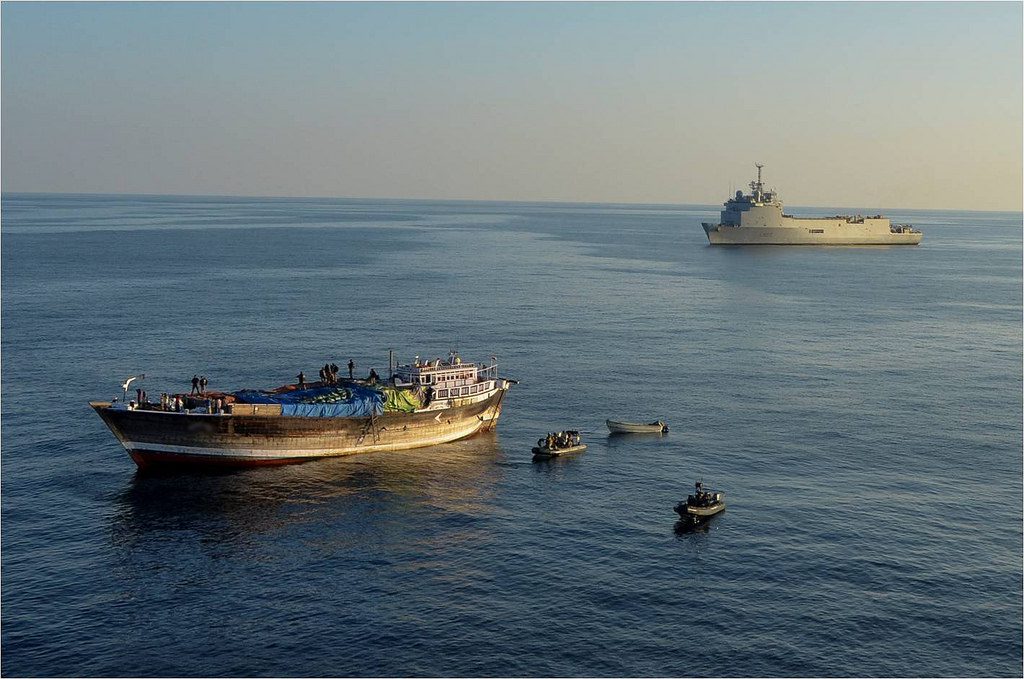
- Piracy is likely to compound Houthi-related shipping risk in the Gulf of Aden over the next 0-14 days, despite the recovery of Lutuf. The International Maritime Organization reported six merchant vessels and more than 90 seafarers held captive in the region, while reporting identified Lutuf, Honour 25, Sward, Eureka, Asana, and Seamull among the vessels held. Seamull was hijacked on 20 August off Al Mukalla, and Lutuf was freed after a 10-day Turkish-Somali operation. The Joint Maritime Information Center assessed the overall Gulf of Aden threat as substantial because of piracy and Houthi attacks. We assess that the rescue demonstrates response capacity but does not establish that the underlying piracy threat has fallen. Confidence is medium because the evidence is credible but the current status of all named vessels is not fully established. (Confidence: medium · ASSESSED)
- I&W: A new hijacking or armed boarding is reported in the Gulf of Aden, or the Joint Maritime Information Center raises its threat assessment above substantial. (0-14 days)
- I&W: Honour 25, Sward, Eureka, Asana, and Seamull are all reported released and no new boarding is reported in the Gulf of Aden. (0-14 days)
Outlook & scenarios
Persistent selective disruption (65%)
This is the most likely course. Houthi threats and intermittent attacks continue against Saudi-linked shipping, Yemeni naval forces remain engaged with Houthi boats, and carriers maintain a split posture. Some vessels use Bab-el-Mandeb while others continue Cape of Good Hope diversions. Saudi Arabia sustains mixed export routing, with freight costs and delivery times remaining elevated.
Partial route reopening (25%)
MSC's 24 August decision is followed by selected carriers restoring additional Red Sea and Suez services. Houthi maritime activity falls without a confirmed successful attack on a loaded tanker, while Hapag-Lloyd resumes selected Aden bookings. Traffic improves but remains below normal because piracy in the Gulf of Aden and insurance concerns persist.
Broad regional shipping retreat (10%)
A very unlikely, high-impact wildcard is a confirmed successful Houthi strike on a loaded Saudi-linked tanker, combined with another Gulf of Aden hijacking. Major carriers then suspend more Red Sea services, Saudi Arabia relies more heavily on constrained alternative corridors, and delivery delays and tanker rates rise sharply.
Recommendations
- For the next 14 days, treat Red Sea and Bab-el-Mandeb access as constrained rather than closed. Maintain separate risk assessments for Saudi-linked tankers, container services, and Aden-bound cargo because carrier decisions are diverging.
- Establish a daily watchlist covering Ansar Allah statements, Yemeni naval reports near Hanish and Zuqar islands, UKMTO advisories, Kpler vessel counts, and booking notices from MSC and Hapag-Lloyd. Record reported attacks separately from independently confirmed vessel damage.
- Track Saudi export resilience through the 3.65 million barrels per day previous-low benchmark, East-West Pipeline flows, SUMED flows, and reported tanker routing. Flag sustained export weakness alongside SUMED flows near 1.9 million barrels per day as evidence of tightening spare capacity.
- Include Gulf of Aden piracy in Red Sea shipping risk products. Monitor the status of Honour 25, Sward, Eureka, Asana, and Seamull, and treat any new boarding or hijacking as a separate trigger from Houthi activity.
- Assess the Saudi-led maritime coalition by operational output rather than announced intent. Maintain separate records for the eight-state coastal formulation and the fourteen-country support list, then look for evidence of patrols, escorts, or verified incident reduction.
- Require geographic verification before combining maritime incidents across the Red Sea, Gulf of Aden, and Strait of Hormuz. Conflicting location reporting in the supplied material makes route-specific attribution necessary for warning and trend analysis.
Confidence & uncertainty
Overall confidence is high because the core pattern is corroborated across major media, wire services, trade publications, local media, official statements, and Kpler reporting. These sources consistently indicate Houthi pressure on Saudi-linked shipping, route diversions, elevated freight costs, carrier-specific service changes, and a separate piracy problem in the Gulf of Aden. Confidence is lower for individual incident details, including the extent of damage to Amzan, the status of all hijacked vessels, and the practical membership and capabilities of the Saudi-led coalition. The supplied reporting also contains conflicting carrier decisions and inconsistent accounts of some maritime locations, which limit precision without overturning the broader assessment.
Intelligence gaps
- [EEI 1.3 · UNCOVERED] Unusual Houthi force posture indicators along Yemen’s Red Sea coast: movement or concentration of small boats, visible coastal missile/rocket emplacements, or logistics buildup at known launch sites (locations, timestamps). Recommended collection: imagery/satellite
- [EEI 1.4 · UNCOVERED] Intercepts or communications indicating orders, targeting lists, or intent to strike merchant shipping (messages referencing specific vessel classes, companies, or chokepoints). Recommended collection: signals/communications
- [EEI 2.1 · UNCOVERED] Reports or visual confirmation of floating or moored mines and debris fields in shipping lanes or approaches to Bab-el-Mandeb, with geolocation and time. Recommended collection: imagery/satellite
- [EEI 2.2 · UNCOVERED] Detection of mine-laying activity: small vessels loitering in lane approaches, unexpected AIS track patterns consistent with mine deployment, or salvage/mining vessels operating in the area. Recommended collection: maritime/AIS
- [EEI 2.3 · UNCOVERED] Hydrographic notices, naval warnings, or port authority advisories closing lanes or imposing route restrictions (text of Notice to Mariners, issuing agency, effective times/areas). Recommended collection: naval/port_authority
- [EEI 2.4 · UNCOVERED] Naval or commercial reports of mine-countermeasure operations or confirmed mine removal events (location, time, platforms involved). Recommended collection: naval/intelligence
- [EEI 3.1 · UNCOVERED] Movements and presence of foreign warships and support vessels: names/classes, task group compositions, patrol areas and timelines, and whether vessels are conducting escort or interdiction operations. Recommended collection: naval/intelligence
- [EEI 3.3 · UNCOVERED] Recorded interactions between naval forces and vessels in the corridor (hailings, boardings, warnings, defensive strikes), including timestamps and outcomes. Recommended collection: maritime/AIS
- [EEI 3.4 · UNCOVERED] Planned or ongoing multinational exercises, air ISR sorties, or logistics moves that increase or decrease naval capacity in the area (exercise name, participating units, dates, locations). Recommended collection: open-source/military_reporting
- [EEI 4.2 · PARTIAL] War-risk and hull insurance coverage changes: issuance refusals, premium increases for Red Sea transits, or explicit route exclusions by underwriters (policy notices or market rate data with dates). Recommended collection: commercial/insurance_data
- [EEI 4.3 · PARTIAL] Freight and charter market signals tied to the corridor: spot rates for container, tanker, and dry bulk routes affected by Red Sea disruptions, and reported port congestion or turnaround-time increases at nearby hubs. Recommended collection: commercial/market_data
- [EEI 4.4 · PARTIAL] Incidents of cargo denial or diversion for critical goods (crude oil, refined products, LNG, high-value container cargo) including vessel IDs, cargo type, reroute/turnback actions, and economic impact estimates where available. Recommended collection: maritime/AIS
Cited sources
[1] Horn Review · The Saudi-Led Red Sea Coalition and the Prospects for Ethiopia’s Red Sea Strategy (C) · sha256:63d6edb8b6f7 [2] Al Jazeera (aljazeera.net) · من "إنسيليا" إلى "أمزان". تسلسل زمني لاستهداف الحوثيين الناقلات السعودية في البحر الأحمر (A) · Tue Aug 25 2026 16:46:50 GMT+0000 (Coordinated Universal Time) · sha256:4b4a1feb3152 [3] Arabi21 · الجيش اليمني يشن هجمات ضد الحوثيين واشتباكات بحرية بين الطرفين (شاهد) (D) · Mon Aug 31 2026 22:13:14 GMT+0000 (Coordinated Universal Time) · sha256:2800649601de [4] Mmegi (mmegi.bw) · Geopolitical complexities of the Red Sea (D) · Mon Aug 31 2026 06:00:00 GMT+0000 (Coordinated Universal Time) · sha256:3ee8ecc990c4 [5] AOL (syndicated from The Hill / Nexstar Media) · Saudi Arabia forms Red Sea defense coalition to protect against Houthi attacks (B) · Fri Jul 31 2026 00:46:44 GMT+0000 (Coordinated Universal Time) · sha256:e7efe5302727 [6] Al Jazeera Net (aljazeera.net) · كيف حاصرت المخاطر الأمنية ميناء عدن رغم موقعه الإستراتيجي؟ (A) · Sun Aug 30 2026 13:59:04 GMT+0000 (Coordinated Universal Time) · sha256:7bd99ca68cdd [7] BusinessToday · Saudi oil shipments hit a 2026 low: Why the kingdom’s escape routes are running out of room - BusinessToday (B) · Mon Aug 31 2026 03:09:59 GMT+0000 (Coordinated Universal Time) · sha256:30e9731c2dcd [8] Al-Monitor · AL-MONITOR: The Middle Eastʼs leading independent news source since 2012 (A) · sha256:5e3c8729d518 [9] Bloomberg (republished by gCaptain) · Oil Tankers Make Fortunes During War as Sinokor Dominates (A) · Mon Aug 31 2026 16:13:10 GMT+0000 (Coordinated Universal Time) · sha256:ae3317bf341a [10] gCaptain · Turkish-Somali Forces Free Hijacked Cargo Ship Off Somalia (C) · Mon Aug 31 2026 15:48:58 GMT+0000 (Coordinated Universal Time) · sha256:efe8cebcb54a
Source content hashes were computed at collection time; the cited text is preserved unmodified for the life of this product.
TLP:CLEAR