TLP:CLEAR · Disclosure is not limited.
Red Sea Shipping: Selective Return, Persistent Security Risk
Time window: Last 7 days · Audience: General analyst · Type: Situation report · DTG: 2026-11-14 01:13Z · Overall confidence: HIGH
BLUF
Maersk and Hapag-Lloyd have begun selectively restoring service through the Suez Canal, but say further routing decisions depend on Red Sea security. Houthi-Saudi military exchanges and the Houthis’ previously announced blockade of Saudi-linked shipping keep Bab el-Mandeb risk elevated; the reporting for this period does not establish a new Houthi attack on a Red Sea merchant vessel.
Executive summary
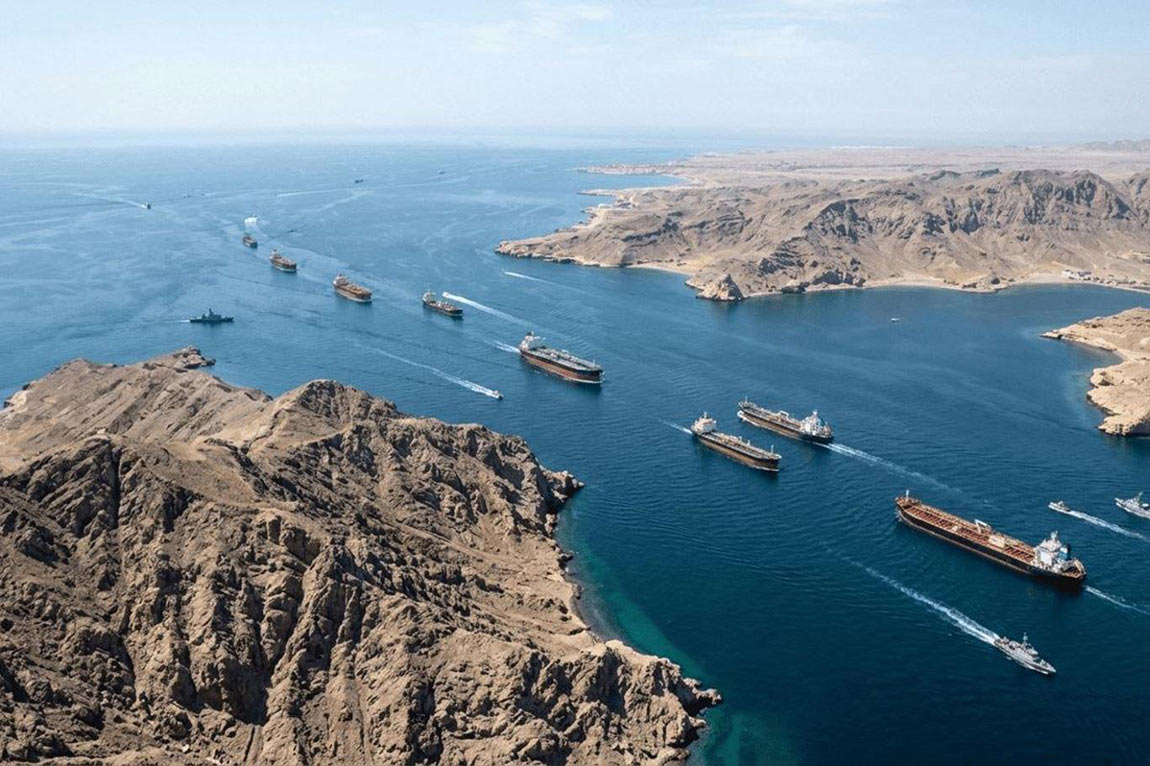
Maersk and Hapag-Lloyd have started returning their joint ME1 service to the Suez Canal after diversions around Africa. The first westbound departure from Salalah was scheduled for 4 November, and the first eastbound departure from Tangier for 12-13 November. The companies say further routing depends on security conditions. Separately, the Houthis said they fired two ballistic missiles at Saudi forces in Al-Tuwal, Jazan, on 13 November; the Saudi-led coalition reported intercepting Houthi drones over the Riyadh region and Eastern Province on 12 November. These reports concern Houthi-Saudi exchanges, not a confirmed strike on merchant shipping. The UN has warned of tensions around Bab el-Mandeb and called for the restoration of freedom of navigation. The corridor is seeing a selective commercial return, while the scale and enforcement of the Houthi threat to shipping remain uncertain.
Change from previous assessment
Since the prior brief, reporting has added specific evidence of Maersk and Hapag-Lloyd restoring some ME1 sailings through Suez, including scheduled departures from Salalah and Tangier. This strengthens the assessment that commercial traffic is returning selectively, while the companies’ security caveat and the reported Houthi-Saudi exchanges leave the maritime risk elevated. The prior finding that reporting did not establish a general closure is retained.
Key judgments
- Maersk and Hapag-Lloyd have begun a selective return of the ME1 service to the Suez Canal, rather than a general return of Red Sea shipping. The reported sailings include a westbound departure scheduled from Salalah on 4 November and an eastbound departure scheduled from Tangier on 12-13 November. The companies have said further routing decisions remain dependent on Red Sea security. (Confidence: medium · REPORTED)
- I&W: Confirm: Maersk or Hapag-Lloyd publishes a further ME1 sailing through Suez. Break: either company cancels a scheduled Suez sailing and announces a return to Cape of Good Hope routing. (0-14 days)
- I&W: Confirm: the companies publish additional Red Sea service schedules. Break: both suspend Red Sea transits in new routing notices. (1-3 months)
- The Houthi threat to Saudi-linked shipping through Bab el-Mandeb is likely to remain material over the next 0-14 days, but enforcement of the announced blockade is not independently established in the supplied reporting. A think-tank account says the Houthis announced the blockade in July and have since attacked several vessels, including Saudi-linked tankers. The reporting for this period does not establish a new Houthi attack on a merchant vessel in the Red Sea. (Confidence: low · ASSESSED)
- I&W: Confirm: a Houthi statement or maritime security report identifies a Saudi-linked merchant vessel as attacked, boarded or threatened in Bab el-Mandeb. Break: the Houthis publicly withdraw the blockade or explicitly exempt Saudi-linked commercial vessels. (0-14 days)
- Houthi-Saudi military exchanges are likely to sustain concern about maritime security around Bab el-Mandeb, although the reported exchanges do not establish an attack on Red Sea shipping. The Houthis said they fired two ballistic missiles at Saudi forces in Al-Tuwal, Jazan, on 13 November, and the Saudi-led coalition reported intercepting Houthi drones over the Riyadh region and Eastern Province on 12 November. The UN Assistant Secretary-General has warned of tensions around Bab el-Mandeb and the effects of restrictions on maritime navigation. (Confidence: medium · ASSESSED)
- I&W: Confirm: a further Houthi-claimed missile or drone attack on Saudi territory is reported alongside a coalition interception, or a maritime security notice records an incident in Bab el-Mandeb. Break: no further cross-border attack is reported and scheduled ME1 Suez sailings proceed. (0-14 days)
- I&W: Confirm: Maersk or Hapag-Lloyd suspends Red Sea sailings following a reported security incident. Break: both maintain scheduled Suez services without a reported Bab el-Mandeb incident. (1-3 months)
Outlook & scenarios
Selective Suez service continues (55%)
This is the likely near-term path. Maersk and Hapag-Lloyd continue some ME1 sailings through Suez while keeping routing decisions conditional on security. Houthi-Saudi exchanges continue, but the supplied reporting does not establish a new attack on Red Sea merchant shipping.
Renewed attacks interrupt the return (25%)
A Houthi attack on a Saudi-linked merchant vessel in or near Bab el-Mandeb would reinforce the announced blockade and prompt carriers to pause or reverse their Suez service plans. This outcome is unlikely on the supplied evidence, which does not confirm a new Red Sea merchant-vessel attack during the reporting period.
Security improves and Suez use expands (15%)
If security conditions improve, Maersk and Hapag-Lloyd expand ME1 sailings through Suez. UN readiness to support negotiations offers a diplomatic channel, but the reporting does not establish an agreement that would reduce Houthi threats.
Wildcard: one attack prompts broad carrier withdrawal (5%)
A high-impact attack on a commercial vessel in Bab el-Mandeb prompts major carriers to suspend Red Sea transits and return to Cape of Good Hope routing. This is unlikely, but would reverse the current selective return and deepen disruption.
Recommendations
- Track actual ME1 passages separately from scheduled departures. Review Maersk and Hapag-Lloyd routing notices for the Salalah, Tangier and Suez legs at least daily for the next 14 days.
- Maintain a separate log for Houthi statements about Saudi targets and confirmed effects. Do not treat claims about Saudi infrastructure or military sites as evidence of an attack on merchant shipping without independent maritime reporting.
- Set an alert threshold for any report that identifies a merchant vessel, location and incident type in Bab el-Mandeb. Reassess the route-risk judgement if a vessel is confirmed attacked, boarded or directly threatened.
- Distinguish a selective carrier return from normalisation in briefings. Record cancellations, completed transits and any stated security conditions before describing the corridor as open or closed.
Confidence & uncertainty
Overall confidence is high for the broad situation picture: trade reporting provides specific ME1 routing changes, while UN reporting addresses maritime tensions around Bab el-Mandeb and major-media reporting records the latest Houthi-Saudi exchanges. Confidence is lower on the likelihood and enforcement of the Houthi blockade, which rests mainly on one think-tank account, and on whether recent military exchanges will affect merchant shipping. The supplied reporting does not establish a new Houthi attack on a Red Sea merchant vessel during this period.
Intelligence gaps
- [EEI 1.1 · PARTIAL] Incidents of hostile action against commercial vessels: vessel name/IMO, position (lat/long), time/date, observable damage or casualties, and weapon type reported (missile, drone, small-arms, explosive-laden boat). Recommended collection: maritime/AIS
- [EEI 1.2 · PARTIAL] Public Houthi claims of attacks or warnings tied to specific dates/routes, including social-media posts, official statements, and timing relative to merchant transits. Recommended collection: open-source/social_media
- [EEI 1.3 · UNCOVERED] Unusual Houthi force posture indicators along Yemen’s Red Sea coast: movement or concentration of small boats, visible coastal missile/rocket emplacements, or logistics buildup at known launch sites (locations, timestamps). Recommended collection: imagery/satellite
- [EEI 1.4 · UNCOVERED] Intercepts or communications indicating orders, targeting lists, or intent to strike merchant shipping (messages referencing specific vessel classes, companies, or chokepoints). Recommended collection: signals/communications
- [EEI 2.1 · UNCOVERED] Reports or visual confirmation of floating or moored mines and debris fields in shipping lanes or approaches to Bab-el-Mandeb, with geolocation and time. Recommended collection: imagery/satellite
- [EEI 2.2 · UNCOVERED] Detection of mine-laying activity: small vessels loitering in lane approaches, unexpected AIS track patterns consistent with mine deployment, or salvage/mining vessels operating in the area. Recommended collection: maritime/AIS
- [EEI 2.3 · UNCOVERED] Hydrographic notices, naval warnings, or port authority advisories closing lanes or imposing route restrictions (text of Notice to Mariners, issuing agency, effective times/areas). Recommended collection: naval/port_authority
- [EEI 2.4 · UNCOVERED] Naval or commercial reports of mine-countermeasure operations or confirmed mine removal events (location, time, platforms involved). Recommended collection: naval/intelligence
- [EEI 3.1 · PARTIAL] Movements and presence of foreign warships and support vessels: names/classes, task group compositions, patrol areas and timelines, and whether vessels are conducting escort or interdiction operations. Recommended collection: naval/intelligence
- [EEI 3.2 · UNCOVERED] Official announcements or directives from states/coalitions regarding convoys, armed escorts, protected corridor establishment, or changes to rules of engagement for merchant protection. Recommended collection: diplomatic/public_affairs
- [EEI 3.3 · UNCOVERED] Recorded interactions between naval forces and vessels in the corridor (hailings, boardings, warnings, defensive strikes), including timestamps and outcomes. Recommended collection: maritime/AIS
- [EEI 3.4 · UNCOVERED] Planned or ongoing multinational exercises, air ISR sorties, or logistics moves that increase or decrease naval capacity in the area (exercise name, participating units, dates, locations). Recommended collection: open-source/military_reporting
- [EEI 4.1 · PARTIAL] Transit volume and pattern changes: number of commercial transits per day/week through Bab-el-Mandeb and southern Red Sea compared with baseline, and instances of rerouting around Africa (position/time data). Recommended collection: maritime/AIS
- [EEI 4.2 · UNCOVERED] War-risk and hull insurance coverage changes: issuance refusals, premium increases for Red Sea transits, or explicit route exclusions by underwriters (policy notices or market rate data with dates). Recommended collection: commercial/insurance_data
- [EEI 4.3 · PARTIAL] Freight and charter market signals tied to the corridor: spot rates for container, tanker, and dry bulk routes affected by Red Sea disruptions, and reported port congestion or turnaround-time increases at nearby hubs. Recommended collection: commercial/market_data
- [EEI 4.4 · PARTIAL] Incidents of cargo denial or diversion for critical goods (crude oil, refined products, LNG, high-value container cargo) including vessel IDs, cargo type, reroute/turnback actions, and economic impact estimates where available. Recommended collection: maritime/AIS
Red cell review: CONCUR WITH COMMENT
TLP:CLEAR