TLP:CLEAR · Disclosure is not limited.
Red Sea Shipping: Traffic Recovers, Security Risk Persists
Time window: Last 7 days · Audience: General analyst · Type: Situation report · DTG: 2026-10-15 01:08Z · Overall confidence: HIGH
BLUF
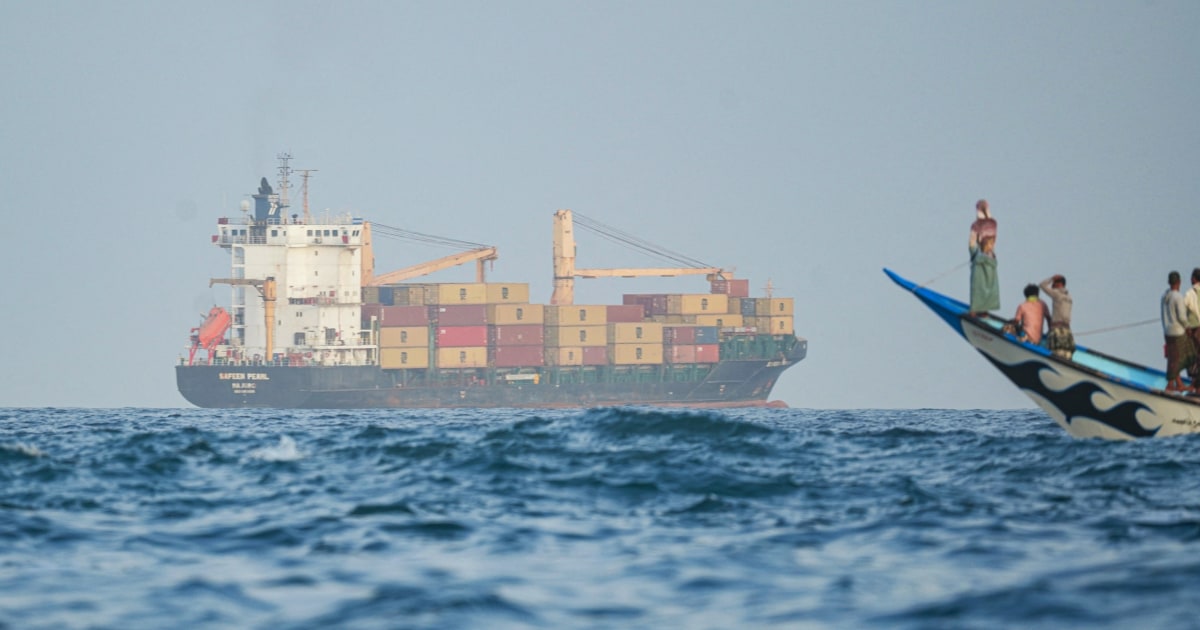
Red Sea shipping through Bab el-Mandeb is likely to remain disrupted but passable over the next 0-14 days. Suez container traffic has recovered to just over half its 2023 level, while renewed Saudi-Houthi exchanges and unresolved control claims around Mocha and Dhubab keep the security risk elevated.
Executive summary
Reporting for 8-15 October shows some shipping services returning to the Suez Canal, but container traffic remains well below the same period in 2023 and war-risk premiums for Bab el-Mandeb transits remain around 3%. The Houthis’ 10 October attack on Riyadh’s King Khalid International Airport killed 13 people and injured more than 300, according to several reports; Saudi authorities suspended airport operations through 17 October. The Saudi-led coalition struck oil-related sites in Sanaa, Dhamar and Saada on 13 October. Reports of control around Mocha and Dhubab conflict, and the extent of damage from an incident at an Aramco administrative building in Dhahran is disputed. Fighting around Taiz is also worsening humanitarian conditions: the World Food Programme reported that about 800,000 people are cut off from aid, including more than 600,000 in Taiz, while Al-Thawra Hospital said its dialysis supplies would last 14 days.
Change from previous assessment
Since the 14 October brief, the core assessment that shipping disruption is likely to persist remains unchanged. This brief adds quantitative evidence of partial Suez recovery, including first-half October transit volumes and announced service returns, so the route is assessed as impaired but passable rather than simply disrupted. The coastal-control judgment remains low confidence, with competing reports now focused on Mocha and Dhubab. Saudi-Houthi escalation remains likely; the US direct-strike judgment remains unlikely because Trump’s stated consideration is not a commitment.
Key judgments
- Red Sea shipping through Bab el-Mandeb is likely to remain disrupted but passable over the next 0-14 days. Clarksons Research put weekly Suez container transits at roughly 753,000 TEU in the first two weeks of October, compared with 1.457 million TEU in the same period of 2023; BIMCO reported 16 services announcing Suez returns since early July. Bab el-Mandeb war-risk premiums have remained at roughly 3% since early September. This supports continued use of the route, not a return to normal traffic or a confirmed closure. (Confidence: medium · ASSESSED)
- I&W: Confirm: Clarksons weekly Suez container transits remain below 1.457 million TEU and Bab el-Mandeb war-risk premiums remain at roughly 3% or rise. (0-14 days)
- I&W: Break: Clarksons reports weekly Suez container transits at or above 1.457 million TEU for four consecutive weeks. (1-3 months)
- Neither the Houthis nor Saudi-backed Yemeni government forces are likely to have uncontested control of the coast near Bab el-Mandeb. Major media report that government-aligned forces recaptured Mocha and pushed Houthi forces away from positions closest to the strait; Houthi material separately claims their forces expelled Saudi-backed troops at Dhubab airport. The competing accounts do not establish who controls all key coastal positions. (Confidence: low · ASSESSED)
- I&W: Confirm: independently geolocated reporting shows government-aligned forces at Mocha while Houthi forces retain positions around Dhubab. (0-14 days)
- I&W: Break: independently corroborated reporting establishes one side’s continuous control of both Mocha and Dhubab, with the other side withdrawing. (1-3 months)
- Saudi-Houthi exchanges are likely to continue over the next 0-14 days, sustaining elevated risk to Red Sea shipping. The Houthis’ 10 October attack on King Khalid International Airport was followed by Saudi-led coalition strikes on oil-related sites in Yemen on 13 October. Houthi acting foreign minister Abdulwahid Abu Ras said retaliatory strikes against Saudi airports and oil facilities would continue while Riyadh conducts military operations. The supplied reporting does not establish a new Houthi strike on a Red Sea merchant vessel during this reporting period. Reports also conflict over whether a missile directly struck the Aramco administrative building in Dhahran or was intercepted, leaving the extent of damage unresolved. (Confidence: medium · ASSESSED)
- I&W: Confirm: the Saudi-led coalition reports another strike in Sanaa, Dhamar or Saada, or Saudi authorities report another Houthi missile or drone interception near Riyadh, Dhahran or Al-Kharj. (0-14 days)
- I&W: Break: Saudi and Houthi officials announce a halt to attacks and no verified coalition strike or Saudi-bound Houthi launch is reported for 14 consecutive days. (0-14 days)
- Direct US strikes against Houthi targets are unlikely over the next 0-14 days, although the risk is higher than before the Riyadh airport attack. President Donald Trump said he was considering joining Saudi strikes, but reporting records no commitment; US support is described as intelligence sharing, aerial refuelling and targeting information. Houthi political bureau member Mohammed Al Bukhaiti warned that the group would target American interests if the US joined the campaign. (Confidence: medium · ASSESSED)
- I&W: Confirm: the US announces direct combat authorisation against the Houthis or reports a US strike on a Houthi target. (0-14 days)
- I&W: Break: the US publicly rules out direct strikes and continues to describe its role as limited to intelligence, refuelling and targeting support. (0-14 days)
Outlook & scenarios
Continued disruption with partial route use (55%)
The most likely course is continued but incomplete use of Bab el-Mandeb and the Suez Canal. Shipping services continue returning selectively, while traffic stays below 2023 levels and Saudi-Houthi strikes sustain insurance and security concerns.
Wider Saudi-Houthi escalation (25%)
Further Houthi attacks on Saudi airports or energy sites prompt additional Saudi-led coalition strikes in Yemen. Shipping companies delay or divert more services, and competing claims about control around Mocha and Dhubab remain unresolved.
Limited de-escalation and further Suez recovery (17%)
Saudi and Houthi forces reduce attacks, allowing carriers to continue restoring Suez services. Traffic improves, although reaching the 2023 benchmark remains a longer-term test of normalisation.
US enters the campaign (3%)
The US authorises direct strikes against Houthi targets after another high-casualty attack on Saudi territory. Houthi threats against American interests then raise the risk of a wider conflict and a sharp shipping pullback.
Recommendations
- Keep separate daily tracking for Bab el-Mandeb and the Strait of Hormuz. Record confirmed vessel incidents, Suez transit volumes, announced service returns and Bab el-Mandeb war-risk premiums; do not count the reported Hormuz sinkings as Red Sea incidents.
- Verify control claims around Mocha and Dhubab against independently corroborated, geolocated reporting. Record Houthi and government statements as competing claims until territorial control is independently established.
- Distinguish confirmed impacts from interceptions and claimed targeting when tracking attacks on King Khalid International Airport, Dhahran and other Saudi sites. Reconcile casualty totals and the reported damage to the Aramco administrative building before using them in estimates.
- Track aid-route access and hospital supplies around Taiz alongside military developments. Prioritise updates on the reported 14-day dialysis supply at Al-Thawra Hospital and the World Food Programme’s estimate of people cut off from aid.
- Treat President Trump’s statement that he is considering military action as deliberation, not an operational decision. Reassess the US intervention outlook only after a public authorisation or a confirmed US strike.
Confidence & uncertainty
High confidence applies to the broad picture of continued but incomplete route use and renewed Saudi-Houthi escalation. Clarksons Research and BIMCO provide quantitative shipping indicators, while major media and official Saudi statements report the airport closure, coalition strikes and missile interceptions. Confidence is lower on control of Mocha and Dhubab, the extent of damage in Dhahran, and some battlefield claims because reporting conflicts or relies on belligerent statements.
Intelligence gaps
- [EEI 1.1 · UNCOVERED] Incidents of hostile action against commercial vessels: vessel name/IMO, position (lat/long), time/date, observable damage or casualties, and weapon type reported (missile, drone, small-arms, explosive-laden boat). Recommended collection: maritime/AIS
- [EEI 1.2 · PARTIAL] Public Houthi claims of attacks or warnings tied to specific dates/routes, including social-media posts, official statements, and timing relative to merchant transits. Recommended collection: open-source/social_media
- [EEI 1.3 · PARTIAL] Unusual Houthi force posture indicators along Yemen’s Red Sea coast: movement or concentration of small boats, visible coastal missile/rocket emplacements, or logistics buildup at known launch sites (locations, timestamps). Recommended collection: imagery/satellite
- [EEI 1.4 · PARTIAL] Intercepts or communications indicating orders, targeting lists, or intent to strike merchant shipping (messages referencing specific vessel classes, companies, or chokepoints). Recommended collection: signals/communications
- [EEI 2.1 · UNCOVERED] Reports or visual confirmation of floating or moored mines and debris fields in shipping lanes or approaches to Bab-el-Mandeb, with geolocation and time. Recommended collection: imagery/satellite
- [EEI 2.2 · UNCOVERED] Detection of mine-laying activity: small vessels loitering in lane approaches, unexpected AIS track patterns consistent with mine deployment, or salvage/mining vessels operating in the area. Recommended collection: maritime/AIS
- [EEI 2.3 · UNCOVERED] Hydrographic notices, naval warnings, or port authority advisories closing lanes or imposing route restrictions (text of Notice to Mariners, issuing agency, effective times/areas). Recommended collection: naval/port_authority
- [EEI 2.4 · UNCOVERED] Naval or commercial reports of mine-countermeasure operations or confirmed mine removal events (location, time, platforms involved). Recommended collection: naval/intelligence
- [EEI 3.1 · UNCOVERED] Movements and presence of foreign warships and support vessels: names/classes, task group compositions, patrol areas and timelines, and whether vessels are conducting escort or interdiction operations. Recommended collection: naval/intelligence
- [EEI 3.2 · UNCOVERED] Official announcements or directives from states/coalitions regarding convoys, armed escorts, protected corridor establishment, or changes to rules of engagement for merchant protection. Recommended collection: diplomatic/public_affairs
- [EEI 3.3 · UNCOVERED] Recorded interactions between naval forces and vessels in the corridor (hailings, boardings, warnings, defensive strikes), including timestamps and outcomes. Recommended collection: maritime/AIS
- [EEI 3.4 · UNCOVERED] Planned or ongoing multinational exercises, air ISR sorties, or logistics moves that increase or decrease naval capacity in the area (exercise name, participating units, dates, locations). Recommended collection: open-source/military_reporting
- [EEI 4.2 · PARTIAL] War-risk and hull insurance coverage changes: issuance refusals, premium increases for Red Sea transits, or explicit route exclusions by underwriters (policy notices or market rate data with dates). Recommended collection: commercial/insurance_data
- [EEI 4.3 · PARTIAL] Freight and charter market signals tied to the corridor: spot rates for container, tanker, and dry bulk routes affected by Red Sea disruptions, and reported port congestion or turnaround-time increases at nearby hubs. Recommended collection: commercial/market_data
- [EEI 4.4 · PARTIAL] Incidents of cargo denial or diversion for critical goods (crude oil, refined products, LNG, high-value container cargo) including vessel IDs, cargo type, reroute/turnback actions, and economic impact estimates where available. Recommended collection: maritime/AIS
Cited sources
[1] WWD / Sourcing Journal · Container Shipping’s Red Sea Comeback is Outpacing the Risk Warnings (B) · 14 October 2026 · sha256:258db238e22e [2] Firstpost · Why did Saudi Arabia reject Netanyahu’s proposal to join fight against Houthis? (B) · 14 October 2026 · sha256:5afe37453698 [3] NBC News (originally published on CFR.org) · Another Hormuz? What to know about the Houthi threat to the Red Sea (A) · 12 October 2026 · sha256:5948bcc7fd99 [4] International Business Times (Singapore edition, ibtimes.sg) · Houthis Strike Saudi Aramco Complex as Attacks Spread (B) · 14 October 2026 · sha256:cd6aea7a0722 [5] DDGeopolitics (Telegram channel) · 🇾🇪⚔️🇸🇦 The Yemeni Armed Forces (Ansar Allah) have released footage they say shows their fighters driving out Saudi-backed troop concentrations at Dhubab airport, near the Bab al-Mandab strait.Acco… (E) · sha256:bb72767f1ba3 [6] CBS News · Saudis launch new strikes on Houthis; Iran-backed group threatens U.S. if it joins in (A) · 12 October 2026 · sha256:a4ee58b9db9f [7] Sunday Guardian Live · US-Israel-Iran War Latest News: Houthis Claim Attacks on Aramco Sites and Riyadh Airport as Four People Are Injured by Missile Debris (B) · 14 October 2026 · sha256:d30f7d1fb208 [8] rt-english.com · Houthis will respond ‘eye for an eye’ to Saudi attacks – foreign minister (VIDEO) (F) · 14 October 2026 · sha256:129385f88071 [9] Arabian Post · Missile attack sparks fire at Aramco Dhahran complex (D) · 14 October 2026 · sha256:08625ad1aed2 [10] InfoMoney (content © Bloomberg L.P.) · Sob ataque dos houthis, príncipe saudita enfrenta sua maior crise em anos (A) · 14 October 2026 · sha256:a22d2f1c46cf
Source content hashes were computed at collection time; the cited text is preserved unmodified for the life of this product.
Red cell review: CONCUR WITH COMMENT
TLP:CLEAR