TLP:CLEAR · Disclosure is not limited.
Red Sea shipping: traffic resumes amid Houthi threat
Time window: Last 7 days · Audience: General analyst · Type: Situation report · DTG: 2026-10-31 01:10Z · Overall confidence: HIGH
BLUF
Commercial traffic is using the Red Sea at scale, with 24 of 46 direct Asia-Europe services reported to use the passage. Houthi-related disruption at Bab el-Mandeb is likely to remain a risk over the next 1-3 months, but reports of coastal gains and attacks on Saudi facilities remain contested or unconfirmed.
Executive summary
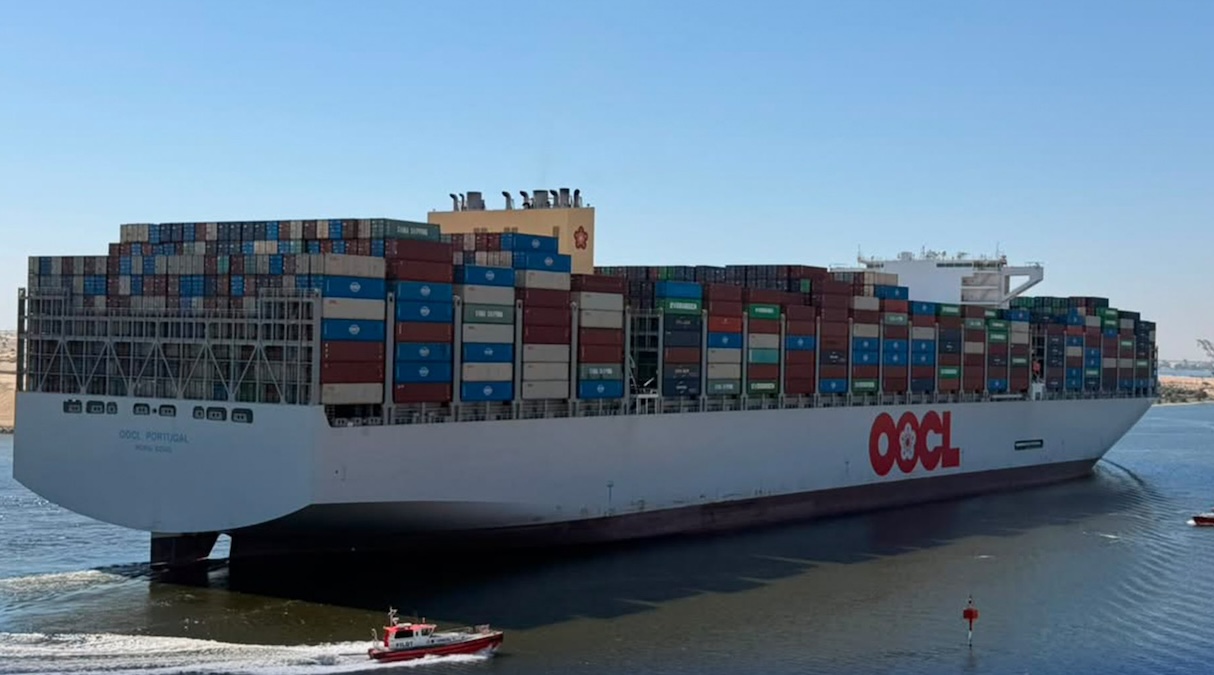
Alphaliner reported that 63% of deployed capacity on direct Asia-Europe services was using the Red Sea, and Zim announced a return to Red Sea routing for its joint service with MSC. This traffic does not mean the threat has abated: JMIC rated the threat substantial in Bab el-Mandeb, the southern Red Sea and the Gulf of Aden on 29 October. Reports of Houthi advances towards the strait conflict with reports of Yemeni government forces retaking coastal territory. The Houthi claims of attacks on Saudi facilities also remain unconfirmed by Saudi Arabia, with reported impacts in conflict.
Change from previous assessment
Since the 30 October prior brief, this assessment adds Alphaliner's report that 24 of 46 direct Asia-Europe services, representing 63% of deployed capacity, were using the Red Sea, as well as Zim's announced return to the route. This revises the prior emphasis on continued Cape diversions: broad diversion should not be treated as the default routing pattern. New reporting also describes competing Houthi and Yemeni government advances on the Red Sea coast. The Saudi facility attack claims remain unverified rather than newly confirmed.
Key judgments
- Commercial use of the Red Sea has returned to meaningful scale: Alphaliner reported 24 of 46 direct Asia-Europe services using the passage, representing 63% of deployed capacity, and Zim announced a return to Red Sea routing for its joint Asia-US East Coast service with MSC. This indicates substantial route use, not that the security threat has abated. (Confidence: medium · REPORTED)
- I&W: Alphaliner's next survey still shows at least 24 of 46 direct Asia-Europe services using the Red Sea; a fall below 12 of 46 would break the assessment of sustained use. (1-3 months)
- I&W: Zim and MSC retain their Red Sea service, or announce a return to Cape of Good Hope routing. (0-14 days)
- Commercial vessels in the southern Red Sea and Bab el-Mandeb are likely to remain exposed to Houthi-related disruption over the next 1-3 months, although the reporting does not establish a closure of the strait to all commercial traffic. The Houthis have attacked commercial shipping and declared blockades on Saudi-linked vessels; they also declared Bab el-Mandeb closed to Israel-linked vessels as recently as August 2026. JMIC rated the threat substantial in Bab el-Mandeb and the southern Red Sea on 29 October. (Confidence: medium · ASSESSED)
- I&W: UKMTO or JMIC reports a new attack or attempted attack on a named commercial vessel in Bab el-Mandeb or the southern Red Sea. (0-14 days)
- I&W: The Houthis rescind their Israel-linked closure declaration and JMIC lowers the threat rating for Bab el-Mandeb below substantial. (1-3 months)
- Houthi forces are roughly as likely as Yemeni government forces to improve their position on Yemen's Red Sea coast over the next 1-3 months. One report says the Houthis captured the port of Mokha and advanced towards Bab el-Mandeb; another reports government progress retaking Houthi-held coastal territory. Neither account establishes current control of the coast. (Confidence: low · ASSESSED)
- I&W: Independent reporting or imagery identifies which force controls Mokha or a named coastal position. (0-30 days)
- I&W: Yemeni government forces document retaking a named coastal position, or Houthi forces document continued control of Mokha. (0-30 days)
- The Houthi-reported package of attacks on Saudi facilities remains unverified as a set. Saudi Arabia had not confirmed the attacks or their impact by 30 October, while another report alleged at least 12 deaths and more than 300 injuries at King Khalid International Airport. Saudi authorities separately described a fire near Ras Tanura as quickly contained, leaving the scale and impact of the reported attacks unresolved. (Confidence: low · REPORTED)
- I&W: Saudi authorities confirm an attack or damage at any named facility, or corroborated reporting establishes impact at King Khalid International Airport, Ras Tanura, Rabigh or Abqaiq. (0-14 days)
- I&W: Saudi Arabia continues not to confirm the claimed impacts and reporting produces no corroborated evidence of damage or casualties at the named sites. (0-14 days)
Outlook & scenarios
Red Sea routing holds (55%)
Carriers maintain substantial use of the Red Sea while treating Bab el-Mandeb and the southern Red Sea as exposed routes. Houthi threats persist, but no verified attack prompts a broad return to Cape of Good Hope routing.
A verified attack prompts renewed diversions (25%)
A verified Houthi attack on a commercial vessel in the southern Red Sea or Bab el-Mandeb leads carriers to suspend services or divert around the Cape of Good Hope. The share of direct Asia-Europe capacity using the Red Sea falls from the reported 63%.
Yemeni government forces improve their coastal position (15%)
Yemeni government forces continue their reported advances on the Red Sea coast and retake a named position. Houthi claims of control around Mokha and Bab el-Mandeb become harder to sustain, though the maritime threat remains.
Houthi restrictions broaden (5%)
Low-probability, high-impact scenario: the Houthis enforce their declared restriction on Israel-linked vessels and broaden attacks to other commercial traffic. Carriers suspend Red Sea services and divert around the Cape of Good Hope.
Recommendations
- Track Alphaliner's service and capacity figures alongside Zim and MSC routing notices. Treat continued Red Sea use as evidence of commercial routing, not evidence that the threat has abated.
- Review UKMTO and JMIC reporting for named vessel incidents in Bab el-Mandeb and the southern Red Sea. Separate verified incidents from Houthi statements and record the vessel, location and reported damage.
- Keep the Houthi claims about Saudi facilities separate from confirmed damage reporting. Do not use the reported King Khalid casualty figures or infer a Ras Tanura refinery outage without corroboration.
- Monitor reporting on control of Mokha and other named positions on Yemen's Red Sea coast. Compare Houthi claims of advances with reports of Yemeni government gains before revising the coastal-control assessment.
Confidence & uncertainty
Overall confidence is high for the broad situation picture because commercial routing data, Zim's routing announcement, JMIC's threat rating and major-media reporting on Houthi shipping activity provide corroboration across different reporting streams. Confidence is lower on current coastal control and the alleged impacts at Saudi facilities: reporting conflicts, and the Saudi attack claims remained unconfirmed at the time of reporting.
Alternative analysis (red cell)
The available reporting does not establish that either side has a roughly equal chance of improving its position on Yemen's Red Sea coast. It shows mutually conflicting accounts of Houthi and government advances (01a5614c-333e-47c2-b4fe-8601e3b2348b; ffed5218-2c99-478d-9eeb-a98c35b3b875), with no reliable evidence of current control or relative force strength. The most defensible alternative is that the direction of territorial change remains indeterminate, rather than that the two sides have demonstrated parity of prospects.
Intelligence gaps
- [EEI 1.1 · PARTIAL] Incidents of hostile action against commercial vessels: vessel name/IMO, position (lat/long), time/date, observable damage or casualties, and weapon type reported (missile, drone, small-arms, explosive-laden boat). Recommended collection: maritime/AIS
- [EEI 1.2 · PARTIAL] Public Houthi claims of attacks or warnings tied to specific dates/routes, including social-media posts, official statements, and timing relative to merchant transits. Recommended collection: open-source/social_media
- [EEI 1.3 · PARTIAL] Unusual Houthi force posture indicators along Yemen’s Red Sea coast: movement or concentration of small boats, visible coastal missile/rocket emplacements, or logistics buildup at known launch sites (locations, timestamps). Recommended collection: imagery/satellite
- [EEI 1.4 · UNCOVERED] Intercepts or communications indicating orders, targeting lists, or intent to strike merchant shipping (messages referencing specific vessel classes, companies, or chokepoints). Recommended collection: signals/communications
- [EEI 2.1 · UNCOVERED] Reports or visual confirmation of floating or moored mines and debris fields in shipping lanes or approaches to Bab-el-Mandeb, with geolocation and time. Recommended collection: imagery/satellite
- [EEI 2.2 · UNCOVERED] Detection of mine-laying activity: small vessels loitering in lane approaches, unexpected AIS track patterns consistent with mine deployment, or salvage/mining vessels operating in the area. Recommended collection: maritime/AIS
- [EEI 2.3 · UNCOVERED] Hydrographic notices, naval warnings, or port authority advisories closing lanes or imposing route restrictions (text of Notice to Mariners, issuing agency, effective times/areas). Recommended collection: naval/port_authority
- [EEI 2.4 · UNCOVERED] Naval or commercial reports of mine-countermeasure operations or confirmed mine removal events (location, time, platforms involved). Recommended collection: naval/intelligence
- [EEI 3.1 · PARTIAL] Movements and presence of foreign warships and support vessels: names/classes, task group compositions, patrol areas and timelines, and whether vessels are conducting escort or interdiction operations. Recommended collection: naval/intelligence
- [EEI 3.2 · PARTIAL] Official announcements or directives from states/coalitions regarding convoys, armed escorts, protected corridor establishment, or changes to rules of engagement for merchant protection. Recommended collection: diplomatic/public_affairs
- [EEI 3.3 · UNCOVERED] Recorded interactions between naval forces and vessels in the corridor (hailings, boardings, warnings, defensive strikes), including timestamps and outcomes. Recommended collection: maritime/AIS
- [EEI 3.4 · UNCOVERED] Planned or ongoing multinational exercises, air ISR sorties, or logistics moves that increase or decrease naval capacity in the area (exercise name, participating units, dates, locations). Recommended collection: open-source/military_reporting
- [EEI 4.1 · PARTIAL] Transit volume and pattern changes: number of commercial transits per day/week through Bab-el-Mandeb and southern Red Sea compared with baseline, and instances of rerouting around Africa (position/time data). Recommended collection: maritime/AIS
- [EEI 4.2 · PARTIAL] War-risk and hull insurance coverage changes: issuance refusals, premium increases for Red Sea transits, or explicit route exclusions by underwriters (policy notices or market rate data with dates). Recommended collection: commercial/insurance_data
- [EEI 4.3 · UNCOVERED] Freight and charter market signals tied to the corridor: spot rates for container, tanker, and dry bulk routes affected by Red Sea disruptions, and reported port congestion or turnaround-time increases at nearby hubs. Recommended collection: commercial/market_data
- [EEI 4.4 · PARTIAL] Incidents of cargo denial or diversion for critical goods (crude oil, refined products, LNG, high-value container cargo) including vessel IDs, cargo type, reroute/turnback actions, and economic impact estimates where available. Recommended collection: maritime/AIS
Red cell review: PARTIAL DISSENT
TLP:CLEAR