TLP:CLEAR · Disclosure is not limited.
Regional Conflict: Maritime Threats and Saudi Infrastructure Risk
Time window: Last 1 day · Audience: General analyst · Type: Situation report · DTG: 2026-10-12 12:38Z · Overall confidence: HIGH
BLUF
Commercial shipping faces likely elevated attack risk in the Strait of Hormuz and Gulf of Oman, while Houthi-claimed attacks have widened pressure on Saudi Arabia. The supplied reporting does not establish a new Israeli strike on Iran; the clearest immediate risks are maritime incidents, US blockade enforcement and further attacks on Saudi infrastructure.
Executive summary
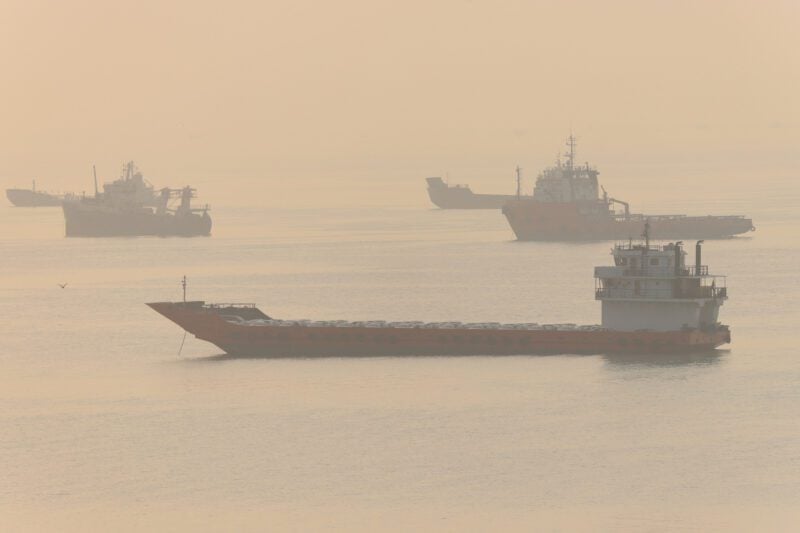
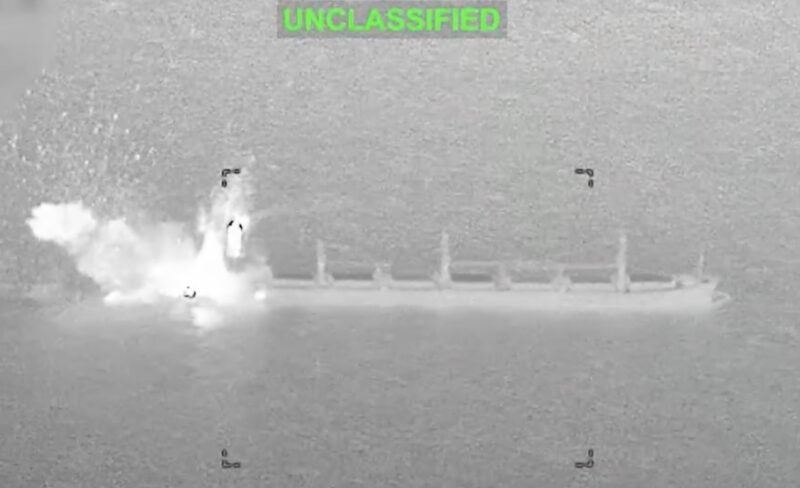
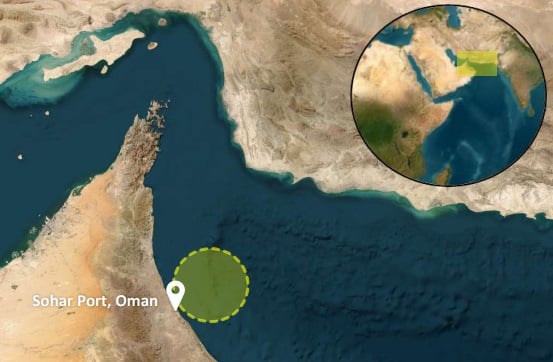
Maritime reporting describes repeated projectile attacks on vessels near the Strait of Hormuz, including the Panama-flagged GEM NO.2 near Al Jazeera, UAE, and attacks on outbound tankers. A drone attack on the MT Petro Dolphin at Sohar Anchorage, Oman, left two seafarers missing, although reports differ on the number rescued. US Central Command said a US fighter jet disabled the Panama-flagged M/V Ocean Molica in the Gulf of Oman on 10 October while enforcing the blockade of Iranian ports. The Houthis claimed attacks on Riyadh airport, Dammam airport and Aramco facilities; reporting on the Riyadh attack’s date, casualties and the effectiveness of Saudi air defences is inconsistent. Iran has proposed conditions for reopening the Strait of Hormuz, but public statements from Iranian security chief Mohsen Rezaei leave the status of talks unclear. Saudi Arabia has announced plans to expand pipeline capacity that bypasses the Strait. The supplied reporting contains no independently corroborated new Israeli strike on Iran.
Change from previous assessment
Since the 11 October brief, reporting adds a drone attack on the MT Petro Dolphin at Sohar Anchorage, further projectile incidents involving outbound vessels, and Iran’s public response to a US reply delivered through Qatari intermediaries. Saudi Arabia’s pipeline expansion announcements add a new energy-resilience judgment. The maritime risk assessment is reinforced; the casualty and air-defence disputes around Riyadh remain unresolved, and the supplied reporting does not materially strengthen the case for an imminent Israeli strike.
Key judgments
- Commercial vessels are likely to face elevated attack risk in the Strait of Hormuz and nearby Gulf of Oman over the next 0-14 days. Reporting describes projectile strikes on the GEM NO.2 near Al Jazeera, UAE, and on outbound tankers in the Strait, as well as a drone attack on the MT Petro Dolphin at Sohar Anchorage; the US-led Joint Maritime Information Center warned that attacks were becoming more frequent. Responsibility for the projectile attacks remains unconfirmed, and some incident descriptions may overlap. (Confidence: medium · ASSESSED)
- I&W: UKMTO records another projectile or drone attack on a commercial vessel in the Strait of Hormuz or Gulf of Oman. (0-14 days)
- I&W: The Joint Maritime Information Center withdraws its warning of more frequent attacks and UKMTO reports no new vessel incidents in these waters. (0-14 days)
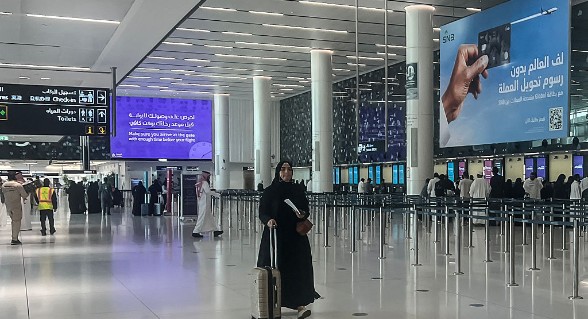
- The Houthis are likely to continue targeting Saudi aviation or energy infrastructure over the next 0-14 days. Reports describe attacks on King Khalid International Airport in Riyadh and a Houthi claim of attacks on Dammam airport and two Aramco facilities, alongside reporting of repeated Houthi attacks on Saudi energy and aviation sites. Houthi responsibility for the Riyadh incident is claimed, but casualty figures conflict sharply and reporting differs on whether Saudi air defences intercepted or failed to stop the attack. (Confidence: medium · ASSESSED)
- I&W: The Houthis claim or Saudi authorities report another attack on King Khalid International Airport, Dammam airport or an Aramco facility. (0-14 days)
- I&W: The Houthis announce a halt to attacks on Saudi infrastructure and no further attacks are reported for 14 consecutive days. (0-14 days)
- An agreement to reopen the Strait of Hormuz is unlikely within the next 0-14 days. Iran presented a seven-condition proposal and the United States replied through Qatari intermediaries, but Mohsen Rezaei called the US response insufficient and said negotiations would not proceed until Iran’s conditions were met. His statement that Iran was no longer responding also conflicts with reporting that Tehran had received a US response in late September, leaving the current status of the channel unresolved. (Confidence: low · ASSESSED)
- I&W: Iran and the United States announce acceptance of terms for reopening the Strait, or authorities report resumed normal passage through it. (0-14 days)
- I&W: Mohsen Rezaei repeats that negotiations will not proceed until Iran’s conditions are met, and Qatar reports no further exchange of messages. (0-14 days)
- Saudi Arabia is likely to increase its ability to move crude to destinations outside the Persian Gulf, but the announced 10 million barrels a day target is a two-to-three-year plan, not an immediate replacement for disrupted Strait of Hormuz shipping. The East-West pipeline was reported to be carrying 5.8 million barrels a day on 6 October. Energy Minister Prince Abdulaziz bin Salman said a repurposed gas pipeline could carry about 1.2 million barrels a day within seven to eight weeks, with a potential increase to 3 million after further investment. These projections come from the minister’s reported remarks and do not establish that the additional capacity is already available. (Confidence: medium · ASSESSED)
- I&W: Saudi Aramco or the Energy Ministry confirms that the repurposed pipeline has begun transporting crude at or near 1.2 million barrels a day. (1-3 months)
- I&W: Saudi authorities report no commissioning of the repurposed line and East-West pipeline throughput remains at or below the reported 5.8 million barrels a day. (1-3 months)
- An Israeli strike on Iran in the next 0-14 days is unlikely on the available reporting, but confidence is low. The assertion that the Israeli army is ready to strike and would not wait for the United States appears in a low-reliability social-media report. Separate reporting says accounts of delaying Israeli elections over a possible strike are proliferating, but the supplied material contains no corroborated operational decision or independent confirmation of imminent Israeli military action. (Confidence: low · ASSESSED)
- I&W: The Israeli government or Israeli military publicly confirms an operational decision to strike Iran, or the Knesset formally advances an election delay explicitly linked to an Iran operation. (0-14 days)
- I&W: The Israeli government publicly rules out action before the election and no formal election-delay measure is introduced. (0-14 days)
Outlook & scenarios
Continued maritime attrition and blockade enforcement (55%)
The most likely course is continued vessel attacks or attempted attacks around the Strait of Hormuz and Gulf of Oman, alongside US enforcement of the blockade on Iranian ports. Commercial operators retain elevated exposure, while responsibility for individual projectile attacks remains disputed.
Limited diplomatic progress on Hormuz (25%)
Qatari intermediaries resume exchanges between Washington and Tehran, producing a limited arrangement on passage through the Strait. This scenario requires movement on Iran’s stated conditions; Rezaei’s public remarks indicate that agreement is not yet in hand.
Saudi-Houthi escalation draws in the United States (15%)
The Houthis continue attacks on Saudi airports or energy sites, and Saudi Arabia responds militarily. US participation becomes more likely if Washington acts on President Donald Trump’s statement that it was considering joining Saudi attacks, though the supplied reporting does not establish a decision to conduct US strikes.
Israeli strike widens the conflict (5%)
A low-probability, high-impact pathway is an Israeli strike on Iran followed by further regional military exchanges. The available claim of Israeli readiness rests on low-reliability social-media reporting, so this remains a wildcard rather than the baseline outlook.
Recommendations
- For daily updates, separate UKMTO incident reports from confirmed attribution. Track each reported vessel incident by date, position, vessel name and whether it may duplicate another report.
- Treat the Riyadh airport casualty totals and air-defence account as unresolved. Give Saudi authority figures and Houthi claims separate attribution until consistent reporting is available.
- Monitor US Central Command statements and vessel tracking for further blockade enforcement actions, including whether commercial ships are turned around or disabled in the Gulf of Oman.
- Track announcements from Qatar, Tehran and Washington against Iran’s seven stated conditions and verify any claimed restoration of normal Strait of Hormuz passage.
- Follow Saudi Energy Ministry and Aramco updates for commissioning dates and measured throughput on the repurposed gas pipeline; distinguish operational capacity from the longer-term 10 million barrels a day target.
- Do not treat the Israeli strike-readiness social-media report or election-delay speculation as confirmation of an operational decision. Seek corroboration from Israeli government, military or parliamentary reporting.
Confidence & uncertainty
Confidence is high in the core reported developments because maritime incident reporting, a US-led maritime centre warning, wire-service reporting and major-media accounts support the occurrence of vessel attacks, US blockade enforcement and Saudi pipeline announcements. Confidence is lower on attribution, Riyadh and Petro Dolphin casualty totals, the status of US-Iran talks and Israeli strike preparations. The headline rating reflects the corroboration of the main events, not certainty about responsibility or what happens next.
Intelligence gaps
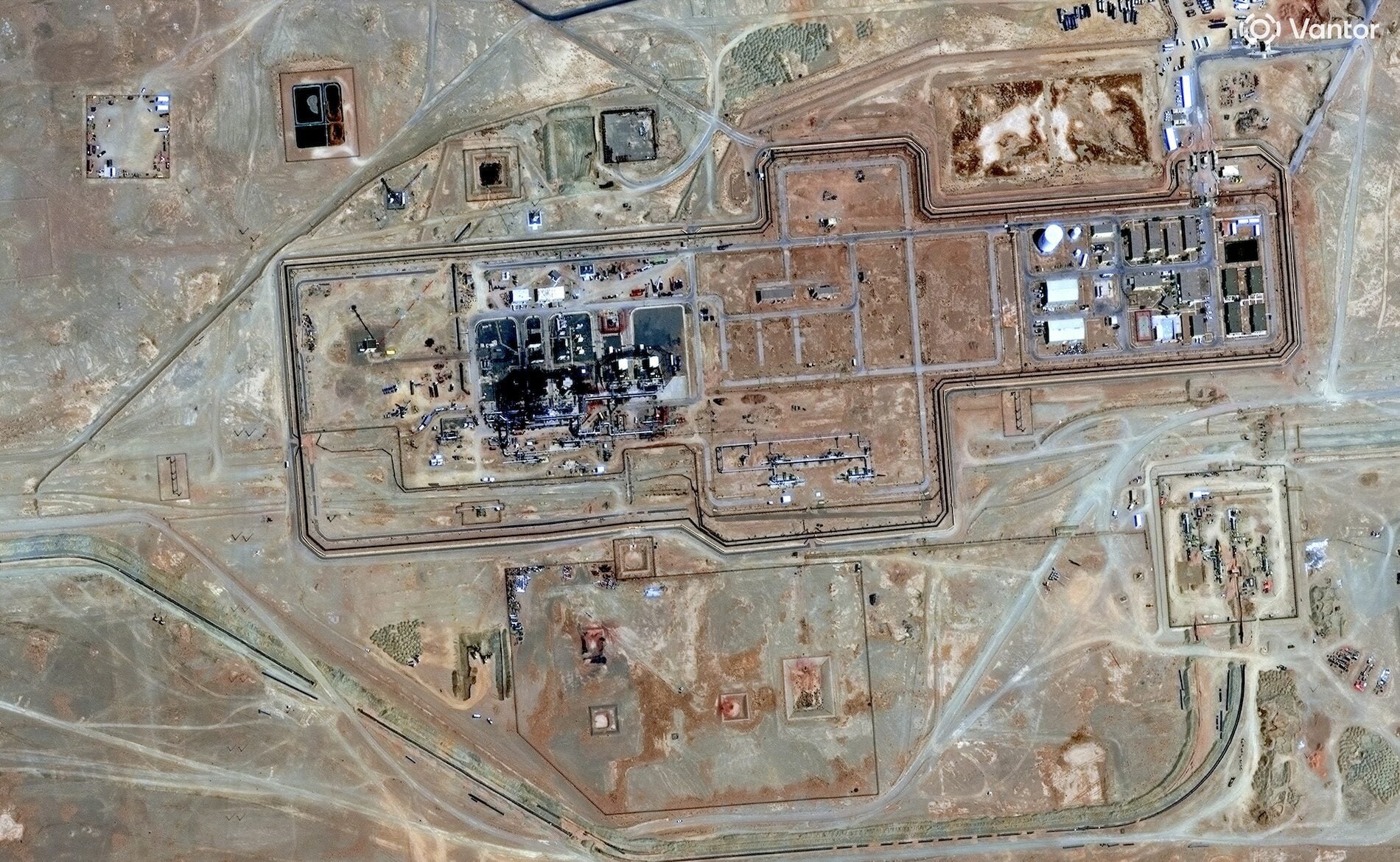
- [EEI 1.1 · PARTIAL] Number, type, launch times, and trajectories of ballistic missiles, cruise missiles, armed UAV strikes, and combat-air sorties launched by Iranian or Israeli forces toward the other's territory or forward bases within a 72-hour window. Recommended collection: signals/intel
- [EEI 1.2 · UNCOVERED] Observable changes in Israeli and Iranian force posture: mobilization or reserve call-up orders, unit road/rail movements, dispersal or sortie rates of air squadrons, redeployment of air-defense batteries, and activation of civil-defense alerts or sirens in major population centers. Recommended collection: open-source/media
- [EEI 1.3 · PARTIAL] Indications of strike authorization or targeting preparations in Iranian or Israeli command chains: authenticated public orders by senior commanders, detected increases in encrypted communications consistent with targeting, or visible movement of strike munitions to launch/storage sites. Recommended collection: signals/intel
- [EEI 2.1 · UNCOVERED] Counts, launch locations (coordinates), weapons types, and assessed damage from rocket/missile/drone strikes originating from Lebanon into northern Israel attributed to Hezbollah or allied groups. Recommended collection: open-source/media
- [EEI 2.2 · UNCOVERED] Reported attacks by Iranian-backed militias in Iraq and Syria: rocket/IED strikes on bases hosting US/coalition or Israeli personnel, documented militia unit movements toward borders, and captured movement or transfer of weapons systems to forward militia positions. Recommended collection: human
- [EEI 2.3 · PARTIAL] Maritime harassment or attacks by proxies (e.g., Houthis): incidents of missile/rocket strikes against commercial vessels, small-boat swarm attacks, discovery or detonation of naval mines, and corresponding AIS anomalies in the Red Sea, Gulf of Aden, or southern Arabian Gulf. Recommended collection: maritime/AIS
- [EEI 3.1 · PARTIAL] Movements and arrival dates of foreign military assets into the region: carrier strike groups, amphibious ships, surface combatants, strategic airlift/tanker deployments, and air/sea patrol patterns by US, European, Russian, or regional militaries. Recommended collection: imagery/satellite
Cited sources
[1] gCaptain · More Tankers Hit in Hormuz as U.S. Strikes Cargo Ship (B) · 11 October 2026 · sha256:80b4c744c804 [2] The Maritime Executive · Two Seafarers Missing in Drone Attack on Product Tanker off Oman (C) · sha256:96cedc4ea135 [3] BBC News عربي · الهجوم على مطار الرياض: لحظة خطيرة جديدة في ظلّ صراع متأزم - BBC News عربي (A) · 11 October 2026 · sha256:2df8e217c878 [4] Bloomberg (republished by gCaptain) · Saudi Eyes 10 Million Barrels a Day of Oil Pipe Capacity (A) · 12 October 2026 · sha256:0fd80354559a [5] Panet (panet.com) · بعد يوم من مقتل 13. السعودية تعلن مقتل شخص في هجوم على مطار الرياض (B) · sha256:d868d5238fa1 [6] Panet (panet.com) · تركيا وباكستان ومصر والسعودية تندد بهجمات الحوثيين على مطار الرياض (D) · sha256:37d67cf675b5 [7] Reuters (republished by gCaptain) · Iran Says US Response To Its Proposal To Reopen Hormuz Was 'Insufficient' (A) · 11 October 2026 · sha256:ee825d32d6fc [8] راديو الثورة (Radio Althawra) · تقرير صادم.. الجيش الإسـ.ـرائيلـ.ـي جاهز لضرب #إيران، والقرار قد لا ينتظر #أمريكا #راديو_الثورة | راديو الثورة (E) · sha256:899bdd612560 [9] الجزيرة نت (Al Jazeera Net) · الجزيرة نت (A) · sha256:3521e0a36f8e
Source content hashes were computed at collection time; the cited text is preserved unmodified for the life of this product.
Red cell review: CONCUR WITH COMMENT
TLP:CLEAR