TLP:CLEAR · Disclosure is not limited.
Regional Escalation Intensifies After US-Israel-Lebanon Framework Agreement
Time window: Last 7 days · Audience: General analyst · Type: Situation report · DTG: 2026-06-28 13:15Z · Overall confidence: HIGH
BLUF
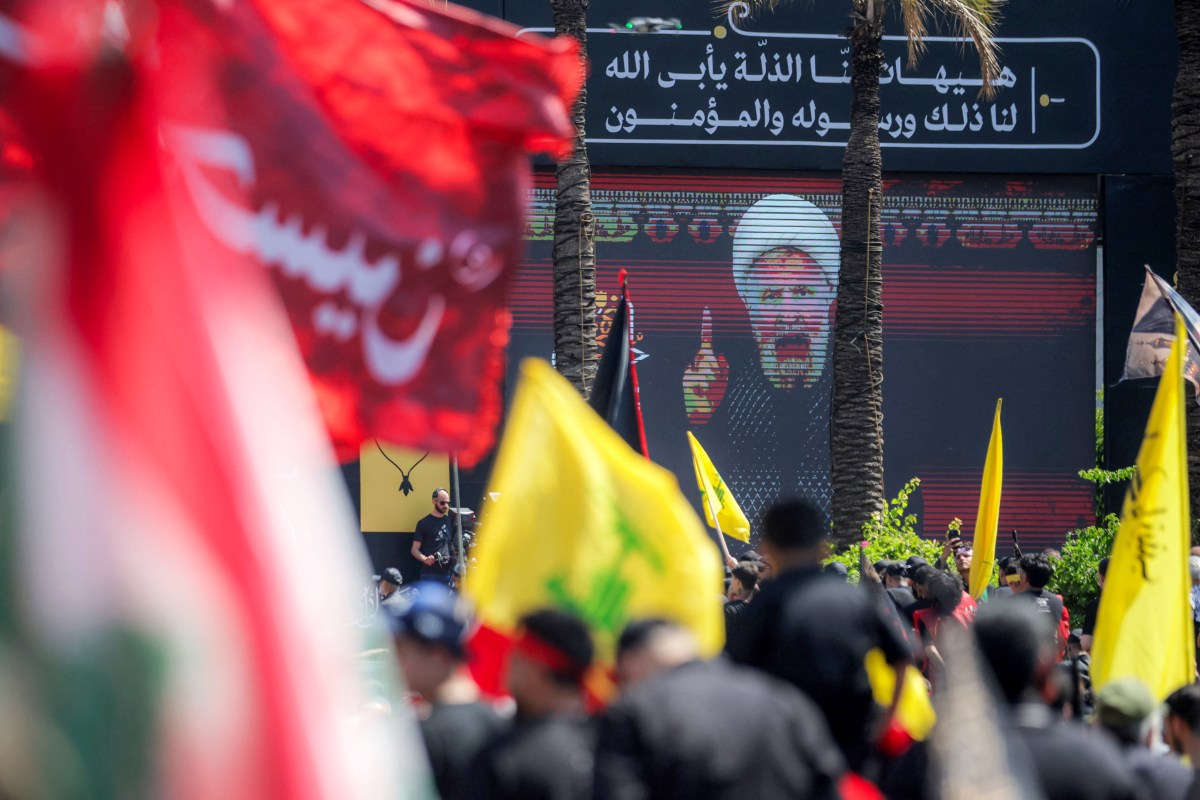
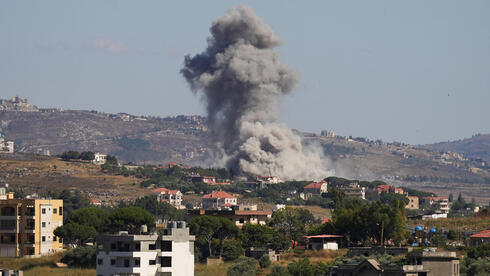
The US-brokered framework agreement between Israel and Lebanon signed on 27 June 2026 is rapidly unravelling, with Hezbollah rejecting the deal as 'null and void' and Israel conducting drone strikes in Nabatiyeh on 28 June. Concurrently, US-Iran strikes in the Strait of Hormuz on 27-28 June have elevated regional maritime threat levels to 'substantial' and risk further escalation.
Executive summary
Israel and Lebanon signed a US-brokered framework agreement on 27 June aimed at achieving a permanent cessation of hostilities, but the deal immediately faced rejection from Hezbollah leadership and continuing hostilities. Israel conducted a drone strike in Nabatiyeh on 28 June, while Iranian forces struck the Panama-flagged tanker Kiku in the Strait of Hormuz on 27 June, prompting retaliatory US strikes against 10 Iranian military targets. The Joint Maritime Information Center raised the threat level in the Strait to 'substantial', and security analysts warn of potential further Iranian military action. Meanwhile, humanitarian conditions remain critical in Gaza with nearly 80 percent of Palestinians living in shelters, severe water shortages, and thermal detections indicating ongoing hostilities.
Change from previous assessment
Previous assessment anticipated continued hostilities despite US-brokered agreement with a roughly even chance of renewed escalation. Current assessment reflects almost certain collapse of the agreement following Hezbollah's explicit rejection and immediate resumption of Israeli strikes, raising the risk of renewed escalation from roughly even chance to very likely. Confidence in continued hostilities has increased from medium to high due to multiple corroborated reports of strikes on 27-28 June. Assessment now specifically identifies US-Iran escalation as the new primary regional risk factor replacing earlier maritime concerns.
Key judgments
- The US-brokered framework agreement between Israel and Lebanon signed on 27 June 2026 is very likely to collapse within the next 1-2 weeks due to Hezbollah's explicit rejection of the deal as 'null and void' and Israel's continued military operations in Lebanon. (Confidence: high · ASSESSED)
- I&W: Hezbollah conducts direct military operation against Israeli Defense Forces personnel in southern Lebanon (0-14 days)
- I&W: Israeli Defence Minister Israel Katz authorises expansion of military operations beyond current security zone boundaries (0-14 days)
- US-Iran clashes in the Strait of Hormuz are very likely to escalate further over the next 7 days, with Iranian forces conducting additional strikes against shipping or regional military installations. (Confidence: high · ASSESSED)
- I&W: Joint Maritime Information Center raises threat level from 'substantial' to 'severe' (1-7 days)
- I&W: Iranian Revolutionary Guard Corps launches attack against US naval vessel in Arabian Sea (0-7 days)
- The Israeli military's sustained presence across a six-mile span of southern Lebanon is almost certainly contributing to increased demolition operations across at least 46 of 54 localities within the IDF's Yellow Line, with villages including Qantara experiencing extensive destruction. (Confidence: high · REPORTED)
- I&W: Israeli Defence Minister Israel Katz states military will maintain presence for 12-month minimum period (1-3 months)
- I&W: UN OCHA reports increase in unexploded ordnance in Tyre district from 200 to 300 sites (1-2 weeks)
- Gaza's humanitarian crisis remains very likely to worsen over the next 30 days, with more than 80 percent of Palestinians now living in shelters and tents, 59,000 individual shelters accommodating more than eight people, and UN agencies reporting severe water shortages in assessed sites. (Confidence: high · ASSESSED)
- I&W: World Health Organization reports cholera outbreak spreading to multiple shelters (7-14 days)
- I&W: Daily water supply at Kerem Shalom crossing drops below 100 trucks (0-7 days)
Outlook & scenarios
Full Collapse of Framework Agreement (45%)
Hezbollah launches direct military operations against Israeli Defense Forces positions by 5 July, triggering significant Israeli counter-offensive operations that force Lebanon to formally annul the framework agreement by 10 July. US attempts to broker revised negotiations begin on 12 July but fail to achieve consensus by 20 July when Iranian forces conduct a major attack against US naval vessels in the Arabian Sea. This scenario would likely result in full resumption of cross-border hostilities, displacement of an additional 300,000 Lebanese civilians, and complete suspension of commercial shipping through the Strait of Hormuz for 7-14 days.
Managed De-escalation (35%)
Despite Hezbollah's rejection of the agreement, limited Israeli military presence in southern Lebanon remains stable while both sides observe an informal truce. On 1 July, the US and Iran agree to a modified memorandum of understanding that establishes verified inspection protocols for Strait of Hormuz traffic by 5 July. This prevents further direct military exchanges while allowing approximately 75 percent of pre-conflict commercial shipping to resume by 15 July. Humanitarian conditions in Gaza gradually improve with daily UN aid shipments reaching 150 trucks by 20 July through expanded Kerem Shalom operations, though water shortages persist in most shelters.
Protracted Stalemate (20%)
Military operations resume along the Israel-Lebanon border at a low intensity beginning 30 June, with Hezbollah conducting daily rocket launches into northern Israel while Israel conducts precision strikes against identified militant positions. US-Iran strikes continue in fits and starts with each side conducting limited retaliatory actions every 3-5 days, but both sides avoid major escalation. Commercial shipping continues in the Strait of Hormuz at approximately 60 percent of pre-war levels through mid-July, though transit times increase due to security protocols. Gaza's humanitarian situation deteriorates further with multiple outbreaks of waterborne diseases reported by 15 July while UN aid deliveries remain restricted to approximately 80 trucks per day.
Recommendations
- Prioritise monitoring of Hezbollah military redeployments from Beirut southern suburbs toward border areas, particularly focusing on movement of rocket launchers and drone systems.
- Coordinate with shipping intelligence partners to track vessel routing changes in Arabian Sea and Gulf of Oman to identify early indicators of maritime risk escalation.
- Analyse daily satellite imagery of demolished areas in southern Lebanon to assess destruction patterns and estimate rebuilding requirements for potential post-conflict planning.
- Track daily water, food, and medical supply metrics at Kerem Shalom crossing to identify critical shortage thresholds that could trigger acute humanitarian crises.
Confidence & uncertainty
Overall confidence is high due to multiple, independent, reliable reporting streams including official military statements from US Central Command, verifiable strike documentation via satellite imagery, UN operational reporting, and credible commercial shipping data. Significant corroboration exists for key events such as the US-Iran strikes on 27-28 June and Israeli operations in southern Lebanon. Uncertainties remain regarding the durability of political agreements and precise future escalation pathways, but core event reporting demonstrates high reliability through source convergence.
Intelligence gaps
- [EEI 1.1 · UNCOVERED] Number, type and geolocated coordinates of projectiles (rockets, mortars, anti-tank guided missiles) fired from Lebanon into Israel in the last 24/72 hours, including time-stamped launch and impact locations. Recommended collection: signals/intel
- [EEI 1.2 · UNCOVERED] Satellite or aerial imagery showing movement, concentration, or forward displacement of Hezbollah-associated military assets (armored vehicles, artillery pieces, mobile rocket launchers, logistics convoys) to positions within 0–10 km of the Israel-Lebanon border. Recommended collection: satellite/imagery
- [EEI 1.3 · UNCOVERED] Intercepted or captured Hezbollah command-and-control communications or orders explicitly directing cross-border operations or coordinated strikes with Palestinian groups (time-stamped messages, unit identifiers, orders to fire/move). Recommended collection: signals/intel
- [EEI 1.4 · PARTIAL] Observable changes in Israeli northern-front posture within Israel (numbers and types of reinforcements deployed to northern brigades, activation of reserves, air defense redeployments, evacuation orders or shelter alerts in northern towns), including timestamps and unit IDs where available. Recommended collection: human/intel
- [EEI 2.1 · UNCOVERED] Official or corroborated reports of IDF reservist mobilization and unit-level deployment orders (number of reservists called, named brigades/units ordered to deploy, deployment timelines). Recommended collection: open-source/media
- [EEI 2.2 · UNCOVERED] Satellite or ground imagery showing concentrations of IDF heavy equipment (tanks, infantry fighting vehicles, engineering vehicles), staging areas, field hospitals or forward supply dumps within X km of the Gaza border and at known crossing points. Recommended collection: satellite/imagery
- [EEI 2.3 · UNCOVERED] Change in strike patterns consistent with pre-ground-attack shaping: sustained high-frequency airstrikes on tunnel networks, command nodes, coastal launch sites, and known insurgent concentrations (strike counts, munition types, locations, times). Recommended collection: open-source/media
- [EEI 2.4 · UNCOVERED] Logistics indicators: verified convoys of fuel/ammunition entering staging areas, establishment of forward logistics or medical bases, or documented requisitioning orders for bulk combat supplies with timestamps and quantities. Recommended collection: human/intel
- [EEI 3.1 · UNCOVERED] Number, participants and content of diplomatic contacts or negotiation sessions in the last 48 hours involving mediators (Egypt, Qatar, US, UN), including any proposed ceasefire text, prisoner/exchange lists, timelines or verification mechanisms. Recommended collection: diplomatic
- [EEI 3.2 · UNCOVERED] Public statements, press releases or verified communiqués from Hamas and other Gaza armed groups specifying acceptance, rejection, or conditions for a ceasefire (explicit conditions such as prisoner release lists, withdrawal terms, lifting of blockades), with timestamps and speaker attribution. Recommended collection: open-source/media
- [EEI 3.3 · PARTIAL] Humanitarian indicators relevant to ceasefire: establishment and operation of agreed humanitarian corridors/checkpoints, number of aid deliveries admitted, civilian evacuations completed, and NGO/hospital reports of access denials or safe-passage violations. Recommended collection: humanitarian/NGO reports
- [EEI 3.4 · UNCOVERED] Operational evidence of a de facto pause: verified sustained reduction (e.g., ≥12 hours) in strikes or launches from either side in specific sectors, supported by strike/impact logs, radar tracks and incident reports. Recommended collection: open-source/media
Cited sources
[1] Al Jazeera · Israel-Lebanon deal ties ceasefire to Hezbollah disarmament: Will it work? (A) · sha256:e163fced1954 [2] gcaptain.com · US Carries Out Fresh Strikes Against Iran After Tanker Struck In Hormuz, Escalating Hostilities (B) · sha256:d0a1e8160079 [3] Wikipedia · 2026 Israel–Lebanon ceasefire (B) · sha256:686da66570cd [4] ynetnews.com · Israel braces for northern escalation after Lebanon deal: ‘Hezbollah and Iran are losing it’ (B) · sha256:ba515337f873 [5] gcaptain.com · Tanker Struck In Hormuz As Navies Raise Threat Level To Ships (B) · sha256:c73f73118763 [6] gcaptain.com · Second Tanker Struck in Strait of Hormuz as U.S.-Iran Shipping Crisis Deepens (B) · sha256:73a0fc5a90df [7] bellingcat.com · Satellite Imagery Shows Ongoing Demolitions Across Southern Lebanon - bellingcat (B) · sha256:052733cd55f8 [8] Newsweek · Hezbollah reacts to new Israel-Lebanon deal: "Our hands are on our weapons" (B) · sha256:e1d2ba1a769e [9] United Nations · World News in Brief: UN launches Hormuz evacuation plan, UNICEF youth champion killed in Gaza, Lebanon ceasefire ‘largely holding’ (A) · sha256:41dca8a20228 [10] Al Jazeera · ‘Between pain and fear’: Gaza children bear cost of ongoing Israeli attacks (A) · sha256:a21c9564aff1 [11] Los Angeles Times · Israeli drone strike kills Palestinian siblings in a Gaza tent camp - Los Angeles Times (A) · sha256:6f347ec85523
Source content hashes were computed at collection time; the cited text is preserved unmodified for the life of this product.
Red cell review: CONCUR WITH COMMENT
TLP:CLEAR