TLP:CLEAR · Disclosure is not limited.
Riyadh Airport Strike Broadens Regional Escalation Risk
Time window: Last 1 day · Audience: General analyst · Type: Situation report · DTG: 2026-10-11 12:40Z · Overall confidence: HIGH
BLUF
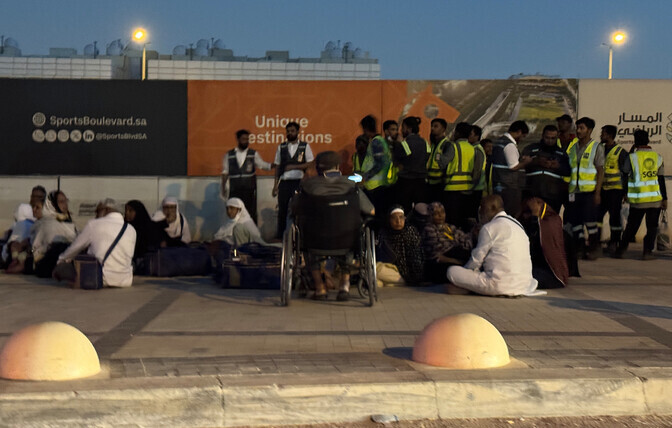
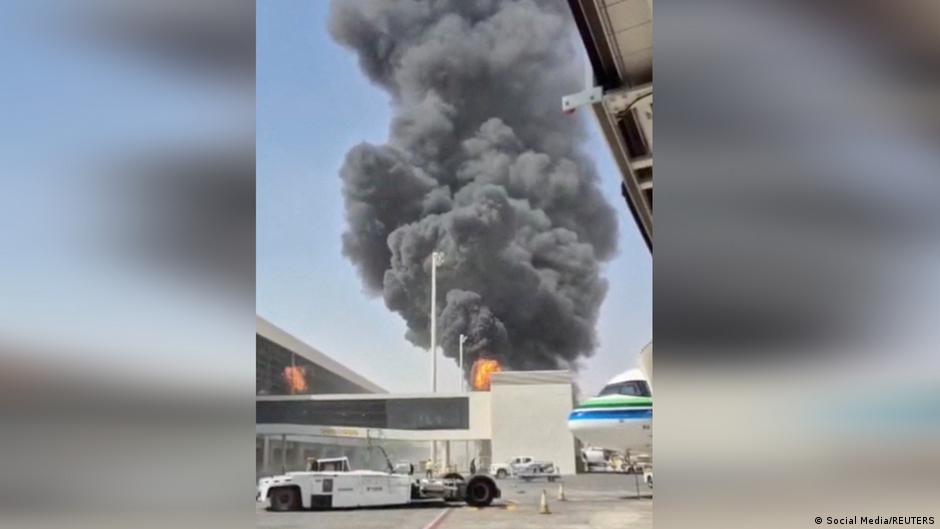
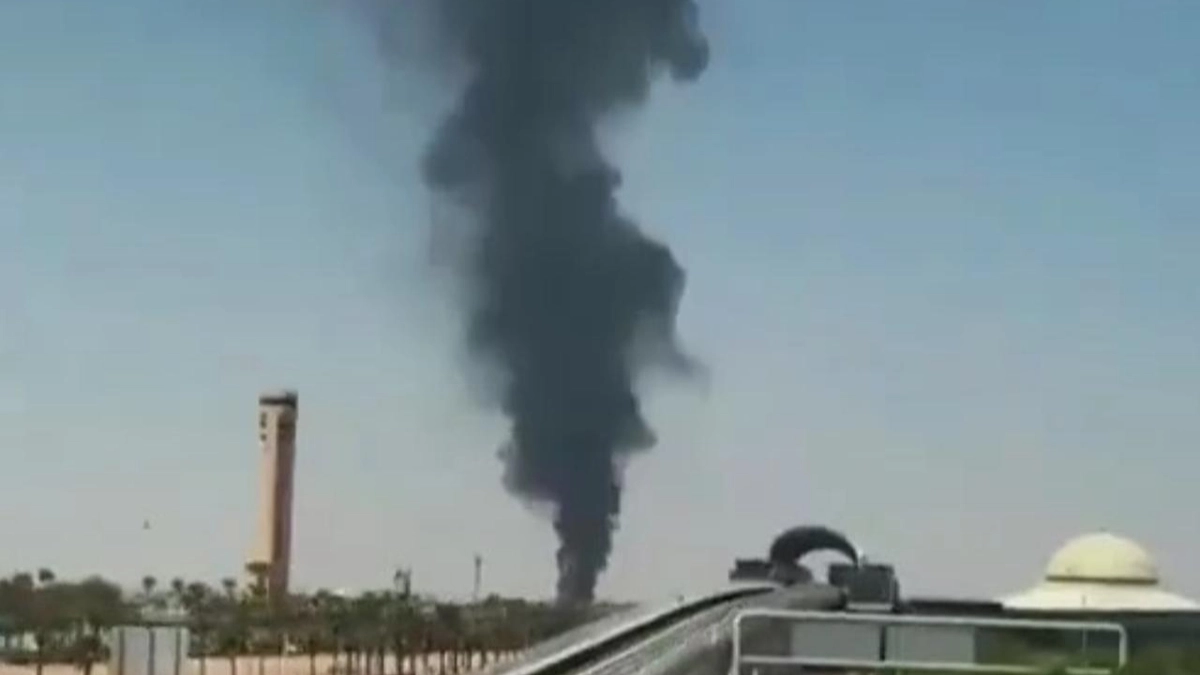
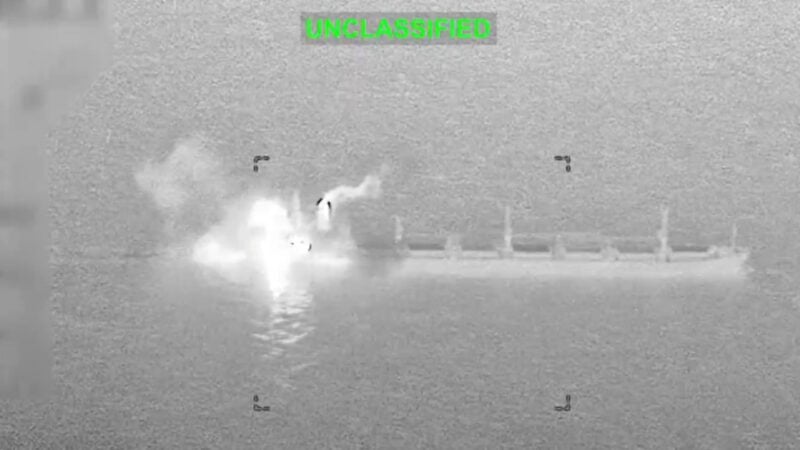
The 10 October strike on King Khalid International Airport killed 12 people and wounded 309, while Saudi Arabia reported more than 60 airstrikes on Houthi-controlled provinces in Yemen. The US disabling of M/V Ocean Molica and reports of prepared US strike options raise concern about wider US-Iran hostilities, but a new US strike on Iran before 3 November remains unlikely. Responsibility for the Riyadh attack and the IRGC’s claim of a mine strike in the Strait of Hormuz remain unverified.
Executive summary
The reported escalation now spans the Saudi-Houthi conflict and the US-Iran maritime confrontation. Saudi authorities reported 12 deaths and 309 injuries in the 10 October strike on King Khalid International Airport in Riyadh; flights were diverted and airport operations were suspended. Saudi Arabia reported more than 60 airstrikes on Houthi-controlled provinces, and Donald Trump said the US was considering joining Saudi strikes. Separately, US Central Command said US forces disabled M/V Ocean Molica in the Gulf of Oman after it ignored warnings, while the IRGC claimed a tanker struck a mine in the Strait of Hormuz. That mine account conflicts with Central Command’s statement that the shipping lane is clear. Reports of Pentagon strike options and a third US aircraft carrier heading to the Middle East add to the risk picture, but do not establish a decision to strike Iran.
Change from previous assessment
Since the 10 October brief, the assessment has widened beyond maritime risk. The 10 October Riyadh airport strike, reported fatalities and injuries, Saudi strikes on Houthi-controlled provinces, and Trump’s stated consideration of US participation add a Saudi-Houthi escalation track. The US disabling of M/V Ocean Molica, the reported deployment of the Theodore Roosevelt and reports of prepared strike options increase concern about direct US-Iran escalation, but do not establish that a new strike on Iran is imminent. The prior assessment that further shipping attacks are likely is unchanged. Confidence in attribution of the Riyadh attack remains low, and the mine-strike account adds a new unresolved contradiction. Initial assessment of these developments since the prior brief.
Key judgments
- The 10 October strike on King Khalid International Airport killed 12 people and wounded 309, and disrupted flights serving Riyadh. Saudi civil aviation authorities reported the casualty figures; reporting also identified the strike as the airport’s third attack in a week and said flights were diverted and operations suspended. (Confidence: high · REPORTED)
- I&W: A Saudi civil aviation update retaining the figures of 12 dead and 309 wounded, alongside an official account of the airport closure, would confirm the reported toll and disruption; a correction to those figures or to the closure account would break this judgment. (0-14 days)
- I&W: Saudi civil aviation or airport notices document the resumption of scheduled departures from King Khalid International Airport, confirming that the immediate flight disruption has ended. (0-14 days)
- The Houthis were likely responsible for the Riyadh airport strike, but attribution remains unsettled. Reporting relays an attribution from a diplomatic source, while another account describes the attackers as unknown; the Houthi warning to airlines to avoid Saudi airspace does not itself establish responsibility for this strike. (Confidence: low · ASSESSED)
- I&W: A Houthi statement explicitly claiming the 10 October strike, or Saudi investigators publicly identifying Houthi launch evidence, would confirm the attribution. (0-14 days)
- I&W: Saudi investigators identify a different attacker and publish evidence inconsistent with a Houthi launch, breaking the attribution. (0-14 days)
- Further Saudi-Houthi exchanges are likely over the next 14 days. Saudi Arabia reported more than 60 airstrikes on Houthi-controlled provinces, while the Houthis declared Saudi airspace a zone of military operations and the Saudi-led coalition reported a Houthi-launched ballistic missile intercepted in Al-Kharj. (Confidence: medium · ASSESSED)
- I&W: A Saudi-led coalition report of further strikes in Houthi-controlled Yemen, or a coalition report of another Houthi missile launch towards Riyadh, Al-Kharj or Dammam, would confirm continued exchanges. (0-14 days)
- I&W: A public halt to Saudi airstrikes followed by 14 days without a reported Houthi attack on Saudi territory would weaken this judgment. (0-14 days)
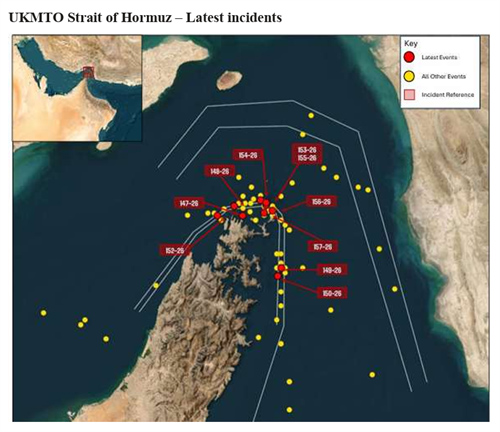
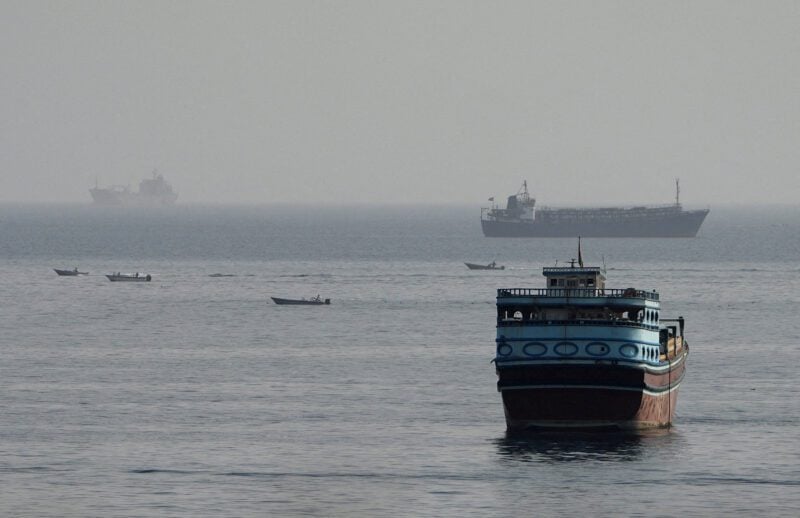
- Further coercive interference with shipping in the Strait of Hormuz or the Gulf of Oman is likely over the next 14 days. UKMTO recorded 11 shipping attacks in the seven days ending 7 October, and the IRGC Navy threatened enforcement against vessels using unauthorised routes. On 10 October, US forces disabled M/V Ocean Molica in the Gulf of Oman after it ignored warnings. The IRGC’s separate claim that a tanker struck a sea mine conflicts with Central Command’s statement that the shipping lane is mine-free; the claims provided do not independently resolve that dispute. (Confidence: medium · ASSESSED)
- I&W: A new UKMTO or IMO report of a vessel strike, seizure or forced diversion in the Strait of Hormuz or Gulf of Oman would confirm continued maritime coercion. (0-14 days)
- I&W: No new UKMTO or IMO incident reports for 14 days, alongside publication of the Tehran-Muscat safe-route details, would weaken this judgment. (0-14 days)
- A new US strike on Iranian territory before 3 November is unlikely. Donald Trump said on 7 October that he would not attack Iran before the US congressional midterm elections, but reporting also says the Pentagon prepared options for a three-day strike operation and that a third aircraft carrier, the Theodore Roosevelt, is being sent to the Middle East. Separate reporting about possible pre-election military action conflicts with Trump’s statement, so this estimate rests on contested reporting and is low confidence. (Confidence: low · ASSESSED)
- I&W: A US announcement authorising strikes on Iranian territory, or a reported US strike on an Iranian target before 3 November, would break this judgment. (0-23 days)
- I&W: A renewed public commitment by Trump not to strike before 3 November, accompanied by an official statement that no operation is authorised, would strengthen it. (0-23 days)
- Hormuz shipping remains materially disrupted despite partial recovery. UKMTO recorded 275 combined inbound and outbound transits in its latest seven-day period, up from 247 the previous week but still about 75% below pre-conflict levels. Industry executives separately put shipments at about 80% of pre-war levels; those figures measure different flows, and the reporting does not provide a common basis for comparison. Marco Rubio’s claim that oil transit had nearly returned to pre-war levels is inconsistent with the UKMTO transit figures. (Confidence: medium · REPORTED)
- I&W: The next UKMTO seven-day report still shows transits about 75% below its pre-conflict baseline, confirming continued disruption. (0-14 days)
- I&W: UKMTO reports transits at 80% or more of the pre-conflict baseline, breaking the assessment of materially reduced traffic. (0-14 days)
Outlook & scenarios
Continued pressure without a new US strike on Iran (55%)
This is the most likely near-term course. Saudi-Houthi attacks continue, and Iran and the US maintain pressure around shipping routes, while neither side opens a new strike campaign against the other’s territory. Riyadh remains vulnerable to further disruption, and Hormuz traffic stays below its pre-conflict level.
US participation in Saudi strikes expands (25%)
Trump’s stated consideration of joining Saudi strikes becomes a US operation against Houthi targets in Yemen. Further Houthi attacks on Saudi territory would likely follow, raising the risk of a wider regional confrontation without necessarily producing a new US strike on Iran.
Direct US-Iran strikes resume (15%)
The US administration orders strikes on Iranian targets before 3 November despite Trump’s public statement. Iran responds with strikes, extending the current maritime confrontation into a direct exchange on Iranian territory. Reports of prepared Pentagon options and the deployment of the Theodore Roosevelt are relevant indicators, but do not establish that a decision has been made.
Verified mine incident triggers a shipping shock (5%)
This very unlikely, high-impact wildcard begins with independent confirmation that a mine struck a tanker in the Strait of Hormuz. A verified incident, especially if followed by further vessel damage or a sharp fall in UKMTO transits, would intensify the dispute over safe passage and force an urgent reassessment of maritime risk.
Recommendations
- Keep separate incident tracks for Saudi-Houthi attacks, direct US-Iran military actions and maritime incidents. Do not treat Houthi responsibility for the Riyadh strike or the IRGC mine account as independently established.
- Check Saudi civil aviation updates for casualty revisions, airport operating status and flight diversions. Track any public Saudi investigation identifying the Riyadh attacker.
- Monitor Saudi-led coalition reporting for further airstrikes and missile interceptions, and monitor Trump’s statements and US government announcements for a decision on joining Saudi strikes.
- Compare each new UKMTO seven-day transit count with the same pre-conflict baseline. Keep total vessel transits separate from industry estimates of oil shipments.
- Treat the mine-free lane statement from US Central Command and the IRGC mine claim as competing official accounts until independent reporting resolves them. Record any new UKMTO or IMO incident report before drawing conclusions about the route’s safety.
Confidence & uncertainty
Overall confidence is high for the main reported event sequence: Saudi civil aviation authorities supplied the Riyadh casualty figures, multiple established outlets reported the airport disruption, and UKMTO and US Central Command reporting provide concrete details on maritime incidents and US action. This confidence applies to the occurrence of reported events and official statements, not to every attribution or forecast. The Riyadh attacker remains unconfirmed, the IRGC and US accounts of a mine incident conflict, and shipping estimates use different measures and reporting periods.
Alternative analysis (red cell)
The available evidence does not yet support a judgment that the Houthis were likely responsible for the airport strike. It establishes a diplomatic-source attribution in 1fb03c6d-e307-4a2c-ae66-d08038b269c2 and 90fc5ec9-c69c-40ce-a149-dd09aafda4d4, but the warning in 02e898bf-dd75-4362-a481-c75daa70dfa2 does not identify the attacker and the attribution conflict recorded under a7d4e2e5-3d62-4b9e-8501-73b127d47a15 and b8dafeba-168e-44e0-ad93-fd5e298dc1ac remains unresolved. The more defensible assessment is that Houthi responsibility is plausible but unconfirmed.
Intelligence gaps
- [EEI 1.2 · PARTIAL] Changes in US or Iranian force posture indicating preparation for further attacks, including aircraft dispersal, missile-unit movement, naval sortie activity, or air-defense activation. Recommended collection: satellite imagery/aviation and maritime tracking
- [EEI 2.1 · PARTIAL] Deployment or repositioning of Iranian ballistic missiles, cruise missiles, drones, fast-attack craft, or other strike assets within operational range of US or partner targets. Recommended collection: satellite imagery/signals intelligence
- [EEI 2.4 · PARTIAL] Changes in Iranian military alert levels, command activity, weapons dispersal, or continuity-of-government measures. Recommended collection: signals intelligence/satellite imagery
- [EEI 3.1 · PARTIAL] Arrival or departure of US carrier strike groups, bombers, air-defense units, special operations forces, or additional personnel in the region. Recommended collection: maritime and aviation tracking
- [EEI 3.2 · PARTIAL] Changes to US force-protection conditions, base access, evacuation plans, embassy staffing, or noncombatant evacuation preparations. Recommended collection: official notices/diplomatic reporting
- [EEI 3.4 · PARTIAL] US or coalition kinetic actions against Iranian territory, military infrastructure, or aligned groups following new exchanges. Recommended collection: military reporting/open-source imagery
- [EEI 4.4 · UNCOVERED] Sustained movements in oil and gas prices, tanker freight rates, or reported disruptions to production and export facilities attributable to the military exchanges. Recommended collection: energy-market reporting
Cited sources
[1] ERR (Estonian Public Broadcasting, Russian-language service) · Атака на аэропорт в Эр-Рияде: 12 погибших, свыше 300 раненых (A) · 11 October 2026 · sha256:15ae10a849f7 [2] ГОРДОН (gordonua.com) · 12 погибших и более 300 раненых. Хуситы атаковали аэропорт столицы Саудовской Аравии (B) · 11 October 2026 · sha256:5b41ac24f8fa [3] Ukrainska Pravda · АР: Из-за атаки хуситов на аэропорт Саудовской Аравии 12 погибших, более 300 раненых (B) · 10 October 2026 · sha256:87168b092fe4 [4] Deutsche Welle (DW) · Атака на аэропорт Эр-Рияда: Погибли 12, свыше 300 ранены. Больницы переполнены (A) · 10 October 2026 · sha256:998edf7932d0 [5] gCaptain · Second Ship Struck Inside Persian Gulf in Three Days (C) · 9 October 2026 · sha256:cc2ef31c3c06 [6] The Maritime Executive · More Tankers Struck as IRGC Expands Threat Against Non-Compliant Vessels (C) · sha256:24ae654e496a [7] gCaptain · US Says It Disabled Cargo Vessel Trying To Run Iran Blockade (C) · 11 October 2026 · sha256:20a9593f1e7c [8] ria.ru · В Ормузе подорвался танкер, шедший по не санкционированному Ираном маршруту (F) · 10 October 2026 · sha256:1d1228d988bd [9] TRT Russian (trtrussian.com) · Может ли Россия помирить США с Ираном? (B) · 10 October 2026 · sha256:c87927903cb6 [10] РИА Новости (RIA Novosti) · 'Готов пожертвовать страной'. Что стоит за словами Трампа об ударах по США (B) · 11 October 2026 · sha256:da065a2462ea [11] gCaptain (republishing Bloomberg content) · Global Oil Tanker Shortage is Getting Worse By the Day (B) · 9 October 2026 · sha256:2372a2e696f4
Source content hashes were computed at collection time; the cited text is preserved unmodified for the life of this product.
Red cell review: PARTIAL DISSENT
TLP:CLEAR