TLP:CLEAR · Disclosure is not limited.
Romania's Carfil case sharpens, but does not settle, Russia-linked sabotage concerns
Time window: Last 1 day · Audience: General analyst · Type: Situation report · DTG: 2026-10-28 13:39Z · Overall confidence: HIGH
BLUF
Romanian officials have added detail to their allegation that a Russia-coordinated network was involved in the 14 September incident at the Carfil industrial site in Brașov, including reporting on three suspects and other alleged operations in Romania. The Russian Embassy rejects the accusation, and the reporting does not resolve whether the incident was a completed sabotage act or an attempted operation.
Executive summary
Romania's SRI said on 26 October that it had identified a network it described as directly coordinated by Russia and linked to the Carfil incident. DIICOT reporting identifies two Belarusian suspects and one Ukrainian suspect; two were detained in Germany and a third was located in Poland, with European arrest warrants and extradition proceedings reported. SRI also said investigations in 2026 uncovered other attempted operations involving international military facilities and sites associated with training Ukrainian personnel. The Russian Embassy called the allegations unfounded. Reporting continues to differ on whether the 14 September event was a fire at the Carfil industrial site or an attempted sabotage operation, and public reporting does not independently establish Russian direction.
Change from previous assessment
Since the 27 October brief, the assessment adds SRI's report that investigations during 2026 uncovered other attempted operations involving international military facilities and sites associated with training Ukrainian personnel. The current reporting also includes the Russian Embassy's rejection of the allegations and a continuing discrepancy over whether the 14 September Carfil incident was a fire or an attempted sabotage operation. These developments add detail to the reported case but do not increase confidence in independent proof of Russian direction.
Key judgments
- Romanian authorities have publicly attributed the 14 September 2026 Carfil industrial site incident in Brașov to a Russia-coordinated network, but Russian state direction and the incident's precise outcome remain unresolved. SRI and DIICOT have described an alleged network and named three suspects, while the Russian Embassy rejects the accusation; reporting also differs between a fire and an attempted sabotage operation. (Confidence: medium · ASSESSED)
- I&W: Romanian prosecutors or a court publish forensic or communications evidence linking the Carfil suspects to Russian tasking, which would strengthen the attribution. (0-3 months)
- I&W: DIICOT or a Romanian court withdraws the sabotage allegation, or rules that the Carfil fire was unrelated to the alleged network, which would weaken it. (0-3 months)
- Likely Romanian authorities will continue pursuing the Carfil case and examining related alleged plots over the next 1-3 months. DIICOT reported two suspects detained in Germany while allegedly preparing similar operations, a third suspect located in Poland, and European arrest warrants with extradition proceedings under way; SRI separately reported other attempted operations in Romania during 2026. (Confidence: medium · ASSESSED)
- I&W: Romanian courts publish extradition decisions or DIICOT files charges naming the suspects and alleged targets, confirming that the case is advancing. (0-3 months)
- I&W: Romanian authorities announce that extradition proceedings have ended without transfer, or that charges against the three suspects have been dropped, which would break the assessment. (0-3 months)
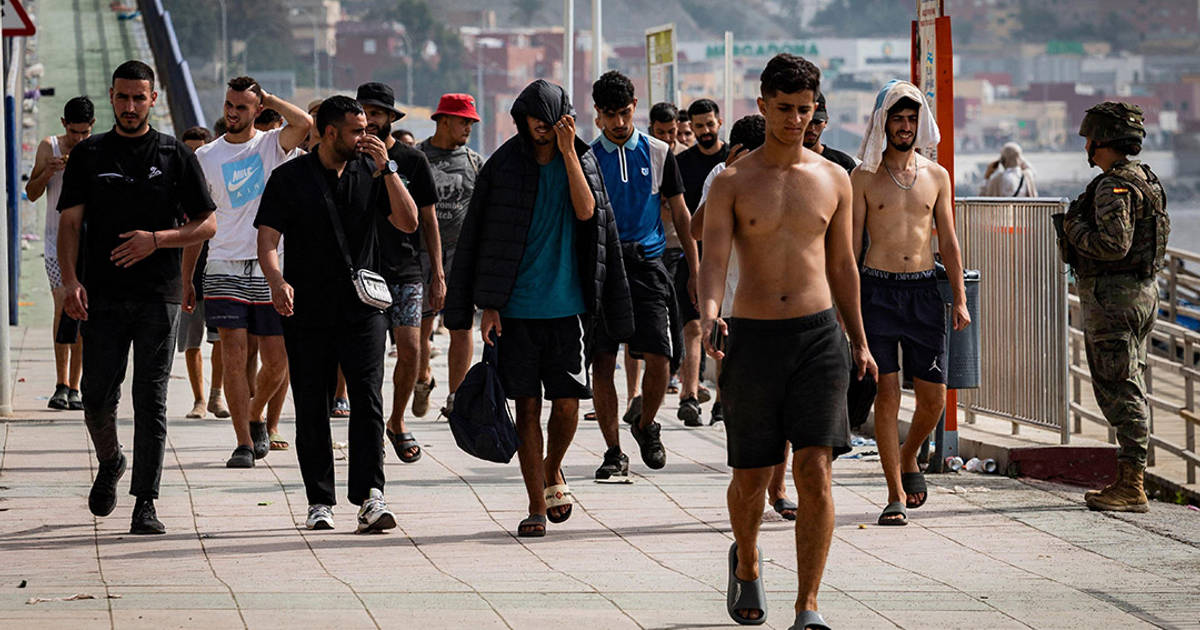
- The reporting does not establish a single Russia-directed disinformation campaign spanning the Ceuta migration episode, the arson attack on a former UK Prime Minister's private residence, and the placement of pigs' heads at nine Parisian mosques. These allegations appear in separate think-tank claims, and the supplied reporting gives no public evidence tying the cases to common Russian direction; confidence is low because the reporting is thin and lacks independent corroboration. (Confidence: low · ASSESSED)
- I&W: Investigators or platforms publish forensic findings connecting at least two of the Ceuta, UK residence, and Paris mosque cases to the same Russia-linked operators, which would support a wider campaign assessment. (1-3 months)
- I&W: Police identify unrelated perpetrators or motives in two or more of those cases, which would further weaken the common-campaign assessment. (1-3 months)
Outlook & scenarios
Romanian investigation advances, attribution remains contested (55%)
The most likely near-term outcome is continued legal activity involving the suspects in Germany and Poland, alongside Romanian investigation of the other alleged plots. The Russian Embassy maintains its denial, and public reporting does not settle whether the Carfil incident was a fire caused by sabotage or an attempted operation.
Evidence strengthens the Russia-coordination allegation (25%)
Romanian prosecutors release evidence linking the Carfil suspects to Russian tasking or show that the alleged network also targeted military facilities or Ukrainian personnel training sites. Such evidence would strengthen the case for a broader Russia-linked operation, although the current reporting does not establish that link independently.
The Carfil case narrows (15%)
Extradition or court proceedings expose gaps in the allegations, or Romanian investigators narrow the case to the three suspects without substantiating Russian direction or related plots. The Russian Embassy's denial would remain part of the public dispute.
Low-probability, high-impact: another attempted operation in Romania (5%)
A further attempted operation targets an international military facility or a site associated with training Ukrainian personnel in Romania. This is very unlikely on the supplied evidence, but SRI has reported that investigations during 2026 uncovered alleged threats involving those types of locations.
Recommendations
- Track DIICOT and Romanian court announcements on the European arrest warrants, extradition proceedings, charges, and any evidence presented about Russian tasking. Keep the Carfil event's outcome described as unresolved until primary evidence clarifies whether it was a fire caused by sabotage or an attempted operation.
- Maintain separate reporting lines for Romanian officials' allegations, the Russian Embassy's denial, and independently verifiable evidence. Do not treat official attribution as proof of Russian state direction.
- Monitor SRI statements for details on the other alleged attempted operations involving international military facilities and Ukrainian personnel training sites in Romania. Record any named location, unit, suspect, or court action before assessing a wider pattern.
- Assess the Ceuta, UK residence, and Paris mosque allegations separately. Do not combine them into a single Russia-directed campaign without public forensic attribution linking the cases.
Confidence & uncertainty
Overall confidence is high for the occurrence of the Romanian official statements and reported legal steps: the account is carried across several outlets and attributed to named Romanian agencies and judicial authorities. The outlets largely relay official statements rather than independently verify the allegations. Confidence in Russian state direction and the precise nature of the Carfil incident is lower because of the Russian Embassy's denial, inconsistent descriptions of the incident, and the absence of public forensic evidence in the supplied reporting.
Intelligence gaps
- [EEI 1.2 · UNCOVERED] Observed reconnaissance activity around critical sites indicative of attack planning (unauthorised drone flights, repeated surveillance visits, loitering vehicles, mapping/photography of assets). Recommended collection: open-source/media
- [EEI 1.3 · PARTIAL] Law-enforcement or customs seizures, arrests or interdictions of persons or shipments carrying explosives, sabotage tools, specialty cutting/electrical equipment, or covert comms gear destined for/near critical infrastructure. Recommended collection: law enforcement
- [EEI 2.1 · UNCOVERED] Emergence or amplification of coordinated social-media networks (sets of accounts, pages, channels) pushing identical narratives or hashtags across multiple platforms, including bot-like activity metrics and origin IP/common management indicators. Recommended collection: social-media/OSINT
- [EEI 2.2 · UNCOVERED] Publication or internal guidance from state-run media, proxy outlets, or identified influence platforms distributing talking points, pre-scripted messaging, or translated content targeted at specific EU countries/communities. Recommended collection: open-source/media
- [EEI 2.3 · PARTIAL] Distribution of manipulated multimedia (deepfakes), targeted phishing/whaling campaigns, or localized false narratives timed to political events (elections, protests, court rulings) with tracked reach and engagement metrics. Recommended collection: cyber/forensic
- [EEI 3.1 · UNCOVERED] Unusual financial transactions: wire transfers, crypto conversions, or payments to shell companies, NGOs or individuals exceeding typical baselines that link to known proxies or front organisations. Recommended collection: financial
- [EEI 3.2 · PARTIAL] Travel and movement indicators for suspected operatives: repeated border crossings, chartered/irregular flights, booking patterns or mobile/location data placing identified individuals in staging areas shortly before incidents. Recommended collection: border/immigration
- [EEI 3.3 · UNCOVERED] Cargo, freight or maritime movements with discrepancies (concealed/dual-use equipment, false manifests, unusual routing) detected at ports, rail hubs or via AIS that correspond to deliveries of material used in sabotage or influence operations. Recommended collection: customs/ports
- [EEI 3.4 · UNCOVERED] Intercepted or otherwise-obtained communications showing tasking, coordination, or payment instructions between Russian agencies/handlers and proxy groups, including identified command-and-control servers or encrypted group identifiers. Recommended collection: signals-intel/SIGINT
Red cell review: CONCUR
TLP:CLEAR