TLP:CLEAR · Disclosure is not limited.
Russia-Linked Hybrid Pressure in Europe: 18 September 2026
Time window: Last 1 day · Audience: General analyst · Type: Situation report · DTG: 2026-09-18 02:41Z · Overall confidence: HIGH
BLUF
Russia is very likely to sustain deniable hybrid pressure against European states, with recent activity spanning drone incursions, suspected sabotage, intimidation and attacks on infrastructure supporting Ukraine. The immediate danger is a miscalculation involving NATO airspace or military platforms, while open Russia-NATO kinetic conflict remains very unlikely.
Executive summary
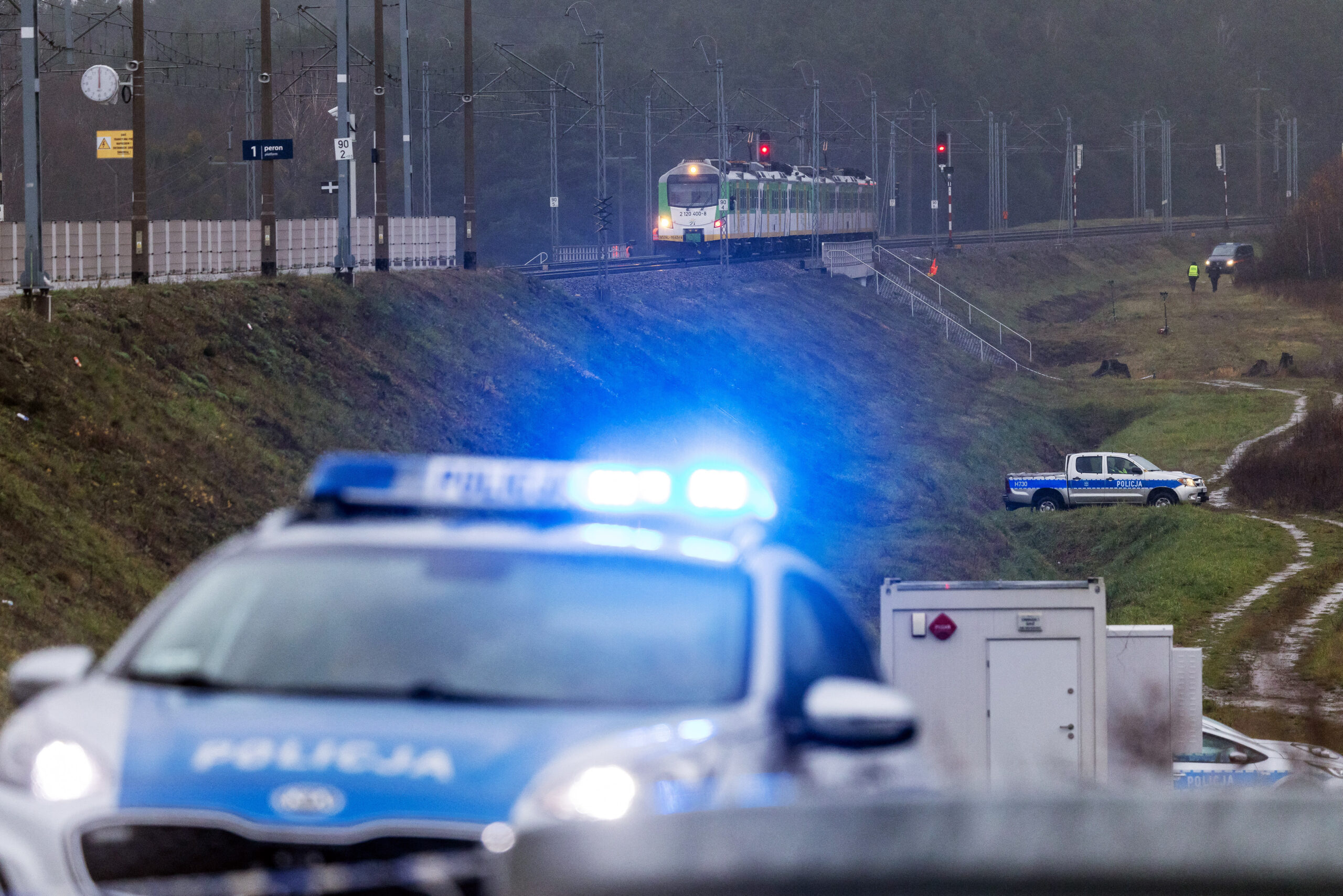
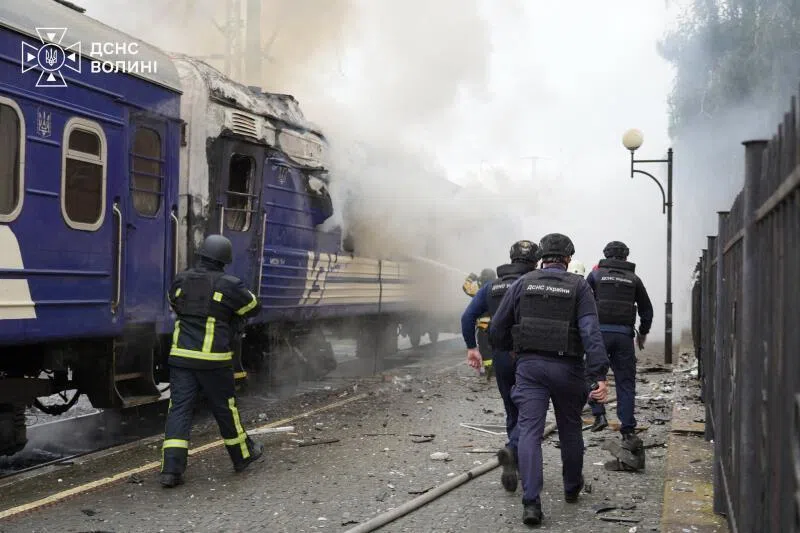
Recent reporting reinforces the assessment of a broad Russia-linked campaign against Europe. NATO aircraft shot down a drone that entered Lithuanian airspace from Belarus, a Russian warship fired two flares near a Danish military helicopter, and a drone entering Romanian airspace prompted the scramble of two Spanish F-18s. ProRail reported suspected sabotage at about 30 locations in the Netherlands, while Germany reported an armed UAV near Leipzig airport and formally blamed Russia, although that attribution remains disputed. A 13 September Russian drone strike near Yahodyn, 2 kilometres from the Polish border, also generated conflicting reporting over whether a passenger train or nearby rail infrastructure was hit and whether a diplomatic train was deliberately targeted. European governments are responding with sanctions, new airspace protection, infrastructure measures and proposals for stronger EU coordination.
Change from previous assessment
The core assessment is unchanged: Russia is very likely to sustain below-threshold pressure against Europe, and open Russia-NATO conflict remains very unlikely. Since the 17 September brief, the assessment gives greater weight to the targeting of defence-industrial and logistics networks, Baltic Sea undersea infrastructure and the Finnish response to maritime sabotage risks. Confidence in the broad campaign trend remains high, while confidence in attribution of the Leipzig and Yahodyn incidents remains low because conflicting accounts persist. No prior judgment on sustained hybrid pressure or European institutional hardening has been retired.
Key judgments
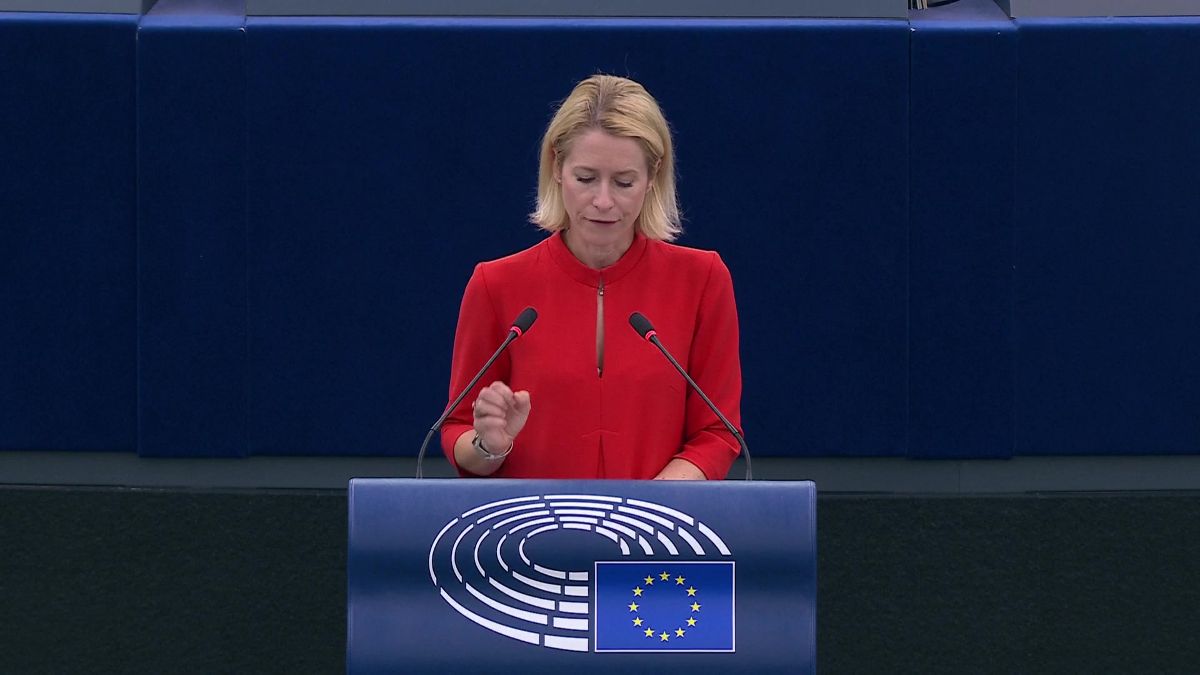
- Russia is very likely to sustain a deniable hybrid campaign against European states over the next 1-3 months, with reported pressure spanning Germany, Poland, Estonia, Latvia, Lithuania, the Netherlands, the UK and the Baltic Sea. Kaja Kallas said hybrid attacks have increased since 2022, while a NATO official reported that Russia had focused over the previous two months on defence-industrial and logistics targets supporting Ukraine. European officials assess that Moscow uses paid intermediaries to preserve plausible deniability. This judgment concerns the campaign-level pattern, not confirmed Russian responsibility for every incident. (Confidence: high · ASSESSED)
- I&W: Confirm: Within 0-14 days, a European government publicly links a new sabotage, cyber, arson or intimidation incident to a Russian service or a named intermediary. (0-14 days)
- I&W: Break: Over 1-3 months, European investigations produce no new Russia-linked incidents and attribute the principal recent cases to non-Russian actors. (1-3 months)
- A dangerous incident involving NATO airspace, military aircraft or critical infrastructure is likely over the next 1-3 months, while open Russia-NATO kinetic conflict is very unlikely. Recent events include NATO aircraft shooting down a drone that entered Lithuania from Belarus, Spanish F-18s scrambling over Romanian airspace, a Russian warship firing two flares near a Danish helicopter, and Russian-linked drone activity near Romanian Black Sea energy infrastructure. The assessment is medium confidence because US intelligence reporting has described a possible limited Russian incursion to test NATO, while Tallinn, Riga and Vilnius assess that Russia lacks the manpower and equipment for a successful near-term attack. (Confidence: medium · ASSESSED)
- I&W: Confirm: Within 0-14 days, another drone enters Lithuanian or Romanian airspace, a Russian vessel conducts an unsafe encounter with a NATO platform, or an incident damages Baltic Sea infrastructure. (0-14 days)
- I&W: Break: Over 1-3 months, no further airspace incursions, unsafe encounters or infrastructure incidents occur and Baltic intelligence continues to assess a Russian attack as unlikely. (1-3 months)
- Russia is likely to continue probing defence-industrial and logistics networks that support Ukraine, with activity reaching firms and transport infrastructure in Germany, Estonia, Poland, the Netherlands and the UK. The reported pattern includes a suspected arson attack at Milrem Robotics in Estonia, a fire at WB Electronics in Poland that Donald Tusk called sabotage, suspected Dutch rail sabotage, alleged Russian collection of data on UK drone manufacturing sites, and the 2024 attack and reported assassination plot involving Rheinmetall CEO Armin Papperger. Confidence is medium because attribution of the individual fires, rail disruption and Leipzig airport incident remains incomplete or contested, and parts of the reporting are single-source. (Confidence: medium · ASSESSED)
- I&W: Confirm: Within 0-14 days, a defence manufacturer, rail operator or logistics site in Germany, Poland, Estonia, the Netherlands or the UK reports a new sabotage, arson, cyber or surveillance incident linked to Russian intelligence. (0-14 days)
- I&W: Break: Over 1-3 months, official investigations into the principal recent cases identify non-Russian perpetrators or find no evidence of a coordinated Russia-linked campaign against these networks. (1-3 months)
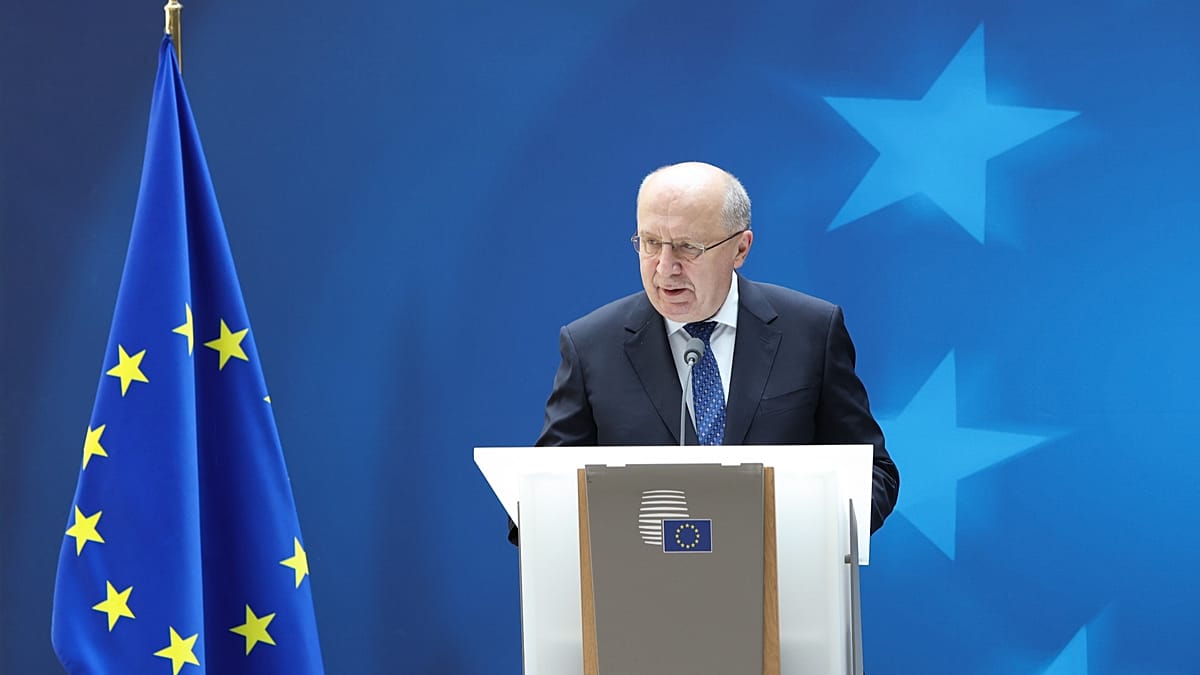
- European governments are very likely to expand coordinated protection and punitive measures against Russian hybrid activity over the next 1-3 months, but implementation is likely to remain uneven. The EU has capped the Russian mission at 40 staff, sanctioned nine individuals and four entities, and Hungary has expelled 10 Russian diplomats. Ursula von der Leyen has proposed a European hybrid-threat mechanism, an Emergency Security Protocol modelled on NATO Article 4 and a European Security Council, while Finland is seeking new powers to inspect suspect vessels and intervene against unmanned underwater vehicles. Confidence is medium because several of the most consequential measures remain proposals or powers under consideration. (Confidence: medium · ASSESSED)
- I&W: Confirm: Within 1-3 months, the EU adopts the Emergency Security Protocol or a hybrid-threat mechanism, adds sanctions, or approves new authorities for the Finnish Border Guard and other national responders. (1-3 months)
- I&W: Break: Within 1-3 months, the EU proposals lapse without implementation and no additional sanctions, diplomatic expulsions, airspace measures or maritime enforcement powers are announced. (1-3 months)
- Attribution of individual incidents is likely to remain contested, particularly the August armed UAV incident at Leipzig airport and the 13 September strike near Yahodyn, 2 kilometres from the Polish border. German reporting confirms detection of an armed UAV, while another account attributes the incident to Russia and a separate account describes an interception without attribution. Yahodyn reporting conflicts over whether a passenger train or rail junction was hit and whether the diplomatic train carrying Boris Johnson, Carl Bildt, David Petraeus and senior European security officials was deliberately targeted. This judgment rests on conflicting and partly single-source reporting, so confidence is low. (Confidence: low · REPORTED)
- I&W: Confirm: Within 0-14 days, German authorities publish forensic or intelligence evidence establishing the Leipzig UAV's operator, and Ukrainian or international investigators clarify whether the Yahodyn train or adjacent rail infrastructure was struck. (0-14 days)
- I&W: Break: Over 1-3 months, official investigations attribute the Leipzig and Yahodyn incidents to non-Russian actors or establish that the alleged diplomatic-train targeting did not occur. (1-3 months)
Outlook & scenarios
Sustained deniable pressure below the armed-conflict threshold (60%)
Russia maintains a campaign of sabotage, cyber activity, arson, drone incursions and intimidation against European states supporting Ukraine. The activity remains deniable and dispersed across logistics, defence-industrial and critical-infrastructure targets. European governments expand sanctions, airspace protection and maritime monitoring without entering open conflict with Russia.
Unsafe incident followed by managed escalation (25%)
A drone incursion, unsafe maritime encounter or infrastructure incident causes casualties or damage near NATO territory. NATO and affected European governments hold emergency consultations, reinforce air and maritime protection, and impose additional measures while seeking to contain the incident. Open Russia-NATO war remains very unlikely.
Coordinated European hardening reduces operational impact (10%)
The EU advances the Emergency Security Protocol or a comparable hybrid-threat mechanism, while Finland, Poland, Germany and other states improve national response authorities and infrastructure protection. Russian-linked operations continue, but their effect on transport, defence production and public confidence is reduced.
Wildcard: lethal attack triggers an alliance crisis (5%)
A Russian or Russia-linked operation kills civilians or seriously damages critical infrastructure in a NATO state. The affected government seeks NATO Article 4 consultations, European states impose broad punitive measures, and reciprocal actions produce a prolonged crisis with a materially higher risk of direct confrontation.
Recommendations
- Maintain a separate attribution ledger for Leipzig airport, Yahodyn, Dutch rail disruption, the Milrem Robotics and WB Electronics fires, and the Romanian sabotage case. Record confirmed facts, official allegations and unresolved contradictions separately.
- Prioritise collection over the next 0-14 days on Lithuanian and Romanian airspace incursions, Russian naval activity near Danish aircraft, Baltic Sea infrastructure incidents and the Romanian Black Sea gas platform. Seek official air, maritime, police and forensic reporting before consolidating incidents.
- Track implementation rather than announcements of the EU Emergency Security Protocol, the proposed European Security Council, new sanctions, Finnish Border Guard powers and Poland's expanded airspace protection. Reassess operational effect at 30 and 90 days.
- Map defence-industrial and logistics nodes supporting Ukraine in Germany, Poland, Estonia, the Netherlands and the UK. Link any new incident to the affected state's Ukraine-support activity, the target's function and the presence of Russian intelligence or intermediary indicators.
- Keep the hybrid-campaign assessment separate from the conventional invasion assessment. Treat repeated drone and sabotage incidents as indicators of miscalculation risk, not as evidence by themselves of an imminent Russian attack on NATO territory.
Confidence & uncertainty
Overall confidence is high because the campaign-level assessment is supported by multiple independent strands of reporting, including the European External Action Service, NATO-linked statements, official government statements, major media and wire reporting. The pattern is corroborated across drone incursions, suspected sabotage, infrastructure threats, Russian diplomatic pressure and European countermeasures. The main uncertainties concern responsibility for individual incidents, the intended target at Yahodyn, the attribution and outcome of the Leipzig airport UAV incident, and the conflicting US and Baltic assessments of Russia's near-term conventional military feasibility.
Intelligence gaps
- [EEI 1.2 · PARTIAL] Observed reconnaissance activity around critical sites indicative of attack planning (unauthorised drone flights, repeated surveillance visits, loitering vehicles, mapping/photography of assets). Recommended collection: open-source/media
- [EEI 1.3 · PARTIAL] Law-enforcement or customs seizures, arrests or interdictions of persons or shipments carrying explosives, sabotage tools, specialty cutting/electrical equipment, or covert comms gear destined for/near critical infrastructure. Recommended collection: law enforcement
- [EEI 2.1 · UNCOVERED] Emergence or amplification of coordinated social-media networks (sets of accounts, pages, channels) pushing identical narratives or hashtags across multiple platforms, including bot-like activity metrics and origin IP/common management indicators. Recommended collection: social-media/OSINT
- [EEI 2.2 · UNCOVERED] Publication or internal guidance from state-run media, proxy outlets, or identified influence platforms distributing talking points, pre-scripted messaging, or translated content targeted at specific EU countries/communities. Recommended collection: open-source/media
- [EEI 2.3 · UNCOVERED] Distribution of manipulated multimedia (deepfakes), targeted phishing/whaling campaigns, or localized false narratives timed to political events (elections, protests, court rulings) with tracked reach and engagement metrics. Recommended collection: cyber/forensic
- [EEI 3.1 · UNCOVERED] Unusual financial transactions: wire transfers, crypto conversions, or payments to shell companies, NGOs or individuals exceeding typical baselines that link to known proxies or front organisations. Recommended collection: financial
- [EEI 3.2 · UNCOVERED] Travel and movement indicators for suspected operatives: repeated border crossings, chartered/irregular flights, booking patterns or mobile/location data placing identified individuals in staging areas shortly before incidents. Recommended collection: border/immigration
- [EEI 3.3 · UNCOVERED] Cargo, freight or maritime movements with discrepancies (concealed/dual-use equipment, false manifests, unusual routing) detected at ports, rail hubs or via AIS that correspond to deliveries of material used in sabotage or influence operations. Recommended collection: customs/ports
- [EEI 3.4 · UNCOVERED] Intercepted or otherwise-obtained communications showing tasking, coordination, or payment instructions between Russian agencies/handlers and proxy groups, including identified command-and-control servers or encrypted group identifiers. Recommended collection: signals-intel/SIGINT
Cited sources
[1] European External Action Service (EEAS) · Statement by High Representative/Vice-President Kaja Kallas to the European Parliament for the Joint Debate on Russia’s hybrid attacks against Member States: strengthening the EU’s coordinated response and protecting European security and democracy (A) · sha256:25dc96ab926e [2] ua.news · The Kremlin is preparing to turn life in Europe into a living hell — Bloomberg (B) · Thu Sep 17 2026 19:14:51 GMT+0000 (Coordinated Universal Time) · sha256:75708b626206 [3] Meduza · Война (B) · Thu Sep 17 2026 12:37:20 GMT+0000 (Coordinated Universal Time) · sha256:c757feebf117 [4] Meduza · Russia is escalating its hybrid attacks on the West. Moscow will make Europe’s life ‘hell’ for supporting Ukraine, Kremlin insider tells Bloomberg. (B) · Thu Sep 17 2026 13:23:48 GMT+0000 (Coordinated Universal Time) · sha256:03064323acfd [5] Euronews · МИД Франции: «Не надо поддаваться на запугивания Путина» (A) · Thu Sep 17 2026 06:52:11 GMT+0000 (Coordinated Universal Time) · sha256:395614905055 [6] Decode39 (affiliated with Formiche) · Italy’s warning: Russia’s hybrid war against Europe is entering a more dangerous phase (B) · Thu Sep 17 2026 09:19:18 GMT+0000 (Coordinated Universal Time) · sha256:7b3d426746ab [7] Insurance Journal · Russia's Attacks on Europe Are Getting More Brazen and More Dangerous (B) · Thu Sep 17 2026 10:03:23 GMT+0000 (Coordinated Universal Time) · sha256:0e356724768b [8] Reuters (republished by gCaptain) · Finland Practices Ship Boardings at Sea to Stop Undersea Sabotage (A) · Thu Sep 17 2026 19:35:06 GMT+0000 (Coordinated Universal Time) · sha256:4febcfa9aab4 [9] The Japan Times · Russia’s attacks on Europe are getting more brazen and more dangerous (B) · Thu Sep 17 2026 11:08:11 GMT+0000 (Coordinated Universal Time) · sha256:17153d926fd7 [10] Atlantic Council · Putin is escalating against NATO but a Baltic incursion remains unlikely (C) · Thu Sep 17 2026 20:19:19 GMT+0000 (Coordinated Universal Time) · sha256:9b1f239fec93 [11] Euronews · Kubilius: Europe will respond to Russian hybrid threats with ‘pain’ (A) · Thu Sep 17 2026 08:44:02 GMT+0000 (Coordinated Universal Time) · sha256:ef01fbc2985f [12] UK Government (Foreign, Commonwealth & Development Office) · Strengthening European security: UK statement to the OSCE (A) · Thu Sep 17 2026 12:05:01 GMT+0000 (Coordinated Universal Time) · sha256:10cf1a9e10fc [13] 24tv.ua · Жертвы среди гражданского населения в Европе в результате атак России – лишь вопрос времени, – Bloomberg (D) · Thu Sep 17 2026 20:24:00 GMT+0000 (Coordinated Universal Time) · sha256:af40ec0581d5 [14] The Straits Times · What’s driving Russia to escalate its hybrid attacks on Europe (A) · Thu Sep 17 2026 21:00:00 GMT+0000 (Coordinated Universal Time) · sha256:51b742f11e02 [15] VonWallace.com (CyberInsights) · CyberInsights with VonWallace.com: Navigating the World of IT and Cybersecurity (E) · Fri Sep 18 2026 02:30:33 GMT+0000 (Coordinated Universal Time) · sha256:2d7b6a49c79a
Source content hashes were computed at collection time; the cited text is preserved unmodified for the life of this product.
TLP:CLEAR