TLP:CLEAR · Disclosure is not limited.
Russia-NATO Escalation Risk and Black Sea Shipping
Time window: Last 7 days · Audience: General analyst · Type: Situation report · DTG: 2026-10-09 06:08Z · Overall confidence: MEDIUM
BLUF
Marco Rubio's 8 October warning identifies a risk of escalation, but the supplied reporting does not substantiate a Yandex data-centre strike or establish that a specific Ukrainian strike triggered Russian retaliation. Russia is likely to sustain grey-zone pressure in Europe; a deliberate Russian incursion into NATO territory over the next three months is unlikely.
Executive summary
On 8 October, Rubio described a widening Russia-Ukraine drone target set, including ports, tankers, e-commerce warehouses and data centres, and warned of a risk of sabotage in NATO member countries. The detailed target list rests on media reporting of his remarks, not independently documented incident accounts. Turkish Foreign Minister Hakan Fidan said attacks by Russia and Ukraine were endangering Black Sea navigation; Ankara is awaiting responses to its proposal to stop attacks and protect grain shipments. Think-tank reporting raises the risk of Russian-directed sabotage and a limited incursion into NATO territory, but does not provide operational evidence for either. The supplied claims do not substantiate the Yandex episode described in the topic framing or establish a direct retaliation sequence.
Key judgments
- Rubio's 8 October remarks describe a widening Russia-Ukraine drone target set, but do not establish a Yandex data-centre strike or a sequence linking a Ukrainian strike to Russian retaliation. The target list rests on one major-media account of Rubio's remarks. (Confidence: medium · REPORTED)
- I&W: A transcript or US State Department account of Rubio's 8 October remarks confirms the reported list of targets, including data centres. (0-14 days)
- I&W: A transcript or US State Department account corrects the reported target list and omits data centres. (0-14 days)
- Russia is likely to sustain grey-zone pressure in Europe over the next 1-3 months, including sabotage attempts. The claim that Russia is recruiting online disposable agents rests on think-tank reporting and is not independently corroborated in the supplied material, so confidence in the forecast is low. (Confidence: low · ASSESSED)
- I&W: A European police or prosecutor statement links a named sabotage or arson case to online recruitment and Russian tasking. (0-14 days)
- I&W: Authorities investigating reported online-recruited agents publicly attribute the cases to independent criminal motives and rule out Russian direction. (1-3 months)
- A deliberate Russian incursion into NATO territory in the next three months is unlikely. The supplied warnings include a think-tank summary of a Danish military intelligence assessment and a separate report of fears about a limited incursion; another assessment characterises conventional Russia-NATO war risk as low. The warnings are not accompanied by operational indicators, leaving confidence low. (Confidence: low · ASSESSED)
- I&W: Danish military intelligence publicly identifies a Russian unit and staging area near a NATO border as preparing for a cross-border incursion. (0-30 days)
- I&W: Danish military intelligence publicly revises its warning and states that it has no evidence of Russian preparations for a near-term attack on a NATO state. (1-3 months)
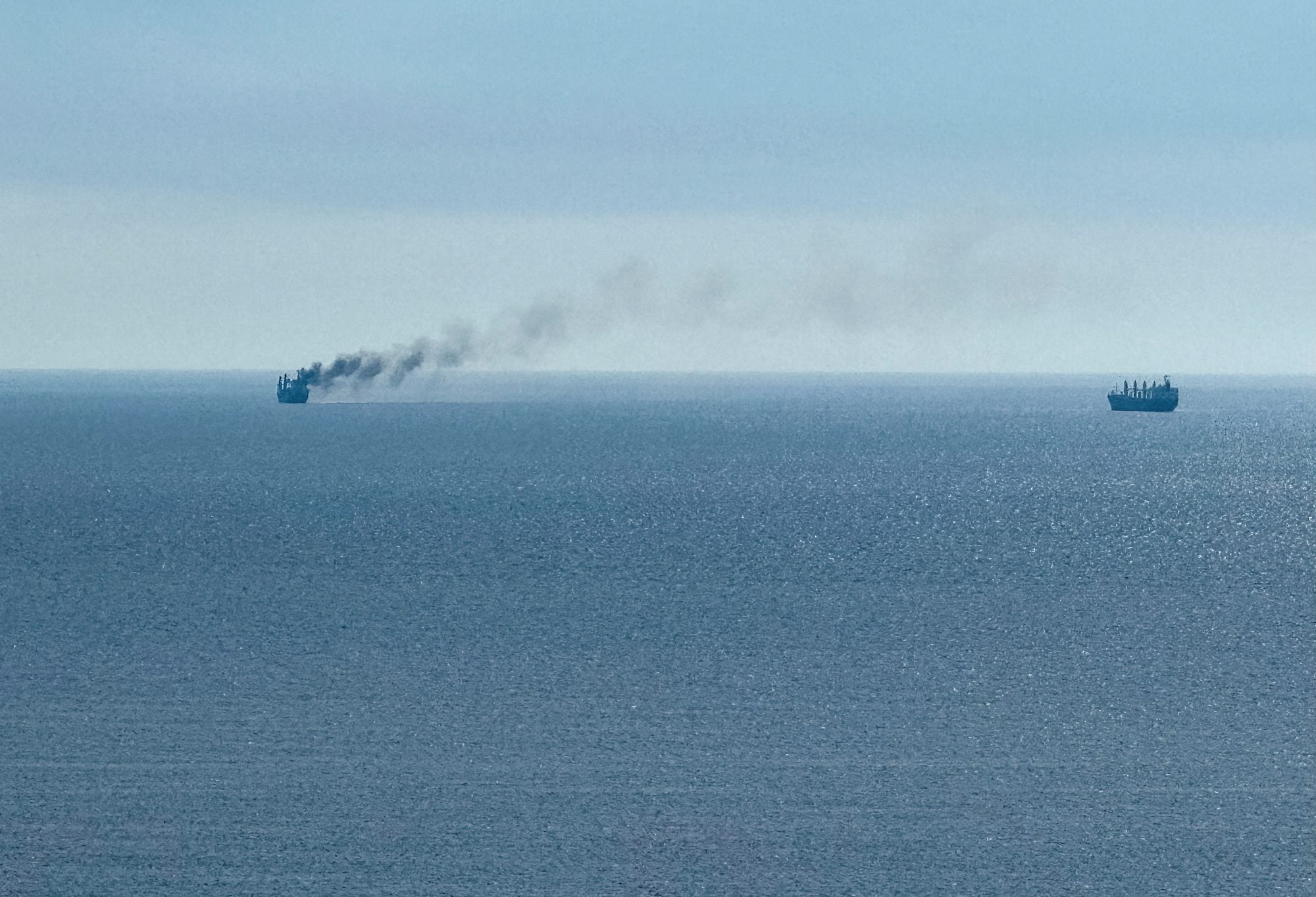
- Commercial-vessel attacks in the Black Sea are likely to remain a risk over the next 1-3 months. Reporting records Russian strikes on Odesa, Chornomorsk and Pivdennyi, and Ukrainian attacks on vessels and infrastructure supporting Russian oil and grain exports. The wire-service account provides credible reporting of the hazard, but the supplied claims do not independently corroborate the incidents. (Confidence: medium · ASSESSED)
- I&W: Turkish authorities or another named maritime authority reports an attack on a Turkish-flagged or Turkish-owned commercial vessel in the Black Sea. (0-14 days)
- I&W: Turkey announces that Russia and Ukraine accepted its proposal, followed by 30 days without a reported commercial-vessel attack in the Black Sea. (1-3 months)
Outlook & scenarios
Bounded reciprocal attacks and grey-zone pressure (55%)
This is the likely course over the next three months. Russia and Ukraine continue attacks on infrastructure and maritime-linked targets, while Russia sustains low-visibility pressure in Europe. The available reporting does not point to a direct Russian military incursion into NATO territory.
Turkey secures temporary restraint at sea (20%)
This is an unlikely but plausible course. Russia and Ukraine accept Turkey's proposal to stop attacks on commercial vessels and protect grain shipments. A reduction in reported Black Sea incidents lowers immediate shipping risk, while strikes elsewhere continue.
Diplomatic engagement slows the escalation (20%)
This is an unlikely course. The planned visit of Volodymyr Zelensky's negotiating team to the United States, alongside Washington's stated pursuit of a negotiated settlement, produces temporary restraint in the strike campaign without resolving the conflict.
Low-probability, high-impact NATO crisis (5%)
This is a very unlikely course with high potential impact. A sabotage incident or limited Russian incursion in a NATO member state is attributed to Moscow and triggers a wider confrontation between Russia and NATO.
Recommendations
- Obtain the full record of Rubio's 8 October remarks and compare it with the media account. Verify whether he named particular data centres, including a Yandex facility, before treating that episode as established.
- Maintain an incident log for Russia-Ukraine strikes that records the date, named target, location, reported actor, damage and source. Do not assess a Russian action as retaliation unless reporting establishes a direct link.
- Seek the underlying Danish military intelligence assessment before using the incursion warning in operational judgements. Record whether it identifies a state, unit, staging area or observable preparation.
- Track responses from Moscow and Kyiv to Turkey's Black Sea proposal. Record each reported attack on a Turkish-flagged or Turkish-owned vessel separately from attacks on export infrastructure.
- For sabotage reporting, distinguish suspected Russian involvement from publicly documented attribution. Prioritise police or prosecutor statements that identify Russian tasking, recruitment methods and the affected site.
Confidence & uncertainty
Overall confidence is medium because the reporting includes a major-media account of Rubio's remarks and wire-service reporting of Black Sea risks, but the core target list and maritime incidents are not independently corroborated in the supplied claims. The sabotage and NATO-incursion forecasts rely mainly on think-tank analysis, including a secondhand summary of Danish military intelligence. No supplied reporting establishes an operational decision to attack NATO or a direct link between a particular Ukrainian strike and Russian retaliation.
Cited sources
[1] vietnam.vn · Украина призывает США усилить давление на Россию. (B) · 9 October 2026 · sha256:8fd69045d577 [2] Atlantic Council · Ukraine can help Europe counter Russia’s escalating shadow war (C) · 8 October 2026 · sha256:2c1c3b6bc82e [3] Atlantic Council · Europe needs a new strategy for Russian gray zone aggression (C) · 29 September 2026 · sha256:38f526956919 [4] Reuters (republished by gCaptain) · Turkey Says Russia, Ukraine Increasing Attacks in Black Sea Ahead of Winter (A) · 8 October 2026 · sha256:6482e08f7187
Source content hashes were computed at collection time; the cited text is preserved unmodified for the life of this product.
Red cell review: CONCUR
TLP:CLEAR