TLP:CLEAR · Disclosure is not limited.
Russia-Ukraine Front: Largest UAS strike on Moscow, intensified Russian salvos, static line with pressure toward Sloviansk
Time window: Last 7 days · Audience: General analyst · Type: Situation report · DTG: 2026-06-19 17:56Z · Overall confidence: MEDIUM
BLUF
Ukraine very likely executed its largest drone strike of the war against the Moscow region on 18 June, while Russia likely maintained a high-tempo strike pattern across several Ukrainian oblasts. The ground line is likely largely unchanged, with Russian pressure increasing toward Sloviansk and a rising risk to commercial shipping in the Black Sea.
Executive summary
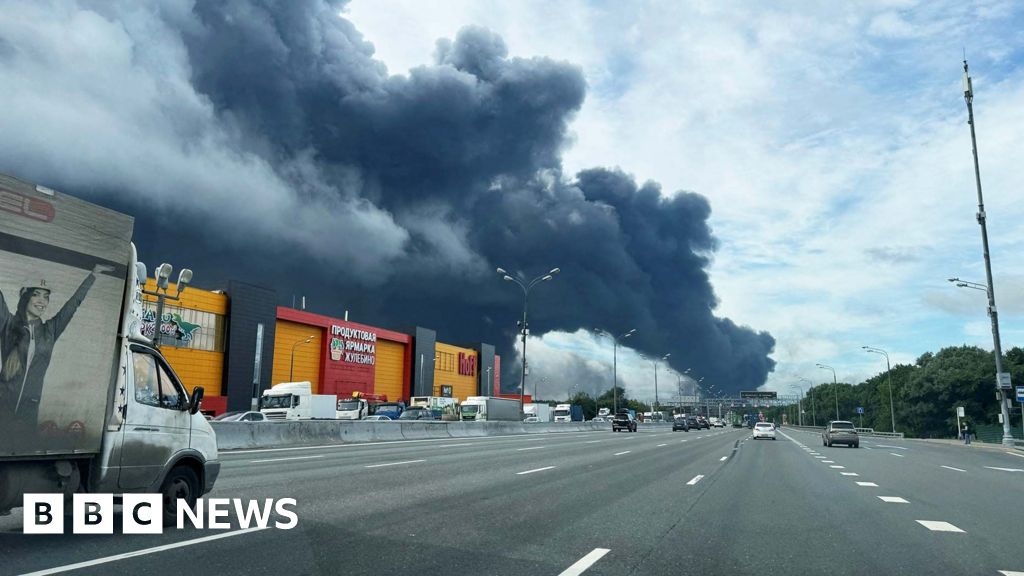
Close to 200 Ukrainian drones very likely struck targets around Moscow on 18 June, damaging the Moscow Oil Refinery and wounding at least 17 people in Moscow Oblast; residents reported oily residue after the refinery hit, and an oil depot in Rostov Oblast was also struck with one fatality reported. Russia likely kept up massed missile and drone attacks 18-19 June that killed and injured civilians and hit energy assets in Sumy, while guided aerial bombs injured nine people in Kharkiv and separate strikes killed civilians in Kramatorsk and Odesa. On the ground, the line likely remains largely unchanged, though reporting points to increased Russian pressure toward Sloviansk; widely circulated social-media claims of a three-axis offensive there remain uncorroborated. Ukraine’s interdiction campaign likely continued to strain Russian logistics and rear-area defences, including reported strikes on railway bridges in occupied Crimea and attacks on fuel and transport nodes, while Russian drone attacks on civilian shipping in the Black Sea likely raised maritime risk.
Change from previous assessment
Since the prior brief on 19 June, new reporting adds casualties and energy infrastructure damage in Sumy, injuries in Kharkiv from guided bombs, and separate civilian deaths in Kramatorsk and Odesa. Ukraine’s General Staff reported strikes on railway bridges in occupied Crimea, reinforcing the assessment of a sustained interdiction campaign. Russian pressure toward Sloviansk appears to be increasing, though large-scale multi-axis assault claims remain uncorroborated. Risk to Black Sea shipping rose, with reported Russian UAV attacks killing or wounding civilian mariners. Our overall confidence remains medium.
Key judgments
- Ukraine very likely mounted its largest drone strike of the war on the Moscow region on 18 June, damaging the Moscow Oil Refinery and wounding at least 17 people in Moscow Oblast; a related interdiction also hit an oil depot in Rostov Oblast, killing one. (Confidence: high · REPORTED)
- I&W: Refinery throughput and flaring patterns show the Moscow Oil Refinery operating below normal capacity for at least 7 days after 18 June. (0-14 days)
- I&W: Independent visual evidence of additional fires or shutdowns at Russian oil facilities far from the front line. (0-14 days)
- Russia likely sustained a high-tempo long-range strike campaign 18-19 June, including missile and UAV attacks that killed and injured civilians in Sumy, Kharkiv, Kramatorsk and Odesa, and damaged energy facilities in Sumy. (Confidence: high · REPORTED)
- I&W: Nightly mixed missile, drone salvos targeting major Ukrainian cities are logged by Ukrainian authorities for a week or more. (0-14 days)
- I&W: A sustained lull of 7 or more days without large-scale Russian strikes on urban centres. (0-14 days)
- The ground line very likely remained largely unchanged during 12-19 June, though Russian forces are increasing pressure on the Sloviansk axis; social-media claims of a three-direction offensive toward Sloviansk are uncorroborated. (Confidence: medium · ASSESSED)
- I&W: No verified changes-of-control are published by reputable mapping projects for settlements around Sloviansk, Kramatorsk. (0-14 days)
- I&W: Geolocated evidence shows Russian forces entering or taking named localities on approaches to Sloviansk. (0-14 days)
- Ukraine’s interdiction campaign is very likely straining Russian logistics and forcing rear-area air-defence repositioning, slowing Russian assault tempo; recent strikes on railway bridges in occupied Crimea, a fuel train at the front, and repeated attacks on oil infrastructure point to growing rear-area pressure. (Confidence: high · ASSESSED)
- I&W: Freight movements across Crimean rail bridges remain restricted for a week or more following reported strikes. (0-14 days)
- I&W: Russian assault rates increase and multiple settlements change hands despite continued Ukrainian deep strikes. (1-3 months)
- The risk to commercial shipping in the Black Sea is likely elevated, with Russian UAV attacks killing or wounding civilian mariners on non-military vessels. (Confidence: medium · ASSESSED)
- I&W: Additional reported UAV or missile strikes on named merchant vessels transiting Black Sea routes. (0-14 days)
- I&W: A month without new incidents reported by Ukrainian authorities, shipowners, or insurers. (1-3 months)
- Following the 18 June strikes on the Moscow region, Russia is likely to pursue further large-scale retaliatory salvos against Ukrainian cities and infrastructure. (Confidence: medium · ASSESSED)
- I&W: Official Russian statements signal new ‘mass’ waves followed by multi-axis strikes within days. (0-14 days)
- I&W: A sustained reduction in Russian long-range strike activity despite continued Ukrainian deep strikes in Russia. (0-14 days)
Outlook & scenarios
Attritional status quo: static line, nightly long-range exchanges (60%)
The front line remains largely unchanged over the next several weeks, with Russian forces increasing pressure but failing to achieve a breakthrough toward Sloviansk. Both sides continue nightly long-range strikes, with Russia hitting urban and energy targets and Ukraine sustaining a rear-area interdiction campaign against oil, rail and logistics nodes.
Retaliatory surge: Russia escalates mass salvos on cities and energy (50%)
Moscow responds to the 18 June drone attacks with larger, more frequent missile and UAV waves, prioritising Kyiv and regional energy sites. Civilian casualties and grid disruptions rise, testing Ukraine’s air defences and emergency response.
Deep-strike dividends: Russian logistics and fuel stress widen (40%)
Ukraine intensifies long-range strikes on oil infrastructure, rail bridges in occupied Crimea and frontline supply nodes. Russia’s fuel and munitions constraints worsen, rear-area air defences are pulled back from the front, and assault tempo slows further without producing material Russian territorial gains.
Low-probability breakthrough: verified multi-axis push on Sloviansk (15%)
Social-media claims of a three-direction offensive materialise into verified advances on the approaches to Sloviansk, with geolocated evidence of captured localities. This forces Ukrainian reserves to redeploy and risks localised front-line shifts.
Recommendations
- Prioritise OSINT geolocation and cross-corroboration of reports around Sloviansk; treat multi-axis offensive claims as unconfirmed until supported by verifiable imagery.
- Task regular monitoring of Crimean rail corridors after the reported bridge strikes; track freight disruptions and rerouting to assess logistics strain.
- Expand collection on Russian air-defence posture around oil and logistics infrastructure to detect redeployments away from frontline sectors and identify new vulnerabilities.
- Maintain a running dataset of rear-area strikes on Russian oil assets, including outage durations and follow-on rationing measures, to quantify operational impact on Russia’s war-sustainment capacity.
- Update Black Sea shipping risk assessments: compile incident reporting on UAV strikes against merchant vessels, liaise with maritime insurance open sources, and map high-risk lanes to inform warning products.
- Track Ukrainian air-defence sustainment, including public signals on interceptor resupply and new partner commitments, to gauge the risk from projected Russian retaliatory waves.
Confidence & uncertainty
Many core events rest on multiple major-media and official reports that align, including the Moscow-region drone strike, casualties from Russian salvos in several Ukrainian oblasts, and Ukrainian interdiction actions in occupied Crimea and Russia’s rear. Some elements rely on single-source or social-media reporting, notably claims of a three-direction Russian offensive toward Sloviansk and specific refinery outage durations, which we treat cautiously. The mix of high- and medium-reliability sourcing, plus limited direct evidence of front-line territorial change this week, supports an overall medium confidence judgement.
Alternative analysis (red cell)
While reports document notable interdiction incidents and strike-related civilian harm, multiple key claims rely on same-cluster sourcing or medium-admiralty reporting and the narrative does not reconcile contradictory accounts (see lint contradiction_unaddressed). A more cautious assessment is that Ukraine has executed impactful tactical interdictions and that episodic strikes occurred on both sides, but attribution attributions, superlative characterizations (e.g., 'largest'), and inferred strategic effects on Russian operational tempo remain insufficiently corroborated pending independent imagery, forensics, SIGINT, and aggregated trend data.
Intelligence gaps
- [EEI 1.1 · UNCOVERED] Geotagged UAV/satellite imagery showing abandoned defensive positions or newly occupied settlements. Recommended collection: overhead imagery
- [EEI 1.2 · UNCOVERED] Confirmed movement of frontline ambulance evacuation routes beyond previous coordinates. Recommended collection: SIGINT/medical logistics
- [EEI 2.1 · PARTIAL] Concentration of assault battalions (≥3 mechanized companies) within 15km of contact line. Recommended collection: SIGINT/UAV
- [EEI 2.2 · PARTIAL] Unusual artillery stockpile buildup at forward depots exceeding 30-day consumption rates. Recommended collection: overhead imagery/logistics
- [EEI 3.1 · UNCOVERED] Bridge structural damage assessments at 5 key Dnieper River crossings via multispectral imaging. Recommended collection: overhead imagery
- [EEI 3.2 · UNCOVERED] Rail traffic volume changes at Kryvyi Rih and Pokrovsk rail hubs compared to 7-day baseline. Recommended collection: commercial freight data
Cited sources
[1] bbc.com · Will Putin change tactics after Ukrainian drone attacks? (A) · sha256:ac6664a7881f [2] euobserver.com · Russian internet exploded after Moscow airstrikes, war channels demand nuclear revenge on Kyiv (Ukraine Battlefield update, Day 1,576) (B) · sha256:110186d10555 [3] Al Jazeera · Petrol shortages and ‘oil rain’ bring Russia-Ukraine war home to Moscow (A) · sha256:4b7ae2dac457 [4] BBC · Moscow residents complain of black rain after largest Ukrainian attack hits oil refinery (A) · sha256:3b936b78f38d [5] aljazeera.com · Three killed in Ukraine a day after drone attack kills child in Moscow (A) · sha256:2bdc9d25e874 [6] independent.co.uk · Ukraine-Russia war latest: Kremlin ‘won’t accept ultimatum’ from Europe as Putin warns of major retaliation (B) · sha256:3229e5bcbac1 [7] TSN Deutsch · UKRAINISCHER OFFIZIER WARNT: Russland bereitet neue Großoffensive im Donbas vor (B) · sha256:1b79a6594bac [8] Military Erzo · 🔥Rai-Aleksandrowka Gefallen! Russische Offensive auf Slowjansk aus 3 Richtungen⚔️ Ukraine Krieg (E) · sha256:7f902adcc766 [9] TSN English · UKRAINIAN OFFICER WARNS: Russia Is Preparing the Next Major Push in Donbas (B) · sha256:1d15451bd3ab [10] Kanal13 · Ukraynanın HÜCUMU DAVAM EDİR: Rusiyanın cəbhə xəttinə yanacaq daşıyan qatarı DRONLA VURULDU (B) · sha256:721ebdb1fb02 [11] taskandpurpose.com · Ukraine is shredding Russian supply lines. The US should pay attention (B) · sha256:4eb2ee1c6767 [12] independent.co.uk · How Ukraine’s new drone tactics are causing chaos in Russia after largest-ever attack on Moscow (B) · sha256:48b9636807af
Source content hashes were computed at collection time; the cited text is preserved unmodified for the life of this product.
Red cell review: PARTIAL DISSENT
TLP:CLEAR