TLP:CLEAR · Disclosure is not limited.
Russia-Ukraine front line, 11-18 July 2026: Deep strikes, contested narratives, and Kyiv reshuffle
Time window: Last 7 days · Audience: General analyst · Type: Situation report · DTG: 2026-07-18 07:10Z · Overall confidence: HIGH
BLUF
Ukraine very likely sustained an intensified deep-strike and maritime interdiction campaign that is disrupting Russian fuel flows and rear-area assets, while Russia likely maintained mass strikes against Ukrainian cities including Kyiv. The front line is likely to remain largely static in the near term despite competing claims of Russian breakthroughs and Ukrainian counter-attacks, as Kyiv adjusts to a mid-week leadership reshuffle.
Executive summary
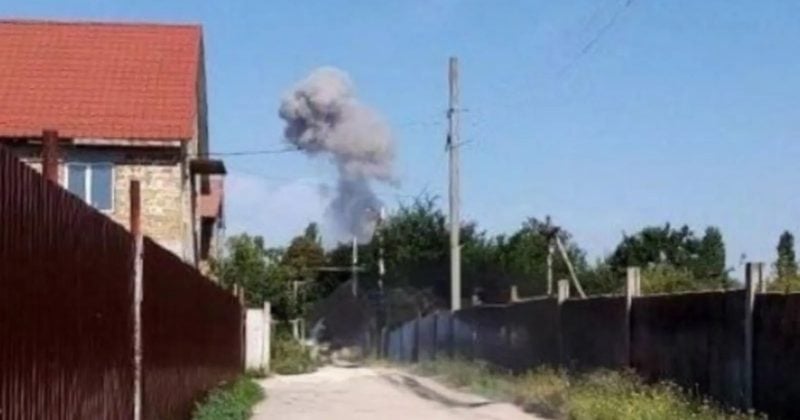
During 11-18 July, Ukraine very likely kept pressure on Russian logistics with drone and maritime attacks that paralysed fuel shipping in the Sea of Azov and triggered a fire near the Gvardeyskoye airfield in Crimea. Russia likely continued high-tempo long-range strikes, including a 16 July missile attack that killed two in Kyiv and claimed mass strikes on Odesa oblast ports. Ground reports were contradictory: Russian sources asserted progress near Zaporizhzhia, Kramatorsk and even a breach near Dnipro, while Ukrainian reporting pointed to counter-attacks near Vovchansk and heavy fighting near Slovyansk. In Kyiv, President Zelensky’s 16 July reshuffle ousted Defence Minister Mykhailo Fedorov, appointed Maj Gen Yevhen Khmara as acting defence minister, and seated a new prime minister, prompting protests and at least one senior air force resignation, but front-line operations continued under interim leadership.
Change from previous assessment
New reporting confirms two fatalities and five wounded in Kyiv from a 16 July Russian missile strike and adds detail on mass strikes claimed against Odesa oblast ports. Ukraine’s interdiction narrative is reinforced by fresh statements that Azov fuel shipping is paralysed and by a reported fire near Gvardeyskoye airfield in Crimea. Kyiv’s leadership reshuffle and associated protests and one senior air force resignation are new this week; we judge near-term front-line impact unlikely but will watch for additional resignations. Our outlook that the front will remain largely static in the near term is unchanged, though we note fresh, uncorroborated Russian claims of progress near Zaporizhzhia, Kramatorsk and Dnipro and keep confidence at medium.
Key judgments
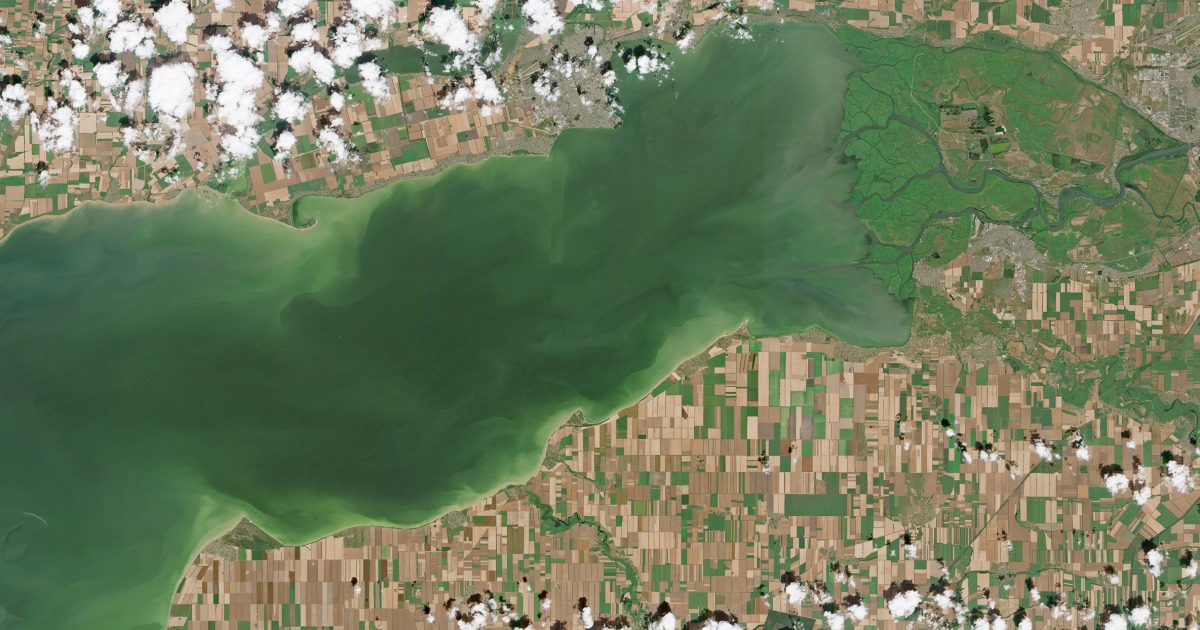
- Ukraine very likely sustained and expanded its deep-strike and maritime interdiction campaign this week, paralysing Russian fuel shipping in the Sea of Azov, disrupting a trade route vital to Russia’s war economy, and igniting a fire near Crimea’s Gvardeyskoye airfield as part of a strategy to target rear infrastructure. (Confidence: high · REPORTED)
- I&W: Further reporting of fuel-linked Russian vessels idling or rerouting within the Sea of Azov trade lane. (0-14 days)
- I&W: Reports that routine Azov fuel shipments have resumed at scale. (1-3 months)
- Russia likely maintained a high tempo of long-range strikes against Ukrainian cities in mid-July, including a 16 July missile attack that killed two and wounded five in Kyiv and mass strikes claimed against Ilyichivsk, Odesa and Chornomorsk. (Confidence: medium · REPORTED)
- I&W: Additional reported missile or glide-bomb strikes on Kyiv or Odesa oblast. (0-14 days)
- I&W: A sustained lull in long-range Russian strikes reported by Kyiv authorities. (0-14 days)
- The front line is likely to remain largely static over the next two weeks, with localised Russian assaults around Zaporizhzhia and Kramatorsk and uncorroborated claims of a breach near Dnipro offset by Ukrainian counter-attacks near Vovchansk and reports of heavy fighting near Slovyansk, but no independently verified breakthrough. (Confidence: medium · ASSESSED)
- I&W: Daily reports of assaults without multi-source confirmation of control changes in named locations such as Kramatorsk. (0-14 days)
- I&W: Verified, multi-source announcements of capture or withdrawal altering control of key settlements on these axes. (0-14 days)
- Ukraine’s long-range attacks and interdiction campaign are likely straining Russian fuel distribution and refinery capacity, reflected in Moscow reportedly seeking gasoline from India; if sustained, this pressure would likely impose friction on Russian military logistics. (Confidence: medium · ASSESSED)
- I&W: Follow-on reporting of Russian refined product imports from India or other external suppliers. (1-3 months)
- I&W: Reports of normalised domestic fuel supply and resumed fuel shipping through the Sea of Azov. (1-3 months)
- Kyiv’s 16 July leadership reshuffle very likely generated short-term civil-military friction and public dissent, including street protests, troop anger and the resignation of an air force deputy commander, but operations continued under an acting defence minister and a new prime minister was approved, making immediate front-line disruption unlikely. (Confidence: medium · ASSESSED)
- I&W: Additional resignations of senior officers or public statements indicating command frictions. (0-14 days)
- I&W: Public endorsements of the acting minister by the General Staff and no further senior resignations. (0-14 days)
Outlook & scenarios
Positional grind with continued strike-trade (60%)
Lines of control remain broadly unchanged through late July. Russia keeps up long-range strikes on Kyiv and Odesa oblast while Ukraine sustains maritime interdiction in the Sea of Azov and periodic deep strikes in Crimea. Localised assaults occur without multi-source verified gains around Zaporizhzhia and Kramatorsk.
Limited Russian advances without operational breakthrough (40%)
Russian forces translate current assaults into small territorial gains on the Zaporizhzhia-Kramatorsk axes, while high-visibility claims of a breach near Dnipro remain uncorroborated. Ukrainian counter-attacks complicate further progress and prevent an operational-level collapse.
Ukrainian interdiction effects deepen (50%)
Azov Sea fuel shipping remains paralysed and Moscow seeks additional external gasoline supplies. A fresh Ukrainian strike in Crimea damages rear infrastructure, prompting further Russian air-defence and logistics adaptations that add friction to front-line sustainment.
Recommendations
- Prioritise OSINT collection on Sea of Azov shipping patterns to validate paralysis or rerouting of Russian fuel shipments, including tracking of reported idling and U-turns.
- Task geolocation and damage assessment on reported strikes in Crimea near Gvardeyskoye to corroborate impact on rear infrastructure.
- Establish a verification cell to cross-check Russian breakthrough claims near Dnipro, Zaporizhzhia and Kramatorsk against multi-source imagery and official communiqués before updating control assessments.
- Monitor Russian refined-product sourcing, with emphasis on reported approaches to India, and map potential impacts on fuel availability for front-line logistics.
- Track civil-military indicators in Kyiv following the reshuffle, including further senior resignations, force morale statements, and continuity of procurement and mobilisation directives under the acting defence minister.
- Maintain a rolling log of Russian long-range strike activity against Kyiv and Odesa oblast to anticipate civil defence demands and adjust risk assessments for urban centres.
Confidence & uncertainty
Multiple independent major media and reputable analytical sources corroborate Ukraine’s continued Sea of Azov interdiction and deep strikes, Russia’s ongoing long-range attacks on cities including Kyiv, and the details of Kyiv’s 16 July leadership changes. Where reporting conflicts, such as claims of rapid front-line breakthroughs, we explicitly reflect the uncertainty and avoid overconfidence. The principal residual uncertainties concern ground control claims that are single-source or partisan and Russian assertions about strike effects in Odesa oblast.
Alternative analysis (red cell)
The reporting base is dominated by single-source and party-origin statements (notably Ukrainian officials) and contains explicit contradictions. Reasonable alternative estimates are that Azov interdictions have caused localized, temporary disruption rather than systemic paralysis; frontline dynamics are mixed with potential for local gains or attrition rather than uniformly static lines; and political reshuffling may produce varied operational effects, including localized disruptions. Independent satellite, commercial, and Russian-logistics data are needed to adjudicate these competing interpretations.
Intelligence gaps
- [EEI 1.1 · PARTIAL] Geotagged UAV/satellite imagery showing abandoned defensive positions or newly occupied settlements. Recommended collection: overhead imagery
- [EEI 1.2 · UNCOVERED] Confirmed movement of frontline ambulance evacuation routes beyond previous coordinates. Recommended collection: SIGINT/medical logistics
- [EEI 2.1 · UNCOVERED] Concentration of assault battalions (≥3 mechanized companies) within 15km of contact line. Recommended collection: SIGINT/UAV
- [EEI 2.2 · UNCOVERED] Unusual artillery stockpile buildup at forward depots exceeding 30-day consumption rates. Recommended collection: overhead imagery/logistics
- [EEI 3.1 · UNCOVERED] Bridge structural damage assessments at 5 key Dnieper River crossings via multispectral imaging. Recommended collection: overhead imagery
- [EEI 3.2 · UNCOVERED] Rail traffic volume changes at Kryvyi Rih and Pokrovsk rail hubs compared to 7-day baseline. Recommended collection: commercial freight data
Cited sources
[1] understandingwar.org · Russian Offensive Campaign Assessment, July 16, 2026 (B) · sha256:66ded14b50f2 [2] nbcnews.com · Ukraine hammers Russian shipping, opening new front in campaign to pressure Putin (A) · sha256:71f2a2525e12 [3] cryptobriefing.com · Drones strike Russian-occupied Crimea, fire near Gvardeyskoye airfield (B) · sha256:81017d8f884a [4] Los Angeles Times · Ukrainians protest Zelensky's ouster of his popular defense minister - Los Angeles Times (A) · sha256:5849857dd830 [5] news.mail.ru · Страшный удар для Зеленского: уничтожены склады НАТО и цех «Фламинго» (B) · sha256:87906149a06b [6] الحرب الثالثة · روسيا تخترق أقوى تحصينات أوكرانيا في دنيبرو | تقدم جديد في زابوروجي وكراماتورسك 17 يوليو (B) · sha256:07361e04eaca [7] Trigger Law · 30KM From Belgorod, Ukraine BROKE Putin’s Buffer Zone — BIG MISTAKE (E) · sha256:101b6d183c60 [8] Телеканал FREEДОМ · Наиболее напряженная ситуация на фронте сохраняется на Славянском направлении, где оккупанты безуспешно пытаются прорвать оборону. Подробнее о ситуации на фронте и новой стратегии обороны Киева в эфире FREEДОМ рассказал руководитель военных программ безопасности Центра глобалистики "Стратегия ХХI" Павел Лакийчук. #stoprussia #FREEДОМ | Телеканал FREEДОМ (E) · sha256:02973240b0bb [9] BBC · Ukrainian soldiers criticise removal of popular defence minister (A) · sha256:c880a7234ad0 [10] Associated Press · Ukraine fights under an interim defense chief after Zelenskyy's contested government shake-up (A) · sha256:851c8d02d0e3
Source content hashes were computed at collection time; the cited text is preserved unmodified for the life of this product.
Red cell review: PARTIAL DISSENT
TLP:CLEAR