TLP:CLEAR · Disclosure is not limited.
Russia-Ukraine front line, 23-30 June: deep strikes, casualties, and contested gains
Time window: Last 7 days · Audience: General analyst · Type: Situation report · DTG: 2026-06-30 07:11Z · Overall confidence: MEDIUM
BLUF
Ukraine very likely sustained deep drone strikes on Russian energy facilities around 27-30 June while Russia almost certainly kept up large-scale missile and drone attacks across Ukraine that killed civilians. Russian claims of a breakthrough on the front remain uncorroborated; the firmer picture is localised Russian advances west of Lyman alongside mounting fuel and power strains in occupied Crimea.
Executive summary
Open-source reporting indicates Ukraine struck oil refineries at Slavyansk-on-Kuban and Yaroslavl, causing fires and at least one reported fatality, as Kyiv maintains a deep-strike campaign into Russia. Russia continued high-tempo strikes across Ukraine on 27-29 June, with at least 12 killed nationwide and six dead in Dnipro, while NASA registered 148 thermal anomalies in Ukraine during 29-30 June consistent with clusters of heat events but not attributing cause. Moscow has publicly acknowledged fuel shortages and other problems linked to Ukrainian attacks, with widespread rationing inside Russia and reports of tight fuel stocks, blackout reports, and daytime-only operations in Crimea. On the ground, Russian forces claim continued advances west of Lyman; wider breach narratives lack corroboration. Humanitarian conditions in occupied Kherson’s left bank remain acute due to disrupted supplies, limited ambulance access, and mine hazards.
Change from previous assessment
New reporting confirms refinery strikes at Slavyansk-on-Kuban and Yaroslavl with a reported fatality, and adds public admissions from Vladimir Putin about fuel problems, reinforcing prior assessments of strain on Russian logistics. Russian strikes inside Ukraine continued with at least 12 killed nationwide and six in Dnipro. NASA’s two-day thermal detections decreased from the prior period’s higher count to 148 for 29-30 June. Russian Ministry of Defence assertions of advances west of Lyman persist, but broader breach narratives remain uncorroborated. Humanitarian detail on Oleshky is expanded, including disrupted shipments and ambulance access, and recent aid-worker casualties from mine and attack hazards. Confidence in front-line change remains constrained by limited independent corroboration.
Key judgments
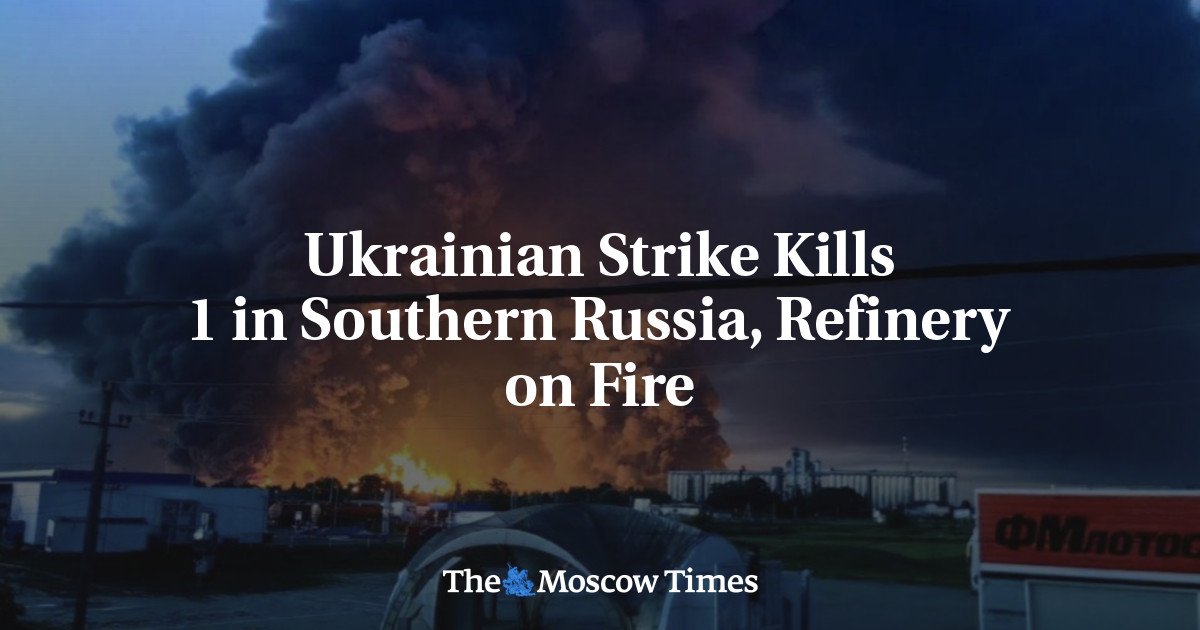
- Ukraine very likely struck the Slavyansk-on-Kuban and Yaroslavl oil refineries around 27-28 June, causing a refinery fire and at least one death, with regional authorities reporting drone attacks and Ukrainian leadership claiming responsibility. (Confidence: high · REPORTED)
- I&W: Fresh satellite imagery shows burn scars and damaged process units at Slavyansk EKO and Yaroslavl refineries. (0-14 days)
- I&W: Regional governors or Rosenergo/EMERCOM publish imagery confirming rapid restoration of affected units without visible damage. (0-14 days)
- Russia almost certainly sustained a high-tempo strike campaign across Ukraine on 27-29 June, killing at least 12 people nationwide and six in Dnipro, with NASA recording 148 thermal anomalies over 29-30 June that are consistent with clusters of heat events but do not attribute cause. (Confidence: high · REPORTED)
- I&W: Ukrainian authorities issue additional casualty updates for Kyiv, Dnipro, Kharkiv or Sumy following night-time barrages. (0-14 days)
- I&W: A sustained lull in nationwide air-raid alerts coincides with a marked drop in NASA VIIRS thermal detections over Ukraine. (0-14 days)
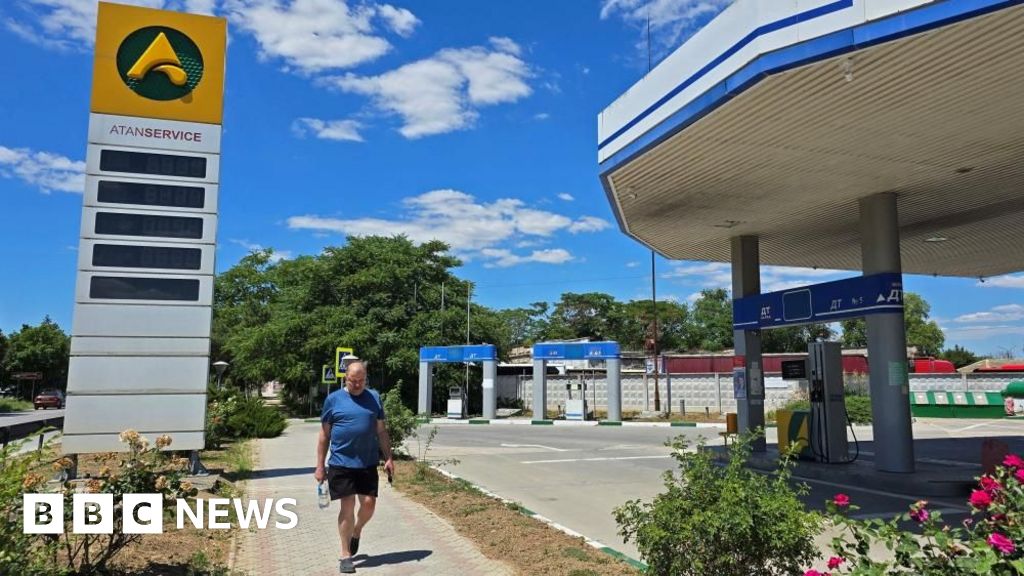
- Ukraine’s deep-strike campaign is very likely straining Russian fuel logistics nationwide and in occupied Crimea, reflected in the Kremlin’s public admission of shortages, widespread rationing, and reports of tight stocks and service restrictions in Crimea. (Confidence: medium · ASSESSED)
- I&W: Regional administrations across Russia extend or tighten fuel rationing and report limited deliveries; Crimean authorities prolong daytime-only operations or impose formal sale caps. (0-14 days)
- I&W: Russia’s Energy Ministry reports normalised supplies in most affected regions and regional rationing measures are lifted. (1-3 months)
- Russian forces likely continued localised advances west of Lyman, but claims of a broader breach on the front line are uncorroborated and likely overstated. (Confidence: medium · ASSESSED)
- I&W: Geolocated combat footage or administrative announcements verify additional settlement captures immediately west of Lyman. (0-30 days)
- I&W: Ukrainian General Staff reports and corroborated OSINT show Ukrainian counter-actions restoring positions on the Lyman axis. (0-30 days)
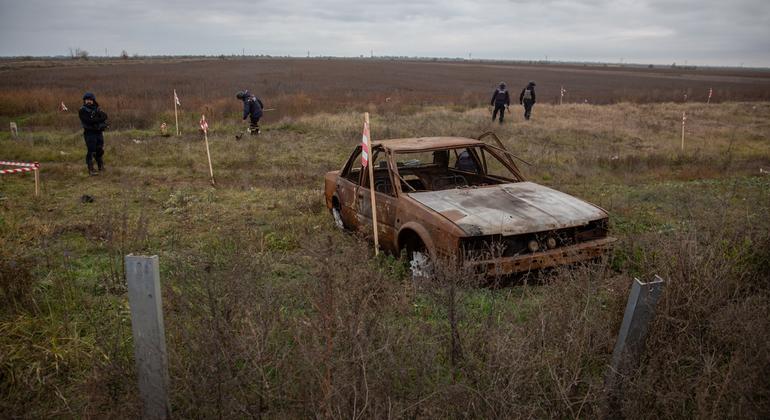
- Humanitarian conditions on the Russian-occupied left bank of Kherson Oblast remain acute, with disrupted supplies, limited ambulance access, and persistent mine and attack hazards causing civilian and aid-worker casualties. (Confidence: high · REPORTED)
- I&W: Verified deliveries resume into Oleshky and local services restore direct ambulance responses to homes. (0-30 days)
- I&W: Additional confirmed reports of mine incidents affecting aid convoys or demining teams in Oleshky and Hola Prystan. (0-30 days)
- Ukraine is likely degrading Russian movement into and within Crimea by targeting logistics routes and bridges, contributing to reported blackouts and fuel scarcity despite Moscow’s assertion that long-range strikes have no impact at the front. (Confidence: medium · ASSESSED)
- I&W: Traffic restrictions or closures recur on key Crimea approaches or bridges, paired with extended retail fuel limits and rolling outages announced by occupation authorities. (0-30 days)
- I&W: Occupation authorities publicise steady fuel convoys across the Kerch Bridge and lift consumer restrictions without reimposition. (1-3 months)
Outlook & scenarios
Strike-for-strike tempo persists (70%)
Ukraine continues periodic long-range UAV strikes on Russian energy nodes while Russia maintains nationwide missile and drone barrages. Civilian casualties inside Ukraine and intermittent refinery fires in Russia remain frequent, with no decisive change on the front line.
Incremental Russian gains west of Lyman (40%)
Russian units convert pressure west of Lyman into incremental advances, contesting a handful of settlements without operational breakthrough. Fighting remains attritional and localised.
Crimean logistics pinch deepens (30%)
Fuel scarcity and power instability in occupied Crimea worsen as Ukrainian interdiction persists, prompting tighter rationing and constrained military mobility. Public restrictions extend and recovery lags.
Talks noise without traction (10%)
Moscow’s signals about readiness for talks and Minsk as a venue produce episodic diplomatic activity but no substantive de-escalation, while military operations continue largely unchanged.
Recommendations
- Prioritise geospatial collection on Slavyansk EKO and Yaroslavl refineries to characterise damage and repair timelines; fuse Sentinel-2/Planet imagery with local ground footage to validate strike effects.
- Task OSINT geolocation teams to verify any claimed Russian advances west of Lyman and to filter out uncorroborated breach narratives; maintain a running control-of-terrain log for the Lyman axis.
- Stand up a structured dataset of Russian regional fuel restrictions, queue lengths and sale caps, including Crimea; track daily changes from regional administrations and retail networks.
- Monitor Crimean power outage reporting and traffic flows on key approaches and bridges to assess logistics constraints; correlate with any announced daytime-only or curfew-like operating rules.
- Use NASA VIIRS thermal anomaly feeds as a triage tool only; corroborate with air-raid alert data and ground reporting before attributing cause to strikes or shelling.
- Exploit Russian official statements for indicators of logistics strain, including acknowledgements of shortages and pledges to expand air defence production; archive for trend analysis.
- Maintain liaison with humanitarian monitoring on the Kherson left bank to capture supply access, ambulance availability and mine incidents; integrate into civilian harm and access-to-aid assessments.
- Prepare rapid assessments of any new refinery or energy-node strikes in Moscow region, Krasnodar and Volga corridors to anticipate follow-on impacts on Russian military fuel availability.
Confidence & uncertainty
Multiple high-quality sources corroborate the strike patterns and casualties, including Ukrainian and regional officials, major media, and NASA thermal detections. Reports on fuel shortages and rationing are supported by public acknowledgements and regional measures, though the precise operational impact remains partly inferential. Front-line breach claims are weakly sourced, while more modest Russian advances west of Lyman are reported by a single belligerent source and require geolocation for confirmation. NASA data record heat, not cause, and some Crimea restriction reports are medium confidence. Taken together, this mix of solid reporting and areas of uncertainty supports an overall medium confidence level.
Alternative analysis (red cell)
Reporting indicates strikes, thermal anomalies, and domestic fuel problems, but many supporting items are political statements or medium-admiralty reports that do not establish direct causation. A sober alternative estimate is that attacks and shortages are occurring concurrently yet the degree to which Ukrainian deep strikes are the primary driver of nationwide logistics failures and Crimea-wide blackouts/fuel scarcity remains unresolved without independent technical and supply-chain data.
Intelligence gaps
- [EEI 1.1 · UNCOVERED] Geotagged UAV/satellite imagery showing abandoned defensive positions or newly occupied settlements. Recommended collection: overhead imagery
- [EEI 1.2 · PARTIAL] Confirmed movement of frontline ambulance evacuation routes beyond previous coordinates. Recommended collection: SIGINT/medical logistics
- [EEI 2.1 · UNCOVERED] Concentration of assault battalions (≥3 mechanized companies) within 15km of contact line. Recommended collection: SIGINT/UAV
- [EEI 2.2 · UNCOVERED] Unusual artillery stockpile buildup at forward depots exceeding 30-day consumption rates. Recommended collection: overhead imagery/logistics
- [EEI 3.1 · UNCOVERED] Bridge structural damage assessments at 5 key Dnieper River crossings via multispectral imaging. Recommended collection: overhead imagery
- [EEI 3.2 · UNCOVERED] Rail traffic volume changes at Kryvyi Rih and Pokrovsk rail hubs compared to 7-day baseline. Recommended collection: commercial freight data
Cited sources
[1] jamaicainquirer.com · Ukraine says it attacked two Russian oil refineries - Jamaica Inquirer – Daily Jamaica News (B) · sha256:f2cf3bca6ce1 [2] The Moscow Times · Ukrainian Strike Kills 1 in Southern Russia, Refinery on Fire - The Moscow Times (B) · sha256:13de35e22b7d [3] The Times · The Times: Холодный расчет и квота на убийства главнокомандующего Киева (B) · sha256:e774cbda12ba [4] forbes.com · Monday, June 29. Russia’s War On Ukraine: News And Information From Ukraine (A) · sha256:771522a50258 [5] NASA · NASA FIRMS thermal detections — Ukraine (2d) (A) · sha256:44fa03669f76 [6] bbc.co.uk · Putin makes rare admission of fuel shortages caused by Ukrainian strikes (A) · sha256:8727d923002b [7] BBC News · Crimea blockade: No fuel for sale as Ukraine's attacks take effect in Russian-occupied region (A) · sha256:f42b3099c362 [8] 手奇塾 · 6/30 ウ軍主戦場の防衛線を突破され、頼りは心理戦 (E) · sha256:12694d68393d [9] TSN English · AN HOUR AGO! The offensive has begun! There’s been a breach on the front line! (B) · sha256:09368dfaae10 [10] United Nations · Thousands trapped in southern Ukraine struggle to survive (A) · sha256:723a12fa9d25
Source content hashes were computed at collection time; the cited text is preserved unmodified for the life of this product.
Red cell review: PARTIAL DISSENT
TLP:CLEAR