TLP:CLEAR · Disclosure is not limited.
Russia-Ukraine Front Line: Continued strikes, contested local gains and Oleshky evacuation
Time window: Last 7 days · Audience: General analyst · Type: Situation report · DTG: 2026-11-01 07:13Z · Overall confidence: HIGH
BLUF
The Oleshky ceasefire enabled a large civilian evacuation, but the reporting does not establish a broad shift in front-line control. Drone attacks continued elsewhere, while claims of Ukrainian gains near Kupiansk and Lyman remain disputed and the planned Russia-Ukraine-US talks have not produced an operational pause.
Executive summary
Reporting from 25 October to 1 November shows continued attacks by both sides alongside a local humanitarian pause in Oleshky, in Ukraine’s Kherson Oblast under Russian occupation. Hundreds of Oleshky residents were reported to have reached Ukrainian-held territory through Russia and Belarus; the ceasefire was due to expire on the evening of 1 November. Kyiv experienced explosions and serious power disruption on 1 November, though the available claims do not establish responsibility for that specific disruption. Ukraine reported a strike on the Novokuybyshevsk refinery on 30 October, and drones caused a fire in Ufa’s Northern Industrial Zone on 31 October, but attribution for the Ufa attack is unconfirmed. Ukrainian and Russian accounts of operations near Kupiansk conflict, and reports of planned trilateral talks in Abu Dhabi do not indicate that either side has agreed to limit military operations.
Change from previous assessment
Since the 31 October brief, confidence has increased that the Oleshky evacuation took place: reports now describe residents crossing into Chernihiv, although the final count and ceasefire compliance remain uncertain. New reporting records serious power disruption in Kyiv on 1 November, Ukrainian claims of strikes on the Novokuybyshevsk refinery on 30 October, and a drone-related fire in Ufa on 31 October with attribution unresolved. Plans for Russia-Ukraine-US talks in Abu Dhabi are now reported, but the date and format remain unsettled. The prior assessment that reporting does not establish a broad shift in control remains unchanged; the conflicting accounts of Operation Veles keep confidence in local battlefield outcomes low.
Key judgments
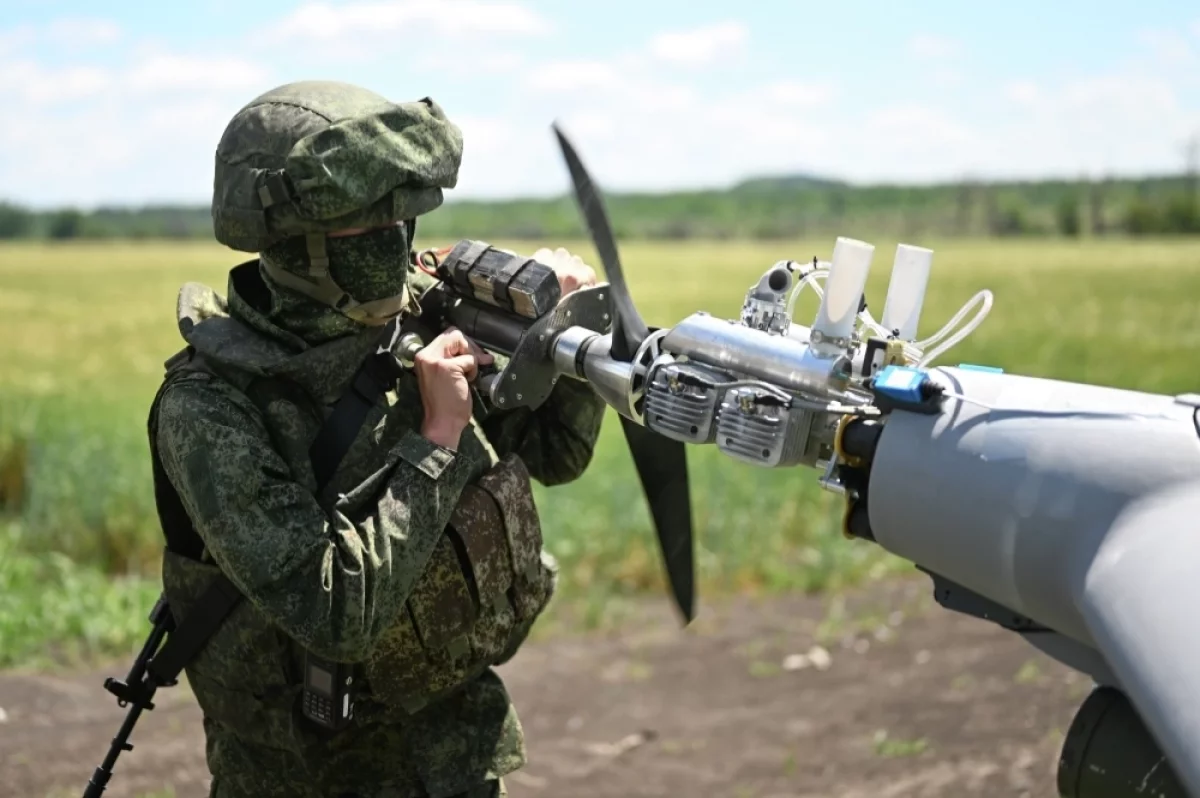
- Russian and Ukrainian drone attacks are likely to continue beyond the Oleshky ceasefire over the next 14 days. Reporting on 1 November says both sides continued drone attacks elsewhere in Ukraine; Ukrainian authorities reported that more than 153 Russian UAVs attacked Ukraine on 25 October, while the Russian Ministry of Defence claimed it intercepted 222 Ukrainian drones overnight on 26 October. The figures are belligerent reporting and are not independently verified here. (Confidence: medium · ASSESSED)
- I&W: Confirm: Ukrainian authorities report new Russian UAV launches while Russian authorities report new Ukrainian UAV interceptions over Belgorod, Crimea or the Black Sea. (0-14 days)
- I&W: Break: both sides report a 72-hour halt to drone attacks outside the Oleshky area. (0-14 days)
- A broad shift in front-line control is unlikely to be established by this reporting, although Ukrainian forces likely achieved localized effects near Kupiansk and Lyman. Ukraine’s Khartiia Corps described an underground advance of more than 15 kilometres near Kupiansk, and Volodymyr Zelensky said Operation Veles captured more than 30 Russian soldiers and caused more than 100 Russian losses. Russian reporting instead said the Ukrainian group in the pipeline was destroyed. For Operation Vivaldi near Lyman, 3rd Army Corps commander Andriy Biletsky claimed that Ukrainian forces retook 277 square kilometres and more than 16 settlements. Russian forces separately claimed that the Vostok grouping captured Obshchee in Zaporizhzhia Oblast. These battlefield claims are not independently verified, and the accounts of Operation Veles directly conflict. (Confidence: low · ASSESSED)
- I&W: Confirm: independently verified imagery or map updates show a change in control at a named settlement near Kupiansk, Lyman or Obshchee. (0-14 days)
- I&W: Break: updated mapping shows no change in control around those locations and neither side reports a sustained advance there. (0-14 days)
- Russian strike pressure on Ukrainian energy infrastructure is likely to continue over the next 14 days. Zelensky reported Russian attacks on Ukrainian substations, thermal power plants and gas infrastructure, and Kyiv had explosions followed by serious power disruption on 1 November, including a reported complete outage in the Troieshchyna area. The claims establish the reported disruption but do not independently attribute that specific outage to a Russian strike. (Confidence: medium · ASSESSED)
- I&W: Confirm: Kyiv authorities report new emergency outages following a reported strike on a named substation, thermal power plant or gas facility. (0-14 days)
- I&W: Break: Kyiv authorities report restored service and no new strike damage to named energy infrastructure during the period. (0-14 days)
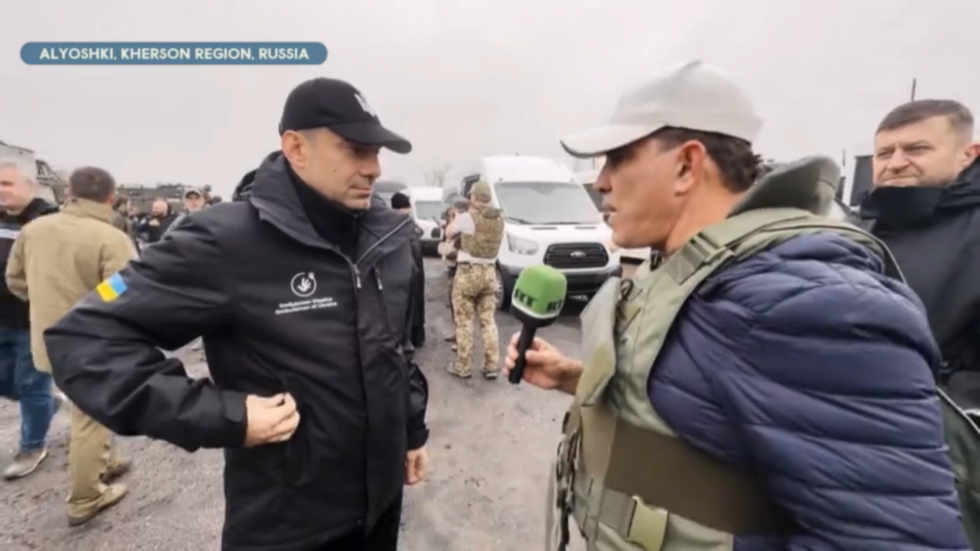
- Hundreds of Oleshky residents were evacuated to Ukrainian-held territory on 30-31 October, and the local ceasefire was reported to be due to expire on the evening of 1 November. BBC and Al Jazeera reporting, along with Zelensky’s statement, supports the evacuation and arrivals in Chernihiv; a report of more than 750 evacuees has not been reconciled with other accounts describing a 25-bus convoy with capacity for 750. Reports also conflict over whether strikes occurred in the ceasefire area during the week. The Russian Ministry of Defence’s reported tally may cover a different period from accounts that say the pause held, but the timing remains unresolved. (Confidence: medium · REPORTED)
- I&W: Confirm: Russian and Ukrainian officials announce an extension or a further humanitarian mission in Oleshky after the scheduled expiry. (0-14 days)
- I&W: Break: either side reports artillery or UAV strikes on Oleshky or its evacuation roads after the ceasefire’s scheduled expiry. (0-14 days)
- The planned Russia-Ukraine-US talks are unlikely to produce an immediate halt to front-line operations. Moscow and Washington were still coordinating a date; Zelensky hoped for a meeting between 6 and 10 November and said Kyiv wanted Europe involved. Kremlin spokesman Dmitry Peskov said preparations did not commit Russia to limiting military operations, while Yury Ushakov said European representatives would not take part. The date and format remain unsettled. (Confidence: medium · ASSESSED)
- I&W: Confirm: Moscow, Kyiv and Washington publicly confirm a meeting date and participants without announcing a wider operational pause. (0-14 days)
- I&W: Break: Moscow and Kyiv jointly announce a verified pause in military operations across the wider front before the talks. (0-14 days)
Outlook & scenarios
Continued attritional fighting alongside talks (65%)
Drone attacks and long-range strikes continue while Moscow, Kyiv and Washington work towards a meeting date. The Oleshky pause remains a local humanitarian arrangement rather than a model for a wider cessation, and neither side makes a broad change in front-line control.
Local gains and counterattacks, without a broad front shift (30%)
Ukrainian forces consolidate reported effects near Kupiansk or Lyman, while Russian forces maintain pressure and claim gains such as the capture of Obshchee. The conflicting accounts remain unresolved, and any territorial changes stay local.
Kherson ceasefire breakdown and wider offensive (5%)
The Oleshky pause ends without renewal and fighting intensifies around Kherson. This is a low-probability, high-impact contingency, not an established force disposition: the only warning in this reporting set is an uncorroborated social media account relaying Ukrainian soldiers’ belief that Russian forces were preparing an offensive.
Recommendations
- Track the Oleshky ceasefire’s expiry and any renewal separately from claims about a wider Kherson-region pause. Reconcile reports of shelling against the relevant dates and locations before assessing compliance.
- Maintain separate entries for Ukrainian and Russian claims about Operation Veles, Operation Vivaldi and the capture of Obshchee. Seek independent geolocation or map confirmation before assessing territorial change.
- Monitor Kyiv city and military administration updates for restoration of power and for any newly named strike damage to substations, thermal power plants or gas infrastructure. Do not attribute the 1 November outage to Russia without additional reporting.
- Treat the Abu Dhabi talks as planned, not agreed to, and record separately the unresolved date, European participation and Moscow’s stated position on continuing military operations.
- Report the Patriot PAC-3 MSE action as an approved sale of 500 missiles valued at $2.1 billion, not as missiles already delivered or available to Ukrainian forces.
Confidence & uncertainty
Overall confidence is high for the core situation picture because BBC and Al Jazeera reporting, alongside statements from Ukrainian officials, corroborates the Oleshky evacuation and arrivals in Chernihiv. Confidence is lower on tactical control, battlefield losses and whether strikes occurred during the ceasefire: those points rely heavily on belligerent accounts, and some reports directly conflict. The headline rating reflects confidence in the main reported developments, not certainty about battlefield outcomes.
Alternative analysis (red cell)
The available reporting does not establish that Ukrainian forces achieved localized effects near Kupiansk and Lyman. The Ukrainian accounts in 1248b3aa-1858-4d9e-a6e1-15e46e9b8949 and be6fb30f-f5e7-4f4f-aeca-a62913681944 are unverified, while the Veles account is directly contradicted by 7e3b366c-6e3f-4e40-a543-a01cfa51d010. A more defensible reading is that battlefield effects remain indeterminate and that the reporting supports neither localized Ukrainian success nor a broad change in front-line control.
Intelligence gaps
- [EEI 1.1 · UNCOVERED] Geotagged UAV/satellite imagery showing abandoned defensive positions or newly occupied settlements. Recommended collection: overhead imagery
- [EEI 1.2 · PARTIAL] Confirmed movement of frontline ambulance evacuation routes beyond previous coordinates. Recommended collection: SIGINT/medical logistics
- [EEI 2.1 · UNCOVERED] Concentration of assault battalions (≥3 mechanized companies) within 15km of contact line. Recommended collection: SIGINT/UAV
- [EEI 2.2 · UNCOVERED] Unusual artillery stockpile buildup at forward depots exceeding 30-day consumption rates. Recommended collection: overhead imagery/logistics
- [EEI 3.1 · UNCOVERED] Bridge structural damage assessments at 5 key Dnieper River crossings via multispectral imaging. Recommended collection: overhead imagery
- [EEI 3.2 · UNCOVERED] Rail traffic volume changes at Kryvyi Rih and Pokrovsk rail hubs compared to 7-day baseline. Recommended collection: commercial freight data
Red cell review: PARTIAL DISSENT
TLP:CLEAR